174/365 Foxgloves

Tags

, , , ,

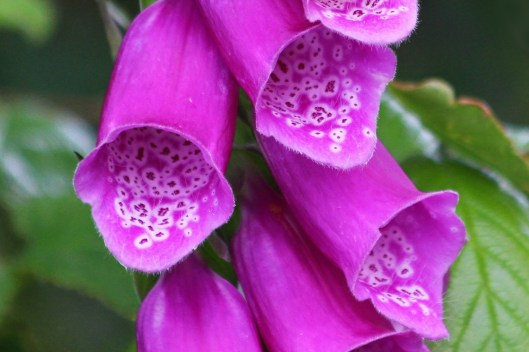
I’m out on a birding trip today and may be home late so here’s a little something I prepared earlier on the gorgeous Foxgloves that I’ve been spotting, growing at the edges of train tracks heading up the Welsh Valleys, and under trees, alongside hedgerows and amongst the bracken at Aberbargoed Grasslands. Foxy places perhaps? Their liking for the places frequented by foxes is the only reason Richard Mabey comes up with in my Flora Britannica for their Foxglove name. It’s a mystery!

190623 foxgloves (1)

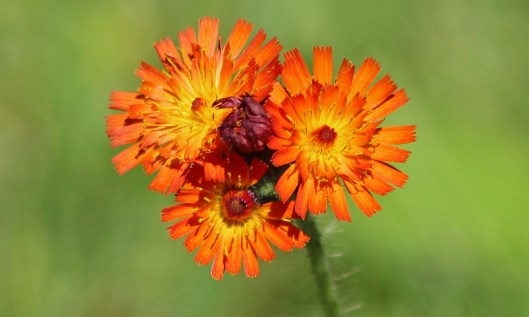
173/365 Orange hawkweed

Tags

, , , , , ,

190622 orange hawkweed (3)

The Orange hawkweed (also known as Fox-and-cubs and Grim the collier) was putting on a magnificent display in Cathays Cemetery today.

190622 orange hawkweed (1)

So, I thought I’d better grab some photos because this is a cemetery that is (mis)managed by the ‘neat and tidy’ brigade, those who place value in strimming everything to within an inch of its life rather than in the beauty of the wildflowers and the food they provide to insects.

190622 orange hawkweed (2)

172/365 Flitillaries

Tags

, , , , , , ,

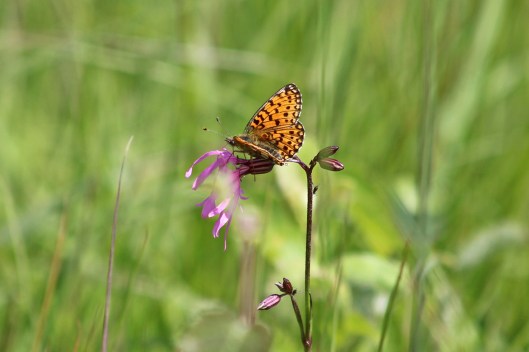
My mis-spelling of the word fritillaries is deliberate – the darn things never keep still. They’re either constantly flitting from place to place at a great rate of knots or, when they do settle, they either disappear into the long grass so you can’t find them or they perch on a flower to refuel but never stop flapping their wings for a moment.

190621 small pearl-bordered fritillary (1)

Those are my excuses for the Small pearl-bordered fritillaries in today’s photos being out of focus and/or obscured by blades of grass!

190621 small pearl-bordered fritillary (2)

Still, I spent a glorious few hours with them, and their cousins the Marsh fritillaries, at Aberbargoed Grasslands National Nature Reserve. A little patience was required, as huge menacing clouds kept rolling over but, in the gaps between, when the sun came out, so did the butterflies.

190621 small pearl-bordered fritillary (3)

It was a magical way to spend the summer solstice!

190621 small pearl-bordered fritillary (4)

171/365 Just resting?

Tags

, , , ,

190620 jay (1)

I’m not sure what this Jay was up to, sitting still on the grass fairly close to a busy path. Its wing weren’t spread so it wasn’t sunning itself or anting, and it didn’t seem to be distressed so I don’t think it had been attacked by anything. It also didn’t look like a particularly young bird, but maybe it was and was just waiting for its parents to feed it. Whatever the truth of the matter, it had gone by the time I walked back this way a couple of hours later.

190620 jay (2)

170/365 Growing fast

Tags

, , , , , , ,

It’s time for an update on the Lesser black-backed gulls who are rearing their brood among the chimney pots on a house in the next street to mine.

190619 lesser black-backed gull chicks (1)

First off, though I thought initially that there were only two, there are, in fact, three chicks, though one is significantly bigger than the other two and much more aggressive when it comes to demanding food from its parents.

190619 lesser black-backed gull chicks (2)

I was a little worried that all the recent rain might have caused them problems as the parents seem to leave them on their own a lot but they all look reasonably healthy so far (they’re at least two weeks old now).

190619 lesser black-backed gull

It must take a lot of effort from the parents to keep their hunger satisfied – if it ever is. I spotted one of the parents with a long bit of fish – young eel? – hanging out of its mouth the other day. I bet that soon got gobbled up when it was later regurgitated. Another progress report soon!

190619 lesser black-backed gull chicks (3)

168/365 From pristine to tatty

Tags

, , , , , ,

Butterflies have a hard life. Having to weave their way through a maze of wildflowers and long grasses, squabbling with other butterflies, taking evasive manoeuvres to avoid being eaten, these all take their toll on creatures that are not very robust to begin with.

190617 small copper

During today’s stroll around Cosmeston, I discovered a stunning, pristine Small copper, presumably newly emerged, one of their second brood for the year, but I also saw a very tatty looking Common blue, its wings frayed around the edges, its colour very faded, its life almost over. Yet it was battling on into a strong headwind, not giving up. There’s a lesson there, I think.

190617 common blue

166/365 Whitethroat family

Tags

, , , , , ,

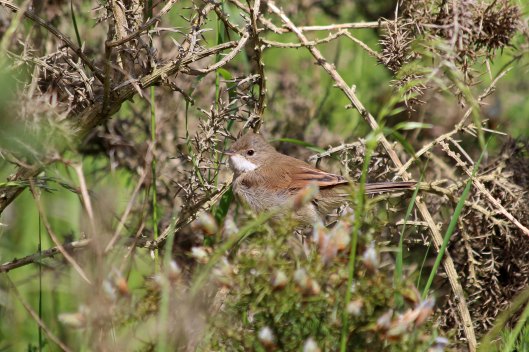
Braving the continuing rain, I walked a new path today, one seldom walked by others judging by how overgrown it was. The choice was a good one. As well as a couple of unexpected butterflies and some gorgeous orchids, I surprised a family of Whitethroats, the two parents and their three fledglings (two of them pictured here) browsing amongst the low shrubs, scratchy brambles and prickly gorse bushes. I froze and, after a couple of minutes, they ignored me and continued searching for snacks. It was a real delight to watch them.

190615 whitethroat fledgling (1)190615 whitethroat fledgling (2)

165/365 Coming soon …

Tags

, , , , , , , ,

First, the caterpillar. Now I know this is a bit like the chicken and egg debate – which came first? – but my sequence is chronological for 2019. This is the caterpillar / larva of a Burnet moth, most likely a Six-spot Burnet (Zygaena filipendulae), as they’re the species I’ve seen at this site in previous years. I only found out this week that they over-winter as caterpillars, and they’re now enjoying a final munch before beginning their transformation.
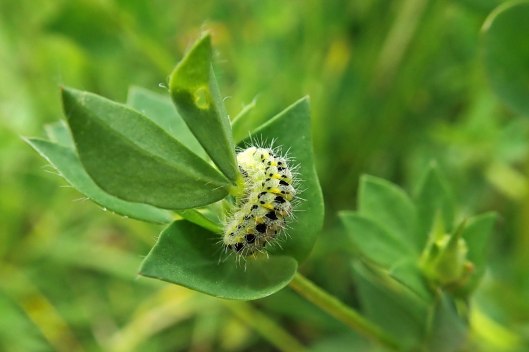
Second, the pupa. Some of the munchers have already begun their metamorphosis into moths. This week I’ve spotted quite a number of the papery cocoons they spin to house their pupae while they go through this process.

190614 Burnet moth cocoon

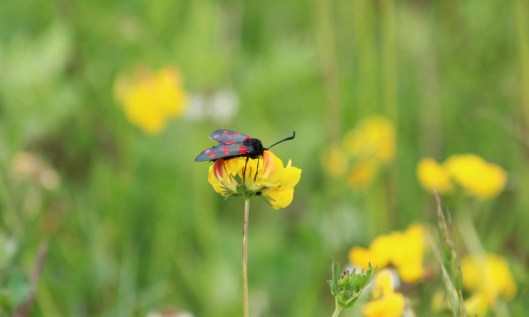
Third, the moth. In previous years, the Six-spots have begun to appear around the beginning of July but the weather conditions can have an effect on their emergence. So, eyes peeled for the appearance of these gorgeous creatures in a meadow near you very soon!

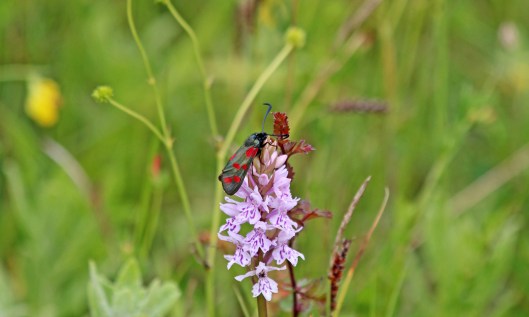
190614 Six-spot Burnet moth

p.s. And if, by some chance, it’s actually a Five spot Burnet (Zygaena lonicerae), then it will look like this – you just have to count the dots!


190614 Five-spot Burnet moth