184/365 Sad news

Tags

, , , , ,

I am the bearer of sad tidings today. All three of the Lesser black-backed gull chicks, who were living amongst the chimney pots across the back lane, have perished. I think one died a week or so ago, probably because it was the runt of the brood and was out-competed for food by its two older siblings. I’m not sure what happened to the other two – one was definitely much larger and more dominant than the other, so perhaps the smaller of the remaining two also died from starvation. I noticed the third chick had disappeared late yesterday afternoon, when I spotted a couple of the local Jackdaws inspecting the nest site – I don’t think they would’ve killed the chick, as it was bigger than them, and they seemed merely to be picking through the nest materials.
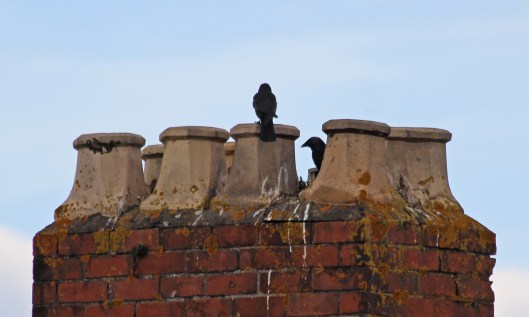
190703 jackdaws

The female Lesser black-backed soon chased them off and has spent quite a bit of time sitting on the chimney pots, peering at the nest as if looking for the chick(s). She has also been staying nearby, as if she expects them to reappear and she’s been calling for them, which has been very sad to hear.

190703 lesser black-backed gull (2)

There have been many other gulls in the area, some of whom have been taking an interest in the nest. Several times I’ve heard lots of screeching and watched while the parents chased off the interlopers. I presume that, while the parents were out looking for food, either those gulls or some other predator has carried off the remaining two chicks. ‘Tis the sad reality of the natural world.

190703 lesser black-backed gull (1)

183/365 Pathetic, but not

Tags

, , , , , ,

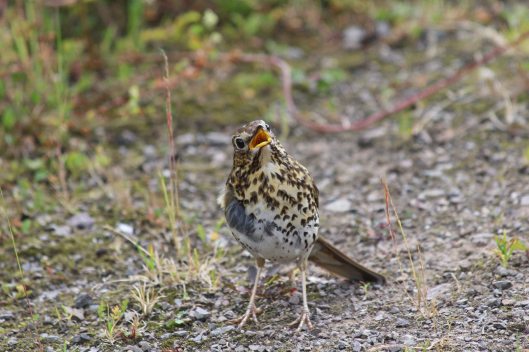
Young birds really have perfected the ‘poor me, I’m starving, feed me’ routine!

190702 song thrush (a)

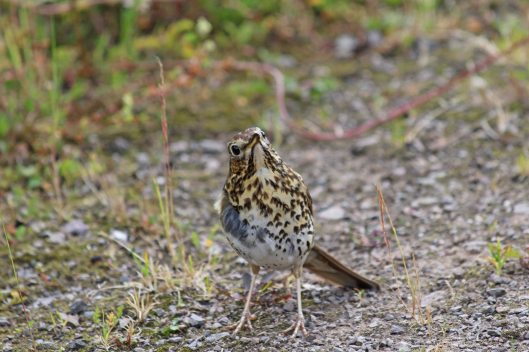
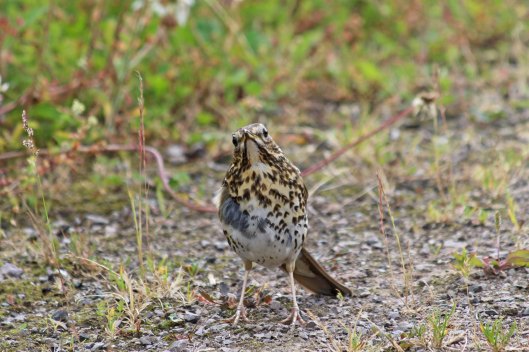
This fledgling Song thrush was sitting on a path alongside a wildflower meadow I visited today. It had its head tilted to keep an eye on the sky and was uttering the most pathetic-sounding peeps. I immediately felt sorry for it, thought it might have lost its parents, be injured, be unable to fly.

190702 song thrush (b)

But no, as soon as I got within a few feet of it, it was up and off at a rate of knots to the nearest tree. I didn’t see its parents – maybe they’d become immune to its pleas and knew very well it was old enough to fend for itself.

190702 song thrush (c)

183/365 Smiling bees

Tags

, , ,

190702 bee orchid (1)

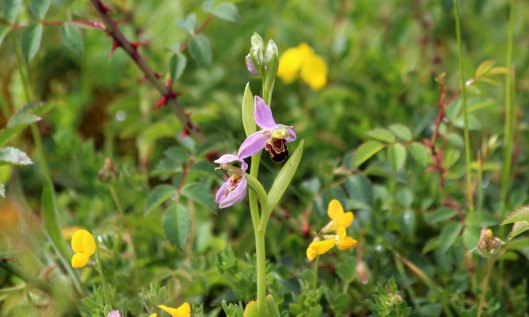
Some of the beautiful Bee orchids in my local wild places are starting to go over now, punished perhaps by the extreme June heat we’ve been experiencing. So, before they disappear completely for another year, I thought I’d share some of their wonderfully cheery, smiling faces. No two are the same.

181/365 An aberrant Meadow brown

Tags

, , , , , , , , ,

I feel like I should be apologising for featuring butterflies three days in a row but this little butterfly is so interesting that I just had to share it. There are a ton of Meadow browns flitting around the wildflower fields at Cosmeston right now and they mostly look like this – or, at least, the females do.

190630 Meadow brown normal female

So, I think you can see why the butterfly in this next photo caught my eye. Unfortunately, I wasn’t able to get a really clear shot of it, as it kept flying further into the flowers and I didn’t want to trample them, but you get the idea. Thanks to a tweet from UK Butterflies, I now know “This aberration is referred to as ‘pathological’, where wing scales fail to pigment – thought to be caused by some type of damage (physical or chemical) to the pupa. Asymmetrical examples are known too where only 1 wing is affected.” Isn’t it fascinating?

190630 Meadow brown aberrant female

180/365 Butterflying in Somerset, part II

Tags

, , , , , , , ,

Scenario: Three friends go seeking rare butterflies across the border in England.

190629 Collard Hill view

Second location: Collard Hill, in Somerset. A hot walk up the steep hill for more incredible views across picturesque Somerset. And we weren’t far from the legendary Glastonbury Tor.
190629 Glastonbury Tor

Support act: Marbled white. My first sightings of these little beauties for the year, and we saw several flitting back and forth above the long grass.

190629 marbled white

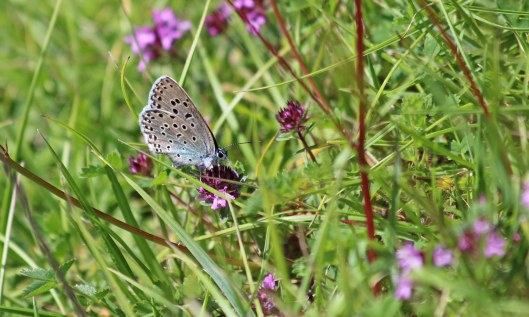
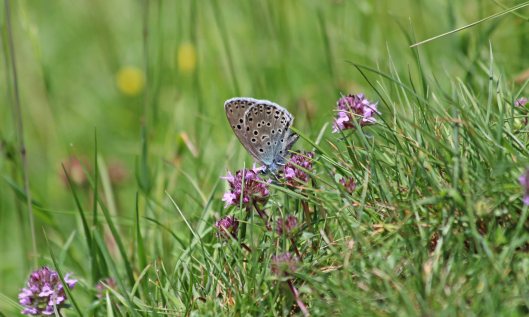
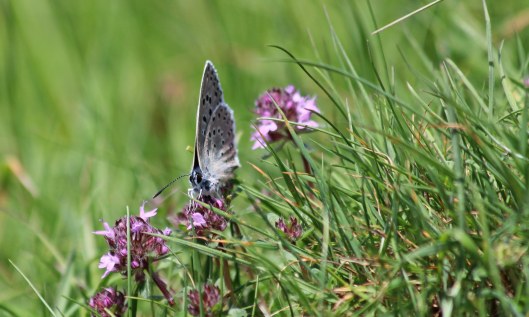
Star attraction: Large blue. Incredibly, this butterfly was declared extinct in Britain in the 1970s but was reintroduced from Sweden to Green Down, a Somerset Wildlife Trust site, in 1992. Since then the butterflies have mostly thrived (though they are affected by weather, habitat and ant conditions – for more on that, check out the National Trust Large blue blog) and they’ve been reintroduced to several other areas, including this site at Collard Hill.

190629 large blue (2)

During our visit, it was very windy at the top and very hot in the lee of the hill, not ideal conditions for seeing the butterflies but, after following the animal tracks back and forth across the hillside, we finally had good sightings of three Large blues on their favourite food plant, Wild thyme. One female was even ovipositing, which bodes well for the coming years.

190629 large blue (3)

It was amazing to see both these Large blues and, earlier in the day, the Heath fritillaries, both lifers for me, and I want to say a huge thank you to Gareth and Alan for letting me join their butterflying expedition. It was a truly magical day!

190629 large blue (4)

179/365 Butterflying in Somerset, part I

Tags

, , , , , , ,

Scenario: Three friends go seeking rare butterflies across the border in England.

190628 Haddon Hill views

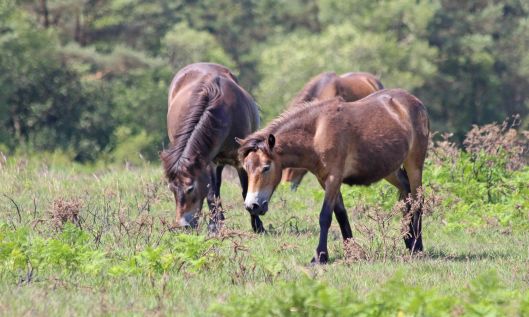
First location: Haddon Hill, in Somerset, offering superb views across the surrounding countryside and grazed by Exmoor ponies.

190628 exmoor ponies

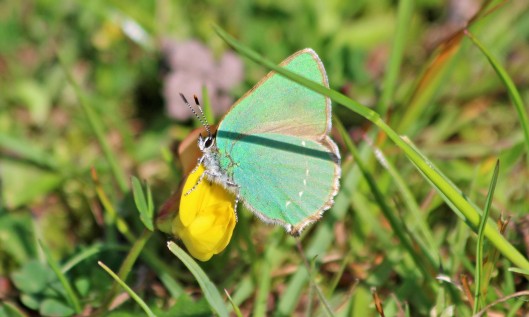
Support act: A Green hairstreak. This was a superb spot by Alan almost as soon as we crossed the stile into the reserve, as this gorgeous little butterfly was incredibly well camouflaged sitting on the grass.

190628 green hairstreak

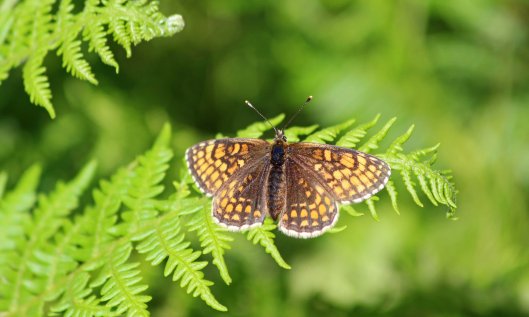
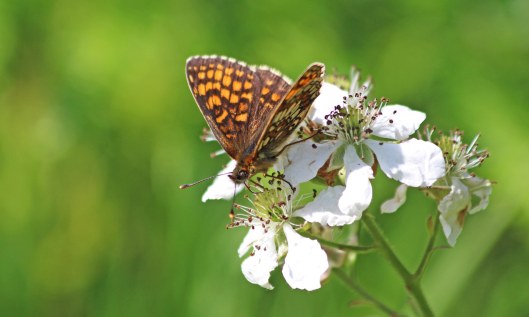
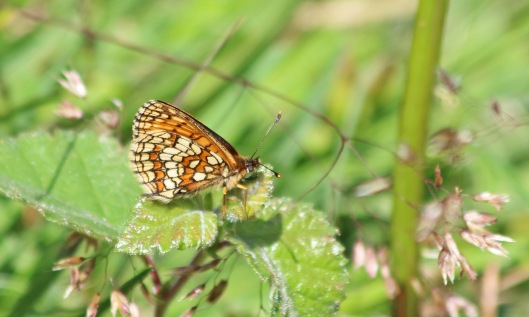
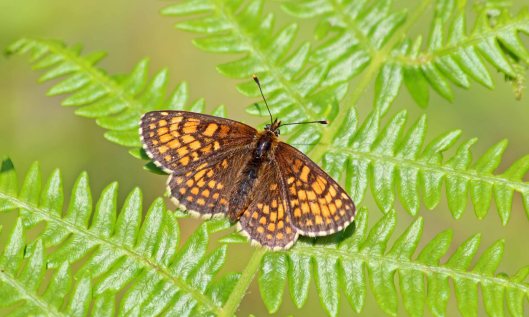
Star attraction: Heath fritillary. What a cracking little butterfly this is, with its elaborate orange and dark brown upperwing markings, and its equally lovely and intricate underwings. Sadly, this is a rare butterfly in Britain these days but it is being helped along by the sterling efforts of Butterfly Conservation and others. Luckily, at this site, Heath fritillaries are very numerous – we must’ve seen at least 25, and they were literally fluttering in the bushes and brambles all around us. One even landed briefly on my hand – an incredibly special moment.

190628 heath fritillary (1)190628 heath fritillary (2)190628 heath fritillary (3)190628 heath fritillary (4)190628 heath fritillary (5)

178/365 Oxeyes

Tags

, , , , , , , ,

I’ve gone butterflying today – fingers crossed I’ll have some beauties to show you tomorrow. In the meantime, I hope these Oxeye daisies will brighten your day as much as they always do mine.

190627 ox-eye daisy (j)

These are Leucanthemum vulgare, also known as Dog daisies, Horse daisies, Moon daisies, Moonpennies and Marguerites. Once abundant in agricultural grasslands, they’ve been driven out of those areas, mostly because of the industrialisation and chemicalisation of modern farming, so now they’re the early colonisers of brown-field sites and roadside verges, and flourish in unimproved grasslands.

If you want to know more about these cheery flowers, check out Plantlife’s website, which always has a wealth of fascinating information about Britain’s wildflowers.

177/365 Skimmers

Tags

, , , , , ,

I was just saying to someone the other day that I haven’t been seeing many dragonflies this year and what happens? The very next time I go walking at Cosmeston, I see several.

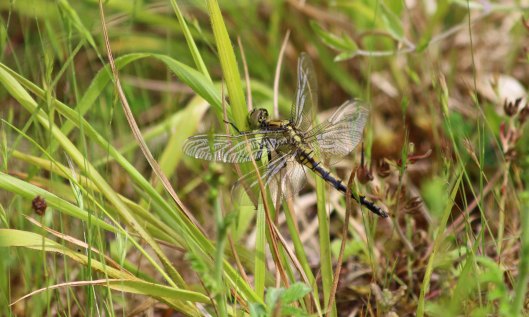
190626 black-tailed skimmers (2)

These two Black-tailed skimmers were the most obliging, as they tend to station themselves along the pathways through the wildflower fields, rising up as you get near them and then re-settling a little further along the path. If you watch where they land and you’re slow and quiet as you approach, you can get quite near them.

190626 black-tailed skimmers (1)

176/365 More new arrivals

Tags

, , , , , , ,

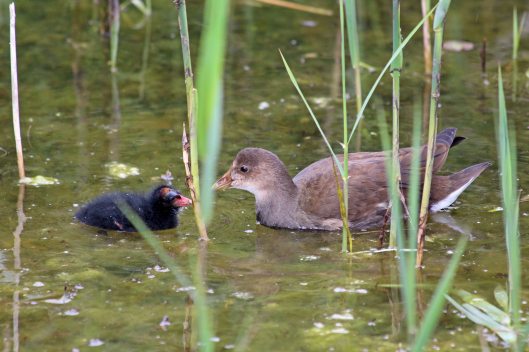
190625 moorhen family (5)

On April Fool’s day I reported on the hatching of five Moorhen chicks in one of the ponds at Cosmeston Lakes Country Park. Nearly two months on, I’m delighted to report that all five of those chicks are still alive and thriving, and they now have a brand new bunch of five siblings, their parents’ second brood of the year. Raising them is a real family affair, as the older siblings help to feed and look after their little brothers and sisters. And there’s still time for the mum and dad to have yet another brood. I’ll be watching.

190625 moorhen family (1)

175/365 The eye of faith

Tags

, , , , , , , , , , , , ,

You’re just going to have to believe me when I tell you that the photo on the left below is of a Cuckoo in a tree, and the photo on the right is of a Hobby in the same tree four minutes later.

Today’s photos were taken during yesterday’s Glamorgan Bird Club field trip to RSPB Ham Wall and Shapwick Heath on the Somerset Levels, a very watery place, as you can imagine, and one where, depending on the time of year, you’re almost guaranteed to see Marsh harriers, Bitterns, Great white and Little egrets. So, here they are, plus a couple of extras. It was a grand day out, as usual on these birding field trips.

A Grey heron hunts in one of the lush reens …

190624 heron in a reen

The obligatory blurry bittern fly-past shot.

190624 bittern flypast

The equally obligatory distant Marsh harrier shot … but I did manage to get two in one frame.

190624 marsh harriers

Great white egrets aplenty …

190624 great white egret

Black-tailed godwits and a couple of Lapwings doing a turn of the pond. And “Look at me! Look at me!” called the handsome little Whitethroat, so we did.