I’m following a tree: September 2018

Tags

, , , ,

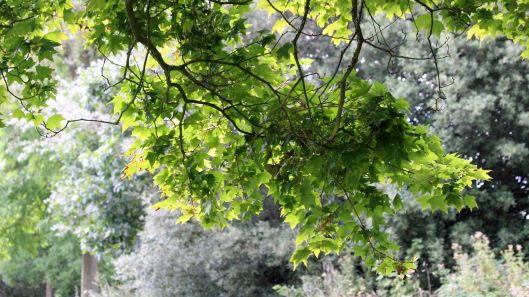
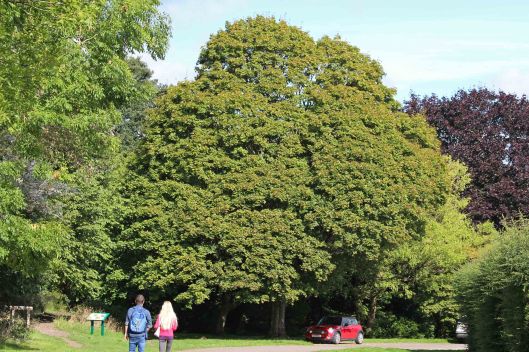
I expected my tree, this magnificent Acer pictum aka Acer mono, to be looking a little autumnal when I visited it in Cardiff’s Bute Park on Friday, but no.
180909 acer mono (1)

There were leaves that almost looked burnt, were dry and curling up, but that looked more like a hangover from the several weeks of drought and high temperatures we had in July and August, rather than the slow changing of colour you’d expect to see during autumn.

180909 acer mono (2)

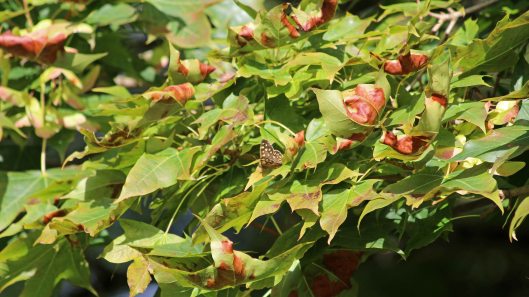
Spot the Speckled wood butterfly perched high in the canopy – one of two I saw up there.
180909 acer mono (3)

Most of the foliage was still looking lush and vibrant and very green.

180909 acer mono (6)

Though a few lay scattered beneath the tree, most of its seeds were also still attached. I brought a couple of seed pods home, thinking to look at the seeds inside them. It wasn’t until I checked them later that I realised all the seeds had burst out of their pods. Next time …

A Whinchat family

Tags

, , , , , , , , ,

180908 2 whinchats (1)

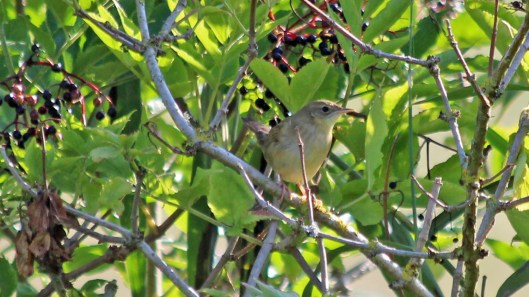
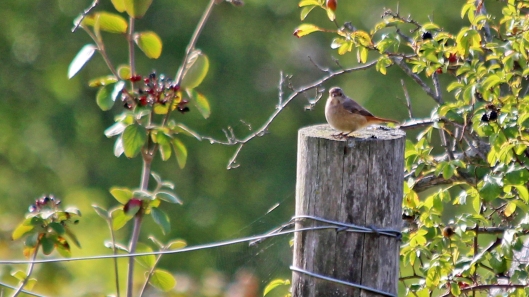
One of the highlights of this week at Cosmeston Lakes Country Park has been watching the party of three Whinchats that have stopped off to feed up prior to their migration to central and southern Africa. I think they’re a family group because this one appears still to have the plumage of a juvenile.

180908 whinchat (1)

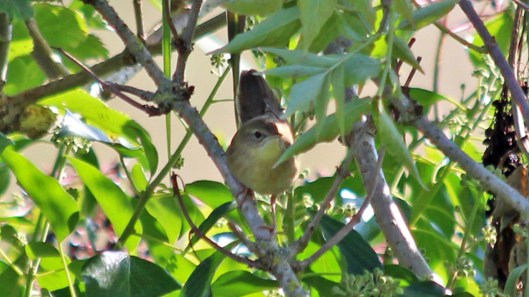
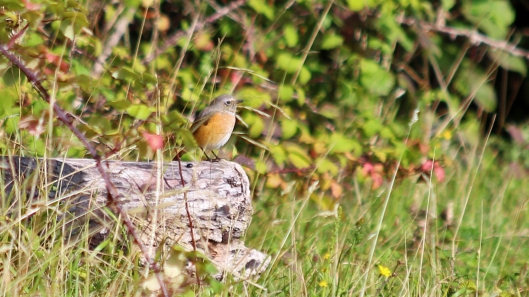
Another (below) is still part way through the moulting process. I read recently that birds don’t usually migrate until after their moult is complete, as the lack of all their proper flight feathers, in particular, can affect their ability to fly long distances. Perhaps that’s another reason why they’ve broken their journey at Cosmeston.

180908 whinchat (2)

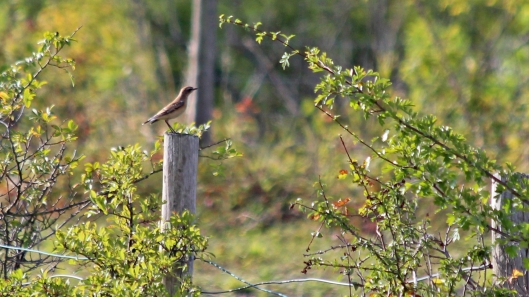
This is the third Whinchat, or Saxicola rubetra, to give it its scientific name.

180908 whinchat (3).jpg

Their common name, as with many birds, reflects their behaviour – whin is another word for gorse, as these little birds are commonly found amongst gorse and bracken and areas of low shrubs and bushes. Chat relates to their call, which combines the sound of two stones being tapped together with a series of melodic whistles.

180908 2 whinchats (2).jpg

Eyebrights

Tags

, , ,

I’m not even going to try to put a name to this little flower except to say it’s an Eyebright, one of around 20 very similar (and 60-plus hybrid) species of Euphrasia. They’re pretty and very dainty little plants, though easily overlooked as they’re don’t grow very tall and so are often obscured by surrounding grasses and overwhelmed by other wildflowers.

180907 eyebright (1)

According to Richard Mabey’s Flora Britannica: ‘Their name and old medicinal use are a classic example of the Doctrine of Signatures. The flowers, like tiny violets in shape, are mottled with purple and yellow blotches and stripes, not unlike the colours of a bruised eye, and compresses and tinctures made from them were prescribed for all manner of eye disorders.’

I got a Gropper!

Tags

, , , , , , ,

Non-birders will be wondering what on earth my title is about; birders, on the other hand, will immediately recognise the name and understand the reason for my excitement. Gropper is birder shorthand for Grasshopper warbler (Locustella naevia) and this is one difficult bird to photograph, except perhaps in the springtime, when it pops up a little more often to advertise itself to potential mates. Although Groppers are present in many parts of Britain, it’s usually their grasshopper-chirping-like song (called reeling) that lets you know one’s about.

180906 grasshopper warbler (3)

I was alerted to this bird’s presence by my birding friend Graham, who got a photo the previous day, and he’d also seen migrating birds in this general location, one of the outer fields at Cosmeston Lakes Country Park, so I figured it was worth a look.

I found this particular bird and stood still watching it for so long that a grasshopper (the insect, not the bird) started climbing up the inside of my trouser leg, which, sadly, didn’t end well for the grasshopper as I freaked slightly about what it might be. And, to be completely honest, not having seen a Gropper up close before, I actually thought the bird I was watching was an immature Reed warbler. It was only when I sent Graham a photo later that he confirmed its identity. I might just have to go back and see if I can find it again.

180906 grasshopper warbler (1)

Wild word: feather

Tags

, , , , , ,

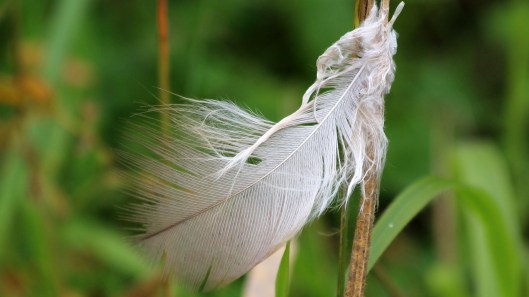
Feather: Noun; any of the flat appendages growing from a bird’s skin and forming its plumage, consisting of a partly hollow horny shaft fringed with vanes of barbs (Oxford Dictionary).

180905 feather (1)

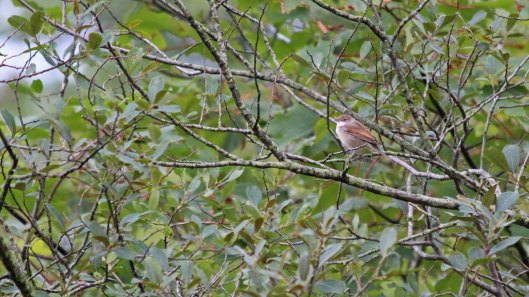
I often come across discarded feathers when I’m out walking and try to guess which birds they’ve come from, though, unless they’re very distinctively patterned, that can be virtually impossible. Sometimes the feather just has to come home with me … like these three below. I think the bottom one’s probably from a Pheasant – not sure about the other two.
180905 feather (5)

Two in two days

Tags

, , , ,

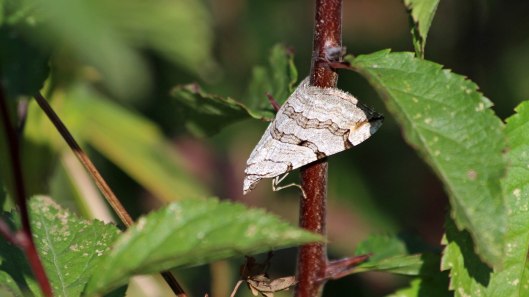
I’d only ever seen this beautifully patterned moth once before so it was a treat last week to see two of them on two consecutive days. Despite having a guide book, I always find moths difficult to identify but this one, the Treble-bar (Aplocera plagiata), lives up to its name rather nicely. Having said that, there is a chance these could be Lesser Treble-bars but they are much less common so I’m assuming they’re not (and I wasn’t able to check the ends of their abdomens to be sure!).

180904 treble bar (1)

These are probably second generation moths, the first having emerged, mated, laid, munched, pupated during May and June, and the second now going through that process during August and September.

180904 treble bar (2)

Flax

Tags

, , , ,

When I was walking through Cosmeston on Saturday, I was reminded that the plant name Flax can mean very different things to different people. In New Zealand, my homeland, Flax is a hefty plant, with thick leathery sword-shaped leaves that will quickly blunt even the sharpest secateurs and tall flower spikes full of a delicious nectar that is the particular favourite of the beautiful Tui. The traditional Flax species is Phormium tenax, though nowadays there are many cultivars in a wide range of colours and sizes.

180903 New Zealand flax (2)

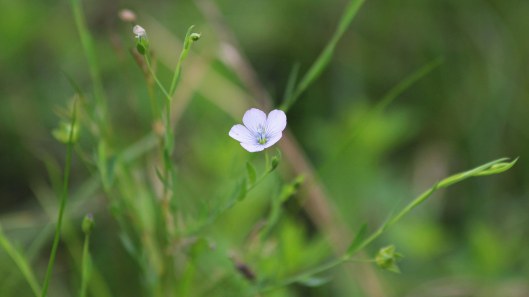
The Flax I see when I’m out wandering in the British countryside couldn’t be more different from the Kiwi version. It is Linum usitatissimum, a small delicate plant, with beautiful pale blue flowers. Despite its seemingly insubstantial structure, the fibres of this plant are used to make linen and that is how the New Zealand plant got its name. According to the Eden Project website:

When Captain James Cook, the great navigator, and Joseph Banks, the great botanist, arrived in New Zealand in 1769, they noticed the native Maori people were wearing a fine cloth similar to linen made from this plant [Phormium tenax]. Linen is made from flax, so this plant became known as New Zealand flax.

180903 British flax (3)

Birding out the window: Collared doves

Tags

, , , , ,

180902 collared dove (1)

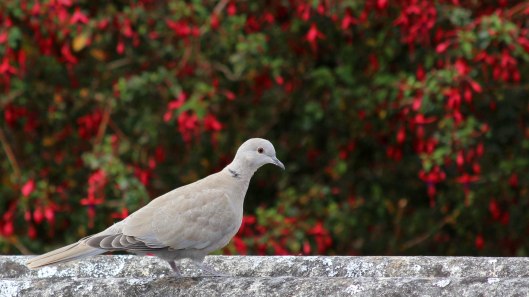
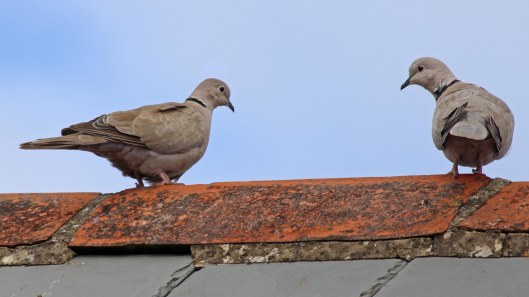
Sometimes you don’t even have to leave home to watch wildlife, even when you live in a first-floor flat with no garden. These two beautiful Collared doves were visiting the garden of a neighbour across the back lane. Although I can’t see them, this kindly person obviously has bird feeders that are always kept topped up with delicious bird treats, as quite a variety of birds visit the garden on a regular basis.

180902 collared dove (2)

I wonder if they’re speculating about whether I also have food for them?

More migrants passing through

Tags

, , , , , , , , , , , , ,

My local country park, Cosmeston Lakes, has been awash with migrating birds this past week. And it’s not just me getting better at finding them – according to birders who’ve been checking the area much longer than I’ve lived nearby, this has been a bumper year for sightings.

180901 Redstart female 2408180901 Redstart male 2408

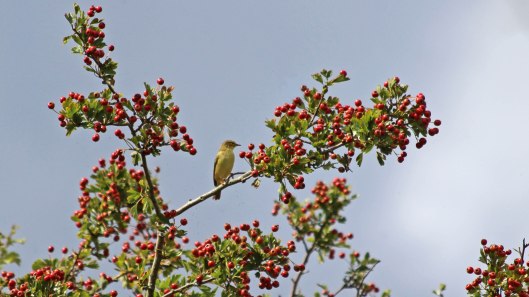
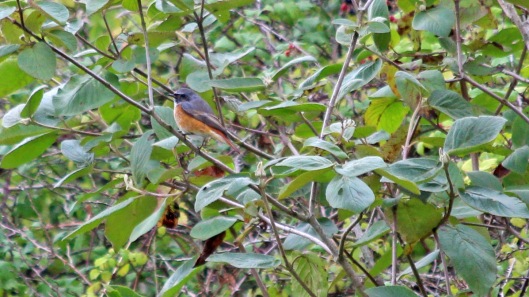
On 24 August I found two Redstarts, a male and another that may have been a female or an immature bird that hadn’t yet developed its full adult colouration.

180901 wheatear 2408

Also on the 24th I had a very fleeting view of a Wheatear that popped up from grass to fencepost, then was off in the blink of an eye.

180901 whinchat 2708

On the 27th my birding friend Della texted me to say she’d found a Whinchat. That was the fastest I’d ever walked to Cosmeston and, luckily, the bird waited for me – and, in fact, stayed around most of the week so I saw it several times.

180901 common whitethroat

180901 chiffchaff180901 willow warbler

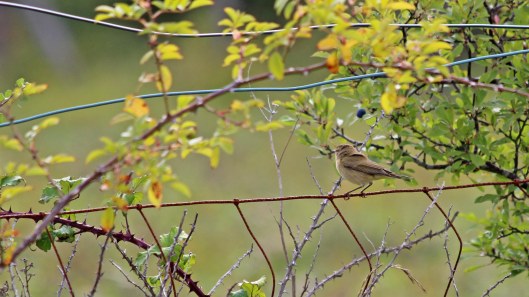
During my frequent visits to Cossie this week, I’ve seen ones and twos of Whitethroat and Chiffchaff, and tens of Willow warblers. These are the ones I spotted on the 30th.

180901 redstart 2908

Also on 30 August, I spotted another Redstart and, from the dark head colours, I could tell this one was definitely a male.

180901 pied flycatcher

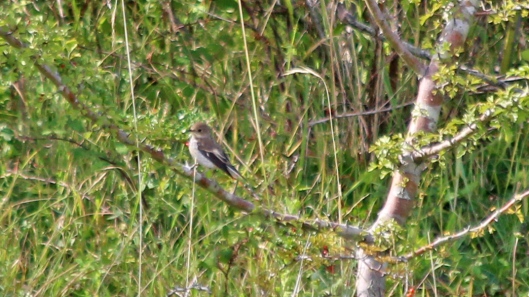
The week ended with a bang! My birding friend, Graham, let me know that he’d seen a Pied flycatcher with a small group of Spotted flycatchers, a most unusual visitor. Luckily, I was on the coastal path heading homeward so was able to divert towards Cosmeston and, with Graham’s help, got distant views of this beautiful little bird catching flies along the tree line. What a stunning week it has been!

On the scabious

Tags

, , , , , , , , , ,

180831 devil's-bit scabious (1)

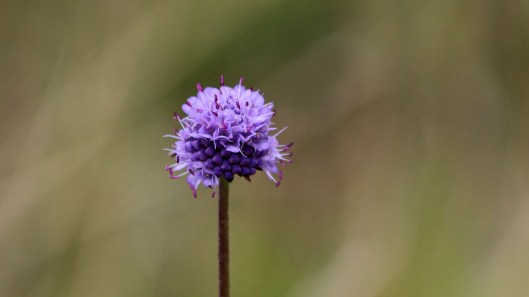
Devil’s-bit scabious (Succisa pratensis) has a beautiful flower that paints the wildflower meadows at Lavernock Nature Reserve in shades of purple lusciousness and provides some very welcome late summer nectar and pollen to a host of insects, particularly bees, flies and butterflies.

And that name? Well, the story goes that the devil was not pleased that the plant’s medicinal properties were healing the skin conditions of people suffering from bubonic plague and scabies so, in a fit of rage, he tried to kill off the plant by biting off the ends of the plant’s roots. Ever the party pooper!