The wise wagtail

Tags

, , , , ,

180423 Pied wagtail (1)

A baby watched a ford, whereto
A wagtail came for drinking;
A blaring bull went wading through,
The wagtail showed no shrinking.

A stallion splashed his way across,
The birdie nearly sinking;
He gave his plumes a twitch and toss,
And held his own unblinking.

Next saw the baby round the spot
A mongrel slowly slinking;
The wagtail gazed, but faltered not
In dip and sip and prinking.

A perfect gentleman then neared;
The wagtail, in a winking,
With terror rose and disappeared;
The baby fell a-thinking.

~ ‘Wagtail and baby’, Thomas Hardy (1840-1928), a comment on how the natural world is in harmony with itself but ‘with terror rose’ at the approach of man.

‘Ups a daisy’

Tags

, , , , ,


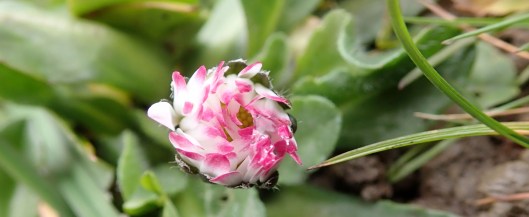
180422 daisy (1)

Nature is so interwoven in our lives that we sometimes don’t stop to think where the everyday expressions we use have come from.

‘to be as fresh as a daisy’ – to be keen, enthusiastic and ready to go, after relaxation or a good refreshing sleep. This saying apparently comes from the Old English version of daisy, which was ‘day’s eye’, a reference to the way its petals close at night and reopen afresh the next morning.

‘Whoops a daisy’ or perhaps ‘oops a daisy’ or ‘ups a daisy’ – it seems there are many spelling variations for this phrase, which was originally used to encourage children to get up off the ground after a fall and is now more generally used as an exclamation following a mistake or accident.

‘to be pushing up daisies’ – a euphemism for being dead and buried, and thus helping to the fertilise the daisies that grow above the ground in which we lie.


World Curlew Day

Tags

, , , , ,

I consider myself extremely fortunate to be able to see the Curlew (Numenius arquata) quite frequently during the winter months as the birds graze along the seashore and in adjacent playing fields at a seaside town close to where I live in south Wales. But the Curlew is in trouble. Due to changes in the habitat management of its breeding grounds and possibly to an increase in predatory mammals like foxes, the Curlew population has seen worrying declines in recent decades and the bird is now an amber-listed species in Britain.

180421 curlew (1)

Today, 21 April, is World Curlew Day, a day not only to celebrate all the various species of Curlew but also to recognise that these birds are threatened all over the world, and to focus on the research, conservation programmes, and support initiatives needed to ensure their continued survival.

180421 curlew (2)

This particular date was chosen because of the Curlew’s special link with Wales. A post on the Wader Study Group website explains:

April 21 was chosen to be World Curlew Day because of a delightful, traditional Welsh tale that identifies the first curlew conservationist. St Beuno, was a 6th century abbot from Wales. Legend has it he was sailing off the coast when he dropped his prayer book in the sea. A curlew flew over and rescued it and took it to the shore to dry. The grateful St Beuno decreed that from then on, the bird be given special protection and that its nest must be difficult to find; which is indeed the case.

You can read more about the RSPB’s Curlew Recovery programme here, and about the international Curlew situation on the BTO website here. There is also a World Curlew Day Facebook page here and a Twitter page here.

180421 curlew (3)

Grandmother’s nightcap

Tags

, , , , , , ,

180420 wood anemone (4)

I’m not sure my grandmother ever wore a nightcap quite like this but Grandmother’s nightcap is just one of the vernacular names for the luminous Wood anemone (Anemone nemorosa). Others include Windflower, and, in parts of Deryshire, where a moggie is a mouse not a cat, Moggie nightgown, as well as Smell foxes, due to the musky smell a large colony of Wood anemones will sometimes emit.

180420 wood anemone (1)180420 wood anemone (2)180420 wood anemone (3)

Birding at Craig Cerrig Gleisiad and Garwnant

Tags

, , , , , , , , , , ,

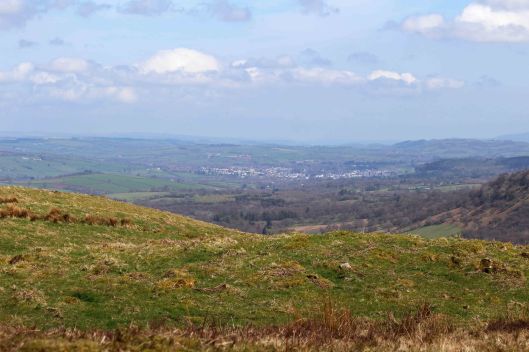
Derek the weatherman got the forecast absolutely right for our Glamorgan Bird Club trip yesterday: foggy and a bit mizzly until 10am, then the cloud lifted to leave clear blue skies and t-shirt weather – it almost felt like summer!
180419 Brecon in the distance

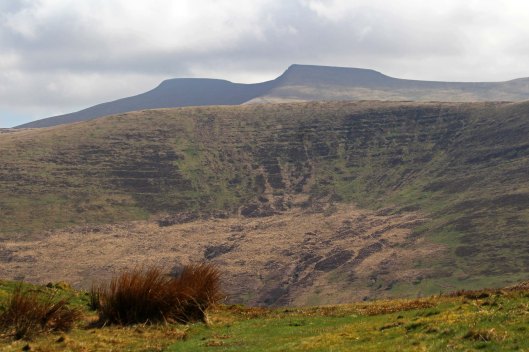
We twenty-two birding enthusiasts had headed north of Cardiff to the Brecon Beacons National Park – when the cloud lifted, we could see Pen-y-fan, at 2,907 feet (886m), Wales’s 10th highest mountain. The plan was to walk the lower slopes of Craig Cerrig Gleisiad National Nature Reserve, in the hope of seeing Ring Ouzels, Whinchats, Redstarts, Wheatears and possibly Pied Flycatcher, amongst other birds.
180419 Pen-y-Fan

Because of the damp weather and low cloud, we began the day by exploring the woodland around the Youth Hostel across the road from the reserve and immediately had superb views of Pied flycatchers, and not only male birds but also a female who was making a start on nest building. A Tree pipit sitting high on bushes in the neighbouring fields was also a year tick for me.

After a spot of early lunch back at the cars, we climbed the slopes into the dramatic landscape of Craig Cerrig Gleisiad, the southernmost glacial boulder field in Britain. Here we had Willow warblers singing all along the stream, and frequent views of Stonechats and Meadow pipits.

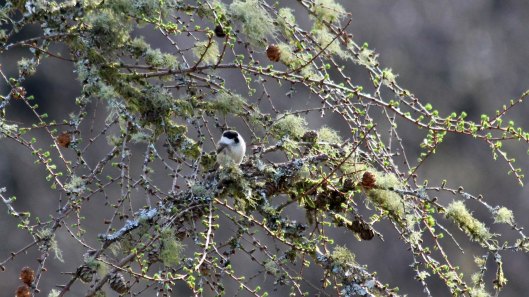
Some of the party went further up the track and were rewarded with views of distant Ring ouzels – I wasn’t one of the lucky ones, but it was great that others got on to them. Then, after regrouping back at the cars, some of us took a small detour on the way home for a quick visit to the Garwnant Forestry Centre, where we saw Grey wagtails and Dippers on the river and a Red kite and Sparrowhawk overhead. And we were very lucky that the resident Willow tit showed well for us near the Centre’s car parking area. It was another splendid day’s birding!

My species list for the day was: Red Kite, Sparrowhawk, Buzzard, Peregrine, Lesser Black-backed Gull, Woodpigeon, Crow, Raven, Blue Tit, Great Tit, Coal Tit, Willow Tit, Willow Warbler, Blackcap, Wren, Nuthatch, Treecreeper, Dipper, Blackbird, Song Thrush, Robin, Pied Flycatcher, Redstart, Stonechat, Dunnock, Grey Wagtail, Pied Wagtail, Tree Pipit, Meadow Pipit, Chaffinch, and Siskin. And other birds seen (but not by me) were: Kestrel, Marsh Tit, Wheatear, Skylark, Swallow, Goldcrest, Ring Ouzel, and Linnet.

180419 Willow tit

Wild words: bud burst

Tags

, , , , , ,

I love this little miracle that happens every spring, and I couldn’t resist having ‘bud burst’ as this week’s words after seeing many beautiful examples when I was out walking on Monday.

During winter, deciduous trees look so bare and barren, yet, safely enclosed within the protective cases of their ‘bud scales’, tiny leaves are beginning to grow. Then, once temperatures start to warm up, the trees’ roots absorb more water and the sap begins to rise. The leaf buds grow and swell to the point when their scales just can’t contain them any more and then, one day …

Shazam! The buds burst out and begin to expand and soak up the spring sunshine!

OLYMPUS DIGITAL CAMERA

A moth trap

Tags

, , , , ,

I don’t have a garden so I can’t have a moth trap, and I admit to getting the teensiest bit envious of friends who do have traps. But I get to see their finds on Facebook, and I will also readily admit that learning to identify the 2500 species of moth found in Britain might just do my head in, so perhaps not having a moth trap is really a good thing! And, anyway, I seem to have discovered a very convenient place to find the occasional moth, a tall alleyway between local houses that has its very own street lamp.

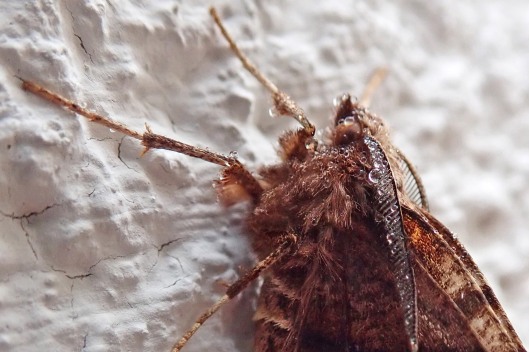
I walk this way often but hadn’t noticed moths until the day before yesterday – perhaps it hasn’t been warm enough before. And, as you can see from the head of this first moth (photo below), it was a damp, foggy morning and the moth was still to warm up so couldn’t fly away. This is one of the first of two generations of Early thorn (Selenia dentaria) to breed throughout much of Britain each year. (To find out more about the Early thorn, click here).

OLYMPUS DIGITAL CAMERA

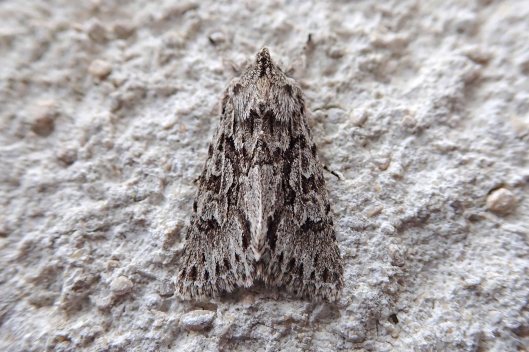
The second moth on the alley wall was this dapper delight, an Early grey (Xylocampa areola), another common and widespread moth, whose caterpillars feed on Honeysuckle. (More on the Early grey here.)

OLYMPUS DIGITAL CAMERA

Getting the flutters

Tags

, , , , , , , , ,

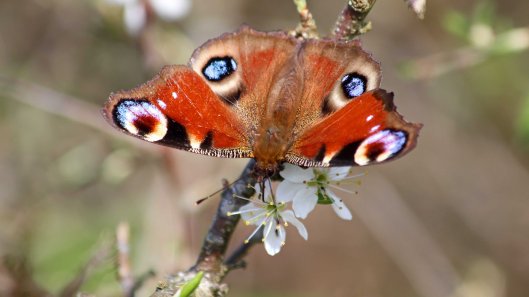
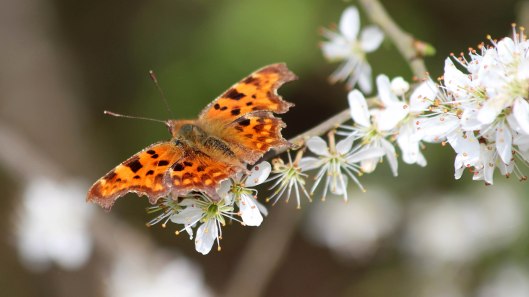
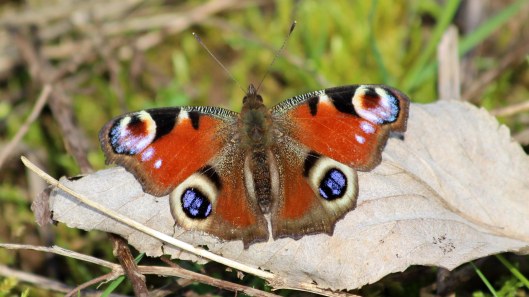
Spring came to south Wales on Saturday at approximately 3.30pm and lasted about 4 hours. (It’s supposed to return again next week and stay a few days but, in the constantly changing contemporary climate, it pays not to count your chickens – or, maybe that should be, your rays of sunshine!) Amazingly, as soon as the sun appeared, so too did the butterflies. It was like a door had been opened – where had they been hiding, I wonder? In the space of about 30 minutes, I saw Peacocks and Commas, several never-settling Brimstones, a distant large-or-small White, and my first Speckled wood of the year. Oh, and a couple of Bee-flies – not butterflies, obviously, but the cutest wee flying things you ever did see so I’ve included one here. It was delightful!

180416 1 Peacock180416 2 Comma180416 3 Peacock180416 4 Comma180416 5 Speckled wood180416 6 Bee fly

On the verge

Tags

, , , ,

Are you up for a challenge? Do you like wildflowers? Well, then get following Wildflowerhour on Twitter and / or Facebook, and join in the weekly wildflower challenge fun. Not only will your newsfeed be filled with glorious colour every Sunday night from 8 to 9pm (and throughout the week, as well) but I guarantee you will also learn something new each week.

180415 The verge

The verge

This week’s challenge was titled ‘On the verge’, and we were challenged to see what wildflowers we could discover on roadside verges. Rather than a busy highway, I chose a quiet local side road at Penarth Marina – I already get lots of odd looks for taking a close look at flowers and insects, so tried to avoid too much attention. The Marina area is a relatively new environment, my verge an area that had previously been a dock, where ocean-going ships brought goods from near and far to Cardiff, but this particular dock was filled with household rubbish and turned into a park back in the 1980s. So, I didn’t find anything particularly exciting on my verge but it was interesting to see what plants had become established.

180415 Common cornsalad Valerianella locusta

Common cornsalad (Valerianella locusta)

180415 Creeping buttercup Ranunculus repens

Creeping buttercup (Ranunculus repens)

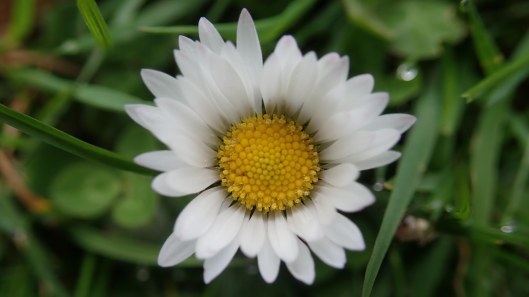
180415 Daisy Bellis perennis

The ever reliable Daisy (Bellis perennis)

180415 Dandelion Taraxacum sp and slug friend

Partly devoured Dandelion (Taraxacum sp.) and slug friend

180415 Field Wood-rush Luzula campestris

Field Wood-rush (Luzula campestris)

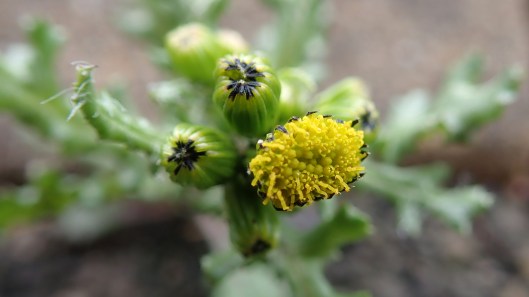
180415 Groundsel Senecio vulgaris

Groundsel (Senecio vulgaris)

180415 Ribwort plantain Plantago lanceolata

Not quite open yet, but close – Ribwort plantain (Plantago lanceolata)

180415 Wavy Bitter-cress Cardamine flexuosa

Wavy Bitter-cress (Cardamine flexuosa)

Andricus kollari, maybe

Tags

, , , , , , ,

180414 Andricus kollari (3)

If you’re a regular around here, you may recall that in August 2017, I posted a mini-series of posts about some of the galls you can find on Oak trees, which included the Oak Marble gall (see the post here). You might also remember that in late October, I was excited to discover a creature had hatched out of one of my galls and I initially thought it was the gall causer, a minute wasp called Andricus kollari. It was not – turns out it was one of the 29 other species of hymenoptera (bees, wasp, ants and sawflies) that can also be found living in an Oak marble gall (more on that here) (and I never did identify it).

Well, this time, maybe, just maybe, I have seen the gall-causing wasp itself, A. kollari. A while ago, while out walking, I found a small Oak sapling that was absolutely covered in marble galls and, when I found one that had no holes in it, I couldn’t resist bringing it home. The tiny wasp you see in these photos recently hatched out of this gall and the size of the hole it made, plus comparisons with online photos, has led me to think that this time I may have seen the gall causer. I couldn’t be one hundred percent certain of my identification without killing the wasp and getting an expert to check it but I didn’t want to do that. And, of course, I could be totally wrong yet again. In the meantime, the wasp has been returned to the area where I found it so, weather permitting, it can continue its life cycle.