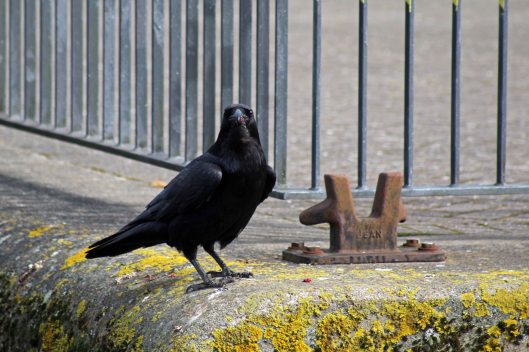
Cavorting at Cossie

Tags

, , , , , , , ,

180503 Brimstone & Comma

I think it’s fair to say it’s not been much of a Spring so far, weather wise at least. It’s often been cool, frequently wet, and the sun has been elusive. I’m hoping Monday, the last day of April, was a hint of days to come – though there was a cool wind, the skies were mostly blue and it was warm in sheltered spots. Those conditions at Cosmeston persuaded the butterflies to come out to play, and I saw the highest numbers so far this year: 7 Brimstones, 2 Orange-tips, 2 Speckled woods, 2 Commas and 4 Peacocks. And it was such fun to be cavorting like a crazy woman again, flitting across fields and dancing along hedgerows to try to get photographs.

180503 Brimstone (2)180503 Comma180503 Orange-tip180503 Peacock180503 Speckled wood

Wild word: phototaxis

Tags

, , , , , , ,

Phototaxis: noun; biology; the bodily movement of a motile organism in response to light, either towards the source of light (positive phototaxis) or away from it (negative phototaxis) (Oxford Dictionary).
I hadn’t realised that some creatures suffer from negative phototaxis but, apparently, cockroaches are repelled by light – I thought they were just scurrying away from the humans who want to kill them. The example of positive phototaxis (i.e. an attraction to a light source) that immediately springs to mind is the moth – I’m sure we’ve all noticed them fluttering around a bright light at night – though there are many other examples. One of these is the insect in my photos: it’s one of the large family of non-biting midges (Chironomidae species). I found perhaps 30 of them on a wall near a street light recently.

April on the Ely embankment

Tags

, , , , , , ,

I thought I’d avoid an April Fool’s Day visit to ‘my patch’ in case a long-extinct Dodo should suddenly appear before me (!) so my first wander this month was on 2 April.

180501 turnstones (2)

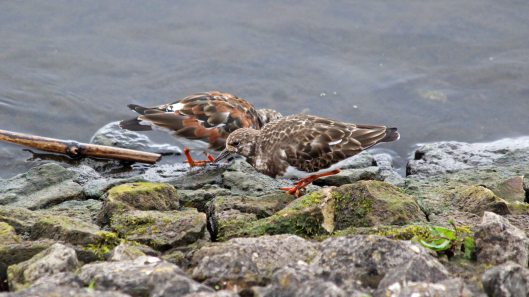
There were no particular surprises lurking, just the standard avians – two Pied wagtails and one Grey, and two Redshanks, but the treat was a total of 15 Turnstones, many now showing signs of their change to summer plumage. I assume these birds were enjoying a short stopover in Cardiff Bay before continuing their journey north. According to information on the Joint Nature Conservancy Committee website, the Turnstones that winter on the coasts of north-west Europe (including Britain and Ireland) are part of the Western Palearctic population and breed on Canada’s Ellesmere Island, and in north and east Greenland.

180501 turnstones (1)

A good comparison: lower bird changing to breeding plumage, upper bird in winter dress.

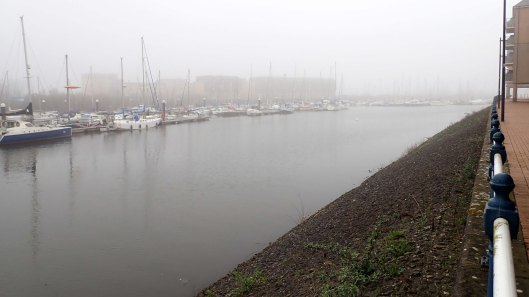
The rest of April reads pretty much like that first visit – the occasional one or two Redshanks, the occasional one or two Pied and Grey wagtails, and Turnstone numbers in the low to mid teens. The weather varied considerably, from damp and foggy winter-like gloom to brilliant blue skies with the water so still you could perfect reflections mirrored in it, but the bird numbers and varieties remained fairly static.

180501 weather fog180501 weather fine

So, what I think I will do in subsequent months is expand my monthly catch up to include the whole of Cardiff Bay. I walk right round on a regular basis and, as the habitats are more varied, there is more chance of spotting something a little more interesting. Let’s see what May brings …

180501 turnstone & redshank

180501 turnstones & redshank

Redshank and Turnstones: I still love ’em!

April at Cosmeston

Tags

, , , , , , , , , , , , ,

Easter Sunday – April the 1st this year – is not a particularly smart day to go to Cosmeston to spend a quiet, peaceful time with Nature, but I wanted to stretch my legs and public transport on Sundays is quite restricted. So, I passed through Cosmeston on one of my circular local circuits, avoiding the main paths, taking the fields less trodden. I still managed to spot a Long-tailed tit (below left) nest-building – it’ll be cosy with a few more feathers like that, and, with the help of my friend John, I heard and then spotted my first Willow warbler of 2018 (below right), a good start to the month.

180430 3 blackcaps

5 April  Another quick walk-through, to avoid the school holiday madness, but I did pause at the place I’d recently spotted a Hawfinch, to see if I could hear or see it. No luck with that but I did spot my first Blackcaps of 2018 (above), and there were Willow warblers and Chiffchaffs (below) aplenty!

180430 4 chiffchaff

8 April  Once again, I passed through Cosmeston as part of a longer walk, though I did linger for a short time by the west lake where I got talking to a fellow birder. From there, I had distant views of two Buzzards on the far shore – were they investigating a nest site? – and I got a fleeting glimpse and photos of a mysterious mammal swimming rapidly through the reeds. Was it a Water vole, a Stoat or a Mink? Debate raged on Twitter and Facebook when I posted photos and requested opinions but the jury is still out on its identification.

11 April  Though the heavy rain of the previous night and morning had cleared, cloud cover was thick and low, making for a very gloomy walk around Cosmeston, and it was almost as if the birds were experiencing a similar dullness. Although I spotted several Blackcaps and many of the regulars (Blackbirds, Dunnocks, Robins, Chaffinches, etc), bird song was generally subdued.

Highlights were my first Coot chicks of the season, with the attentive parents feeding three chicks near the former bird hide site on the west lake, and Swallows swooping and diving over both lakes. I tried for about 15 minutes to get photos of them but it was very difficult to keep up with their super speedy aerobatics, so a silhouette will have to do. There’s no mistaking that forked tail though.

I passed through Cosmeston again on 16 April, but saw nothing particularly noteworthy, and then had a break to see other sites and while a friend was visiting. My last visit for the month was today, 30 April. Though a cool wind was blowing it was fine, and warm in sheltered spots. And, though I could hear bird song all around, with the trees now rapidly greening, we’ve reached that time of year when the birds pretty much disappear behind the foliage.
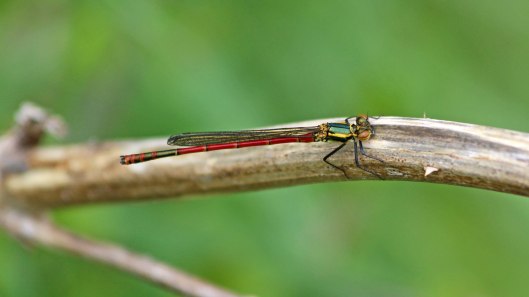
180430 9 Large red damselfly

The good news is that this is also the time of year when the other flying creatures take over: today I saw my first damselfly of the year, a Large Red; the butterflies were out in numbers: Brimstones, Peacocks, Commas, a Large white, a couple of Orange-tips and several Speckled woods (I’ll do a separate post for those in a few days); and I also saw my first shieldbug of 2018, a Hawthorn. It was a lovely walk!


OLYMPUS DIGITAL CAMERA

Walking on water

Tags

, , , ,

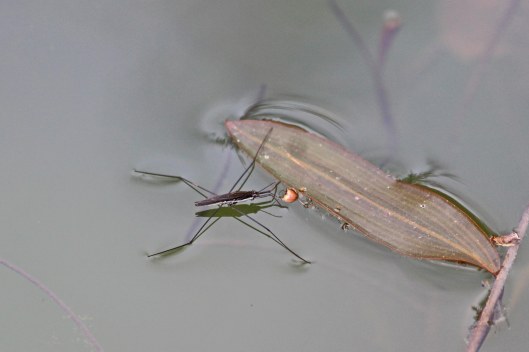
When I took this photo of a pond skater flitting about on a pond at a local nature reserve, I thought it would be easy to identify – ever the optimist, me! Then I discovered that there are, in fact, nine species of pond skater in Britain, though I think this is most likely to be the Common pond skater (Gerris lacustris).
180429 pond skater

I was fascinated to learn that this bug has water-repellent hairs on its feet and that’s how it’s able to ‘walk’ over the surface of still water. It uses its long middle legs to ‘row’ and its hind legs trail along behind like a kind of rudder. Amazing!

Moor babies

Tags

, , , , , , ,

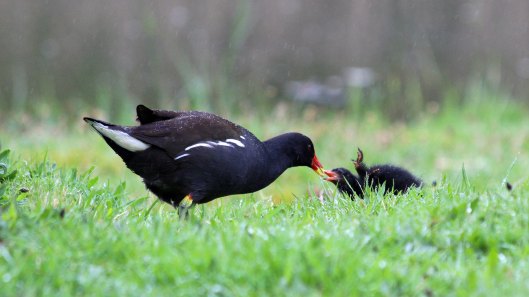
All was peaceful as my friend Jill and I sat in a hide at Forest Farm Nature Reserve earlier this week. Light rain was falling and, though we could hear bird song in the reeds and surrounding trees, the only birds we saw were the cheeky little Great tits and Robins coming to feed on seed left by previous visitors to the hide.

180427 Moorhen chicks (1)

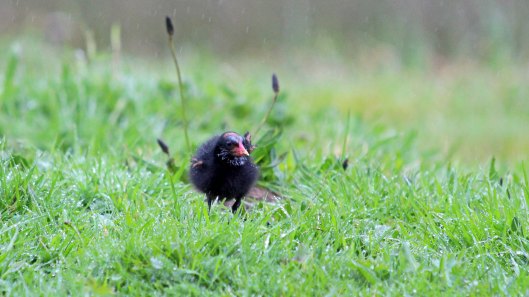
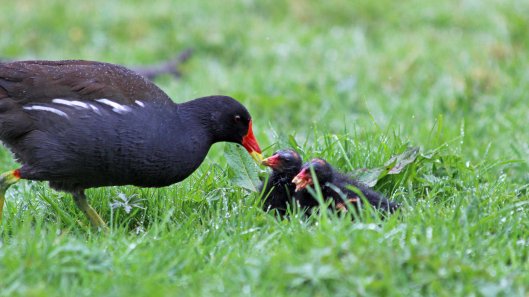
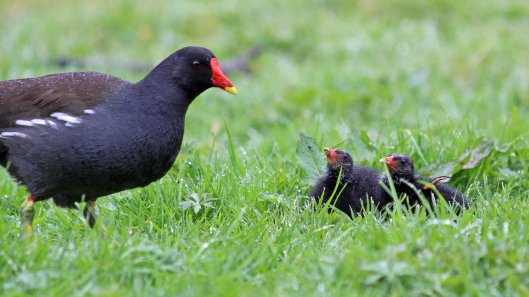
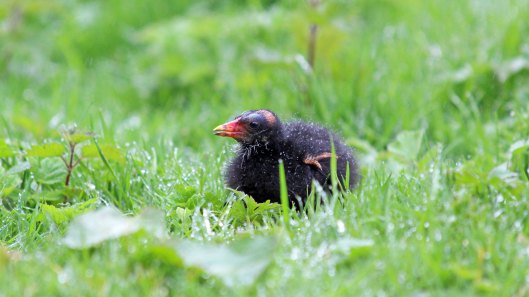
Suddenly, a Moorhen appeared over the lip of the hillock in front of us, making a determined beeline for the front of the hide to harvest the seed that had been thrown out on the grass. The bird wasn’t at all hesitant and nervous … and then we saw why, as first one, then another little bundle of black fluff appeared over the hillock behind. We eventually counted five Moorhen chicks, and both parents emerged to help feed their ravenous youngsters. They were so delightful and entertaining to watch.

180427 Moorhen chicks (2)180427 Moorhen chicks (3)180427 Moorhen chicks (4)180427 Moorhen chicks (5)180427 Moorhen chicks (6)180427 Moorhen chicks (7)180427 Moorhen chicks (8)

A host of local names

Tags

, , , , ,

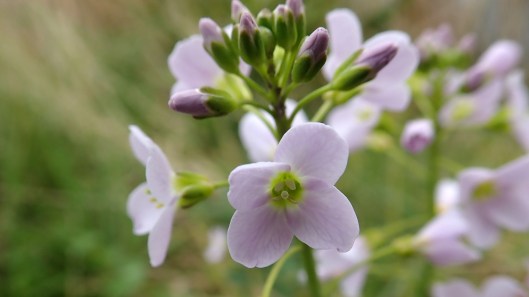
‘Any flower that comes with a host of local names is likely to be of human use, either as food or as medicine’, writes John Lewis-Stempel, in his truly wonderful book Meadowland: The Private Life of an English Field (Doubleday, London, 2014; highly recommended, if you haven’t already read it). And he goes on to mention just a few of the local names that have been given to Cardamine pratensis, namely Cuckooflower (because the pale pink flowers tend to appear around the same time the Cuckoo returns to Britain from its winter sojourn in warmer climes); and Lady’s smock, Lady’s gloves, and Lady’s mantle (due to the flower’s resemblance to those articles of clothing) (though I don’t really see the gloves).

Lewis-Stempel also notes the vernacular Meadow bittercress, so named because ‘the needle-thin leaves … make a peppery edible that used to be sold on medieval market stalls’, which I never knew before. I also didn’t realise that Cuckooflower is the food plant of the caterpillar of the Orange-tip butterfly – reason enough for me not to eat those peppery leaves as I’d love to see more Orange-tips fluttering around.

Cuckoo bees

Tags

, , , , , ,

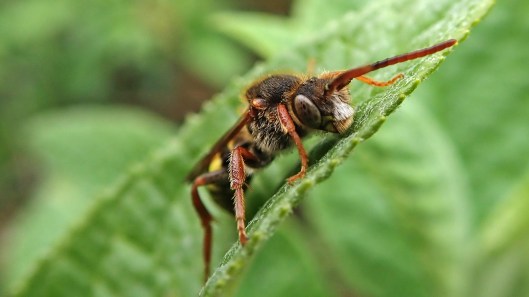
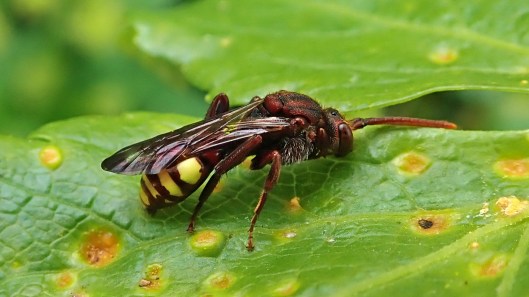
Is it a bird? Is it an insect? Well, it’s definitely an insect but one that’s pretending to be something it’s not in order to act as a kleptoparasite on other insects, hence the name cuckoo. The ‘cuckoo bees’, the Nomada species, consist of some 850 species of bee worldwide, over 30 of which can be found in Britain. Rather than collect pollen, they lay their eggs in the nests of other bees and let those bees do all the pollen-collecting and egg-rearing.

I thought I’d got reasonably good photos of these two Nomada bees but they are notoriously difficult to identify so, according to the experts I consulted, the bee in the photos above may perhaps be Nomada ruficornis and that in the photos below could be Nomada marshamella or N. goodeniana. Despite their parasitic habits, I still find these bees attractive.

180426 Nomada marshamella or goodeniana (2)


Wild word: aposematism

Tags

, , , , , , ,

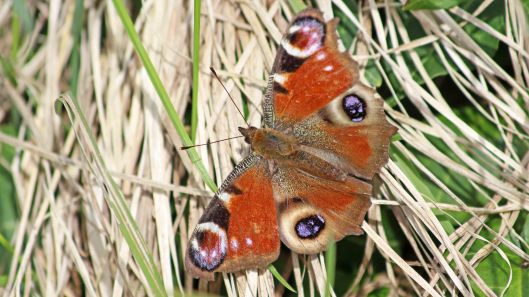
Aposematism: noun; from the Greek ἀπό apo meaning ‘away’ and σῆμα sema meaning ‘sign’; a term developed in the 19th century, reputedly by Edward Bagnall Poulton (a British evolutionary biologist), for the bright colorations or conspicuous markings that creatures use to warn or repel predators. Typical examples are things like bright yellow frogs or orange-and-black-striped caterpillars, whose colours serve as a warning to potential predators that they taste bad or might even be poisonous, and, butterflies, like the Peacock shown here, with big bold eye-type markings that make them look larger than they really are.

180425 Aposematism Peacock butterfly

An unkindness of Ravens?

Tags

, , , ,

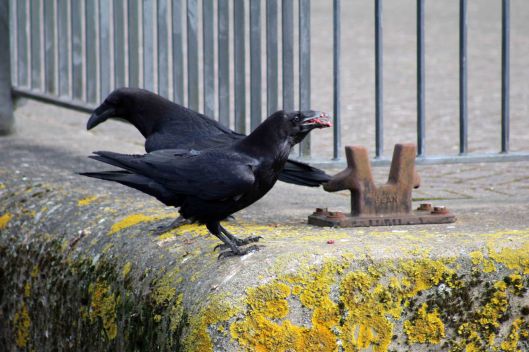
For the avoidance of doubt, the Raven (Corvus corax) is huge! And, no doubt, it is partly that size that accounts for the Raven’s evil reputation, together with its black colour, and its penchant for eating almost anything, animal or vegetable. In ancient Greece, it was feared as the bird that arrived soon after a battle to feed on the corpses and so became a symbol of death, symbolism that has continued throughout history in all manner of myths, legends and folklore.

180424 raven (1)

This negativity is also reflected in the collective noun for a group of Ravens, an unkindness, but, personally, I think we humans have done these beautiful birds a disservice.

180424 raven (2)

A pair of Ravens lives locally and can often be seen around the nearby cliffs and on the Cardiff Barrage, so I get to observe them quite often.

180424 raven (3)

Recently, I watched what I presume was the male bird bring a piece of fruit as a gift for his mate to eat, an action that is probably a form of pair-bonding behaviour. It was delicately done, rather sweet, and certainly not unkind, and so I have a soft spot for my local Ravens.

180424 raven (4)