Distant birds

Tags

, , , , ,

No doubt you will have realised how much I love birds, love looking for them, love finding them, love watching them and learning their ways, love getting good photographs of them. The latter, though, is not always easy, and for two days in a row I’ve seen some wonderful birds I don’t often see but both times they’ve been too distant to photograph well.

240425 whimbrel

Yesterday, at Sully Beach, it was Whimbrels, at least four of them, poking about in the piles of seaweed for crabs and other small morsels of food. But I hadn’t timed my visit very well – the tide was ebbing and already well out so the birds were distant. (I’m planning another visit or two in the coming days when the tides are higher so fingers crossed for better images.)

240425 common scoter

And today, in Cardiff Bay, two Common scoters popped in for a visit. These are birds I’ve only ever seen three times before and that was back in 2019, so seeing them was a real treat. Sadly, they were always distant and the weather was dreich: big dark clouds blowing a cool wind across the water, with frequent squalls.
Furry and cute

Tags

, , ,

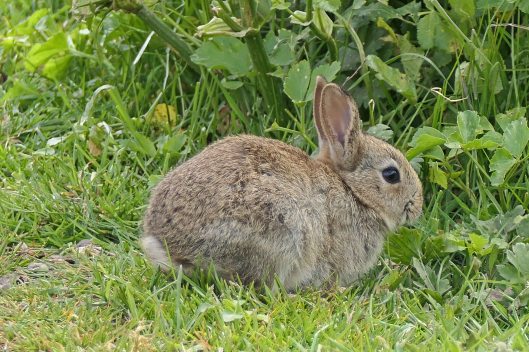
I was planning a different subject for today’s post but I just had to share this little bundle of furry cuteness from my morning walk. It was far too blasé about me strolling along the path towards it – the location is much used by dog walkers so is not very safe for unwary young rabbits. Let’s hope it learns quickly to be more cautious.

240424 bunny

Species 11

Tags

, , , ,

This gorgeous female (the spring females are more heavily marked than the males) was my first Green-veined white (Pieris napi) of the year. It occurred to me later that I should’ve watched her for longer as I’ve not yet seen any of this species’ eggs or caterpillars. I might start checking the larval foodplants they use – Cuckooflower, Garlic mustard, Hedge mustard, Wild Cabbage and Wild radish, amongst others – to see what I can find. If I find anything, I’ll report back.

240423 green-veined white

Leafminers : Coleophora lusciniaepennella

Tags

, , , , , ,

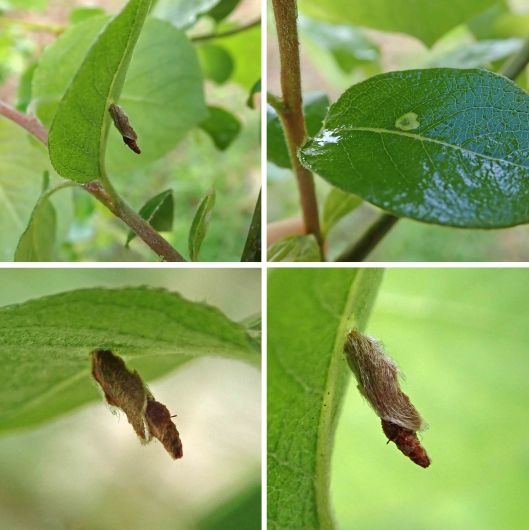
Last Wednesday I found my first active case-bearing moth larva of the year and it was a new species for me, the appropriately named Willow case-bearer (Coleophora lusciniaepennella), feeding, as its name implies, on Willow (one of the Salix species). There are not a lot of local records for this moth but Rob Edmunds of the British Leafminers website explained that these larvae feed up and disappear (to pupate) very quickly, so it seems a case of blink and you miss them. I was just very lucky. You can see the rather non-descript adult moth on the UK Moths website and find more about its larval stage on the British Leafminers website.

240422 Coleophora lusciniaepennella

My photos show the general location of the casebearer within the tree, what you see on the top side of the leaf, and views of either side of its cosy looking case.

Orchids are go!

Tags

, , , ,

It feels like true spring now – migrating birds rolling through, several butterfly species out and about, first damselflies flitting through the air, and now the first orchid of the season is in bloom. I hadn’t thought I’d find any orchids during my woodland walk yesterday so seeing several spikes of Early-purple orchid (Orchis mascula) was a real treat.

240421 early purple orchid

Seven damsels flying

Tags

, , , ,

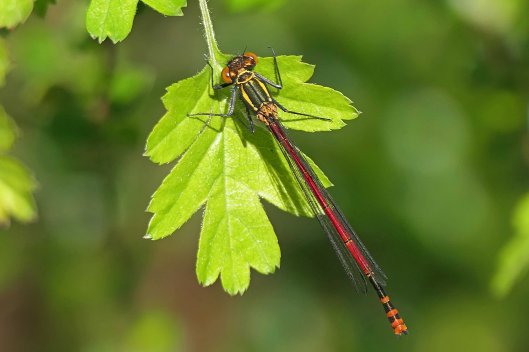
The odonata season has kicked off for me several days earlier than in previous years with the emergence locally of the Large red damselflies (Pyrrhosoma nymphula).

240420 large red damselfly (1)

The two shown here are from a total of seven of these little beauties I found in three different locations at Cosmeston Lakes Country Park on Thursday.

240420 large red damselfly (2)

Great suffering slime balls

Tags

, , , , ,

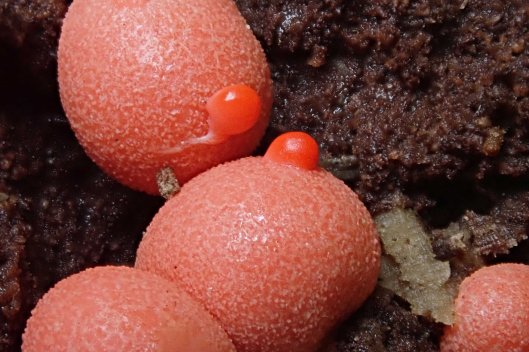
This fallen log was half covered in slime, balls and balls of orange-red-coloured slime. At first I thought they were all the same species but, after looking more closely at my photos, I think there are two. The majority were these Red raspberry slime balls (Tubifera ferruginosa).

240419 slime (1)

And the others were one of the Lycogala species of slime. Both looked delicious … but you wouldn’t want to eat them.

240419 slime (2)

A demanding duck

Tags

, , , , ,

Not content with quacking at me from the water below the boardwalk where I was standing, this very handsome male Mallard decided he would improve his chances of successfully begging for food by flying up and perching on the boardwalk’s handrail. First, he tried smiling at me – at least I think this is meant to be a smile …

240418 mallard (1)

When that didn’t work, he waddled carefully towards me and quacked very loudly …

240418 mallard (2)

Unfortunately for him, I didn’t have any food with me, but I did take the opportunity to take quite a lot of photos as he posed.

Sunday’s gift

Tags

, , , ,

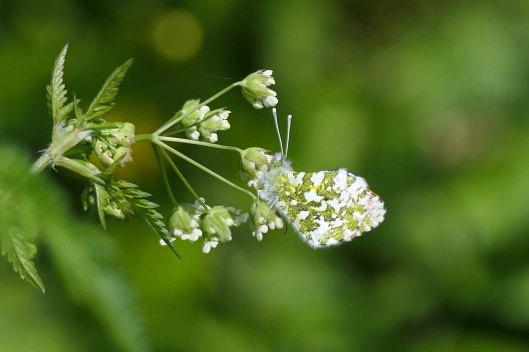
I was trudging slowly along a muddy path, trying not to slip (it’s happened before), so I wasn’t paying attention when my first Orange-tip butterfly (Anthocharis cardamines) of the year flitted up in front of me, disturbed from feeding on a flower of Herb Robert. Typically, it flew back along the way I had come, meaning I had to retrace my slippery steps while trying to keep an eye on where it landed once, twice, three times. By the time I got to the start of the path, the butterfly had disappeared and, though I lingered a while, it didn’t reappear.

240417 orange-tip

On my way home, I was more lucky and spotted my second Orange-tip of the year. I could easily have missed it, so well camouflaged was it amongst the lush new growth of Cow parsley plants, but the breeze had picked up and it was having to flap its wings just a little to hold on to its perch. The flash of its orange tips gave its location away.

Where’s Wally Whitethroat?

Tags

, , , , , ,

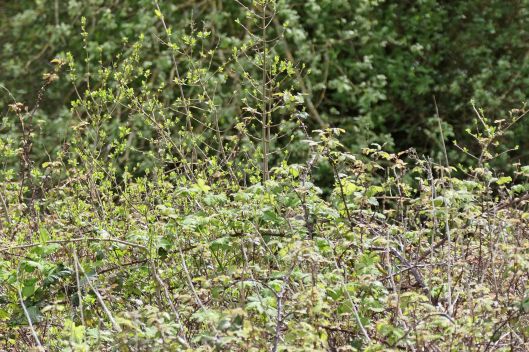
The Brits amongst you, and maybe other nationalities (who might know him as Waldo), will no doubt have heard of ‘Where’s Wally?‘, a series of puzzle books where the illustrator has ‘hidden’ the character Wally in a huge crowd of people. Well, in my version, instead of looking for Wally in a crowd, I was trying to pick out my first (Common) Whitethroat (Sylvia communis) from where it was joyously singing in a scrambled mass of bramble scrub. If you look carefully, you might just be able to spot its head.

240416 wheres wally whitethroat