• ABOUT
  • BIRDING 2018
  • Birding 2019
  • BLOG POSTS
  • Butterflies 2018
  • Resources

earthstar

~ a celebration of nature

earthstar

Tag Archives: bramble

The Blackberry man

10 Sunday Nov 2024

Posted by sconzani in autumn, plants, wildflowers

≈ Leave a comment

Tags

autumn colour, blackberries, bramble, Bramble autumn colour, Bramble berries, Bramble flowers

This post was prompted by my bumping in to ‘The Blackberry man’ during yesterday’s walk. I don’t know his name; he’s just a random stranger I got talking to two winters ago during a walk around Cardiff’s Grangemoor Park. I was picking a few Blackberries to eat, he was filling a small container to take home for his family. He’s an older man, originally from a Middle Eastern country, and doesn’t have great English, but we got by. And now, whenever we see each other at the park, we stop and chat for a few minutes.

Seeing him led me to look more closely at the Brambles. The majority of plants had already flowered, produced berries and the fruit that hadn’t been eaten had gone to seed but, scattered here and there amongst the plants, there were still a few flowers, and a few immature and ripe berries.
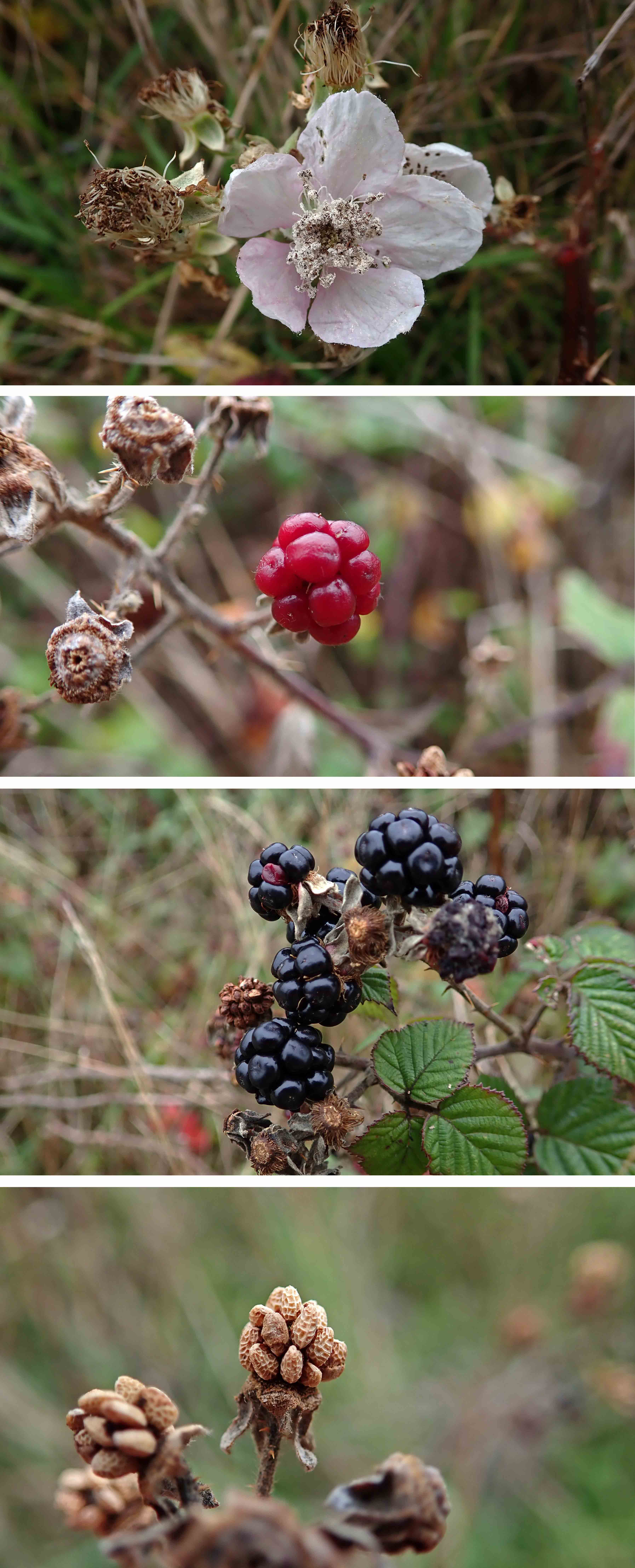
241110 brambles (1)

I also couldn’t help but admire the exceptional colour variations and intensity of colour displayed by the Bramble leaves as autumn progresses. So, thank you Blackberry man, for reminding me to look more closely at these often-overlooked plants.
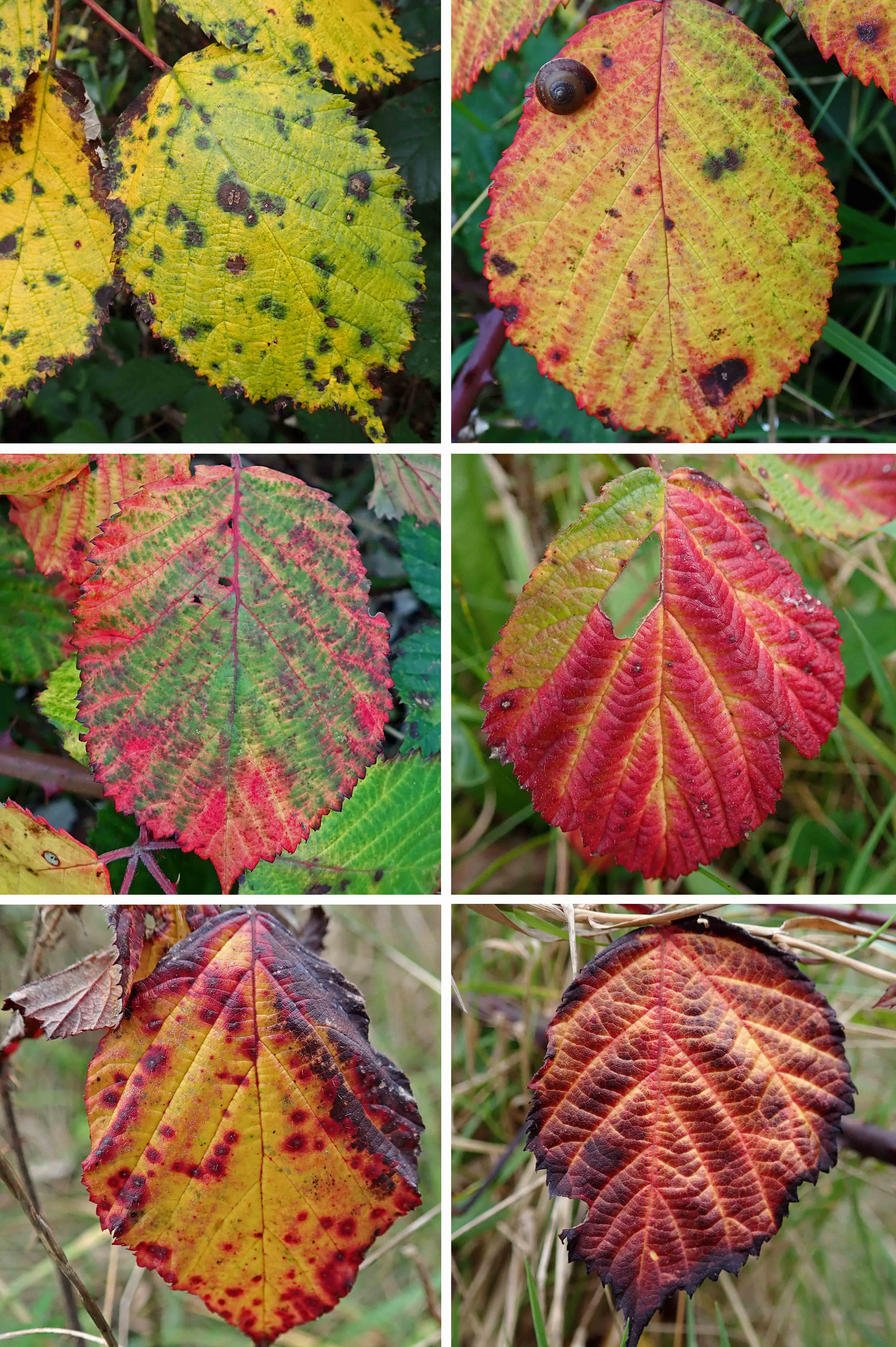
241110 brambles (2)

Like Loading...

Climbing plants

08 Sunday Sep 2024

Posted by sconzani in plants, wildflowers

≈ Leave a comment

Tags

bramble, British wildflowers, climbing plants, Field bindweed, Hedge bindweed, Honeysuckle, ivy, Meadow vetchling, Old Man's Beard

Last week’s challenge for Wildflower Hour on social media was to find climbing plants that were in bloom, and there were lots of wonderful examples of flora with a penchant for climbing. These are some I’ve found locally that are still in flower …

240908 bindweed hedge and field

The bindweeds – these are Hedge bindweed (top) and Field bindweed (below).

240908 ivy bramble

Ivy (it’s only just coming into flower in my area so this was difficult to find) and Bramble (most plants are now covered in delicious berries but I found a couple in bloom).

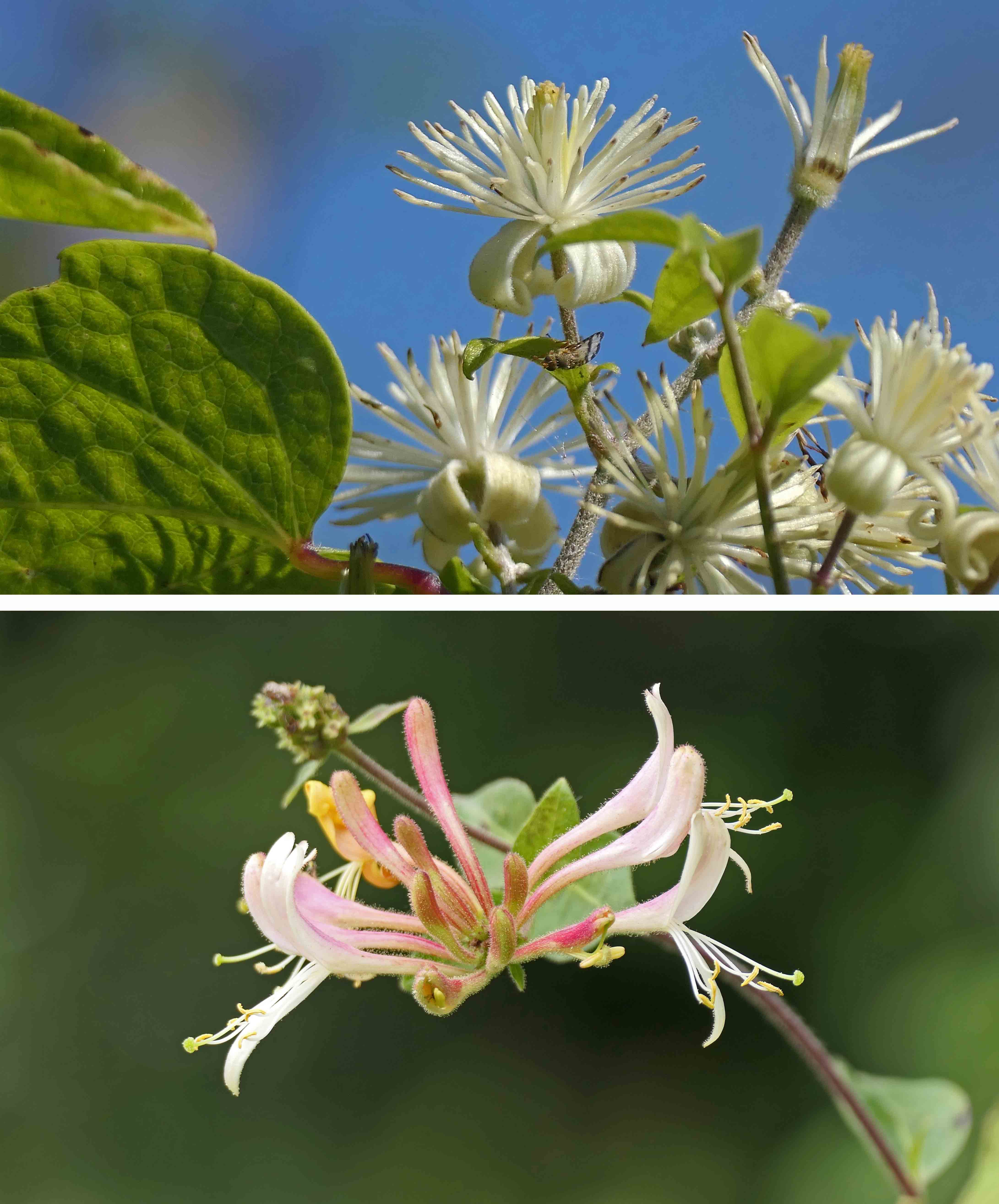
240908 old mans beard honeysuckle

Old man’s beard (also known as Traveller’s joy) and Honeysuckle.

240908 vetches

The vetches: Tufted vetch and Meadow vetchling (most of the vetches have now finished flowering).

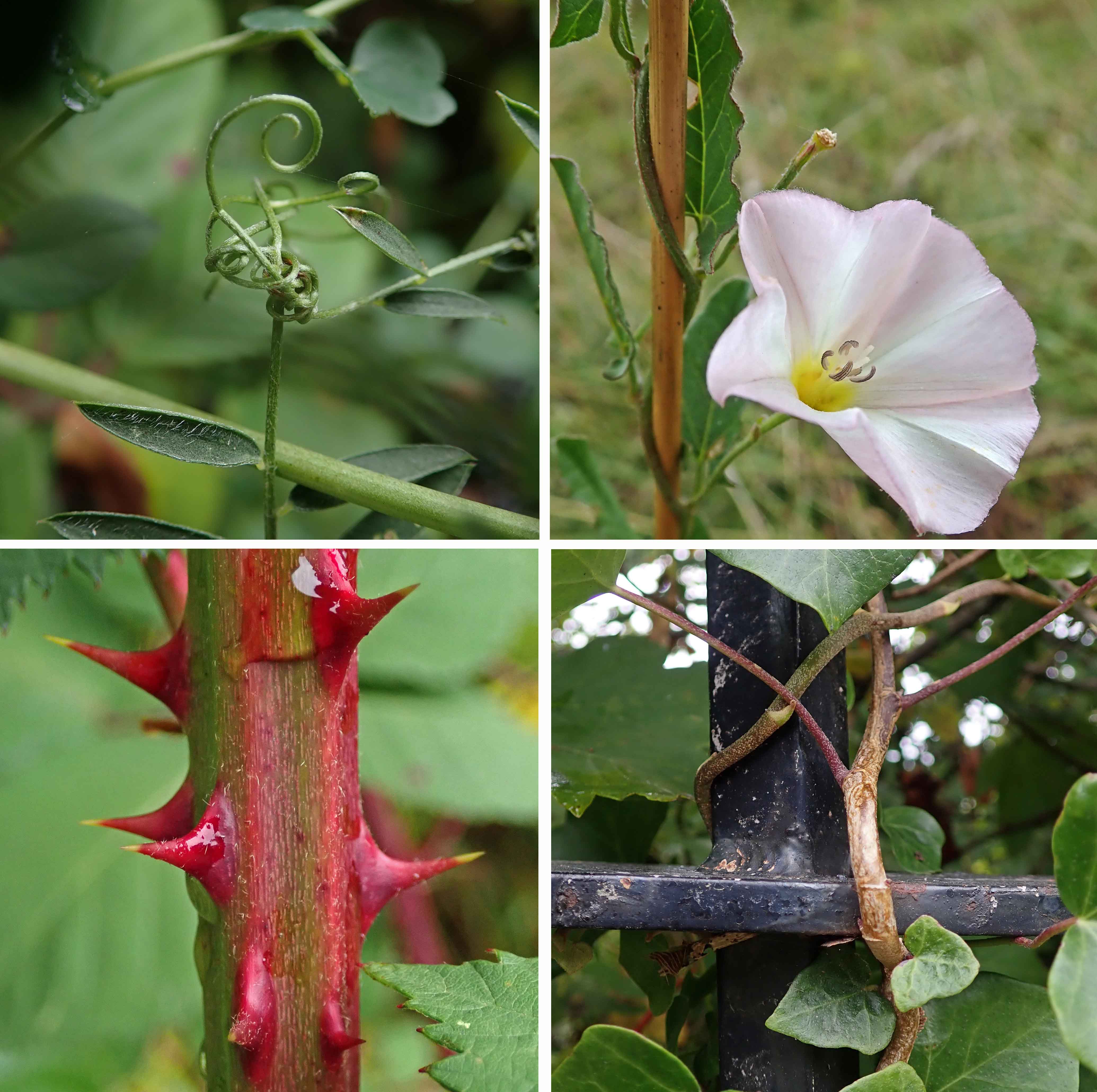
240908 x how they climb

How plants climb:
The twisters: plants like Old man’s beard and Honeysuckle, and the various species of vetch, all twist themselves around other plants to gain support and climb upwards.
The grappler: think of those thorns on Bramble and the many rose species, used like grappling hooks to grab on to anything that will support them.
The clinger: Ivy is a good example of this, producing roots along its stem that help it cling to other plants, as well as to wooden posts, and brick and stone buildings.

Like Loading...

317/366 Colour it bramble

12 Thursday Nov 2020

Posted by sconzani in autumn, leaves, plants

≈ Leave a comment

Tags

autumn colour, bramble, Bramble autumn colour, bramble leaves

Bramble: rambling over fences and through hedgerows, its flowers and fruit provide nourishment to insects, mammals and birds for much of the year; its leaves are home to leaf-mining moths and a multitude of other invertebrates; and, in the autumn, bramble colours our world with a burst of golden yellows, brilliant crimsons, burnt oranges and scarlet reds. What a plant!

201112 bramble colour (1)
201112 bramble colour (2)
201112 bramble colour (3)
201112 bramble colour (4)
201112 bramble colour (5)
201112 bramble colour (6)
201112 bramble colour (7)
201112 bramble colour (8)
201112 bramble colour (9)
Like Loading...

279/366 Being ticked off

05 Monday Oct 2020

Posted by sconzani in autumn, birds

≈ Leave a comment

Tags

birding, birdwatching, Blackcap, Blackcap eating blackberries, bramble, British birds, female Blackcap

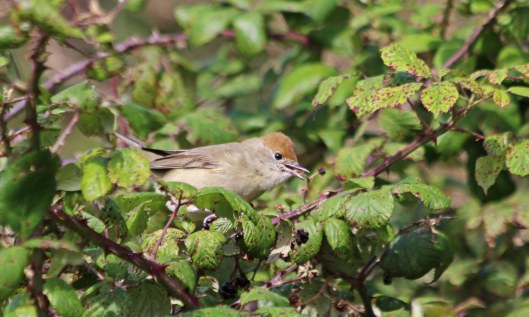
Having spotted movement in the Bramble bushes, I was moving in for a closer look, when out popped this beauty, a female Blackcap.

201005 blackcap (1)

She wasn’t at all happy with my proximity and started giving me a real scolding, a ‘ticking off’. I’m sure you’ve heard Robins and Wrens making their ‘ticking’ sound. Well, Blackcaps also have a ‘tick, tick’ contact call, which seems to get louder, harsher and much more insistent when they’re agitated.

201005 blackcap (2)
201005 blackcap (3)
201005 blackcap (3a)

Why was she annoyed? It seems I was keeping her from her food. She had spotted some particularly succulent-looking blackberries but didn’t feel comfortable about moving in to the open to eat them while I was nearby.

201005 blackcap (4)

A few minutes after I realised what was happening and moved away, she popped out and resumed her feast. So, she was content, and I got some nice photos – and, though the dictionaries don’t mention it, I do wonder if this is where the phrase ‘to tick (someone) off’ comes from.

201005 blackcap (5)

Like Loading...

248/366 The bramble eater

04 Friday Sep 2020

Posted by sconzani in birds, nature, plants

≈ 3 Comments

Tags

autumn berries, birding, birdwatching, blackberries, bramble, British birds, Cosmeston Lakes Country Park, Pheasant, pheasant eating blackberries

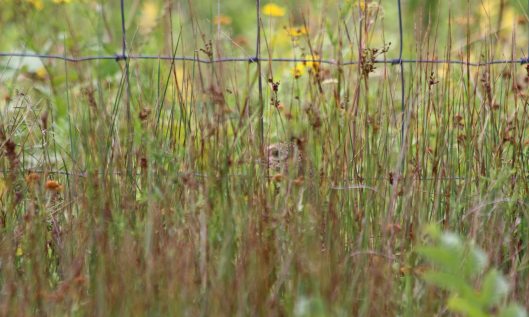
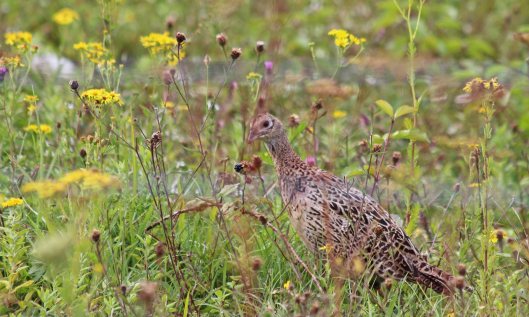
A rustle of vegetation … an eye … who’s this lurking behind the ‘snipe paddock’ fence at Cosmeston?

200904 pheasant (1)

A female Pheasant? A common enough bird in the local countryside but not normally seen here in this dog-full park. She has quite short tail feathers and she’s not too bothered about my presence so I presume she’s a juvenile.

200904 pheasant (2)

It seems she’s quite partial to blackberries.

200904 pheasant (3)

Are there more of those delicious treats?

200904 pheasant (4)

Aha, yes, another ripe one.

200904 pheasant (5)

And, after scoffing those couple of berries, she wanders off in search of more.

200904 pheasant (6)


Like Loading...

329/365 A nice bit of slime

25 Monday Nov 2019

Posted by sconzani in autumn, fungi, nature

≈ 4 Comments

Tags

bramble, slime, slime mould, south Wales coastal path

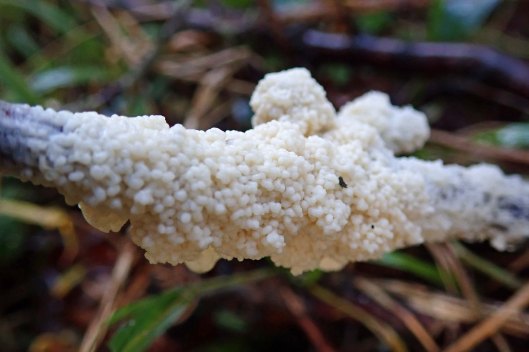
One of the advantages of all the recent wet weather is that it aids the development of slime moulds.

191125 slime mould (1)

I found this lovely stuff on some small dead bramble twigs during today’s walk along the south Wales coastal path.

191125 slime mould (2)

It may be Mucilago crustacea but I can’t be sure about that identification.

191125 slime mould (3)

Like Loading...

254/365 The bramble lovers

11 Wednesday Sep 2019

Posted by sconzani in 365DaysWildin2019, autumn, insects, nature, plants

≈ 4 Comments

Tags

#365DaysWild, autumn fruit, blackberries, bramble, British butterflies, butterfly, Red Admiral, Red admiral on bramble

190911 red admiral (1)

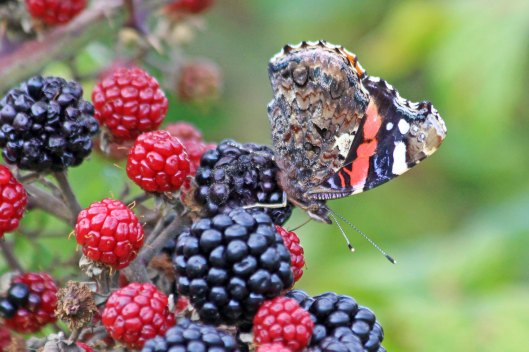
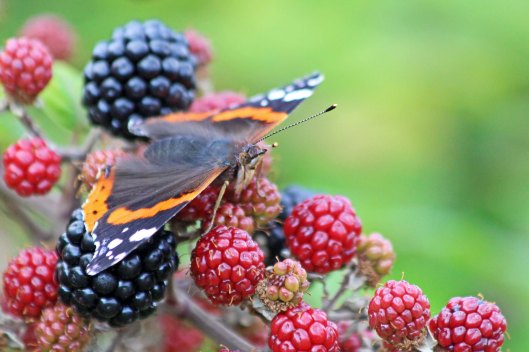
I think everyone would agree that blackberries, the fruit of the bramble bush, are delicious. I’m not one of those people who risks the almost obligatory scratches to go blackberrying at this time of year – I prefer to leave them to the birds and minibeasts. But, at Cosmeston yesterday, I’d been walking longer than I anticipated and my stomach was rumbling so I thought I’d grab a few to keep me going.

190911 red admiral (2)

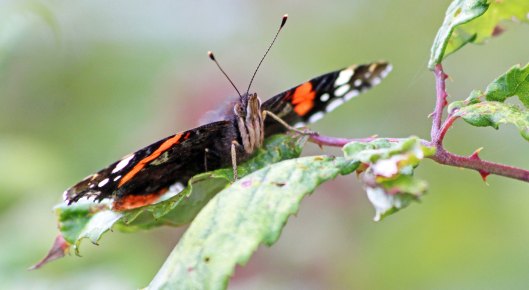
Well, if looks could kill, I would never have made it home because these Red admiral butterflies were absolutely certain the blackberries belonged to them. And they weren’t going to relent, letting me get my hand really close to them without moving a millimetre. One even flew out and ‘buzzed’ me before re-settling on its chosen fruit. I got the message and left them to their feast.

190911 red admiral (3)

Like Loading...

On the bramble

26 Wednesday Dec 2018

Posted by sconzani in fungi, insects, nature, plants, walks, wildflowers

≈ 4 Comments

Tags

bramble, Grooved bonnet, leafhopper, leafmine on bramble, Mycena fungi, Penarth to Lavernock coastal path, south Wales coastal path, Stigmella aurella, Wales Coastal Path

I took myself on a meander along the south Wales coastal path from Penarth to Lavernock and back again today. The weather was still quite gloomy, as it’s been for several days now, but at least there was no rain. I often have this trail to myself but not today – every man, woman, child and their dog had obviously decided this was a good way to walk off their festive feasting. As I had made it today’s mission to look for the little, I got a lot of strange looks, and I heard one or two ‘What was that lady doing?’ comments after people had passed. To their credit a couple of folk were brave enough to ask me directly but their eyes glazed over when I began to extol the beauty of the many leafhoppers I was seeing.

181226 on the bramble (1)

I saw lots of lovely things but thought, for the purposes of this blog, I’d focus on the Bramble (Rubus fruticosus agg.), which grows in abundance along the coastal path and, with this year’s mild weather, is still very green, and even flowering in places.

181226 on the bramble (2)

I haven’t yet had a chance to identify my finds but I think I have photos of three different species of leafhoppers (though it’s possible number 3 is just a yellower version of number 1). I was amazed to see so many of these little critters still flying and hopping around the bushes, though the winter has been very mild here so far and I think some species over-winter as adults.

181226 on the bramble (3)181226 on the bramble (4)181226 on the bramble (5)

I also spotted a couple of other tiny mini-beasties lurking amongst the leaves. I’m not sure what these are.

181226 on the bramble (6)
181226 on the bramble (7)

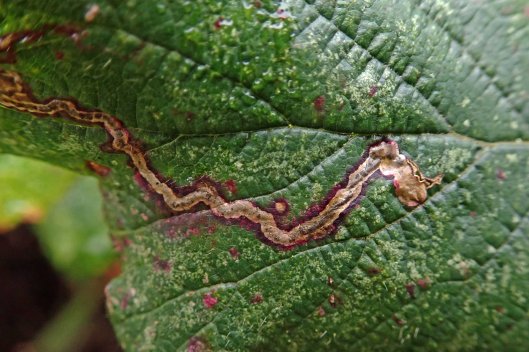
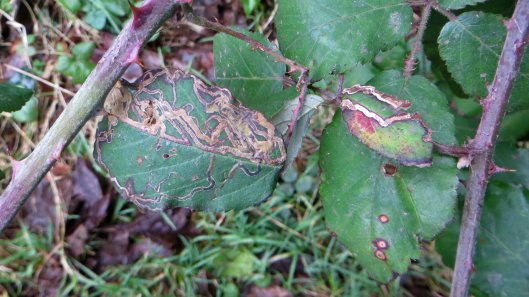
Lots of the leaves had leaf mines, though their makers have now left the leaves. I think most of the mines I saw would have been made by the larvae of Stigmella aurella, a moth.

181226 on the bramble (8)

And my last find was on an old, decaying Bramble branch, where these beautiful little bonnet fungi were growing. Though you can’t see the details in this photo, the caps were striated and the stems grooved so I think these might be Grooved bonnets (Mycena polygramma).

181226 on the bramble (9)

Like Loading...

On the Bramble

13 Wednesday Jun 2018

Posted by sconzani in insects, nature, wildflowers

≈ Leave a comment

Tags

#30DaysWild, #plantsforpollinators, #WildflowerHour, 30 Days Wild, bees, bramble, bumblebees, flies, hoverflies, Rubus fruticosus agg

Last Sunday, on #WildflowerHour, the challenge was to find #plantsforpollinators, i.e. to find wildflowers that support a variety of the insects that act as pollinators. I had found several different insects on Bramble flowers last week so posted a series of photos that showed them. And that gave me the idea for day 13 of #30DaysWild, namely to see what insects I could find on the local Bramble bushes. It was overcast and a bit cooler today, so I didn’t see as many butterflies as last week, but there were bees and bumblebees, flies and hoverflies, one butterfly, and a number of bugs and beetles. Here they are …

180613 on the bramble (1)
180613 on the bramble (2)
180613 on the bramble (3)
180613 on the bramble (4)
180613 on the bramble (5)
180613 on the bramble (6)
180613 on the bramble (7)
180613 on the bramble (8)
180613 on the bramble (9)
180613 on the bramble (10)
180613 on the bramble (11)
180613 on the bramble (12)
180613 on the bramble (13)
180613 on the bramble (14)
180613 on the bramble (15)
180613 on the bramble (16)
180613 on the bramble (17)
180613 on the bramble (18)
Like Loading...

Leafminer on bramble

29 Monday Jan 2018

Posted by sconzani in insects, nature, plants

≈ 6 Comments

Tags

bramble, British micro moth, British moths, Golden pigmy moth, leaf mines, leafminer, moth larvae in leaf mines, Rubus fruticosus agg, Stigmella aurella

Following on from my Leafmines 101 post and the one about leafminers on Hart’s tongue fern, here’s another leaf mine I think I can identify (note the ‘I think’!).

180129 Stigmella aurella on bramble (1)

The reason I’m hesitant about positively IDing this one is because there are two species of micro moth whose larvae produce very similar mines on bramble (Rubus fruticosus agg.) leaves. One is the Glossy bramble pigmy moth (Stigmella splendidissimella) but the more likely in this case is the Golden pigmy moth (Stigmella aurella).

180129 Stigmella aurella on bramble (2)
180129 Stigmella aurella on bramble (3)

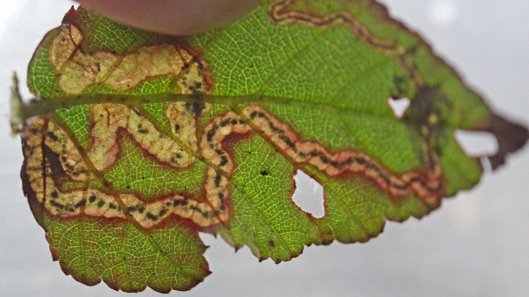
Though it’s very common and widespread in Britain, I’ve never seen this tiny moth (images on the UK moths website here) but the mines its larvae create on bramble leaves are everywhere I look. As you can see, the mine starts out small but, as the larva within chews and chews, so it widens its mine to accommodate its expanding girth.

You can see if the inhabitant is still at home by holding the leaf up to the light. Most of these seemed to be empty, as you can see from the images below (the central black lines are the frass). I’ve never actually opened a mine to have a look at the larva when it has been inside but, if I did, I would see an orangey-yellow grub with a brownish tinge to its head (there are images on the Bladmineerders website here).

180129 Stigmella aurella on bramble (4)180129 Stigmella aurella on bramble (5)

Like Loading...
← Older posts

About me

sconzani

sconzani

I'm a writer and photographer; researcher and blogger; birder and nature lover; countryside rambler and city strider; volunteer and biodiversity recorder.

View Full Profile →

Follow earthstar on WordPress.com

Enter your email address to follow this blog and receive notifications of new posts by email.

Recent blog posts

  • N is for nest December 19, 2025
  • M is for mite December 18, 2025
  • L is for lepidopteran lifers December 17, 2025
  • K is for Keeled skimmers December 16, 2025
  • J is for Jersey tiger December 15, 2025

From the archives

COPYRIGHT

Unless otherwise acknowledged, the text and photographs on this blog are my own and are subject to international copyright. Nothing may be downloaded or copied without my permission.

Fellow Earth Stars!

  • Unknown's avatar
  • Unknown's avatar
  • Unknown's avatar
  • Unknown's avatar
  • Unknown's avatar
  • Unknown's avatar
  • Unknown's avatar
  • Unknown's avatar
  • Unknown's avatar
  • Unknown's avatar
  • Unknown's avatar
  • Unknown's avatar
  • Unknown's avatar
  • Unknown's avatar
  • Unknown's avatar
  • Unknown's avatar
  • Unknown's avatar
  • Unknown's avatar
  • Unknown's avatar
  • Unknown's avatar
  • Unknown's avatar
  • Unknown's avatar
  • Unknown's avatar
  • Unknown's avatar
  • Unknown's avatar
  • Unknown's avatar
  • Unknown's avatar
  • Unknown's avatar
  • Unknown's avatar
  • Unknown's avatar
  • Unknown's avatar
  • Unknown's avatar
  • Unknown's avatar
  • Unknown's avatar
  • Unknown's avatar
  • Unknown's avatar
  • Unknown's avatar
  • Unknown's avatar
  • Unknown's avatar
  • Unknown's avatar
  • Unknown's avatar
  • Unknown's avatar
  • Unknown's avatar
  • Unknown's avatar
  • Unknown's avatar
  • Unknown's avatar
  • Unknown's avatar
  • Unknown's avatar
  • Unknown's avatar
  • Unknown's avatar

Blog at WordPress.com.

Privacy & Cookies: This site uses cookies. By continuing to use this website, you agree to their use.
To find out more, including how to control cookies, see here: Cookie Policy
  • Subscribe Subscribed
    • earthstar
    • Join 667 other subscribers
    • Already have a WordPress.com account? Log in now.
    • earthstar
    • Subscribe Subscribed
    • Sign up
    • Log in
    • Report this content
    • View site in Reader
    • Manage subscriptions
    • Collapse this bar
 

Loading Comments...
 

You must be logged in to post a comment.

    %d