• ABOUT
  • BIRDING 2018
  • Birding 2019
  • BLOG POSTS
  • Butterflies 2018
  • Resources

earthstar

~ a celebration of nature

earthstar

Tag Archives: British butterflies

257/366 Ragwort inspection

13 Sunday Sep 2020

Posted by sconzani in autumn, insects

≈ Leave a comment

Tags

British butterflies, British insects, Common ragwort, Cosmeston Lakes Country Park, importance of ragwort as food plant, insects on ragwort, Ragwort

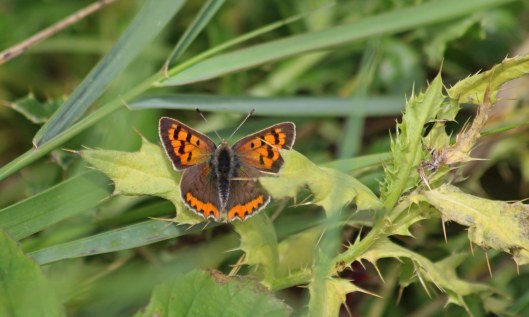
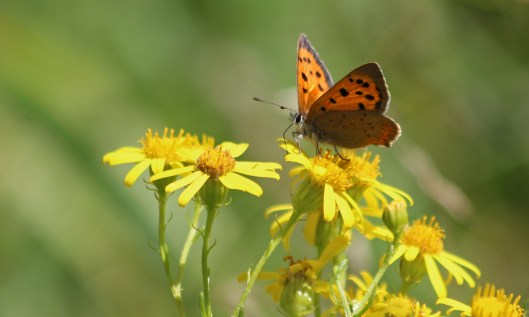
My title says ‘inspection’ but I was tempted to invent a new word and write ‘insection’, as my inspection was really a personal challenge to see how many different insects I could find on the copious number of Common ragwort plants currently in bloom at Cosmeston Lakes Country Park. All except three of these photos were taken during one 45-minute period on Wednesday – the Small copper and two flies were seen the following day. The broad diversity of species just shows how important Ragwort is as a late summer food plant for insects.

200913 bee buff-tailed bumble
200913 bee common carder
200913 bee honeybee maybe
200913 butterfly large white
200913 butterfly meadow brown
200913 butterfly small copper
200913 butterfly small white
200913 cranefly
200913 dock bug
200913 fly sp (1)
200913 fly sp (2)
200913 hoverfly eristalis nemorum
200913 hoverfly eristalis sp
200913 hoverfly helophilus pendulus
200913 hoverfly helophilus trivittatus
200913 hoverfly sp
200913 hoverfly Sphaerophoria sp
200913 hoverfly syrphus sp
200913 nettle tap moth
200913 spider
Like Loading...

254/366 Seven!

10 Thursday Sep 2020

Posted by sconzani in autumn, insects

≈ 2 Comments

Tags

British butterflies, butterflies, Cosmeston Lakes Country Park, Small copper

I was in seventh heaven yesterday because I found seven Small coppers, my favourite butterflies, at Cosmeston, the most I’ve ever seen in one place on one day. Here they are, the little beauties.

200910 small copper (1)200910 small copper (2)200910 small copper (3)200910 small copper (4)200910 small copper (5)200910 small copper (6)200910 small copper (7)

Like Loading...

244/366 Butterfly magic

31 Monday Aug 2020

Posted by sconzani in insects, nature

≈ 4 Comments

Tags

aberrant Meadow brown, British butterflies, butterfly, Comma, Green-veined white, Painted Lady, Red Admiral, Small copper, Small tortoiseshell

To celebrate – or, perhaps, to mourn – the last calendar day of summer, here’s a tribute to some of the beautiful butterflies I’ve seen in recent days, just because, when they’re gone, I’m really going to miss their magic.

200831 comma

A Comma doing what they do so well when their wings are closed – blending in.

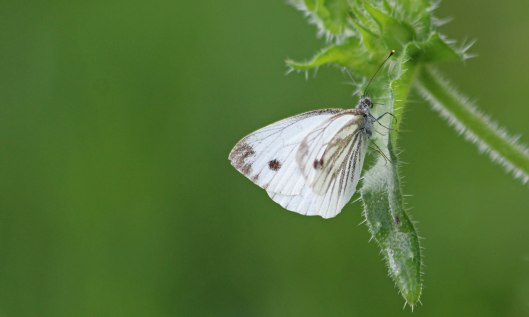
200831 green-veined white

Most of the white butterflies I’ve seen lately have been Small whites so this Green-veined white stood out from the crowd.

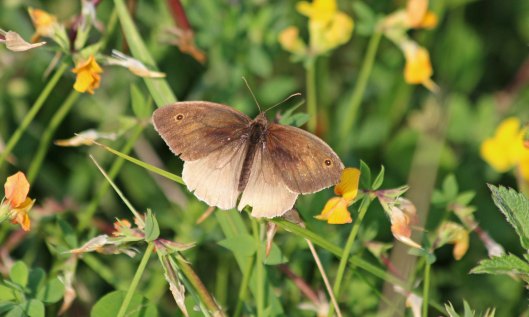
200831 meadow brown

Here’s another that stood out – an aberrant Meadow brown. There always has to be one!

200831 painted lady

The heat wave a couple of weeks ago seems to have brought in a small influx of Painted ladies, though nothing like the numbers we had last year.

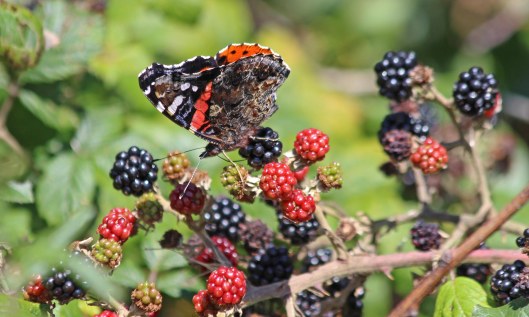
200831 red admiral

Have you ever noticed how much Red admirals like blackberries? And their colours blend in to this background rather well.

200831 small tortoiseshell

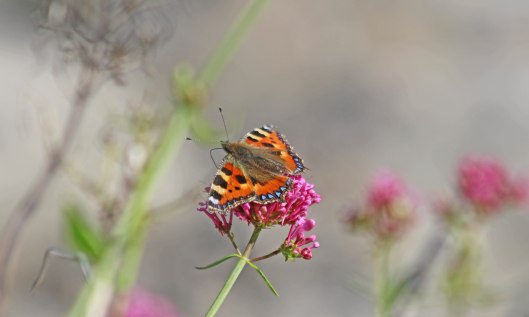
Small tortoiseshells have been having a good year locally, which has been a real treat. I even found two feeding on Red valerian right at the edge of one of the local beaches this morning.

200831 small copper

A delightful surprise from Saturday’s walk at Cosmeston, a pristine Small copper.

Like Loading...

236/366 On the fleabane

23 Sunday Aug 2020

Posted by sconzani in insects, nature, wildflowers

≈ 2 Comments

Tags

British butterflies, British insects, British wildflowers, Common fleabane, fleabane, insects on fleabane, Pulicaria dysenterica

The local fields are ablaze with Common fleabane (Pulicaria dysenterica), which the Plantlife website says has a
‘curious scent, with hints of carbolic soap and chrysanthemum, [which] is an insect repellent. In the past it was kept in houses specifically for the purpose of driving away fleas. Bunches were dried and burned as a fumigant or hung in rooms.’
Well, it may be the bane of fleas and it may act as an insect repellent when it’s been dried but, from what I can see, when it’s alive and fresh, most insects love it!

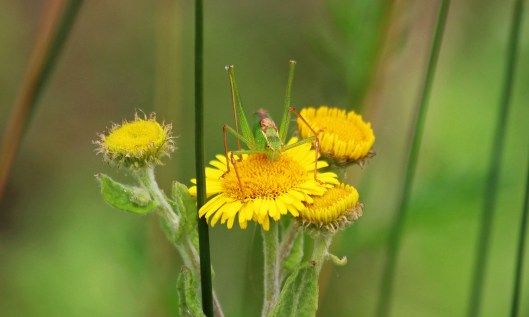
200823 speckled bush-cricket

As well as that Speckled bush-cricket, I’ve found 9 species of butterfly and 1 moth nectaring on Fleabane flowers.

200823 b brimstone
200823 b brown argus
200823 b common blue
200823 b gatekeeper
200823 b painted lady
200823 b meadow brown
200823 b pyrausta purpuralis
200823 b small copper
200823 b small tortoiseshell
200823 b small white

And then there are the hoverflies and assorted other flies, bees and bumbles. It’s more like a magnet than a repellent.

200823 eristalis pertinax
200823 buff-tailed bumble
200823 syrphus sp
200823 Sphaerophoria sp
200823 honey bee
200823 helophilus pendulus
200823 Chrysotoxum bicinctum
200823 nomada sp
200823 picture-winged fly
200823 eristalis horticola
200823 fly sp
Like Loading...

232/366 Third time lucky

19 Wednesday Aug 2020

Posted by sconzani in insects, nature

≈ 7 Comments

Tags

British butterflies, butterfly, Clouded yellow, migrant butterfly

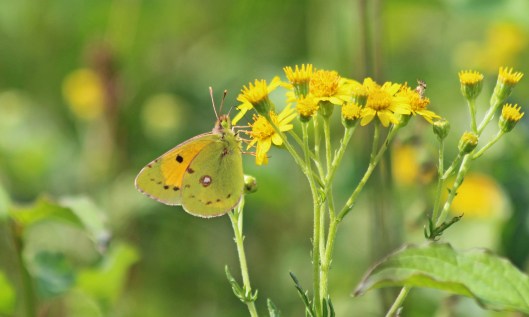
I had hoped the recent combination of southerly winds and heat wave would bring a wave of migrants to our shores and it did. The most exciting for me was the Clouded yellow butterfly. I saw my first on 10 August but, as is often the case with these beauties, their rapid flight can make them difficult to photograph, and this one flew over a fence into a shrubby area, disappearing immediately. My next Clouded yellow sighting came on 16 August, in a different location but with almost the same result – over the fence and gone! I managed to grab a single ‘record’ shot, below.

200819 clouded yellow (1)

Then, last Monday 17 August, I got lucky. I did have to follow this Clouded yellow around a sizeable field, watching intently, not following too closely so as not to spook it, waiting for it to settle but, finally, it paused briefly to feed and I got my photograph. They are such lovely butterflies, so different from anything else in Britain – I just wished they lived among us.

200819 clouded yellow (2)

Like Loading...

225/366 Battered & bird-pecked

12 Wednesday Aug 2020

Posted by sconzani in insects, nature

≈ 2 Comments

Tags

battered butterflies, bird-pecked butterflies, British butterflies, Brown argus, Comma, Essex skipper, Gatekeeper, Painted Lady, Peacock, Ringlet, Small copper

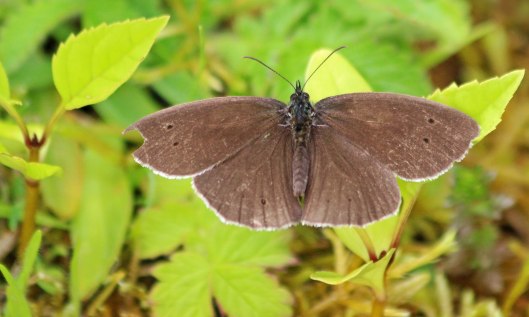
Though second-brood butterflies are still looking pristine, many of the others are now well past their best, as life is tough for such fragile creatures. Some butterflies are so battered that I’m amazed they’re able to fly at all, yet this Gatekeeper and Ringlet were still moving from plant to plant.

200812 battered gatekeeper
200812 battered ringlet

Birds looking for an easy snack often attack butterflies and it’s easy to see the tell-tale signs of bird pecks on butterflies’ wings, like those on these: a Ringlet, Comma, Small copper and Peacock, and another Gatekeeper.

200812 birdpecked ringlet

200812 birdpecked 1 comma
200812 birdpecked 2 small copper
200812 birdpecked 3 peacock

200812 birdpecked gatekeeper

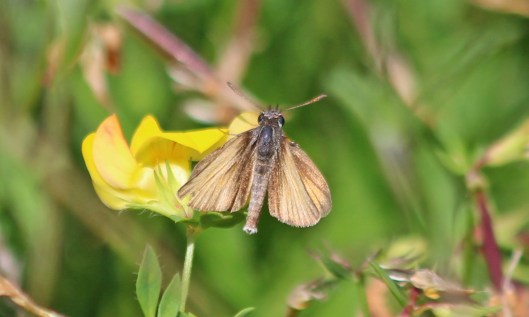
Is it the blazing sun that has caused this Essex skipper’s orange to fade so dramatically or has it lost most of its wing scales?

200812 faded essex skipper

I’m 99% sure this is the same Brown argus, seen first on 1 August and again on 10 August. It already had some bird pecks when I first saw it but, nine days later, it was looking rather faded and more than a little ragged around the edges.

200812 faded brown argus 0108
200812 faded brown argus 1008

This Painted lady is looking battered, bird-pecked, faded and jaded, perhaps the affects of a long migration journey, or simply a tough life well survived.

200812 jaded painted lady

Like Loading...

220/366 Second brood

07 Friday Aug 2020

Posted by sconzani in insects, nature

≈ 1 Comment

Tags

British butterflies, butterfly, Dingy Skipper, second brood butterflies, second brood Dingy skipper

In 2019, when I began keeping records of all my sightings and focused seriously on searching for and recording butterflies, I saw my first local Dingy skipper on 30 April and my last on 10 June. This year, I spotted my first on 6 May and what I thought was the last on 26 May, a relatively short season.

200807 dingy skipper 24july

Then, remarkably, on 24 July, I saw a pristine, obviously newly emerged Dingy skipper, and I’ve seen two more this week, one on 4 August and another the following day. These are second brood butterflies, the product of the breeding of the butterflies seen in May.

200807 dingy skipper 4aug

In his brilliant book Life Cycles of British & Irish Butterflies, Peter Eeles write that ‘Good summers may … result in a partial second brood in southern England that emerges in late July and August (a second brood is the norm in Southern Europe), and this may become a more frequent and widespread phenomenon in Britain and Ireland with a changing climate’. It seems, here in south Wales, that phenomenon is already happening.

200807 dingy skipper 5aug

Like Loading...

217/366 Lep larvae

04 Tuesday Aug 2020

Posted by sconzani in insects, nature

≈ 2 Comments

Tags

British butterflies, British moths, butterfly larvae, Cinnabar moth, Lepidoptera, moth larvae, Small tortoiseshell

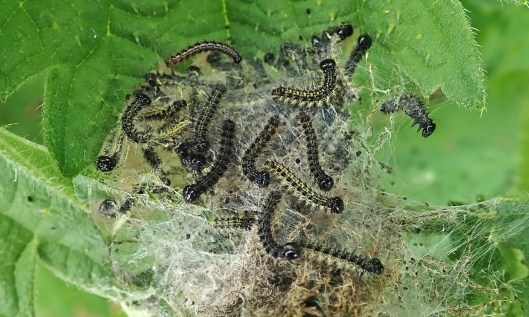
Last week we had a closer look at a couple of butterfly eggs; today we have some Lepidoptera larvae. First up, the caterpillars of the beautiful Small tortoiseshell butterfly, which has two generations of eggs and larvae each year – these will be second generation. The eggs are laid in batches and, when they hatch, the caterpillars stay together to create a communal web where they shelter when they’re not out basking in the sun or munching on nettles. The caterpillars go through five stages (instars) before pupating – these look to be 3rd instars.

200804 small tortoiseshell (1)

200804 small tortoiseshell (2)
200804 small tortoiseshell (3)

In total contrast to the Small tortoiseshell larvae, which are subtle and subdued in their colour and patterns, the larvae of the Cinnabar moth are vibrant, even flamboyant. Their bright orange and black stripes are designed to be seen, warning predators not to eat them as they are poisonous.

200804 cinnabar moth (1)200804 cinnabar moth (2)

Like Loading...

214/366 Butterfly eggs

01 Saturday Aug 2020

Posted by sconzani in insects, nature, plants

≈ 3 Comments

Tags

British butterflies, butterfly, butterfly egg, Common blue butterfly, Common blue butterfly egg, Painted Lady, Painted lady egg, thistle

This Painted lady is only the fourth individual I’ve seen this year but she was by far the best, not because of her appearance, which is a little ragged around the edges, but because she was laying eggs … and I’d never seen a Painted lady egg before.

200801 painted lady

At just 0.65mm high, the egg is tiny and, in my reference book, it’s described as green but, to my eye, this one is more of a pale turquoise – the plant stem is green. And the plant is a thistle – Creeping thistle, I think, though it was a young plant with no flowers, which makes it harder for me to identify but probably more nourishing for the teeny tiny caterpillar to munch on when it emerges. Now if I can only find this exact plant again in approximately a week’s time …

200801 painted lady egg (1)
200801 painted lady egg (2)

And following hot on the heels of finding that Painted lady egg, today I spotted a female Common blue butterfly laying her eggs in a sheltered clearing. You can perhaps see in the photo how she is angling her body to deposit an egg underneath the foliage.

200801 Common blue egg laying

So, once again, I was able to find the newly laid egg and take some photos. According to my book, these eggs are usually 0.5mm in diameter and just 0.25mm high, so really tiny. I have no chance of finding this egg again but I’m really glad I had the chance to see it.

200801 common blue egg (1)
200801 common blue egg (2)
Like Loading...

212/366 A tip top butterfly

30 Thursday Jul 2020

Posted by sconzani in insects, nature

≈ 2 Comments

Tags

Aberbargoed coal tip, British butterflies, butterflying, coal spoil biodiversity, Grayling

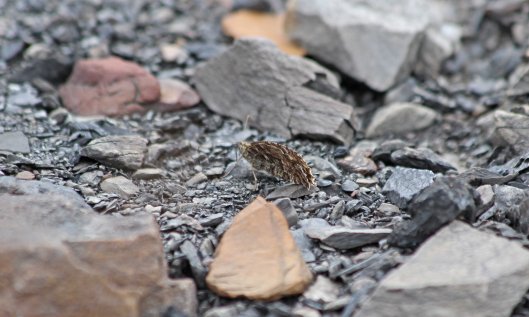
I had big plans to see more of Britain’s butterfly species this year but, in the immortal words of Robbie Burns, plans and schemes ‘gang aft agley’. The Covid 19 lockdown put a stop to all the butterflying plans I was hatching and I’ve missed seeing an awful lot of species this year. But, yesterday, I did manage one more species for 2020, that master of camouflage, the Grayling.

200730 grayling (1)

I have a friend who lives not far from Aberbargoed, with its Grasslands National Nature Reserve and the neighbouring coal spoil tip, so I was able to combine a delightful socially distanced walk with some butterflying. It was a little late in the month – last year I visited the tip in mid July – but we got lucky, with wonderful close sightings of just one individual.

200730 grayling (2)

In his Life Cycles of British & Irish Butterflies, Peter Eeles notes that the Grayling was once known as the Rock Underwing, a testament to its ability to blend in perfectly with the surrounding earth and pebbles when it lowers its forewings. Fortunately, when the Grayling is feeding, it raises its forewings and we were able to see more clearly its two eye spots.

200730 grayling (3)

Like Loading...
← Older posts
Newer posts →

About me

sconzani

sconzani

I'm a writer and photographer; researcher and blogger; birder and nature lover; countryside rambler and city strider; volunteer and biodiversity recorder.

View Full Profile →

Follow earthstar on WordPress.com

Enter your email address to follow this blog and receive notifications of new posts by email.

Recent blog posts

  • Bloody-nosed beetle April 6, 2026
  • Gorse and its weevil April 5, 2026
  • Chiffchaffs chiffchaffing April 4, 2026
  • Bearded tit!!! April 3, 2026
  • A Portland Bill Kestrel April 2, 2026

From the archives

COPYRIGHT

Unless otherwise acknowledged, the text and photographs on this blog are my own and are subject to international copyright. Nothing may be downloaded or copied without my permission.

Fellow Earth Stars!

  • Unknown's avatar
  • Unknown's avatar
  • Unknown's avatar
  • Unknown's avatar
  • Unknown's avatar
  • Unknown's avatar
  • Unknown's avatar
  • Unknown's avatar
  • Unknown's avatar
  • Unknown's avatar
  • Unknown's avatar
  • Unknown's avatar
  • Unknown's avatar
  • Unknown's avatar
  • Unknown's avatar
  • Unknown's avatar
  • Unknown's avatar
  • Unknown's avatar
  • Unknown's avatar
  • Unknown's avatar
  • Unknown's avatar
  • Unknown's avatar
  • Unknown's avatar
  • Unknown's avatar
  • Unknown's avatar
  • Unknown's avatar
  • Unknown's avatar
  • Unknown's avatar
  • Unknown's avatar
  • Unknown's avatar
  • Unknown's avatar
  • Unknown's avatar
  • Unknown's avatar
  • Unknown's avatar
  • Unknown's avatar
  • Unknown's avatar
  • Unknown's avatar
  • Unknown's avatar
  • Unknown's avatar
  • Unknown's avatar
  • Unknown's avatar
  • Unknown's avatar
  • Unknown's avatar
  • Unknown's avatar
  • Unknown's avatar
  • Unknown's avatar
  • Unknown's avatar
  • Unknown's avatar
  • Unknown's avatar
  • Unknown's avatar

Blog at WordPress.com.

Privacy & Cookies: This site uses cookies. By continuing to use this website, you agree to their use.
To find out more, including how to control cookies, see here: Cookie Policy
  • Subscribe Subscribed
    • earthstar
    • Join 642 other subscribers
    • Already have a WordPress.com account? Log in now.
    • earthstar
    • Subscribe Subscribed
    • Sign up
    • Log in
    • Report this content
    • View site in Reader
    • Manage subscriptions
    • Collapse this bar
 

Loading Comments...
 

You must be logged in to post a comment.

    %d