• ABOUT
  • BIRDING 2018
  • Birding 2019
  • BLOG POSTS
  • Butterflies 2018
  • Resources

earthstar

~ a celebration of nature

earthstar

Tag Archives: Cosmeston Lakes Country Park

200/366 Purple hairstreak

18 Saturday Jul 2020

Posted by sconzani in insects, nature, trees

≈ Leave a comment

Tags

British butterflies, butterfly, butterfly in Oak trees, Cosmeston Lakes Country Park, Favonius quercus, Oak butterfly, oak tree, Purple hairstreak

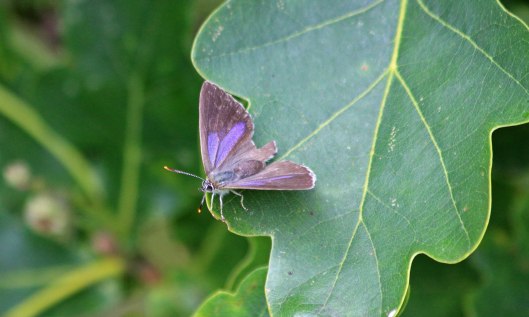
The key to where to locate this gorgeous butterfly, the Purple hairstreak, is in its scientific name Favonius quercus – quercus is the genus of the Oak tree – and I suspect that there are many more colonies of Purple hairstreaks living in our old Oak trees than we currently know about, as these butterflies spend much of their time unseen, high in the leafy boughs, feasting on honey dew.

200718 purple hairstreak (2)

There is a colony at Lavernock, and I’ve seen these butterflies at a couple of locations along the road that leads to Lavernock Point, but they were the only local sites I knew about. So, you can perhaps imagine my delight when, during Thursday’s walk at Cosmeston Lakes Country Park, I came face to snout with a female Purple hairstreak, which had ventured down to head height, and was happily running her yellow proboscis over the honey-dew-covered leaves.

200718 purple hairstreak (1)

This was the closest I’d been to one of these lovely creatures and had previously seen neither the purple sheen on their open wings nor the yellow proboscis. I was in butterfly heaven!

200718 purple hairstreak (3)

Like Loading...

153/366 Skimming and resting

01 Monday Jun 2020

Posted by sconzani in insects, nature

≈ Leave a comment

Tags

Black-tailed skimmer, British dragonflies, Cosmeston Lakes Country Park, dragonfly

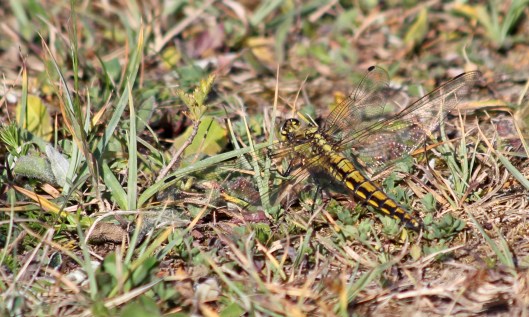
The Black-tailed skimmers are out and about again at Cosmeston Lakes Country Park, and I was delighted to spot both males and females during last Saturday’s exercise walk.

200601 black-tailed skimmer (1)

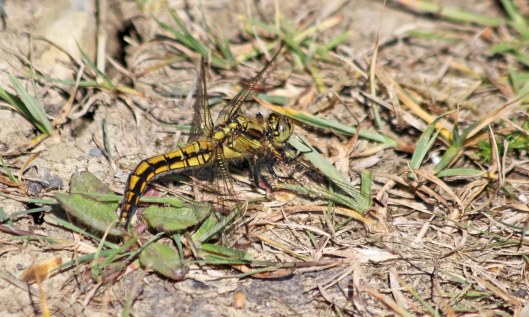
My guide book*, and most websites I’ve checked, say these dragonflies are ‘typically found resting on bare surfaces near water’, and, as its name implies, Cosmeston has two large lakes, as well as a dragonfly pond. But, perhaps surprisingly, I often find these dragonflies several hundred metres away from water, basking on the bare dirt of the tracks through the wildflower meadows.

200601 black-tailed skimmer (3)

The females and immature males are yellow and black, with what’s described as a ‘ladder’ pattern on their abdomens. One female I found this week had a twisted abdomen – perhaps she was damaged when transitioning from a larva to an adult. Luckily, she was still able to fly freely.

200601 black-tailed skimmer (2)

Mature male Black-tailed skimmers have a blue abdomen, which darkens to black at the end, hence the name of the species.

200601 black-tailed skimmer (4)

* I have the new edition of Europe’s Dragonflies by Dave Smallshire and Andy Swash – highly recommended, and I’m not just saying that because I got a complimentary copy in return for having one of my photos included in the book.

Like Loading...

145/366 Common spotteds

24 Sunday May 2020

Posted by sconzani in flowers, nature, wildflowers

≈ 5 Comments

Tags

British orchids, Common spotted orchid, Cosmeston Lakes Country Park, native orchids

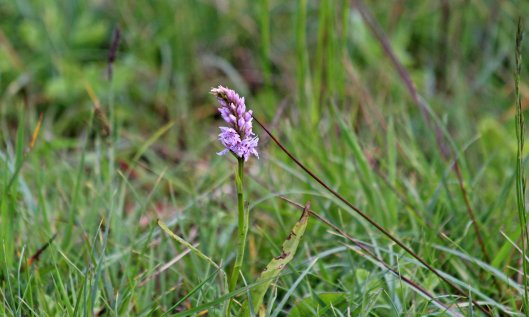
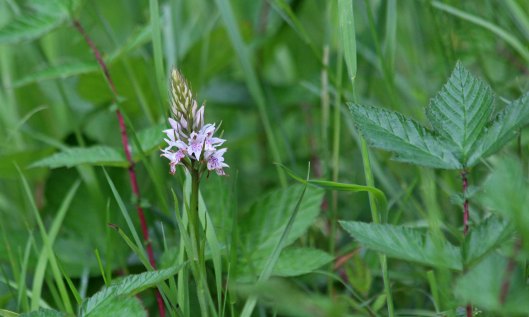
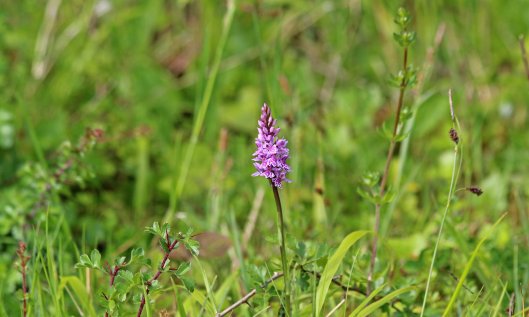
The occasional smatterings of rain we’ve had in the last few days have eased, ever so slightly, the drought conditions hereabouts, and the flush of new growth that was evident during this morning’s early walk through the fields at Cosmeston included my first Common spotted orchids of the year. Superb!

200524 common spotted orchid (1)200524 common spotted orchid (2)200524 common spotted orchid (3)200524 common spotted orchid (4)

Like Loading...

141/366 A Buff-tailed bear

20 Wednesday May 2020

Posted by sconzani in insects, nature

≈ 4 Comments

Tags

British hoverflies, Buff-tailed bear hoverfly, bumblebee mimic, Cogan Wood, Cosmeston Lakes Country Park, Criorhina floccose, hoverfly

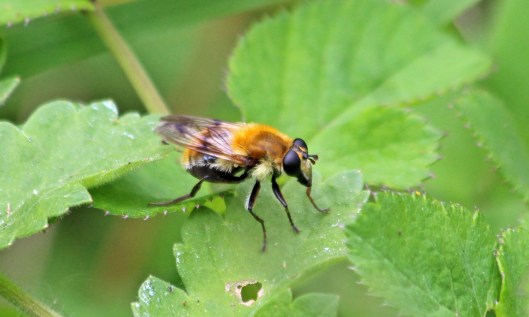
Bear? There are bears in south Wales? No, don’t worry, this Buff-tailed bear is a hoverfly (Criorhina floccose), a new find for me, from my first visit to Cosmeston Lakes Country Park in weeks (due to the Corona virus, the park was closed from 23 March until last Saturday 16 May). I initially thought this hoverfly was a variation of one of the other bumblebee-mimicking hoverflies, Merodon equestris, as they can be found in a wide variety of colours. But my record has been corrected by Mr UK Hoverflies himself, Roger Morris, and I now know the tufts of pale hairs at the sides of its abdomen are one of the main diagnostic features.

200520 Criorhina floccose (1)

These hoverflies are fashioned to mimic Common carder bees – see comparison photos below, hoverfly on the left, Common carder bee on the right. I think the hoverfly deserves an A for effort!

200520 Criorhina floccose (2)
200520 Common carder

Criorhina floccose is usually found in woodland – I found this one in a sheltered clearing in Cosmeston’s Cogan Wood, and there’s only been one previous record in my local 10-kilometre square. Now I know what to look for, I’ll be keeping an eye out for more.

Like Loading...

77/366 Eyelash fungi

17 Tuesday Mar 2020

Posted by sconzani in fungi, nature

≈ 2 Comments

Tags

British fungi, Cosmeston Lakes Country Park, Eyelash fungi, Scutellinia fungi, Scutellinia olivascens

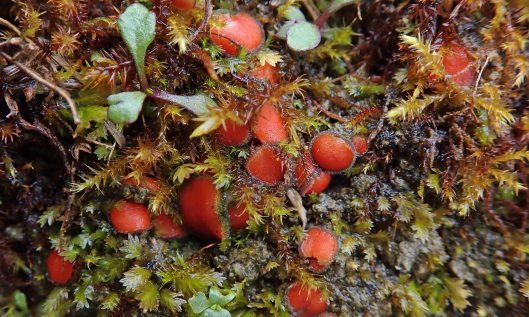
As you can see from my photos, the aptly named Eyelash fungi have hair-like bristles around their outer edges.

200317 eyelash fungi (1)

These particular Eyelashes can currently be found in large numbers in the west paddock at Cosmeston Lakes Country Park, where I presume they are enjoying the soggy muddy conditions, though they are growing on banks and slightly raised areas rather than in the completely sodden soil of the flatter parts.

200317 eyelash fungi (3)
200317 eyelash fungi (2)

When compared to the Eyelash fungi I blogged about back in May 2016 (see ‘Fluttering their eyelashes’ here), these latest examples have much shorter lashes. They are probably one of the Scutellinia species – possibly Scutellinia olivascens – but there are many very similar species of Eyelash fungi and you need to examine them under a microscope to be able to identify them correctly.

200317 eyelash fungi (4)

Like Loading...

75/366 A plant of many names

15 Sunday Mar 2020

Posted by sconzani in nature, plants, wildflowers

≈ 2 Comments

Tags

British wildflowers, Common lungwort, Cosmeston Lakes Country Park, Lungwort

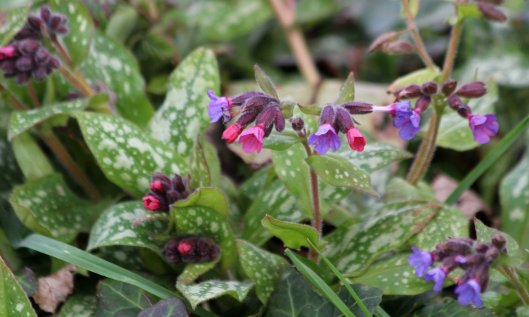
With its spotted leaves and flowers that start out pink but change quickly to blue, Common lungwort (Pulmonaria officinalis) is a very attractive plant. I’ve blogged before about the origin of its name and some of its other common names but the Royal Horticultural Society website has an even longer long list of vernacular names for this plant: Jerusalem sage, Adam and Eve, Bedlam cowslip, beggar’s basket, bugloss cowslip, Jerusalem cowslip, lady’s cowslip, lady’s milk, Mary’s honeysuckle, Mary’s tears, sage of Bethlehem, soldiers and sailors, spotted dog, and Virgin Mary’s honeysuckle.

200320 lungwort (1)

I’m sure many of the Lungwort plants I see are relatively recent garden escapes but the plants shown in today’s photos may perhaps be a little older. They were growing along the boundary fence of the medieval village at Cosmeston Lakes Country Park, a village which is a reconstruction of the actual buildings that existed on this site around 600 years ago. Was it one of the herbal plants used by the locals in those days? I like to think so.

200320 lungwort (2)
200320 lungwort (3)
Like Loading...

72/366 Sand martins

12 Thursday Mar 2020

Posted by sconzani in birds, nature, spring

≈ 1 Comment

Tags

birding, birdwatching, British birds, Cosmeston Lakes Country Park, Sand martin, spring migration

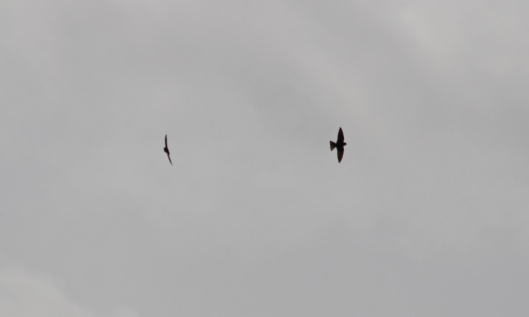
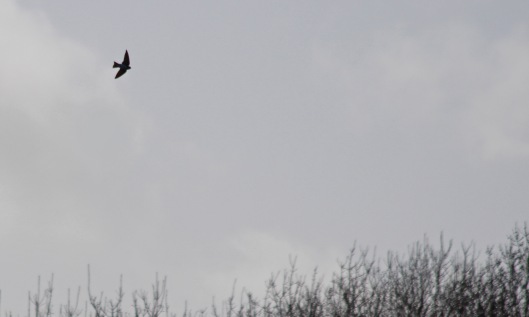
When I walked through the park this afternoon, three Sand martins were riding the blustery winds over Cosmeston’s west lake, twisting and swerving this way and that, hunting for tiny flying insects, feeding up after their marathon flights from Africa. What a joy it was to watch them!

200312 sand martin (1)200312 sand martin (2)200312 sand martin (3)

Like Loading...

66/366 Three Brown rats

06 Friday Mar 2020

Posted by sconzani in animals, mammal, nature

≈ 4 Comments

Tags

brown rat, Cosmeston, Cosmeston Lakes Country Park, Rattus norvegicus

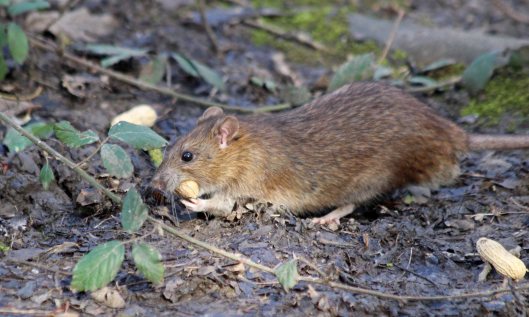
I found some kind soul had left a scattering of bird seed and peanuts, still in their shells, on the dirt by the side of the east lake at Cosmeston, when I walked there this afternoon. A Mute swan, a couple of Mallards and a few Tufted ducks were milling around at the water’s edge, presumably having just been fed, but they couldn’t reach these extra seeds. The food didn’t go to waste though. As I watched, first a set of twitching whiskers and then a pair of dark bulging eyes appeared over the edge of the bank … a Brown rat!

200306 Brown rat (1)

And then another …

200306 Brown rat (2)

And another … three Brown rats! One at a time, they ran out, grabbed a peanut shell, and scurried away to stash their finds somewhere safe. And on they went until all the peanuts had disappeared. They were so cute to watch.
200306 Brown rat (3)200306 Brown rat (4)200306 Brown rat (5)

Like Loading...

56/366 Spots and splashes

25 Tuesday Feb 2020

Posted by sconzani in fungi, lichen, nature

≈ 2 Comments

Tags

British fungi, British lichens, Common jellyspot, Cosmeston Lakes Country Park, Illosporiopsis christiansenii, lichenicolous fungus

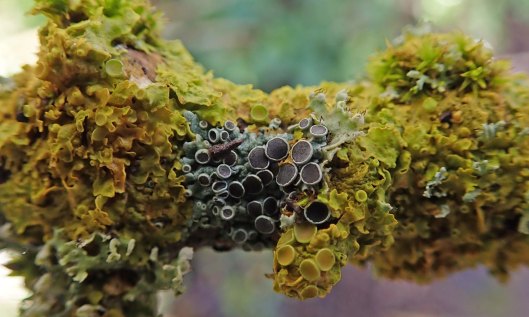
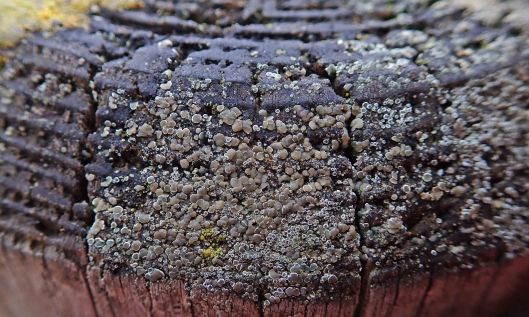
Amidst all the greys and browns and dull greens of the wintertime natural world, there are still wonderful wee spots and splashes of colour to be found. These are some I found during today’s stomp around Cosmeston, a rather rapid stomp trying, unsuccessfully, to avoid the rain showers.

200225 lichen and fungi (1)

200225 lichen and fungi (2)
200225 lichen and fungi (3)

I’m not good at identifying lichens but I do love their fresh, bright yellow-greens, especially on the twigs and small branches that have recently blown down from the tree tops.

200225 lichen and fungi (4)200225 lichen and fungi (5)

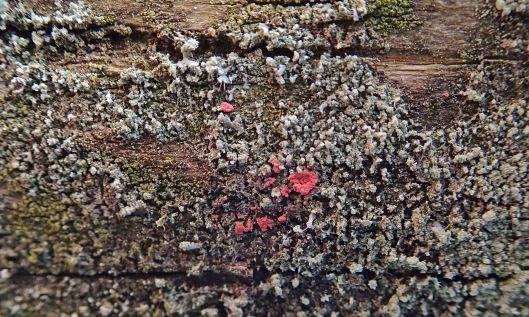
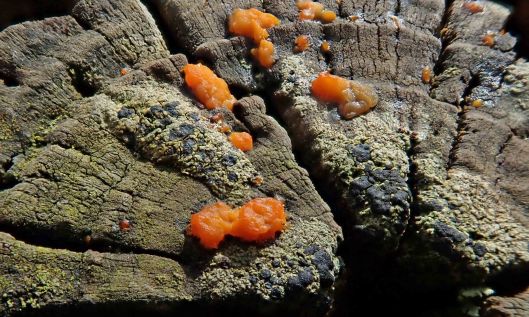
The tiny bursts of lollipop pink are Illosporiopsis christiansenii, a lichenicolous fungus (that’s a fungus which is parasitic on lichens, usually on Physcia tenella and sometimes on Xanthoria parietina).

200225 lichen and fungi (6)
200225 lichen and fungi (7)

And the pretty pops of orange, found on several fence posts, are Common Jellyspot fungus, Dacrymyces stillatus.

200225 lichen and fungi (8)

Like Loading...

34/366 Clever tit

03 Monday Feb 2020

Posted by sconzani in birds, nature

≈ 2 Comments

Tags

birding, birdwatching, British birds, Cogan Wood, Cosmeston Lakes Country Park, Marsh tit

My walk through Cogan Wood this afternoon was punctuated by stops, at tree stumps, a sculpted dead tree known locally as the dragon tree, by benches, and at particular shrubs and bushes, where I dispensed seed to the hungry small birds that immediately mobbed me.

200203 Marsh tit (1)

I was delighted that one of those hungry small birds was the resident Marsh tit, as I hadn’t seen it for a few weeks. And I was very impressed with its intelligence – whereas the myriad Great and Blue tits flit in, grab a single seed, and flit away into the bushes to eat it, the Marsh tit has learnt to grab at least two, once three seeds in its tiny beak before flying quickly off. What a clever little tit!

200203 Marsh tit (2)

Like Loading...
← Older posts
Newer posts →

About me

sconzani

sconzani

I'm a writer and photographer; researcher and blogger; birder and nature lover; countryside rambler and city strider; volunteer and biodiversity recorder.

View Full Profile →

Follow earthstar on WordPress.com

Enter your email address to follow this blog and receive notifications of new posts by email.

Recent blog posts

  • Birch polypore January 30, 2026
  • The Marl Med gull January 29, 2026
  • Recording Grey squirrels January 28, 2026
  • Jimmy Wren January 27, 2026
  • Millipede: Nanogona polydesmoides January 26, 2026

From the archives

COPYRIGHT

Unless otherwise acknowledged, the text and photographs on this blog are my own and are subject to international copyright. Nothing may be downloaded or copied without my permission.

Fellow Earth Stars!

  • Unknown's avatar
  • Unknown's avatar
  • Unknown's avatar
  • Unknown's avatar
  • Unknown's avatar
  • Unknown's avatar
  • Unknown's avatar
  • Unknown's avatar
  • Unknown's avatar
  • Unknown's avatar
  • Unknown's avatar
  • Unknown's avatar
  • Unknown's avatar
  • Unknown's avatar
  • Unknown's avatar
  • Unknown's avatar
  • Unknown's avatar
  • Unknown's avatar
  • Unknown's avatar
  • Unknown's avatar
  • Unknown's avatar
  • Unknown's avatar
  • Unknown's avatar
  • Unknown's avatar
  • Unknown's avatar
  • Unknown's avatar
  • Unknown's avatar
  • Unknown's avatar
  • Unknown's avatar
  • Unknown's avatar
  • Unknown's avatar
  • Unknown's avatar
  • Unknown's avatar
  • Unknown's avatar
  • Unknown's avatar
  • Unknown's avatar
  • Unknown's avatar
  • Unknown's avatar
  • Unknown's avatar
  • Unknown's avatar
  • Unknown's avatar
  • Unknown's avatar
  • Unknown's avatar
  • Unknown's avatar
  • Unknown's avatar
  • Unknown's avatar
  • Unknown's avatar
  • Unknown's avatar
  • Unknown's avatar
  • Unknown's avatar

Blog at WordPress.com.

Privacy & Cookies: This site uses cookies. By continuing to use this website, you agree to their use.
To find out more, including how to control cookies, see here: Cookie Policy
  • Subscribe Subscribed
    • earthstar
    • Join 670 other subscribers
    • Already have a WordPress.com account? Log in now.
    • earthstar
    • Subscribe Subscribed
    • Sign up
    • Log in
    • Report this content
    • View site in Reader
    • Manage subscriptions
    • Collapse this bar
 

Loading Comments...
 

You must be logged in to post a comment.

    %d