• ABOUT
  • BIRDING 2018
  • Birding 2019
  • BLOG POSTS
  • Butterflies 2018
  • Resources

earthstar

~ a celebration of nature

earthstar

Tag Archives: Grangemoor Park

92/366 The Devil’s butterfly?

01 Wednesday Apr 2020

Posted by sconzani in insects, nature, spring

≈ 1 Comment

Tags

British butterflies, butterfly, Grangemoor Park, Nettle tortoiseshell, Small tortoiseshell, spring butterflies

Today’s fascinating information on the once common, now less so Small tortoiseshell (Aglais urticae) is taken from Peter Eeles’s magnificent publication Life Cycles of British and Irish Butterflies (Pisces Publications, 2019). If you like butterflies and don’t have this book, you really should get it, as it’s jam-packed with amazing detail and fabulous photos.

200401 small tortoiseshell (1)

In the section on the Small tortoiseshell, Eeles reports on the variety of names it has had over the centuries: the Lesser Tortoise-shell Butterfly (James Petiver, Musei Petiveriani, 1699); Small Tortoiseshell (Benjamin Wilkes, Twelve New Designs of English Butterflies, 1742); and Nettle tortoiseshell (William Lewin, Twelve Papilios of Great Britain, 1795).

200401 small tortoiseshell (2)

Eeles also notes that, in Scotland, in the past, this lovely creature was called the Devil’s butterfly and the Witch’s butterfly, though he doesn’t explain how it got those unfortunate names.

200401 small tortoiseshell (3)

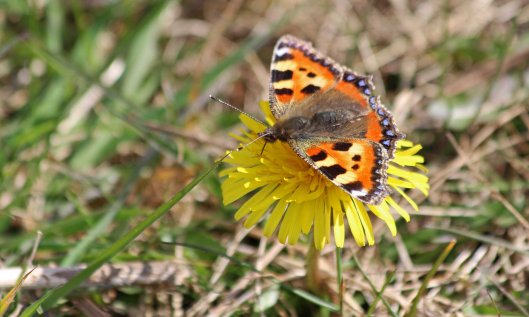
This particular Small tortoiseshell was the highlight of yesterday’s exercise walk around Grangemoor Park (luckily, Cardiff’s parks are still open, though this is the only one in walking distance for me). It was a joy to see, as we don’t get a lot of these butterflies in my local area, and I was delighted when it settled in a couple of places so I could get some photos.
200401 small tortoiseshell (4)

Like Loading...

86/366 Dandelions and Brimstones

26 Thursday Mar 2020

Posted by sconzani in insects, nature, spring, wildflowers

≈ 4 Comments

Tags

Brimstone, Brimstone butterfly, British butterflies, British wildflowers, dandelion, Gonepteryx rhamni, Grangemoor Park

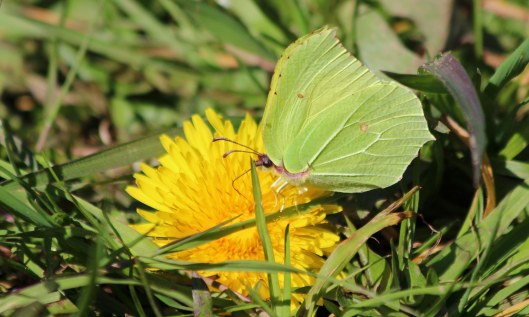
Here’s why it should be an offence to cut, spray or otherwise destroy blooming wildflowers – in this case, Dandelions, in particular.

200326 brimstone (1)

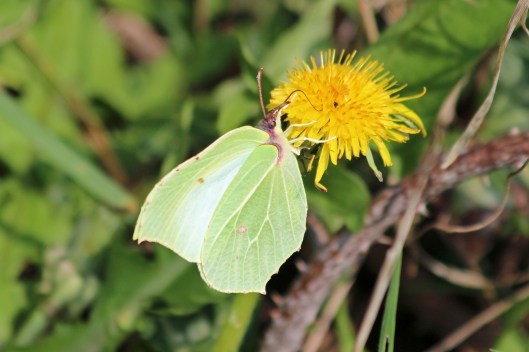
During yesterday’s daily exercise walk around Grangemoor Park I saw at least five Brimstone butterflies. These were all males, newly emerged from hibernation and already flying frantically back and forth along their chosen path-sides and hedgerows, seeking out females to mate with.

200326 brimstone (2)

As there aren’t yet many wildflowers in bloom at Grangemoor, when it came time to refuel for their next patrol flight, every single one of these Brimstones stopped and supped on Dandelion nectar. In fact, once I twigged to what they were doing, I took to checking every Dandelion I saw, just in case it held a butterfly. So, please, PLEASE, leave your Dandelions for the insects to feed on.

200326 brimstone (3)

Like Loading...

51/366 Mystery seedpod

20 Thursday Feb 2020

Posted by sconzani in nature, plants

≈ 10 Comments

Tags

flower seeds, Grangemoor Park, plant seeds, seed pod, seedpod, seeds

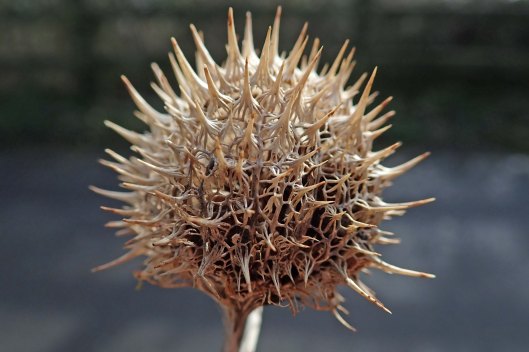
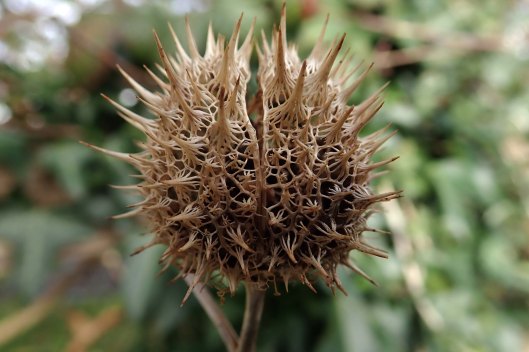
This seedpod is a mystery to me.

200220 mystery seedpod (1)

I found it alongside the path through Grangemoor Park in Cardiff, just two dried up stems about 12 inches tall, with seedpods – four in total – at the tips of each branched stem. No leaves remained and I saw no other similar plants anywhere along the path.

200220 mystery seedpod (2)

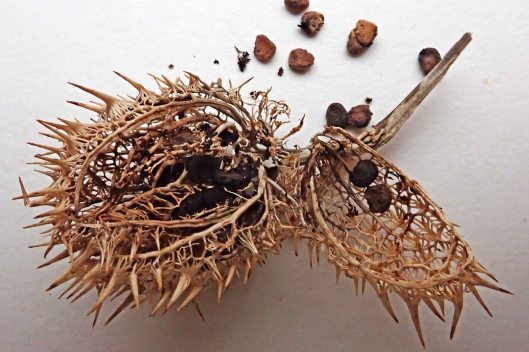
The structure of the seedpod is glorious, so sculptural. I brought two pods home with me, and one has now split into quarters, with small brown seeds spilling out of it.

200220 mystery seedpod (3)

But what is this plant? I’ve tried looking online but found nothing that matches. Of course, the solution would be to plant the seeds but I do not have a garden. I could try planting a couple of seeds in a pot but I’d rather return the seeds to the wild where I found them. So, if there are any botanists or plant people out there who recognise this seedpod, please do let me know in the comments below. Thanks!

p.s. Thanks to Barbara Brown, of BSBI Wales, I now know this is a species of Datura, possibly Datura stramonium, the Thorn-apple. In this case, the seedpod has lost all its flesh making it look a little different from the images I’ve found online.

Like Loading...

353/365 Oak curtain crust

19 Thursday Dec 2019

Posted by sconzani in fungi, nature, winter

≈ 1 Comment

Tags

British fungi, crust fungi, Grangemoor Park, Hymenochaete rubiginosa, Oak curtain crust

‘Nearly always associated with dead oak trees, this easily-overlooked crust fungus varies considerably in its appearance, sometimes mainly resupinate beneath fallen logs but usually in bracket form when on dead stumps,’ writes Pat O’Reilly on his First Nature website. The specimens of Oak curtain crust fungi I found yesterday, in Cardiff’s Grangemoor Park, were definitely growing on oak but, in this case, they were on thick, solid oak logs that have been used to construct benches and signposts.

191219 Oak Curtain Crust (2)

I always enjoy reading the etymology entries on O’Reilly’s website. Oak curtain crust’s binomial name is Hymenochaete rubiginosa, which is explained as follows:

Hymenochaete, the genus name, comes from hymen – a prefix referring to the fertile membrane (the crust surface), and -chaete perhaps from the Greek noun chaite meaning long hair and perhaps referring to the fine hairs (settae) on the upper surfaces of fungi in this generic group.
The specific epithet rubiginosa means rusty and refers to the reddish-brown colour of the hymenial (fertile) surface of this crust fungus.

191219 Oak Curtain Crust (1)

Like Loading...

209/365 Broad-leaved helleborines

28 Sunday Jul 2019

Posted by sconzani in 365DaysWildin2019, flowers, nature, wildflowers

≈ 6 Comments

Tags

British orchids, Broad-leaved helleborine, Grangemoor Park, native orchids

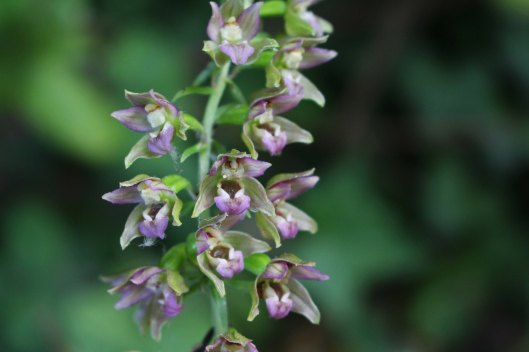
I almost left it too late!

190728 broad-leaved helleborines (1)

I’ve been keeping an eye on these Broad-leaved helleborines for over a month now: at my first visit, the flowers scarcely showed a tinge of red; at my second visit, on 14 July, a couple were in bloom but most still to open; and this morning, many of them had already started to go over.

190728 broad-leaved helleborines (5)
190728 broad-leaved helleborines (6)
190728 broad-leaved helleborines (7)

And, as today was quite windy, my photos are not very sharp so I’ve added in a couple from two weeks ago.

190728 broad-leaved helleborines (2)

Hey ho, at least I managed to see them in all their beauty before they disappear for another year.

190728 broad-leaved helleborines (3)
190728 broad-leaved helleborines (4)
Like Loading...

158/365 Latticed heath

07 Friday Jun 2019

Posted by sconzani in 365DaysWildin2019, insects, nature

≈ 2 Comments

Tags

British moths, Chiasmia clathrata, Cosmeston Lakes Country Park, day-flying moth, Grangemoor Park, Hamadryad Park, Latticed heath, Lavernock Nature Reserve, moth, moths

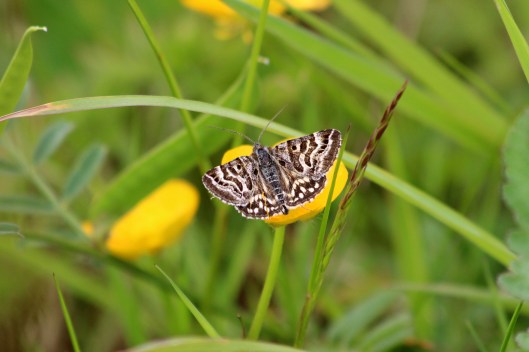
This is one of my favourite moths, a Latticed heath (Chiasmia clathrata, from the Greek chiasma, meaning formed like a cross, and clathrum, meaning lattice or grate, a reference to the lovely interlaced and criss-crossing patterns on its wings).

190607 lattice heath (1)

As well as flying in the night time, the Latticed heath also flies by day, which is how I’m able to see them, though they’re very good at hiding in amongst the long grass and wildflowers. I saw my first for 2019 on 23 May at Cosmeston, and I’ve since seen them at most of my regular haunts, Grangemoor and Hamadryad Parks in Cardiff, and Lavernock Nature Reserve.

190607 lattice heath (2)
190607 lattice heath (3)

It’s a smallish moth, with a wingspan between 20 and 25mm, and can be found around clovers and trefoils and lucerne, which are the plants its caterpillars feed on. The first adults can be seen in May and June, and then there’s a second generation that flies in August and September.

190607 lattice heath (4)

Like Loading...

151/365 Leptastic

31 Friday May 2019

Posted by sconzani in 365DaysWildin2019, insects, nature

≈ 2 Comments

Tags

#365DaysWild, British butterflies, British moths, Brown argus, butterflies, Cosmeston Lakes Country Park, Grangemoor Park, Large skipper, Latticed heath, Mother Shipton, moths

I’ve had a lucky week with my Lepidoptera sightings – that’s moths and butterflies, for those who didn’t know – and the week’s not over yet. As well as the Narrow-bordered Bee Hawk-moth on Monday and the Burnet Companions on Tuesday, yesterday I found my first (three) Large Skipper butterflies for the year at Cosmeston.

190531 large skipper (1)190531 large skipper (2)

And, today, my wander around Grangemoor Park was something of a Lep-fest, with the first (five) Mother Shipton moths I’ve seen in 2019.

190531 mother shipton (1)190531 mother shipton (2)

And I spotted a nice Latticed Heath moth trying to hide in the grass.

190531 latticed heath

And, then, just as I was about to head for home, I noticed something small flitting about along a side path, went to investigate and found two Brown Argus butterflies, which I have seen already this year but not in Wales. You can see why I named this blog ‘leptastic’!

190531 brown argus (1)190531 brown argus (2)

Like Loading...

119/365 Somebody’s got babies!

29 Monday Apr 2019

Posted by sconzani in 365DaysWildin2019, birds, nature, spring

≈ 6 Comments

Tags

#365DaysWild, birding, birdwatching, British birds, caterpillar, Grangemoor Park, long-tailed tit, tit feeding chicks

190429 Long-tailed tit (1)

How cute is this Long-tailed tit I spotted at Cardiff’s Grangemoor Park today? The caterpillar it’s found to feed its chicks is almost as big as it is.

190429 Long-tailed tit (2)
190429 Long-tailed tit (3)
Like Loading...

109/365 Welcome back, Whitethroats!

19 Friday Apr 2019

Posted by sconzani in 365DaysWildin2019, birds, nature, spring

≈ 3 Comments

Tags

#365DaysWild, birding, birdwatching, British birds, Common whitethroat, Grangemoor Park, Sylvia communis, Whitethroat

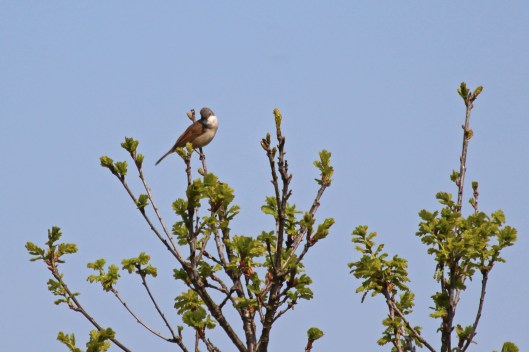
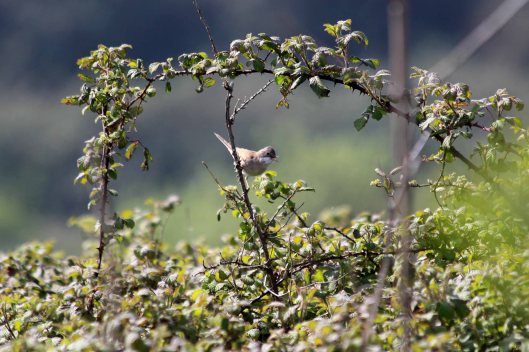
Did you know that the Whitethroat (Sylvia communis, also known as the Common whitethroat to distinguish it from the Lesser whitethroat, Sylvia curruca) is one of thirteen birds on the British list that has the colour white in its name?*

190419 whitethroat (1)

At least this is one bird that is relatively easy to identify, both because of that prominent white throat and because of its distinctive warbling song. And that’s how I managed to spot my first four Whitethroats of the year today at Cardiff’s Grangemoor Park, singing their hearts out, having just arrived back in the country after spending winter in the Sahel, just south of the Sahara.

190419 whitethroat (2)

* This is according to Stephen Moss’s excellent book Mrs Moreau’s Warbler: How birds got their names, Guardian Faber, London, 2018.

Like Loading...

97/365 Fluttering along

07 Sunday Apr 2019

Posted by sconzani in 365DaysWildin2019, insects, nature, spring

≈ 4 Comments

Tags

Brimstone butterfly, British butterflies, butterfly, Grangemoor Park, Green-veined white butterfly, Orange-tip butterfly, Peacock butterfly

I took myself along to Grangemoor Park today, hoping its central hillock would block the cool north-easterly winds so that I might find some butterflies on the warmer, sheltered, river side … and I did. The three Orange-tips – all males – were my first of the year, as was the single Green-veined white (at least, I think it’s a Green-veined white – I do find the whites can be a little confusing).

190407 orange-tip190407 green-veined white

The four Peacocks were mostly too zippy to photograph, until I caught one enjoying the sunshine on a wooden railing. And the two Brimstones were also speeding along the edge of the pathways, until one stopped to refuel and I managed to grab a couple of snaps of it. I love butterflies!

190407 peacock190407 brimstone

Like Loading...
← Older posts
Newer posts →

About me

sconzani

sconzani

I'm a writer and photographer; researcher and blogger; birder and nature lover; countryside rambler and city strider; volunteer and biodiversity recorder.

View Full Profile →

Follow earthstar on WordPress.com

Enter your email address to follow this blog and receive notifications of new posts by email.

Recent blog posts

  • Blackthorn in bloom January 11, 2026
  • Weevil: Mecinus pyraster January 10, 2026
  • Red in beak and claw January 9, 2026
  • Who’s watching who? January 8, 2026
  • Springtail: Orchesella cincta January 7, 2026

From the archives

COPYRIGHT

Unless otherwise acknowledged, the text and photographs on this blog are my own and are subject to international copyright. Nothing may be downloaded or copied without my permission.

Fellow Earth Stars!

  • Unknown's avatar
  • Unknown's avatar
  • Unknown's avatar
  • Unknown's avatar
  • Unknown's avatar
  • Unknown's avatar
  • Unknown's avatar
  • Unknown's avatar
  • Unknown's avatar
  • Unknown's avatar
  • Unknown's avatar
  • Unknown's avatar
  • Unknown's avatar
  • Unknown's avatar
  • Unknown's avatar
  • Unknown's avatar
  • Unknown's avatar
  • Unknown's avatar
  • Unknown's avatar
  • Unknown's avatar
  • Unknown's avatar
  • Unknown's avatar
  • Unknown's avatar
  • Unknown's avatar
  • Unknown's avatar
  • Unknown's avatar
  • Unknown's avatar
  • Unknown's avatar
  • Unknown's avatar
  • Unknown's avatar
  • Unknown's avatar
  • Unknown's avatar
  • Unknown's avatar
  • Unknown's avatar
  • Unknown's avatar
  • Unknown's avatar
  • Unknown's avatar
  • Unknown's avatar
  • Unknown's avatar
  • Unknown's avatar
  • Unknown's avatar
  • Unknown's avatar
  • Unknown's avatar
  • Unknown's avatar
  • Unknown's avatar
  • Unknown's avatar
  • Unknown's avatar
  • Unknown's avatar
  • Unknown's avatar
  • Unknown's avatar

Blog at WordPress.com.

Privacy & Cookies: This site uses cookies. By continuing to use this website, you agree to their use.
To find out more, including how to control cookies, see here: Cookie Policy
  • Subscribe Subscribed
    • earthstar
    • Join 669 other subscribers
    • Already have a WordPress.com account? Log in now.
    • earthstar
    • Subscribe Subscribed
    • Sign up
    • Log in
    • Report this content
    • View site in Reader
    • Manage subscriptions
    • Collapse this bar
 

Loading Comments...
 

You must be logged in to post a comment.

    %d