• ABOUT
  • BIRDING 2018
  • Birding 2019
  • BLOG POSTS
  • Butterflies 2018
  • Resources

earthstar

~ a celebration of nature

earthstar

Author Archives: sconzani

Cantharis decipiens

13 Tuesday May 2025

Posted by sconzani in insects

≈ 2 Comments

Tags

British soldier beetles, Cantharidae, Cantharis decipiens, soldier beetle

Another day, another recent new insect find, this time one of the Cantharidae, otherwise known as soldier beetles.
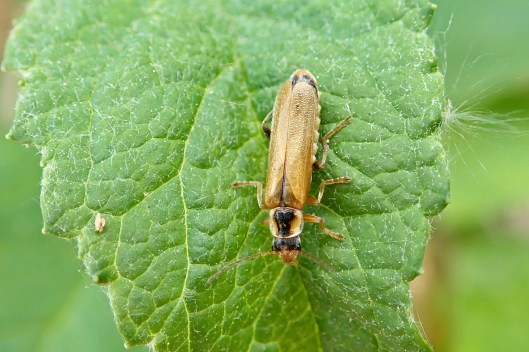
There are a couple of similar species but, if you check a series of particular features carefully, then you can be fairly confident of getting your identification of Cantharis decipiens correct. The Naturespot website has a very helpful checklist, which includes the beetle’s length (I often take a photo with my thumb or a finger in the image to help me figure that out later), the various colours of its body parts, and, what they charmingly call ‘the butternut squash black mark’ on the pronotum. If you’re not familiar with the shape of a butternut squash, you could be in trouble!
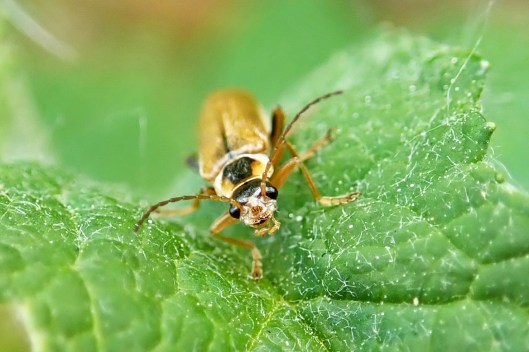
My second photo, the close up on its face, conveys exactly how I’m feeling today as, tomorrow, I’m finally FINALLY moving house!
Like Loading...

Cyllecoris histrionius, adult and nymph

12 Monday May 2025

Posted by sconzani in insects

≈ Leave a comment

Tags

British plant bugs, bugs on Oak, Cyllecoris histrionius, Cyllecoris histrionius adult, Cyllecoris histrionius nymph, Miridae, plant bugs

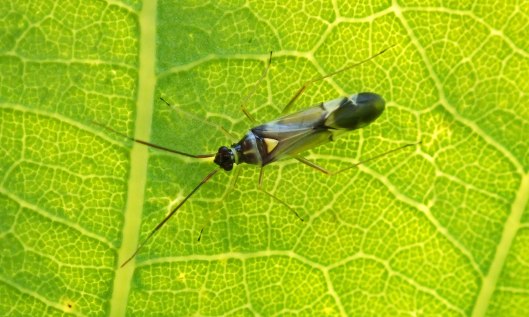
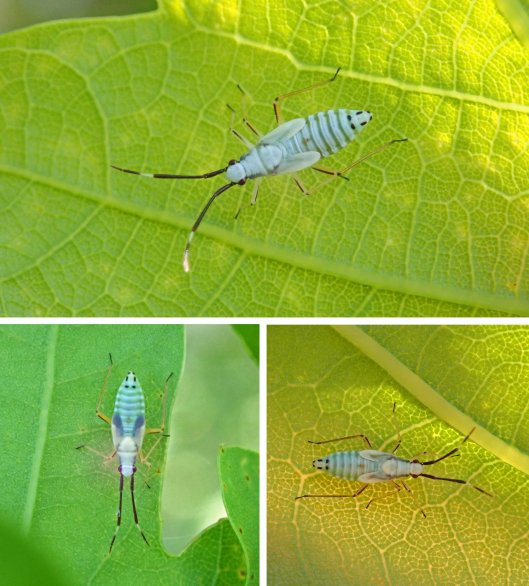
It’s not often that I manage to find both adult bugs and their nymphs at the same time but, during Saturday’s meander around local fields, I got lucky. These are Cyllecoris histrionius, members of the Miridae family, and they spend their lives on Oak trees. I’ve seen the adult bugs before, just not the young’uns.

There are a few plant bugs whose adults have markings quite similar to this one so care must be taken when identifying them, but it’s not too difficult. They are both carnivores and vegetarians, feeding on insects smaller than they are, like bark flies and aphids, as well as on parts of their host tree.

After laying their eggs, the adults die; they’re usually only seen from May through to July. In the Spring, the eggs hatch, and go through several stages (instars) before reaching adulthood. The gorgeous blue-green nymphs shown above are all final instars.

Like Loading...

White squared

11 Sunday May 2025

Posted by sconzani in flowers, spring, wildflowers

≈ 4 Comments

Tags

British wildflowers, spring wildflowers, white wildflowers

Over the past few weeks I’ve been gathering photographs of white wildflowers during my walks. These are what I’ve found: Bramble, Chickweed, Cleavers, Daisy, Garlic mustard, Hairy tare, Hedge parsley, Meadowsweet, Oxeye daisy, Three-cornered leek, Wavy bittercress, White clover, Wild strawberry, Wood anemone, and Woodruff.

Like Loading...

Colour variations in Large reds

10 Saturday May 2025

Posted by sconzani in insects

≈ Leave a comment

Tags

British odonata, colour changes in Large red damselflies, colour variations in Large red damselflies, Large red damselflies, Odonata, Pyrrhosoma nymphula

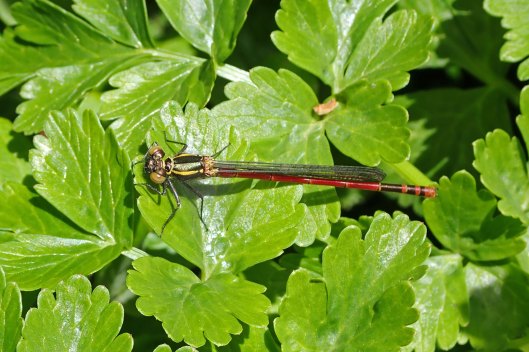
This was initially going to be a ‘Yay, the dragonflies are on the wing’ blog but then I went down a rabbit hole of how Large red damselflies change colour over time and how there are several variations in their colour patterns, and here we are.

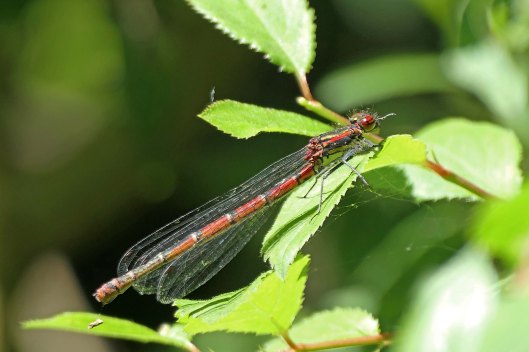
I saw my first odonata of the season, the Large red damselfly (Pyrrhosoma nymphula) shown above, on 21 April, but I’ve been holding off blogging about it until I found one that showed how these beauties change colour as they mature. The photo below was taken this morning, and I hope you can see how the antehumeral stripes (the longitudinal stripes on the sides of the thorax) have changed from yellow in the newly emerged damselfly to red in the older specimen. The eyes also darken to a very deep red as the damselflies age.

The ‘rabbit hole’ article, ‘In-depth Identification Feature – Large Red Damselflies’ by John Curd (which you can read on the British Dragonfly Society website), also pointed out the different colour forms’ based upon the extent of dorsal black on the abdomen’. John’s photos show the variations, which, I am a little ashamed to admit, I had never noticed before, and that led me to go back through my own photos of Large red damselflies.

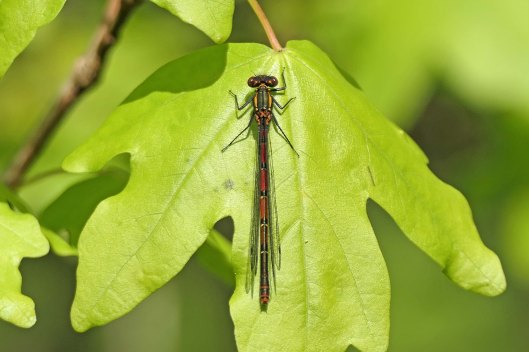
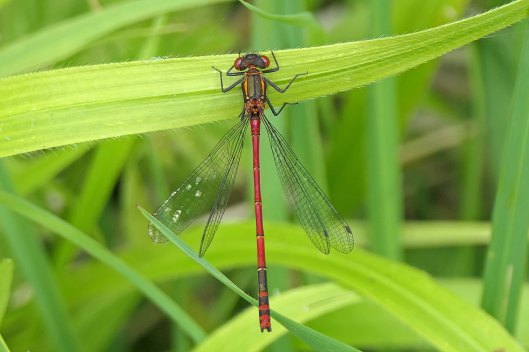
It turns out I’ve only ever photographed two of the variations: f. (form) typica/intermedia, shown above, which has more black at the sutures along the abdomen, and f. fulvipes, below, which has much less black. The latter seems much more common in my area, based on my photographs. The third form (or third and fourth, as some argue this one has two types), f. melanotum, is entirely black and is much rarer.

Like Loading...

A feast for the eyes

09 Friday May 2025

Posted by sconzani in insects

≈ Leave a comment

Tags

British butterflies, butterfly, fritillary butterflies, Marsh fritillary

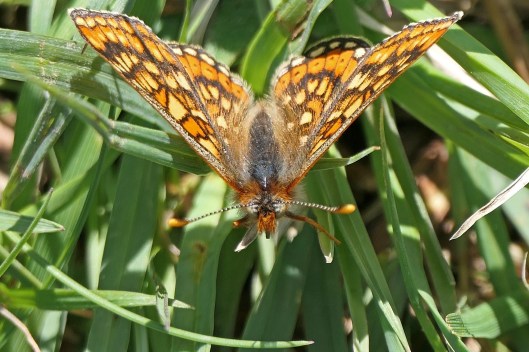
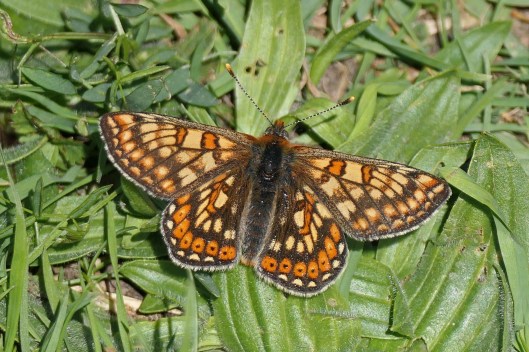
This was the truly magical sight that awaited me when I arrived at Lavernock Nature Reserve last Tuesday morning.

As I walked the footpaths across the fields, more Marsh fritillaries than I’ve ever seen before were flitting up briefly from their perches before settling back down again in the grass.

I’d heard last Sunday that the first fritillaries of the year had been spotted, which is around 10 days earlier than any previous year. That seems to be the norm with butterflies this year, with our warmer than usual and very dry Spring weather.

These Marsh fritillaries were illegally introduced to Lavernock back in 2022, a practice that seems to be increasing across Britain. Whether they will continue to thrive is unknown but, in the meantime, and despite the manner of their arrival and their unknown provenance, they are certainly a joy to behold.

Like Loading...

Birding news

08 Thursday May 2025

Posted by sconzani in birds, spring

≈ Leave a comment

Tags

birding, birdwatching, British birds, Carrion crow, dunnock, Goldfinch, Goldfinches bathing

Spring bird migration passed rather quietly this year, presumably because most incoming birds chose to fly straight through to their breeding locations rather than stop off here on the south Wales coast for a breather. And the breeding process is in full swing with the local birds – they’re either shouting from the bush tops about what a great mate they would be, or rushing around trying to find insects to feed hungry chicks.

In view of the breeding madness going on all around it, I was very impressed with how calm and serene this Dunnock was looking. Perhaps it’s too young to breed, or maybe its first attempt at nesting failed and it hasn’t yet tried again.

Sadly, I’m fairly sure this year’s nesting attempt has failed for my Crow family. For a couple of weeks, the male was desperate for food and quite obviously taking it back to one specific location in the woods, either to feed his mate and/or their offspring. But today both the male and female appeared for food and they had reverted to their usual practice of flying off short distances to stash food amongst low vegetation, then coming back for more. That’s the second year their breeding attempts have failed, which is concerning.

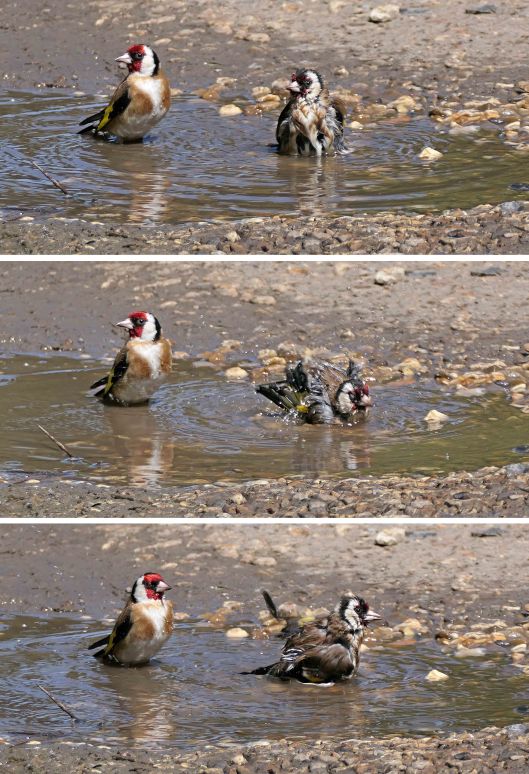
When the stress of life and breeding and chicks all gets too much, what’s a bird to do but find a nice puddle and have a good splash! These Goldfinches really looked like they were having fun.

Like Loading...

Anyone for a mocha?

07 Wednesday May 2025

Posted by sconzani in insects

≈ Leave a comment

Tags

British moths, Cyclophora annularia, moth, The Mocha

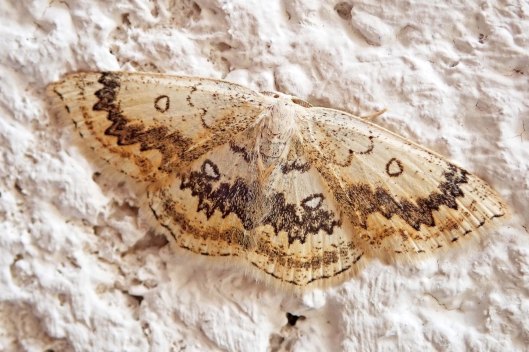
I’m not a coffee drinker but perhaps the person who gave this moth its common name was. Meet The Mocha (Cyclophora annularia), a gorgeous moth that’s described as scarce on the UK Moths website, though it seems from looking at the NBN Atlas for this species that sightings are concentrated in southern Britain so scarce the further north you go. Perhaps surprisingly, I found this one sitting on a house wall as I walked past this morning.

Like Loading...

Spiders: Philodromus species

06 Tuesday May 2025

Posted by sconzani in spiders

≈ Leave a comment

Tags

British spiders, Philodromidae, Philodromus spiders, running crab spiders

When I got my new guide book*, I very naively assumed it would help me identify all the spiders I saw. I should have known from tackling all the other types of creatures I’ve been trying to put names to that nothing is ever that easy.

These three spiders are a case in point. They all belong to the Philodromidae, the running crab spiders, of which, in Britain, there are 17 eight-eyed species in four genera.

Though they share a similar crab-like body structure, the three shown here all look quite different to my eye, and I thought I would be able to identify them but no! Highlighted in red in my book are those words I never like to read: ‘Microscopic examination of the genitalia is necessary to confirm identification of all species in these genera.’

* Lawrence Bee, Geoff Oxford and Helen Smith, Britain’s Spiders: a field guide, 2nd ed., Princeton University Press, Princeton, 2020.

Like Loading...

Leafhopper: Issus species

05 Monday May 2025

Posted by sconzani in insects

≈ Leave a comment

Tags

British cicadellidae, British leafhoppers, Issus coleoptratus, Issus nymph, Issus species, leafhopper, leafhopper nymph

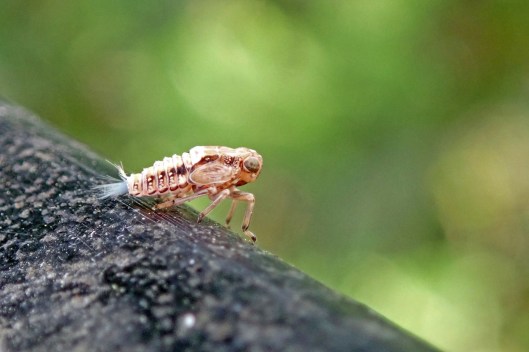
I’ve found two of these little leafhopper nymphs recently but was waiting for verification from the national recorder before posting about them. I recorded them as Issus coleoptratus but the recorder has changed them to Issus species.

The recorder is the expert, I certainly am not an expert but, in this case, I do think these are Issus coleoptratus, and here’s why. According to the Naturespot website entry for this species, there is only one confusion species, which is the much rarer Issus muscaeformis. Naturespot also includes excellent macro photographs of the identification features to look for on a nymph, which are more than 7 sensory pits on its back and pale horizontal bands on the frons (face), both of which I can see in my photos.

I will just have to look for the adult leafhoppers when they appear between June and November and hope that they will convince the national recorder. Meantime, I’m still really pleased to have found a new-to-me leafhopper species.

Like Loading...

Herb-Paris revisited

04 Sunday May 2025

Posted by sconzani in plants, spring, wildflowers

≈ Leave a comment

Tags

British wildflowers, Cwm George, Herb Paris, Herb-Paris, Paris quadrifolia, wildflower, woodland wildflowers

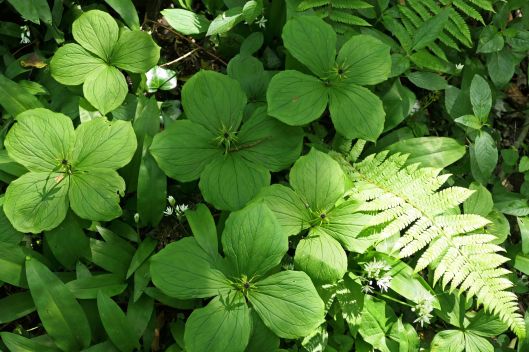
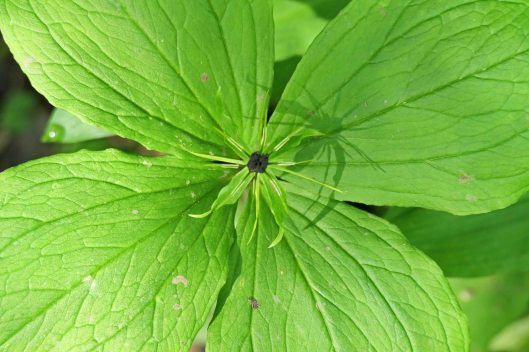
I’ve written about Herb-Paris (Paris quadrifolia) a couple of times before (Herb-Paris, May 2017 and Devil-in-a-bush, April 2021) but it’s such a lovely and unusual plant that I feel it deserves another post, this time primarily of images that I captured when I went on my annual Herb-Paris pilgrimage to Cwm George woodland, in Dinas Powys, earlier this week.

Like Loading...
← Older posts
Newer posts →

About me

sconzani

sconzani

I'm a writer and photographer; researcher and blogger; birder and nature lover; countryside rambler and city strider; volunteer and biodiversity recorder.

View Full Profile →

Follow earthstar on WordPress.com

Enter your email address to follow this blog and receive notifications of new posts by email.

Recent blog posts

  • Nesting material April 28, 2026
  • Lifer: Box bug April 27, 2026
  • Peak Wild garlic April 26, 2026
  • First damsels of 2026 April 25, 2026
  • NFY: Green-veined white April 24, 2026

From the archives

COPYRIGHT

Unless otherwise acknowledged, the text and photographs on this blog are my own and are subject to international copyright. Nothing may be downloaded or copied without my permission.

Fellow Earth Stars!

  • Unknown's avatar
  • Unknown's avatar
  • Unknown's avatar
  • Unknown's avatar
  • Unknown's avatar
  • Unknown's avatar
  • Unknown's avatar
  • Unknown's avatar
  • Unknown's avatar
  • Unknown's avatar
  • Unknown's avatar
  • Unknown's avatar
  • Unknown's avatar
  • Unknown's avatar
  • Unknown's avatar
  • Unknown's avatar
  • Unknown's avatar
  • Unknown's avatar
  • Unknown's avatar
  • Unknown's avatar
  • Unknown's avatar
  • Unknown's avatar
  • Unknown's avatar
  • Unknown's avatar
  • Unknown's avatar
  • Unknown's avatar
  • Unknown's avatar
  • Unknown's avatar
  • Unknown's avatar
  • Unknown's avatar
  • Unknown's avatar
  • Unknown's avatar
  • Unknown's avatar
  • Unknown's avatar
  • Unknown's avatar
  • Unknown's avatar
  • Unknown's avatar
  • Unknown's avatar
  • Unknown's avatar
  • Unknown's avatar
  • Unknown's avatar
  • Unknown's avatar
  • Unknown's avatar
  • Unknown's avatar
  • Unknown's avatar
  • Unknown's avatar
  • Unknown's avatar
  • Unknown's avatar
  • Unknown's avatar
  • Unknown's avatar

Blog at WordPress.com.

Privacy & Cookies: This site uses cookies. By continuing to use this website, you agree to their use.
To find out more, including how to control cookies, see here: Cookie Policy
  • Subscribe Subscribed
    • earthstar
    • Join 642 other subscribers
    • Already have a WordPress.com account? Log in now.
    • earthstar
    • Subscribe Subscribed
    • Sign up
    • Log in
    • Report this content
    • View site in Reader
    • Manage subscriptions
    • Collapse this bar

Loading Comments...

You must be logged in to post a comment.

    %d