• ABOUT
  • BIRDING 2018
  • Birding 2019
  • BLOG POSTS
  • Butterflies 2018
  • Resources

earthstar

~ a celebration of nature

earthstar

Author Archives: sconzani

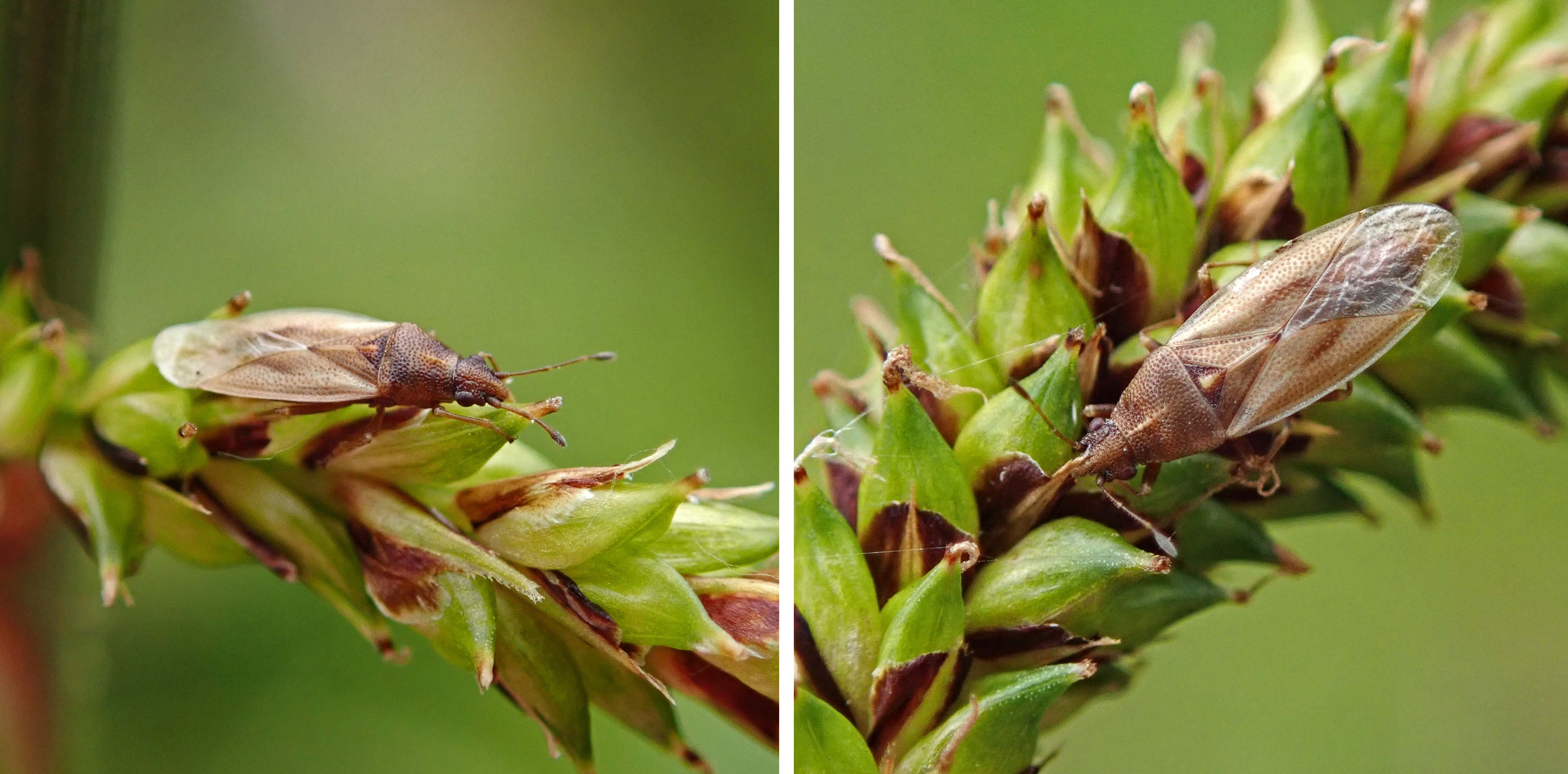
New bug: Cymus glandicolor

29 Wednesday May 2024

Posted by sconzani in insects

≈ Leave a comment

Tags

British bugs, bugs on sedge, Cymus glandicolor, groundbug, Lygaeidae, Pendulous sedge

As I’m stubborn and won’t use apps to help identify the things I find, it took me two and a half weeks to work out what these creatures are and then, truth be told, I only worked it out by using an app, Google lens, once I’d posted some images on Twitter and cried ‘help!’.

240529 cymus glandicolor (2)

I saw the tiny bugs first on this Pendulous sedge on 6 May, lots of them, mostly mating. After that sighting, I tried trawling through the images on the British Bugs website but couldn’t narrow down an identification. My excuse is that I focussed on checking through all the plant bugs, whereas this is actually a member of the Lygaeidae groundbug family.
240529 cymus glandicolor (3)

After seeing these little bugs on the exact same sedge (but not on other sedge plants nearby), still mostly mating, on 23 May, I decided to try again to find their name. And so, thanks to Google lens, I can at last introduce you to Cymus glandicolor, a lover of the damp places where sedges like to grow, mostly in England and Wales, though recently recorded also in Scotland according to the British Bugs website.

240529 cymus glandicolor (1)

Like Loading...

Galls: Taphrina pruni

28 Tuesday May 2024

Posted by sconzani in fungi, trees

≈ Leave a comment

Tags

Bladder plum gall, British galls, gall caused by fungal pathogen, gall on Blackthorn, gall on plum tree, Pocket plum gall, Taphrina pruni

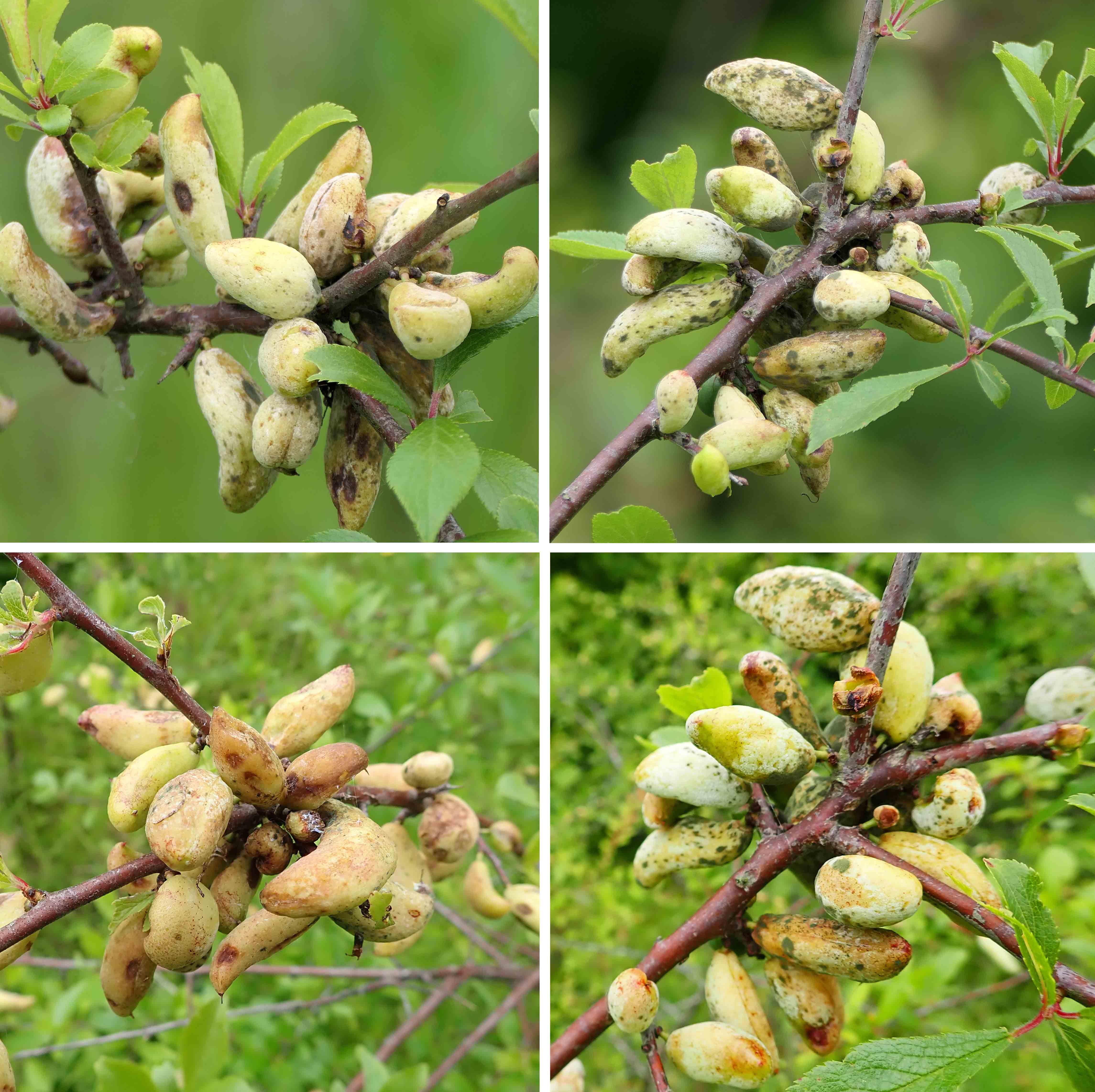
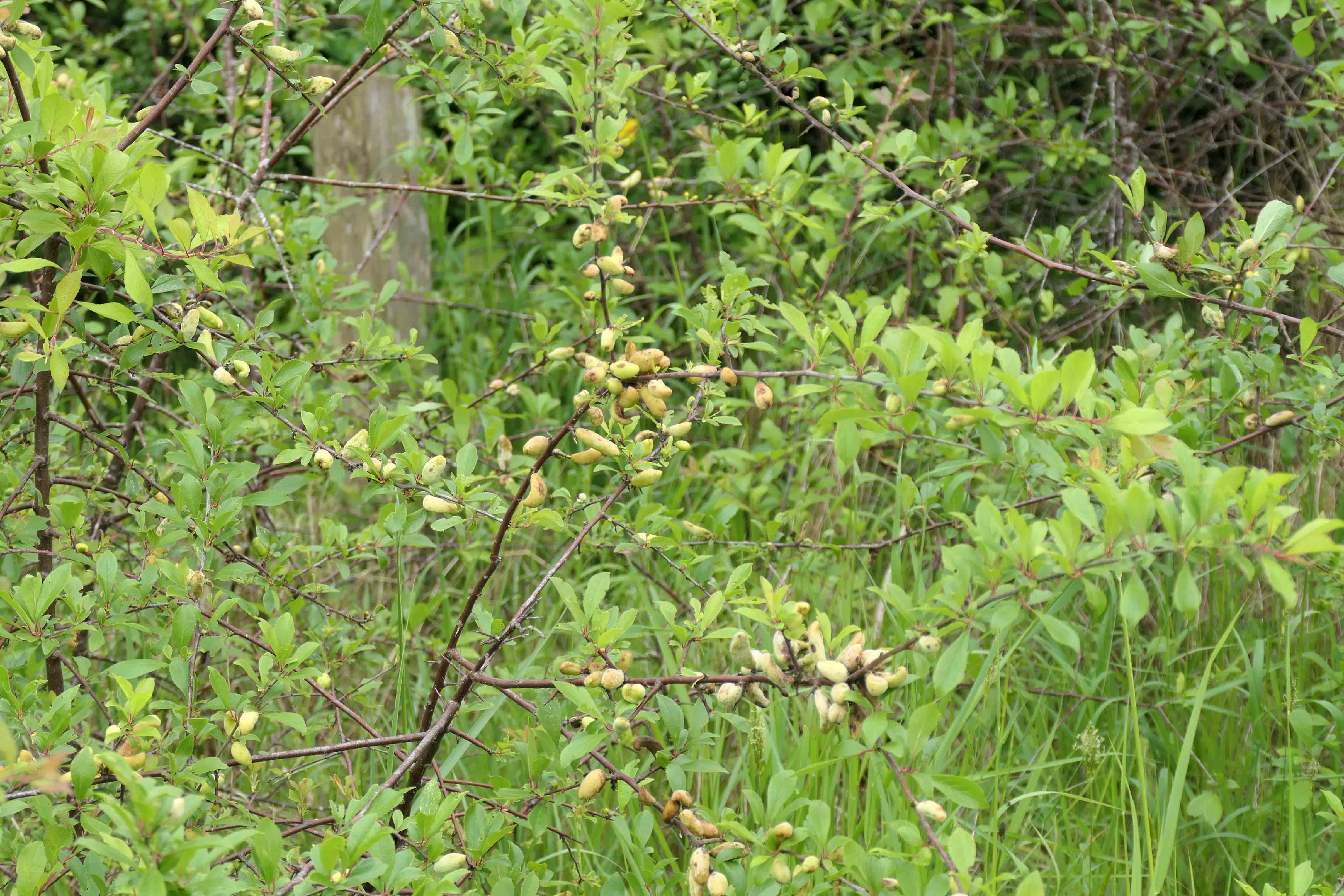
I’ve looked for these galls for some time, and, like that saying about buses (‘you wait ages for one, then two come along at the same time’), I’ve now seen them twice in the past couple of days.

240528 taphrina pruni (1)

Though you’d be forgiven for not recognising them, these are the fruit of the Blackthorn or Sloe (Prunus spinosa) but they have been attacked by a fungal pathogen. That pathogen changes the shape and the colour of the fruit and, if you were to split one open (which I did), you would find that there is no stone inside (or, rather, there is a miniscule speck of brown matter that would have developed in to a stone). The gall is sometimes referred to the Pocket or Bladder plum gall and can also affect domestic plum trees.

240528 taphrina pruni (2)

Like Loading...

Leafmines: Orchestes quercus

27 Monday May 2024

Posted by sconzani in insects, trees

≈ Leave a comment

Tags

British leafmines, leafmine on Oak, leafmining weevil, oak tree, Orchestes quercus, weevil leafmines

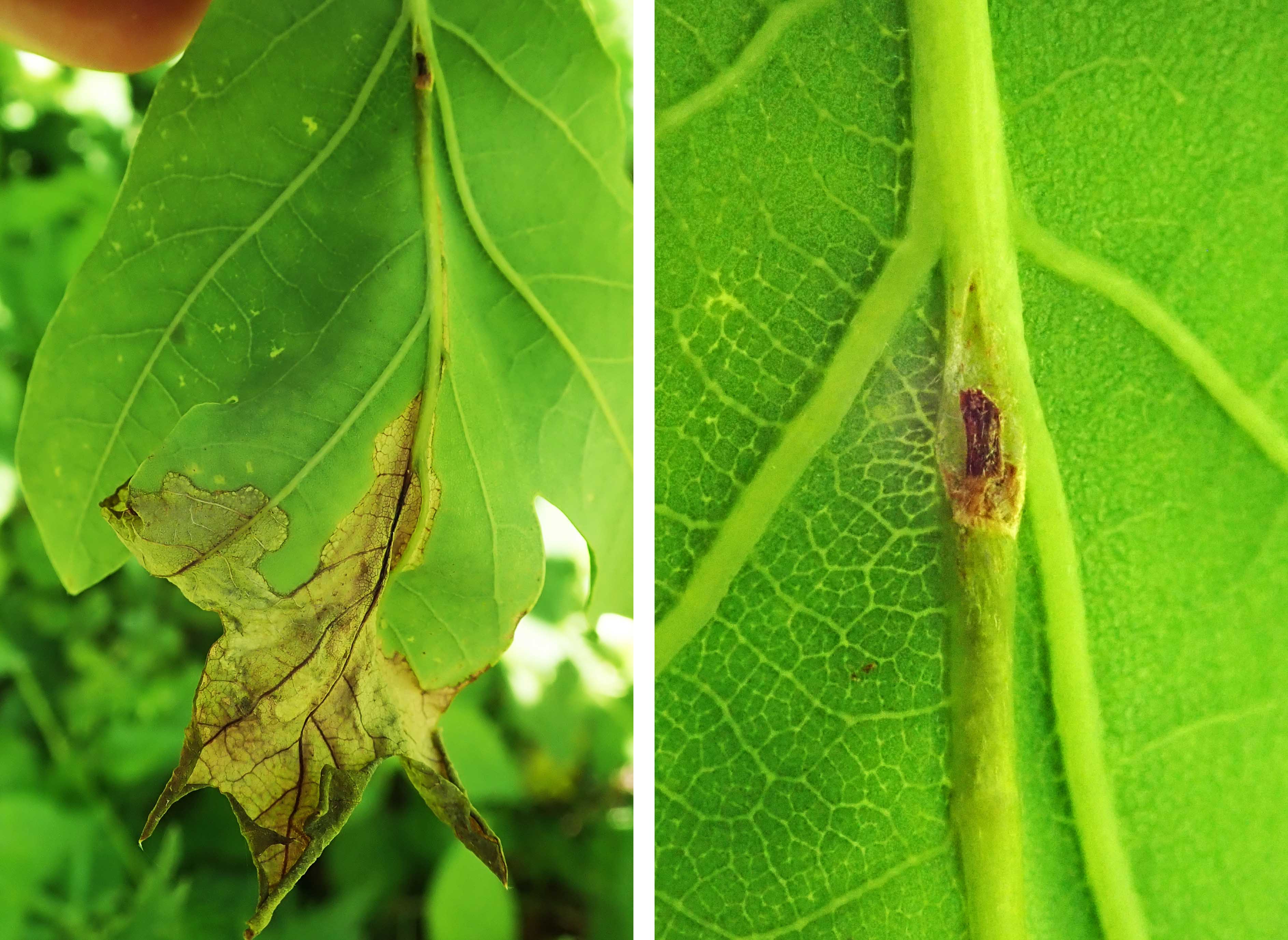
During a wander along the woodland rides of Casehill Woods last Saturday, I spent some time checking Oak leaves for whatever creatures might be living amongst them. One of my finds was this leafmine, a new one for me, made not by a moth or a fly as most leafmines are, but by a weevil.

240527 Orchestes quercus (1)

A female Orchestes quercus weevil laid her egg in the central rib of the leaf (you can see the scar in the photo on the right, below). Once hatched, the larva munched its way down the side of the leaf rib, creating a thin gallery in the epidermis, before its more voracious feeding as it grew created a large blotch mine at the tip of the leaf.

240527 Orchestes quercus (2)

The UK Beetles website has a photo of the adult weevil, a tiny brown hairy creature around 3mm long. Although I searched for any weevils amongst the Oak leaves (I also found the larval mines of another weevil, Orchestes hortorum, formerly O. signifier), I found none.

Like Loading...

Common broomrape

26 Sunday May 2024

Posted by sconzani in plants, wildflowers

≈ 2 Comments

Tags

British wildflowers, broomrape, Common broomrape, Orobanchaceae, Orobanche minor, parasitic plant

The broomrapes, the Orobanchaceae, are curious plants – as they’re unable to produce their own chlorophyll they get it by parasitising the roots of other plants. Until last week, I had only ever seen Ivy broomrape (Orobanche hederae) but, on my way to Grangemoor Park for a meander, growing amongst wildflowers along a road verge, I found another of the nine native species of broomrape in Britain. This strange beauty is Common broomrape (Orobanche minor), which most often taps in to the roots of members of the pea family (the Fabaceae) and the daisy family (the Asteraceae), but will also parasitise many other plant species.

240526 common broomrape

Like Loading...

First ever Slender groundhopper

25 Saturday May 2024

Posted by sconzani in insects

≈ Leave a comment

Tags

British orthoptera, Parc Penallta, Slender groundhopper, Tetrix subulata

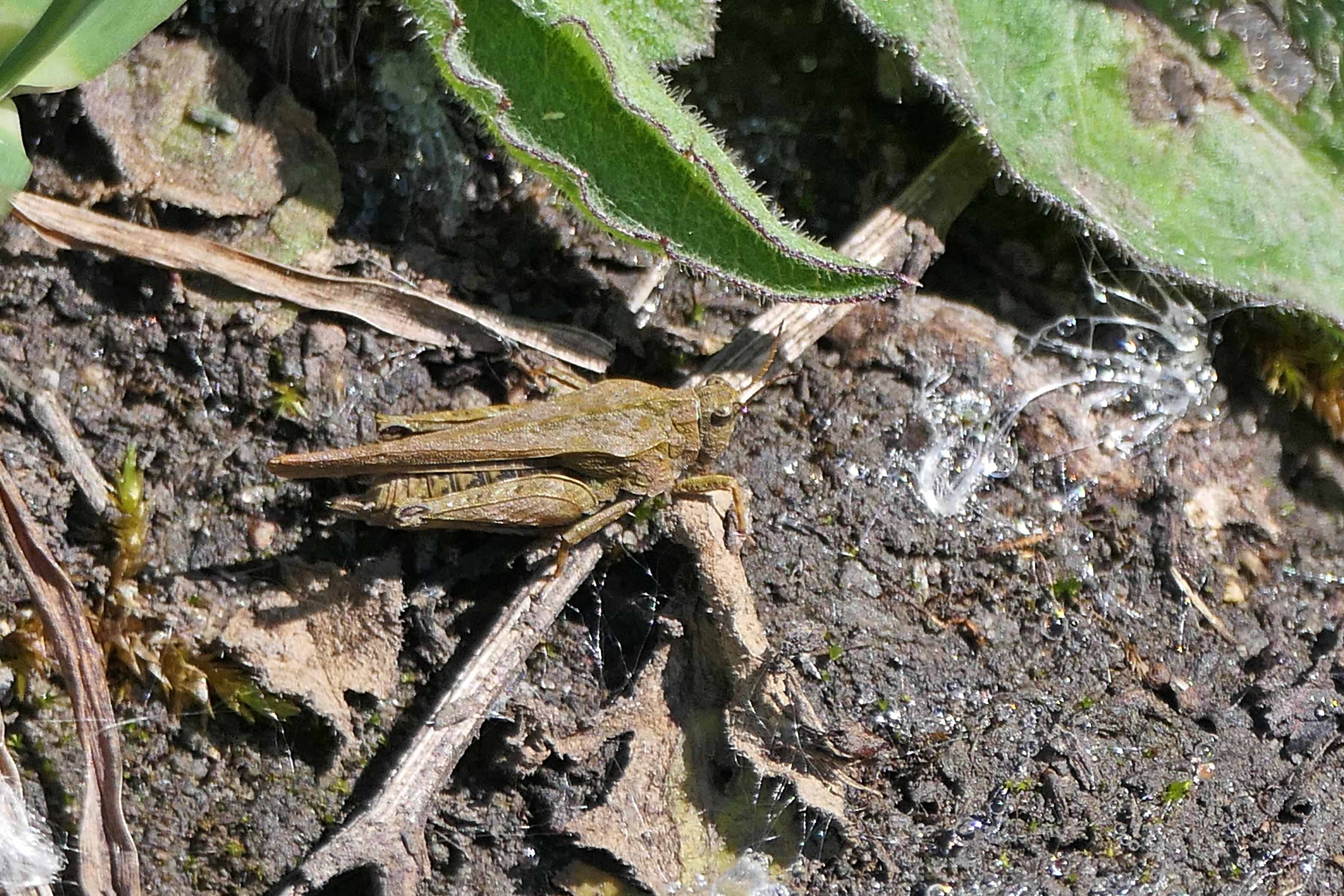
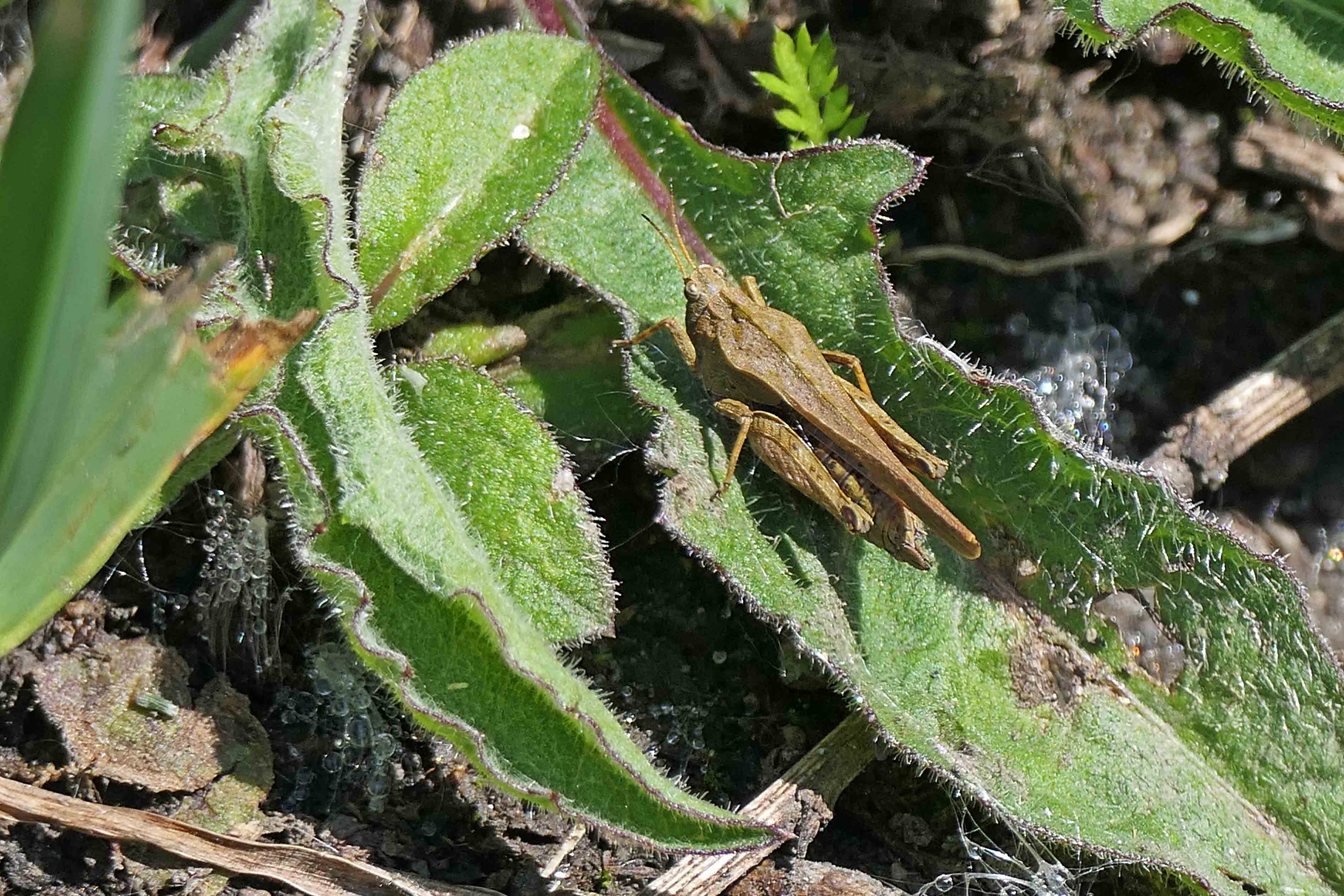
It’s always exciting to find a new beastie, though, in truth, they often find me and I don’t always know what they are when I first see them. That was the situation with this little creature, a Slender groundhopper (Tetrix subulata).

240525 Slender Ground-hopper (1)

For a change of scenery, I’d taken a train up one of the local Welsh valleys for a wander around Parc Penallta, a former coal spoil tip. Though it was a warm, sunny day, wildlife was thin on the ground, so when something tiny hopped out of the way of my walking boot, I quickly bent over to investigate. The creature looked grasshopper-like but not one I recognised. Luckily, its shape is distinctive so, when I got home, some online searches quickly turned up a name.

240525 Slender Ground-hopper (2)

Though the Slender groundhopper can be found in much of the southern half of Britain, it is not common in my area so I was very pleased to see this interesting species.

Like Loading...

Lifer: Red-eyed damselfly

24 Friday May 2024

Posted by sconzani in insects

≈ Leave a comment

Tags

British damselflies, British odonata, damselfly, Erythromma najas, Large redeye, Odonata, Red-eyed damselfly

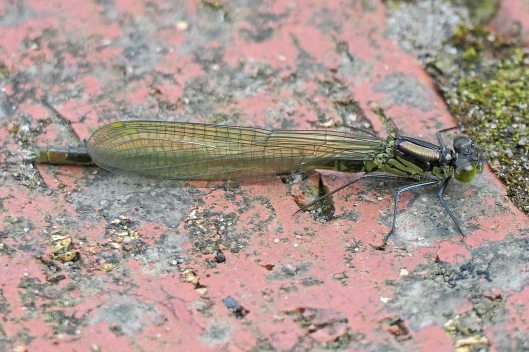
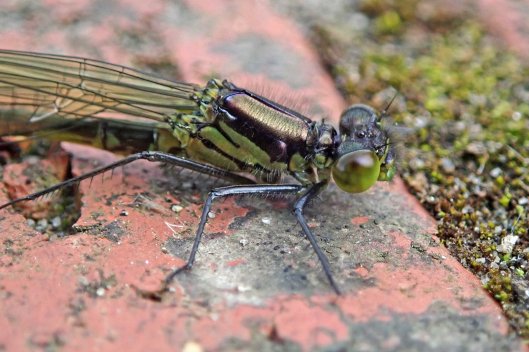
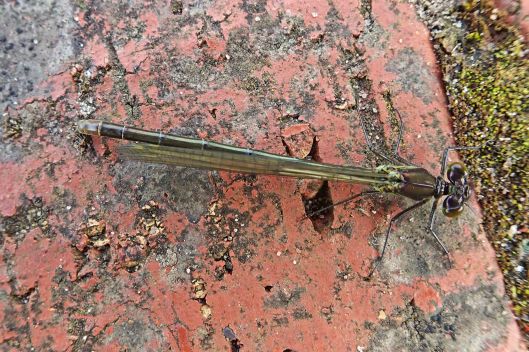
I was having a lovely time watching the antics of the Mute swan cygnets (Eight cygnets, 18 May) when this little damselfly flitted up from the water a couple of metres below where I was standing and settled on the path by my feet. I’m happy to admit that I had no idea which species it was but I did think it ‘looked different’ and so was happily surprised that it stayed put while I took lots of photographs.

240524 red-eyed teneral male (3)

At home, once I’d gone through my images, I trawled through my guide book and checked online websites, but I couldn’t work out what this damselfly was. So, as often happens, I posted some photos on Twitter/X and asked for help. Two people popped up with Red-eyed damselfly (Erythromma najas, also known as Large redeye) as a possibility, one of them tagged a local dragonfly recorder, and I tagged Dave Smallshire, co-author of the Europe’s Dragonflies guide book.

240524 red-eyed teneral male (1)

Within a couple of hours, the identification had been confirmed, though the gender took a little longer to determine. Dave Smallshire came to the rescue: ‘It’s a newly-emerged male Red-eyed Damselfly. ID is always tricky with teneral, but this has pale terminal segments and lacks pale ‘shoulder’ stripe.’ As well as being a lifer for me, my find was in a new site for Cardiff, and the following day both a male and female were seen, so I’m excited to go back myself and look for more.

240524 red-eyed teneral male (2)

Like Loading...

Magical Marsh fritillaries

23 Thursday May 2024

Posted by sconzani in insects

≈ Leave a comment

Tags

British butterflies, butterfly, fritillaries, Lavernock Nature Reserve, Marsh fritillary

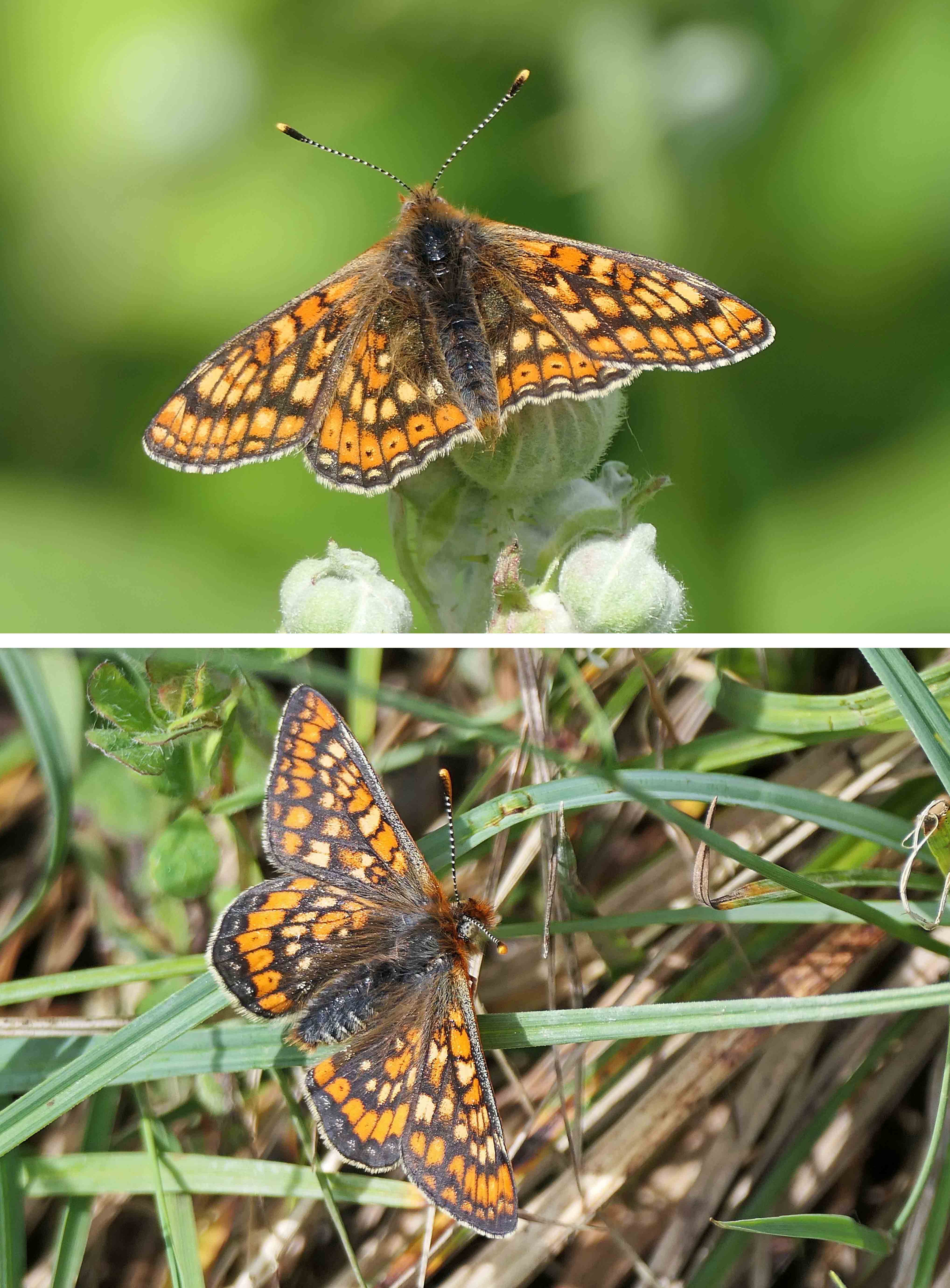
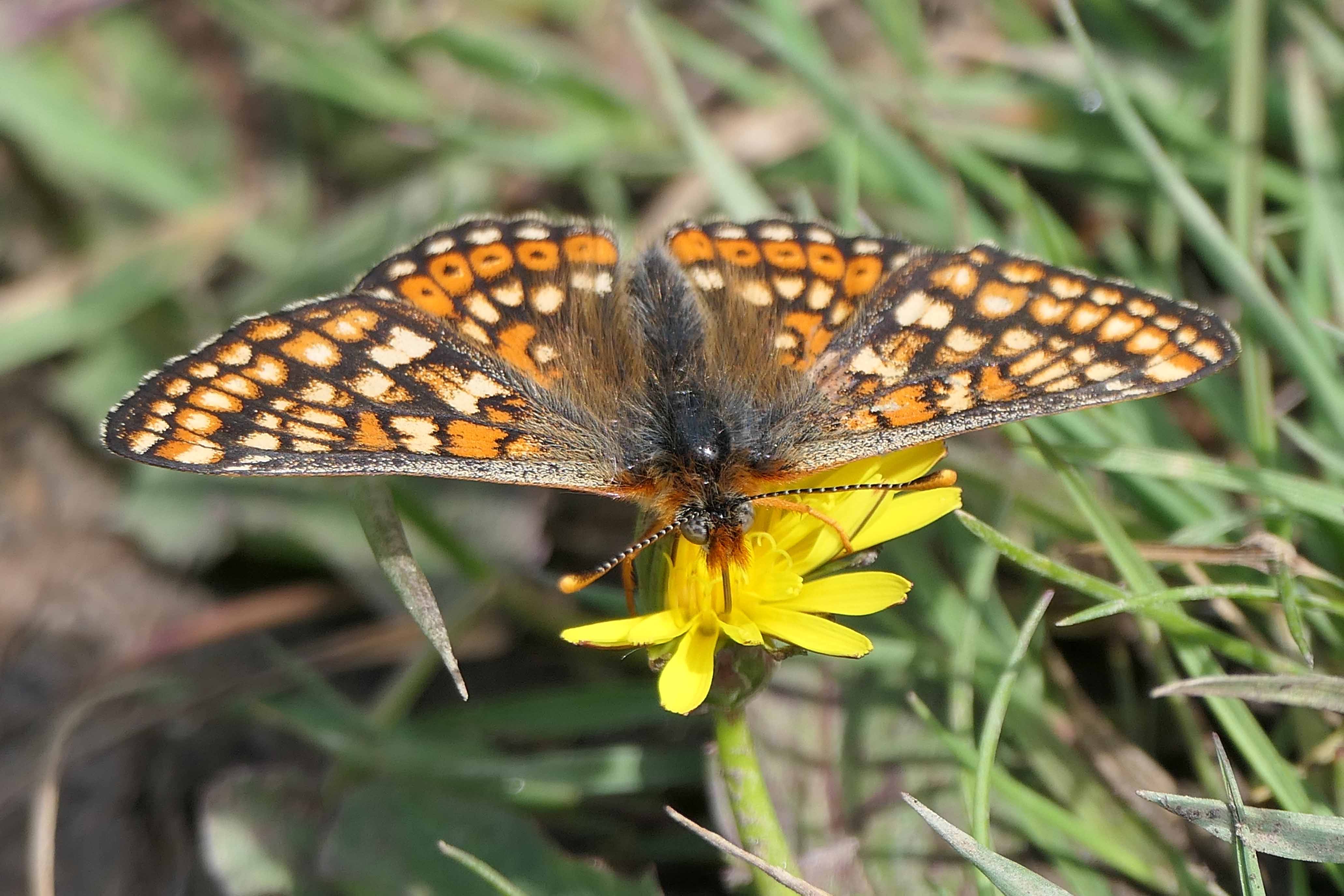
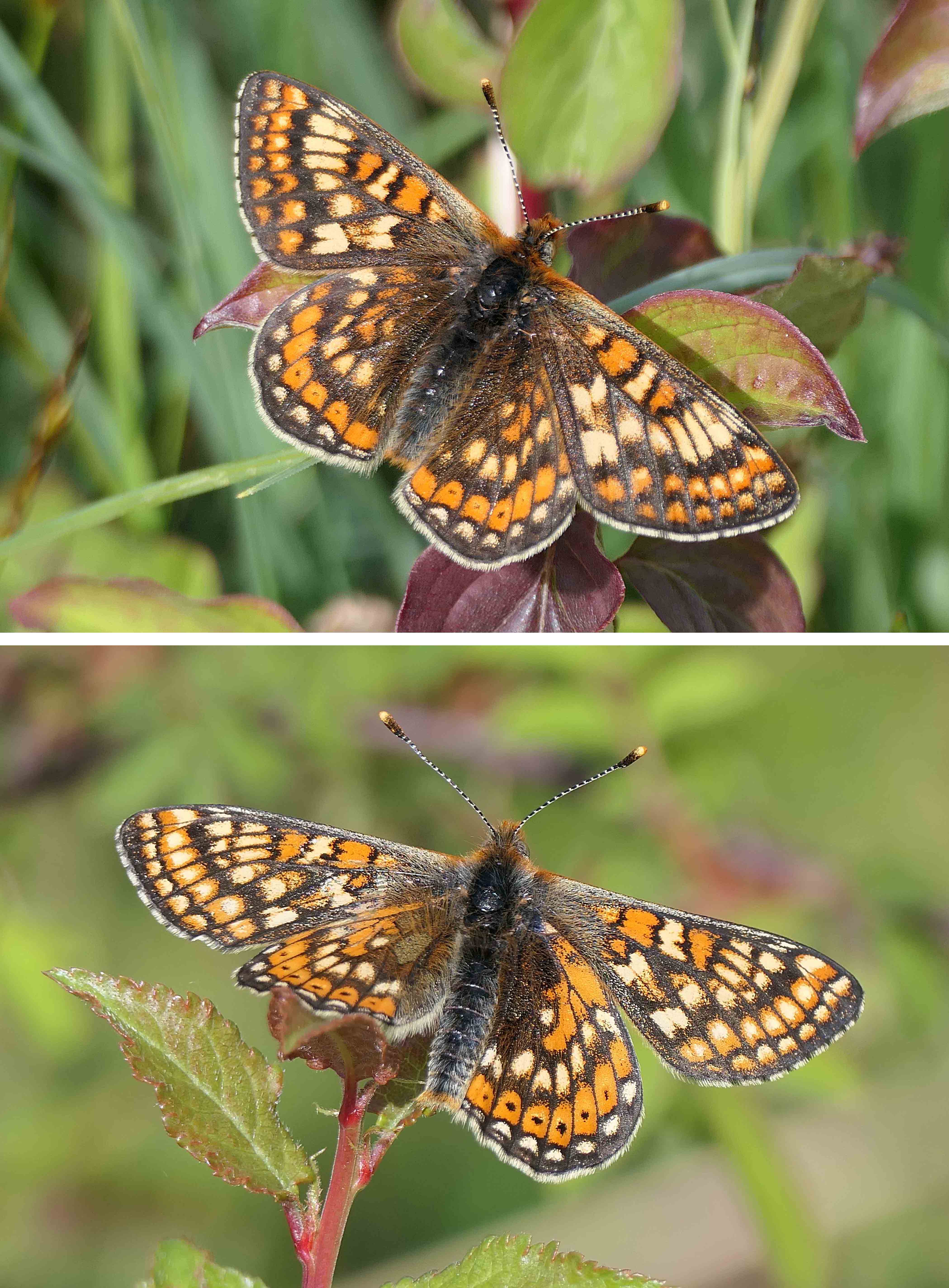
As I reported last year (The illegals, 30 May 2023), some person or persons unknown have illegally introduced Marsh fritillary butterflies to Lavernock Nature Reserve.

240523 marsh fritillary (1)

Judging by the number of butterflies that have emerged there over the past week, the illegal fiddling continues – the amount of Devil’s-bit scabious growing in their field could not have supported the larvae necessary to produce the number of butterflies now being seen so it seems likely that more larvae or pupae have been planted.

240523 marsh fritillary (4)

Regardless of their provenance, the butterflies themselves are as magical and magnificent as ever, and it’s an absolute joy to watch them.

240523 marsh fritillary (3)

Like Loading...

Cranefly: Tipula lunata

22 Wednesday May 2024

Posted by sconzani in insects

≈ Leave a comment

Tags

British craneflies, cranefly, Tipula lunata

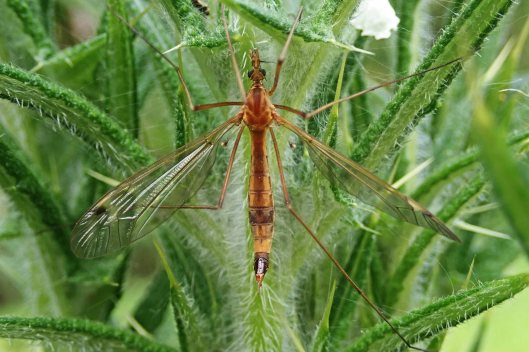
Luck was with me when I spotted this attractive new-to-me cranefly; I was leaning down to photograph a flower at ground level when I turned my head to see it on a plant next to me. ‘Oh, hello.’ Click, click, click.

240522 tipula lunata

Though there are some similarly marked cranefly species, it turns out that my identification of this as Tipula lunata is correct. The Naturespot website reports that it can be found from May through to July in well vegetated areas throughout Britain, so keep an eye out when you’re out and about in Nature.

Like Loading...

Hello, Hairy!

21 Tuesday May 2024

Posted by sconzani in insects

≈ Leave a comment

Tags

Brachytron pratense, British dragonflies, Cardiff Bay Wetlands Reserve, dragonfly, Hairy dragonfly, Hairy hawker

Finally, my first dragonfly of the year appeared during last Thursday’s circuit of Cardiff Bay. This stunning Hairy dragonfly (also known as Hairy hawker) (Brachytron pratense) flew a circuit of the reeds near the boardwalk at the wetlands reserve before settling on a clump close to where I was standing. It was a little obscured by stalks blowing in the gentle breeze but I managed to get a few reasonable photos of this handsome-looking dragon.

240521 hairy dragonfly

Like Loading...

Leafmines: Coleophora follicularis

20 Monday May 2024

Posted by sconzani in insects, plants

≈ Leave a comment

Tags

Agrimony case-bearer, British moths, casebearing moth larvae, Coleophora follicularis, Hemp-agrimony, leaf-mining moth larvae, leafminers on Hemp agrimony

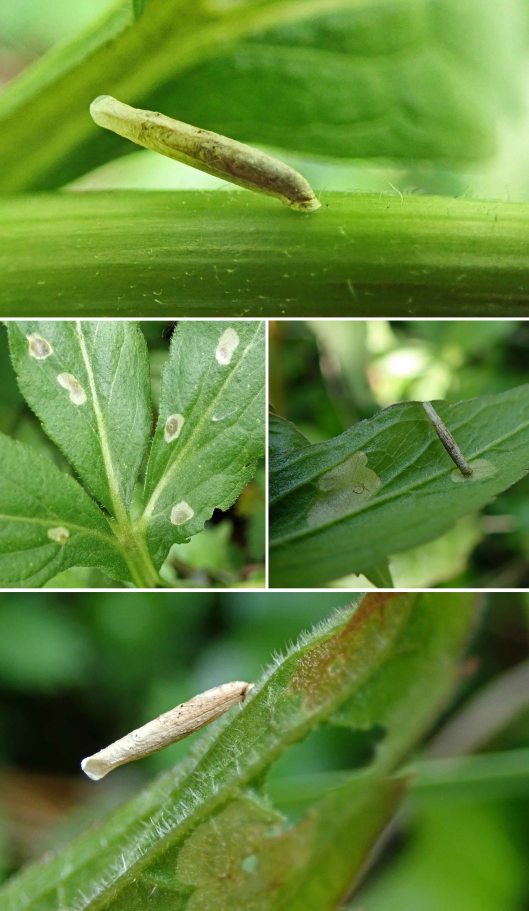
As often happens, I was alerted to the existence of this leafminer by a post on Twitter of someone else finding one. So, in the following days, I pointed my walking shoes in the direction I knew I would find their host plant for a little leaf staring, and Bob’s your uncle (such a strange expression, don’t you think?)! After checking two or three clumps of Hemp-agrimony (Eupatorium cannabinum), I spotted the tell-tale feeding signs (see photos below) and, lurking beneath a leaf, my first Coleophora follicularis (Agrimony case-bearer).

240520 Coleophora follicularis

According to the British Leafminers website, as well as feeding on Hemp-agrimony, these larvae also feed on Common fleabane (Pulicaria dysenterica) and Ploughman’s-spikenard (Inula conyzae), and the times of year of the appearance of the larvae and adults vary depending on the larval food plant. When Hemp-agrimony is used, the mines can be found in April-May and then again in July-August. The UK Moths website shows an adult moth that has a subtle pattern of beige and cream stripes, a smart-looking little flier.

Like Loading...
← Older posts
Newer posts →

About me

sconzani

sconzani

I'm a writer and photographer; researcher and blogger; birder and nature lover; countryside rambler and city strider; volunteer and biodiversity recorder.

View Full Profile →

Follow earthstar on WordPress.com

Enter your email address to follow this blog and receive notifications of new posts by email.

Recent blog posts

  • Thrift March 29, 2026
  • The day of the Wheatears March 28, 2026
  • Cetti’s warblers March 27, 2026
  • Goose barnacles March 26, 2026
  • Black-tailed godwits fighting March 25, 2026

From the archives

COPYRIGHT

Unless otherwise acknowledged, the text and photographs on this blog are my own and are subject to international copyright. Nothing may be downloaded or copied without my permission.

Fellow Earth Stars!

  • Unknown's avatar
  • Unknown's avatar
  • Unknown's avatar
  • Unknown's avatar
  • Unknown's avatar
  • Unknown's avatar
  • Unknown's avatar
  • Unknown's avatar
  • Unknown's avatar
  • Unknown's avatar
  • Unknown's avatar
  • Unknown's avatar
  • Unknown's avatar
  • Unknown's avatar
  • Unknown's avatar
  • Unknown's avatar
  • Unknown's avatar
  • Unknown's avatar
  • Unknown's avatar
  • Unknown's avatar
  • Unknown's avatar
  • Unknown's avatar
  • Unknown's avatar
  • Unknown's avatar
  • Unknown's avatar
  • Unknown's avatar
  • Unknown's avatar
  • Unknown's avatar
  • Unknown's avatar
  • Unknown's avatar
  • Unknown's avatar
  • Unknown's avatar
  • Unknown's avatar
  • Unknown's avatar
  • Unknown's avatar
  • Unknown's avatar
  • Unknown's avatar
  • Unknown's avatar
  • Unknown's avatar
  • Unknown's avatar
  • Unknown's avatar
  • Unknown's avatar
  • Unknown's avatar
  • Unknown's avatar
  • Unknown's avatar
  • Unknown's avatar
  • Unknown's avatar
  • Unknown's avatar
  • Unknown's avatar
  • Unknown's avatar

Blog at WordPress.com.

Privacy & Cookies: This site uses cookies. By continuing to use this website, you agree to their use.
To find out more, including how to control cookies, see here: Cookie Policy
  • Subscribe Subscribed
    • earthstar
    • Join 642 other subscribers
    • Already have a WordPress.com account? Log in now.
    • earthstar
    • Subscribe Subscribed
    • Sign up
    • Log in
    • Report this content
    • View site in Reader
    • Manage subscriptions
    • Collapse this bar
 

Loading Comments...
 

You must be logged in to post a comment.

    %d