From me and the bee …
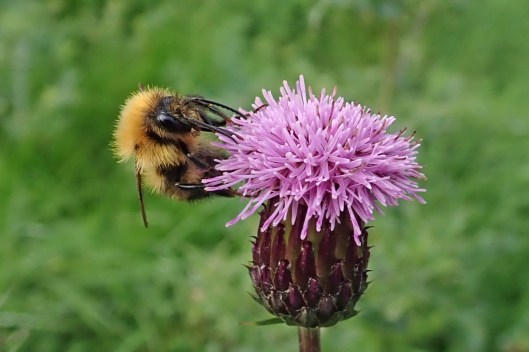

26 Friday Oct 2018
Posted in insects, nature, wildflowers
From me and the bee …
20 Saturday Oct 2018
Tags
British bugs, Bute Park, Graphocephala fennahi, leafhopper, rhododendron bug, rhododendron leafhopper
I enjoyed a delightful long meander in Cardiff’s magnificent Bute Park yesterday (there will be a blog, probably tomorrow, once I finish going through my photos) and, in the course of that, I made sure to visit one particular small patch of rhododendron. The reason is these little critters, Rhododendron leafhoppers (Graphocephala fennahi).

If you’ve been here a while, you may remember I blogged about them back in August 2016, when I was first introduced to them. I wasn’t sure they’d still be around this late in the year, and there certainly weren’t very many of them, but two or three were hopping from leaf to leaf whenever I tried to get near enough for photos. I’ve since read, on the British Bugs website, that they can be seen as late as November, feeding on rhododendron sap and laying their eggs in the leaf buds.


Leafhoppers come in a splendid variety of colours hence this 2019 diary note: *Note to self: make more of an effort to look for leafhoppers next spring/summer*.

17 Wednesday Oct 2018
Posted in autumn, insects, nature, wildflowers
What a difference a week makes! Seven days ago I was still seeing quite a few hoverflies, feeding on the remaining wildflowers and basking on leaves in the occasional sunshine.

Since then, we’ve had a couple of much cooler nights and the blast of wild, wet and windy weather that was Storm Callum, and the hoverflies seem mostly to have disappeared.


Is that the last I’ll see of them till 2019? Only time will tell.

11 Thursday Oct 2018
Posted in birds, insects, nature, walks, wildflowers
Tags
birding, birdwatching, British birds, Buttonweed, Cormorant, Curlew, Glamorgan Bird Club, Kestrel, Musk thistle, Ogmore, Pant Norton, Portobello House, Stonechat, The Pant, Wall butterfly, Wigeon
Though a cool wind was blowing in off the sea, yesterday was a gloriously sunny day for our Glamorgan Bird Club outing to Ogmore. The fine weather also meant we had a great turn out of 26 people, more than usual for our field trips.
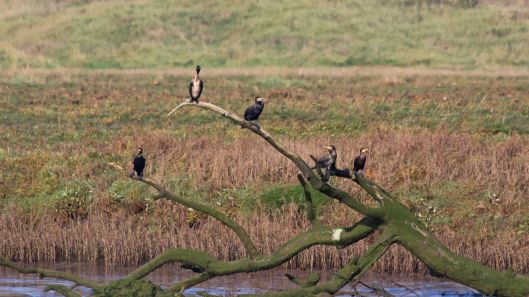
We started off near Portobello House, scanning the dunes of Merthyr Mawr and checking the River Ogmore, where the ubiquitous Cormorants were adorning this big dead tree in the water.
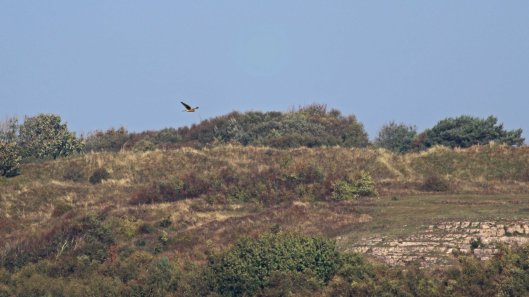
A Kestrel hovered over the dunes, and we witnessed a spectacular chase by a Sparrowhawk after a Meadow pipit – only very blurry photos of that, unfortunately. (The mipit escaped.)


Two Wigeon flew in to join the Canada geese, Mallards and gulls up river.

After grazing along the muddy banks down river for a time, this Curlew flew upstream to find another place to feed.


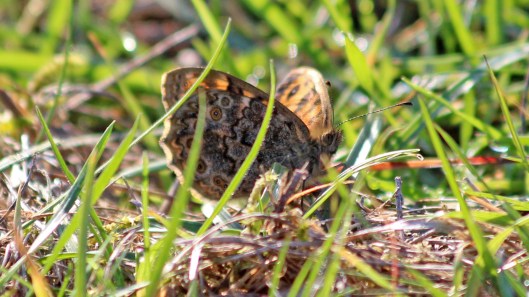
As I’ve mentioned in previous posts, our birding trips are not just about birds. Many birders are also interested in flora and other fauna so, yesterday, Dave was able to point out to us the invasive Buttonweed (Cotula coronopifolia) (he was the first to spot this plant in Wales!) and a Musk thistle (Carduus nutans). And another of our keen-eyed birders spotted this Wall butterfly, only the second time I’ve seen one of these beauties.

After a wander up and down the riverbank we headed across the road and up a track into a series of small valleys, an area known locally as The Pant. As well as many other small birds, there were several Stonechats popping up and down in the shrubs and bracken.

And then, what for me was the highlight of the day, really close views of a Kestrel hunting for its lunch. This handsome young male caught three creatures – probably voles or other small mammals – in the space of 10 minutes or so. It was incredible to watch how this bird’s amazing eyesight enabled it to hone in so accurately on its prey and, though I can’t help but have some sympathy for its victims, to see what an efficient hunter the Kestrel truly is.


My total number of species for the day was 41: Mute Swan, Canada Goose, Eurasian Wigeon, Mallard, Little Grebe, Little Egret, Cormorant, Sparrowhawk, Common Buzzard, Kestrel, Eurasian Curlew, Greenshank, Common Redshank, Black-headed Gull, Lesser Black-backed Gull, Herring Gull, Woodpigeon, Magpie, Carrion Crow, Blue Tit, Great Tit, Coal Tit, Skylark, Long-tailed Tit, Common Chiffchaff, Wren, Nuthatch, Blackbird, Song Thrush, Robin, European Stonechat, House Sparrow, Grey Wagtail, Pied Wagtail, Meadow Pipit, Chaffinch, Goldfinch, Siskin, Linnet, Bullfinch and Willow Warbler.
I must have wandered off when these birds were seen: Greenfinch, Stock Dove, Jay, Jackdaw, Rook, Raven, Goldcrest and Dunnock.
09 Tuesday Oct 2018
Tags
British moths, caterpillars, dagger moths, Grey dagger, Grey dagger caterpillar, Grey dagger larva, moth larvae
Yesterday, when I was checking out some local Oak trees for leaf mines, I came across this vibrant character. It turns out this is the larva of the Grey dagger moth (Acronicta psi), a very colourful creature when compared with its parent (you can see images on the UK Moths website here).
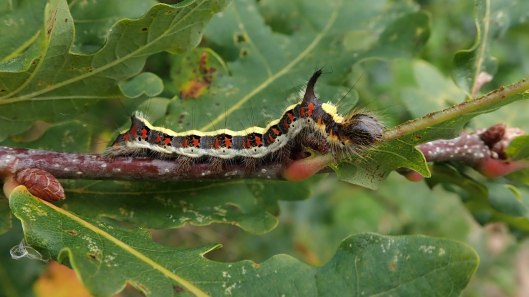
The larvae are about from July through to November and can be found on a wide variety of food plants. They are much easier to identify than their parents: the Grey dagger is almost identical to the Dark dagger moth and an examination of their genitals is required to tell them apart. I’m so glad I found the caterpillar not the moth – and I don’t really think it was looking daggers at me!

08 Monday Oct 2018
Tags
bees on Ivy flowers, British bees, Colletes hederae, Ivy bee, Ivy bee mapping project, ivy flowers
Most of the Ivy bees (Colletes hederae) I spotted when I was out walking last week were living up to their reputation as busy little mini-beasties.


But then I spotted this one, sitting on a leaf, cleaning the pollen off its legs, wings and body. I asked politely if it would please smile for the camera … and it did … I think.
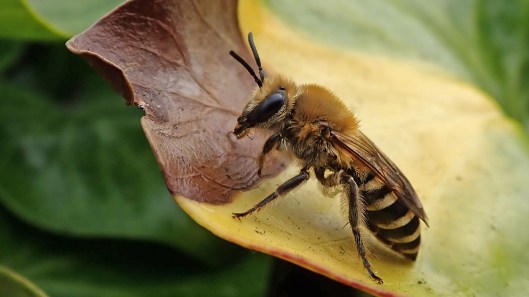
Ivy bees only arrived in Britain in 2001 but they’ve slowly expanded their range across southern England and in to south Wales. They’re very handsome little bees and completely harmless but can only be seen when the Ivy is flowering, from September to November. If you spot one, it would really help if you could report it so that the wonderful folk at BWARS (the Bees, Wasps and Ants Recording Society) can track the bees’ spread around Britain.
02 Tuesday Oct 2018
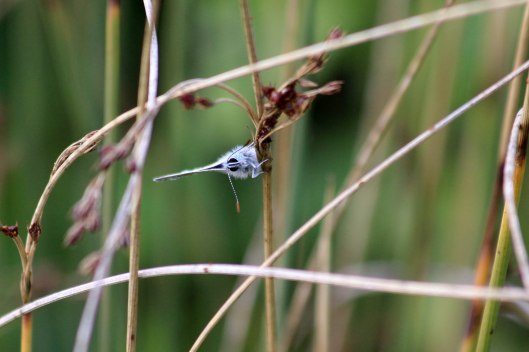
I hadn’t seen any Common blue butterflies at Cosmeston for over two weeks … until yesterday, when I spotted this little chap amongst the dying wildflowers and drying grasses. So, will he be the last Common blue for 2018?
01 Monday Oct 2018
Tags
British butterflies, butterflies, butterfly, Clouded yellow, Lavernock Nature Reserve, Wales coastal path walk
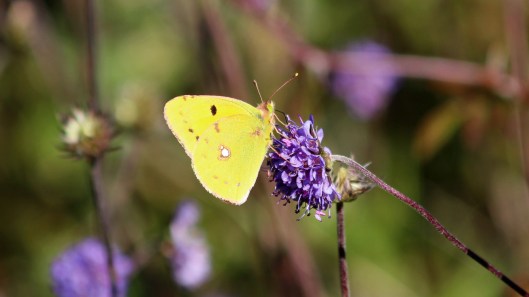
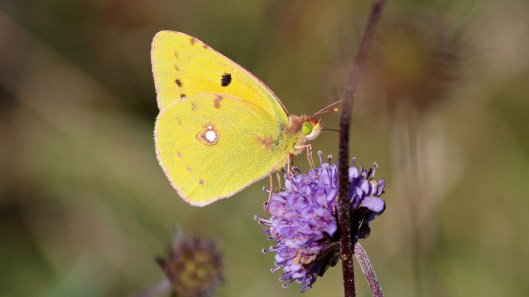
Having enjoyed some wonderful bird sightings on Sully beach, I walked on along the Wales coastal path, through Swanbridge and past St Mary’s Well Bay to Lavernock. This lovely nature reserve, perched high on the cliffs above some of south Wales’s most dramatic coastline, is the best place I know to see butterflies over the spring and summer months.

However, this was late September and there was a cool wind blowing so, although the Devil’s-bit scabious was still flowering, I didn’t really expect to see many butterflies this day. How wrong I was! Not only did I see three Small coppers, a couple of Red admirals, a Painted lady and a Common blue, as well numerous Small whites and Speckled woods, I was absolutely delighted to spot this glorious Clouded yellow, a butterfly we don’t see very often in this neck of the woods.


24 Monday Sep 2018
While my fellow birders were standing in a particularly windy spot to scope the distant shoreline at Llandegfedd Reservoir last Wednesday, I moved along the trail a little to seek shelter behind some trees. And, as I always do, I had a little look at the leaves to see what small creatures were about.
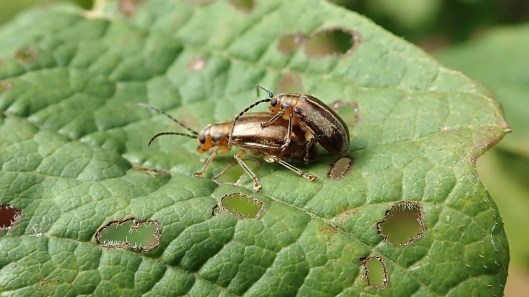


First up were these two bonking beetles who decided to come over and say hello despite being rather busy at increasing their species. After a couple of photos, I returned them to a new leaf and wished them well.
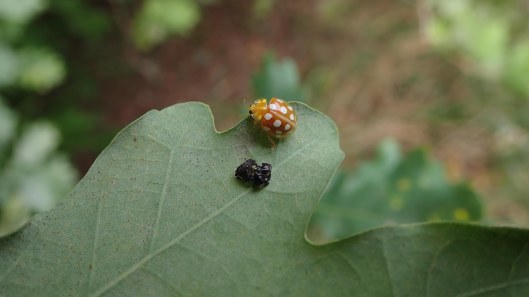
Then it was a warm welcome to the world to this newly emerged Orange ladybird – that little pile of dark matter is what remains of its pupa.


And I’m not sure what this mini-beastie is but I love its pale green body, the hint of turquoise in its wings and those incredible feathery feelers out front.
04 Tuesday Sep 2018
Tags
I’d only ever seen this beautifully patterned moth once before so it was a treat last week to see two of them on two consecutive days. Despite having a guide book, I always find moths difficult to identify but this one, the Treble-bar (Aplocera plagiata), lives up to its name rather nicely. Having said that, there is a chance these could be Lesser Treble-bars but they are much less common so I’m assuming they’re not (and I wasn’t able to check the ends of their abdomens to be sure!).
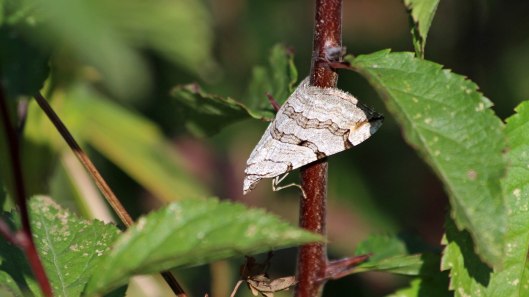
These are probably second generation moths, the first having emerged, mated, laid, munched, pupated during May and June, and the second now going through that process during August and September.

 earthstar
You must be logged in to post a comment.