• ABOUT
  • BIRDING 2018
  • Birding 2019
  • BLOG POSTS
  • Butterflies 2018
  • Resources

earthstar

~ a celebration of nature

earthstar

Category Archives: insects

Square-bashing: ST3990

28 Wednesday Jun 2017

Posted by sconzani in fungi, insects, nature, walks

≈ 5 Comments

Tags

bioblitz, biodiversity, biodiversity in Wales, biological recording, biological records, SEWBReC, square-bashing

I spent last Friday square-bashing with my friend Hilary, and what a brilliant day we had.

170628 ST3990 square-bashing (1)

For the uninitiated, square-bashing consists of taking a square kilometre that has very few existing biological records and walking the roads, tracks and paths through that square to see what you can find. Each month, my local biodiversity records centre SEWBReC publishes the details of just such a square in the counties they cover, Glamorgan and Gwent, in the hope that keen folks like Hilary and I will rectify the lack of records.
170628 ST3990 square-bashing (2)

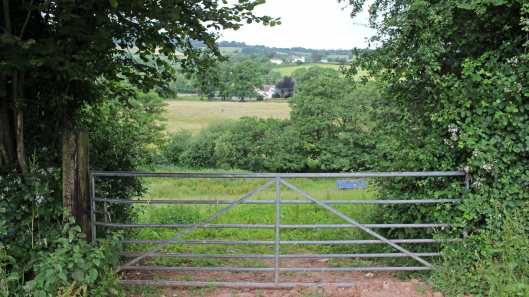
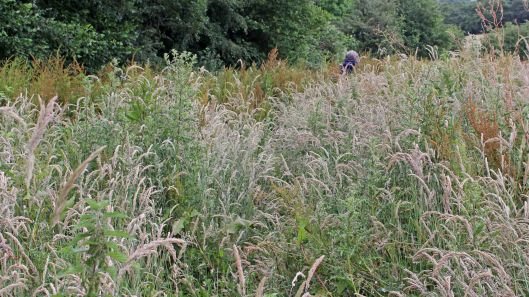
Although the term square-bashing is not meant to be taken literally, we did have to bash our way through one field in our square kilometre, where the public footpath was completely overgrown (spot Hilary in the photo below), but on the whole the countryside was beautiful, with rolling farmed fields, old narrow lanes and, the best part, an ancient holloway (more on that in a future post).
170628 ST3990 square-bashing (3)

Hilary’s something of a whizz when it comes to plants so she recorded those and I did everything else – insects, fungi, birds, you name it! As I’m not a whizz at anything, I mostly take lots of photos and then have to work out the IDs when I get home, which takes time but helps me learn. I have just a couple of outstanding queries but reckon my total will come to around 80 and Hilary has about 90 plants on her list, so it was a very good result indeed. Here are some of my finds – can you identify them?

170628 Beechmast candlesnuff Xylaria carpophila
170628 Common marble Celypha lacunana
170628 Cranefly Ptychoptera sp
170628 Eriophyes similis Gall mite
170628 Harlequin ladybird larva Harmonia axyridis
170628 Hawthorn shieldbug Acanthosoma haemorrhoidale
170628 Knot grass larva Acronicta rumicis
170628 Lagria hirta
170628 Meadow brown Maniola jurtina
170628 Pollen beetles Meligethes sp
170628 Snipe fly Rhagio tringarius
170628 Yellow dung fly Scathophaga stercoraria
Like Loading...

Birding at Lliw Reservoirs

25 Sunday Jun 2017

Posted by sconzani in animals, birds, insects, nature, trees, walks, wildflowers

≈ Leave a comment

Tags

birding, birdwatching, Bog pimpernel, Foxgloves, Glamorgan Bird Club, Grey wagtail, Lliw Reservoirs, Red kite, slow-worm, Tormentil, Victorian dam, Victorian ironwork, Whitethroat

170625 Lliw Reservoirs (3)

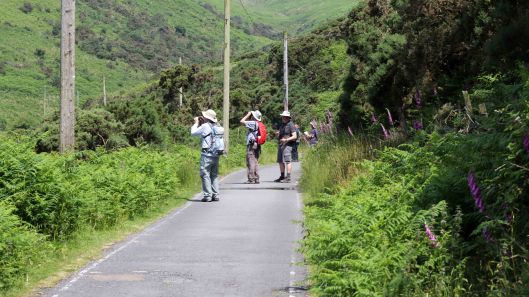
I celebrated the solstice with an outing with my Glamorgan Bird Club buddies to Lliw Reservoirs north of Swansea or, perhaps that should read, I sweated through the solstice – it was one of the hottest days of the year and the middle of a mini heatwave. Still, you know what they say about mad dogs and Englishmen (and Welshmen and a Kiwi) …

170625 Lliw Reservoirs (1)

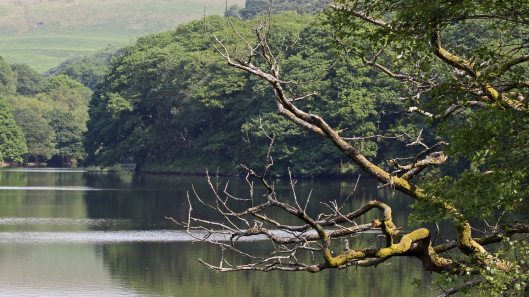
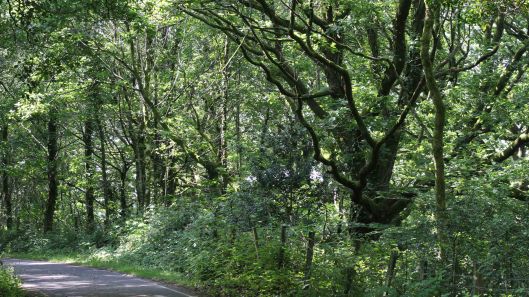
It’s a superb location. The two reservoirs were built in the second half of the 19th century, and still supply water to communities throughout south Wales. We only walked up one side of both reservoirs, through broadleaf woodland and then out onto open areas of grass and scrub and moorland, but there’s an 8-mile circular walk, which would be brilliant in cooler weather and includes large open commons of heath moorland on the hilltops.

170625 Lliw Reservoirs (2)

We heard more small birds than we saw (but that’s helping me learn their songs); buzzards and magnificent red kites were soaring overhead; we heard then saw the elusive grasshopper warbler in flight; dragonflies and damsels and the odd butterfly flitted about; and there were lots of lovely wildflowers (my particular favourites were the foxgloves, tormentil and bog pimpernel). Oh and, most importantly, the locals were friendly and the cafe serves delicious ice cream!

170625 Whitethroat
170625 Tormentil
170625 Slow-worm
170625 Lliw Reservoirs uplands
170625 Peacock
170625 Red kite
170625 Foxglove
170625 Grey wagtail
170625 Victorian ironwork
170625 Bog pimpernel
170625 Welsh sheep
170625 Pines & foxgloves
Like Loading...

The skimmers

24 Saturday Jun 2017

Posted by sconzani in insects, nature

≈ 4 Comments

Tags

Black-tailed skimmer, British dragonflies, dragonflies, dragonfly, Keeled skimmer, Orthetrum cancellatum, Orthetrum coerulescens

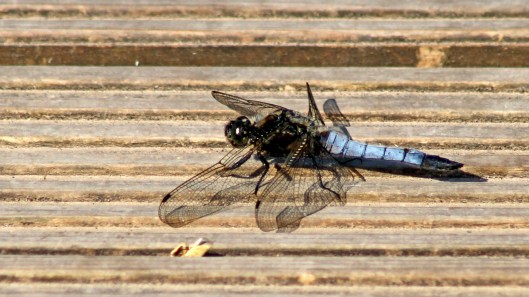
When the birds disappear behind the leaves of the trees during the summer months, my eye turns to the other creatures that delight and amaze with their aerial displays, and the dragonflies are some of the most impressive. In recent weeks I’ve seen my first Skimmers.

170624 Keeled skimmer

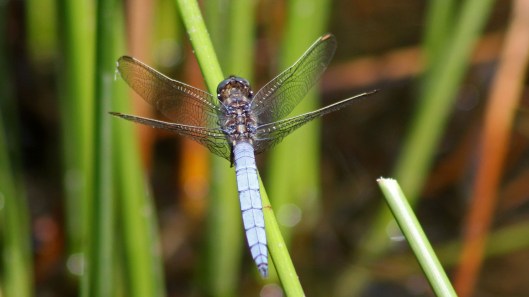
Keeled skimmer (Orthetrum coerulescens)
I was on a walk with my bird club buddies in the hills above Swansea this week when I saw my first Keeled skimmer. It was flitting back and forth quite restlessly in a boggy reed-filled area, perching on the reeds and other vegetation but only for short periods, so I was lucky to get some reasonable photos. I love the brilliant blue colour, called pruinescence, which is actually a covering of wax particles and which can be rubbed off during mating or if the dragonfly accidentally rubs against vegetation. Keeled skimmers are mostly found in western Britain and fly from June through to September.

170624 Black-tailed skimmer

Black-tailed skimmer (Orthetrum cancellatum)
Though very similar in appearance to the Keeled skimmer, the Black-tailed skimmer has, as its name implies, a darker end to its abdomen, and it’s much more common, as it’s happy to live around any pond, lake or stream, rather than the acidic moorland that the Keeled skimmer prefers. Though it is more common in southern parts of Britain, it has gradually been extending its range northwards, and its flight period is a little longer than its keeled cousin, being on the wing sometimes as early as late April right through to October if conditions are mild enough.

170624 Keeled skimmer (2)
170624 Black-tailed Skimmer (2)
Like Loading...

The butterflies are back!

22 Thursday Jun 2017

Posted by sconzani in insects, nature

≈ 4 Comments

Tags

Aphantopus hyperantus, British butterflies, butterflies, Cosmeston Lakes Country Park, Maniola jurtina, Meadow Brown, Ringlet

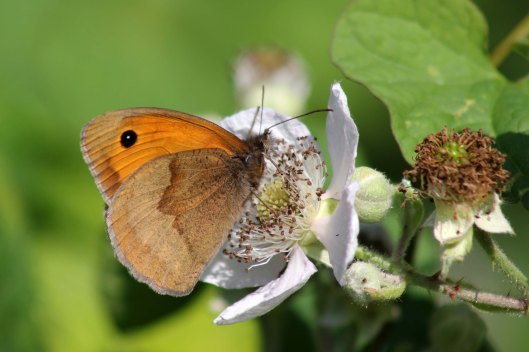
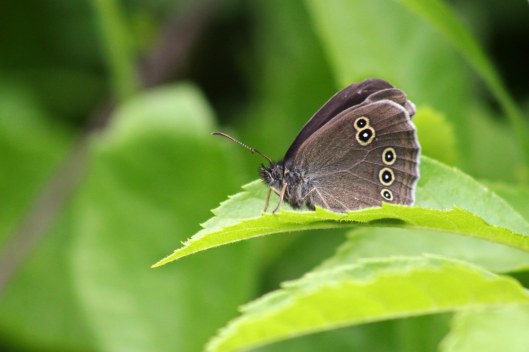
I saw my first Meadow brown (Maniola jurtina) and Ringlet (Aphantopus hyperantus) butterflies of the year at Cosmeston last week. And now there seem to be hundreds of Meadow Browns everywhere, though not so many Ringlets. Such pretty little things.

170622 Meadow brown170622 Ringlet


Like Loading...

March of the caterpillars

20 Tuesday Jun 2017

Posted by sconzani in insects, nature

≈ 7 Comments

Tags

Aglais io, butterflies, caterpillar, Euproctis similis, Lasiocampa quercus, moth larvae, moths, Oak eggar, Peacock butterfly, Yellow-tail

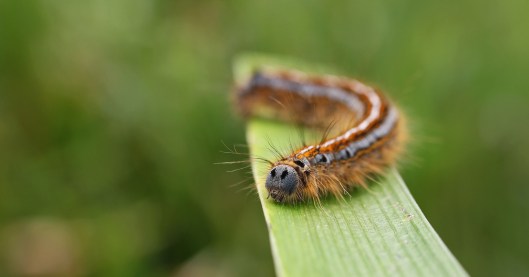
Perhaps that should really be MUNCH of the caterpillars because these little creatures are really the ultimate food processors. They eat ravenously, they ingest determinedly, they process interminably, and, yes, they pooh prodigiously. What a life!

170620 Oak eggar larva (1)

They can be covered in bristles: watch these ones as people with sensitive skin often get a rash from touching them because they can contain chemicals to deter predators from eating them. They can be dull to blend in with the vegetation on their favourite food plant. They can be patterned in startling colours and patterns, again as a warning to predators – ‘Don’t eat me!’

170620 Oak eggar larva (3)
170620 Yellow-tail larva (3)

These particular caterpillars are the larvae of two moths and one butterfly. The hairy ones are the moths, Oak eggar (Lasiocampa quercus) and Yellow-tail (Euproctis similis), and the spiky black one with white dots is the rather surprisingly coloured caterpillar of the Peacock butterfly (Aglais io).

170620 Oak eggar larva (2)
170620 Peacock caterpillars (1)
170620 Peacock caterpillars (2)
170620 Yellow-tail larva (1)
170620 Yellow-tail larva (2)
Like Loading...

Critters at RSPB Ham Wall

13 Tuesday Jun 2017

Posted by sconzani in animals, insects, nature, parks

≈ 6 Comments

Tags

Black-tailed skimmer, caddisfly, Common tortoiseshell, damselfly, Four-spotted Chaser, nature reserve, Roe deer, RSPB Ham Wall, Shapwick Heath

The only problem with going on a birding trip is that, in order to get photos of the birdies, I usually have my long lens on my camera, which means it’s then not easy to get photos of all the lovely smaller creatures I see as I’m walking around. And both RSPB Ham Wall Nature Reserve and, just across the road, Shapwick Heath National Nature Reserve have a profusion of delightful, and sometimes rare smaller creatures to be seen.

170613 Shapwick Heath

In particular, we saw a wealth of damsel- and dragonflies, including several of the Four-spotted chasers and Black-tailed skimmers shown below and, we think, the unusual Variable damselfly (though this can be tricky to identify). Spiders were particularly abundant on the path-side scrub, as were Dock beetles, judging from all the holey leaves we saw.

170613 4-spotted chaser
170613 Black-tailed skimmer

170613 RSPB Ham Wall critters (1)

170613 RSPB Ham Wall critters (2)

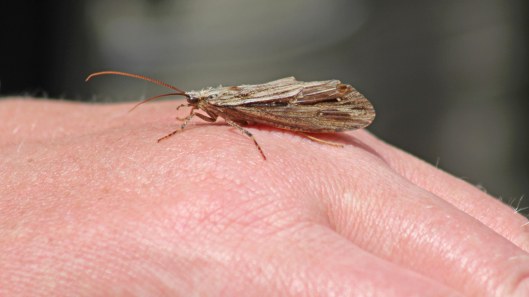
We rescued several large hairy caterpillars which were determinedly marching across the paths but risked annihilation from feet and bicycle tyres, as well as one large and very friendly Caddisfly (above). Butterflies weren’t as plentiful as I expected, though we did see good numbers of very fresh Small tortoiseshells, presumably newly hatched.

170613 Small tortoiseshells (2)
170613 Small tortoiseshells (1)

The most unexpected sighting, and a highlight for me, was a Roe deer on the canal-side bank in Shapwick Heath. Only its head and its very large ears could be seen, as it munched happily on a large green mouthful of vegetation while keeping a close eye on our admiring group of photographers.

170613 Roe deer

As I mentioned in yesterday’s piece on the birds of Ham Wall, you really need a week to explore these superb reserves thoroughly and then you might be lucky enough to see their resident water voles and otters. I have to go back!

Like Loading...

Moths of Kenfig

11 Sunday Jun 2017

Posted by sconzani in insects, nature

≈ 5 Comments

Tags

Beautiful china-mark, British moths, Burnet, Cinnabar, Grass rivulet, Kenfig National Nature Reserve, Lackey, moth, moths, Oak eggar, Small china-mark, Straw dot, Yellow-tail

As the butterflies are still enjoying their summer holidays, I have some moths and soon-to-be moths for you. These were all seen at Wales’s stunning coastal national nature reserve at Kenfig last weekend.

170611 Beautiful china-mark
170611 Burnet
170611 Cinnabar

We have, from left:
Beautiful china-mark (Nymphula nitidulata): It was no surprise to find this near Kenfig pool as its larvae are aquatic.
Burnet: (Zygaena sp.): Not sure which of the Burnet moths this will become as the only difference in the caterpillars is the length of their hairs and I didn’t measure these.
Cinnabar (Tyria jacobaeae): The ‘Jacobaeae’ epithet comes from its larval foodplant, Senecio jacobaea, aka Common ragwort.

170611 Grass rivulet
170611 Lackey
170611 Oak eggar

Grass rivulet (Perizoma albulata): As well as loving grasslands, these little beauties also love a nice sandy beach.
Lackey (Malacosoma neustria): We’ve had these before if you remember (Lackey me).
Oak eggar (Lasiocampa quercus): Don’t go searching around oak trees for this one: its name comes from the acorn-like shape of its cocoon.

170611 Small China-mark
170611 Straw dot
170611 Yellow-tail

Small china-mark (Cataclysta lemnata): Apparently, they don’t often open their wings to show the underwing markings. I got lucky!
Straw dot (Rivula sericealis): Straw coloured with a dot on each wing. I think I might actually remember this one.
Yellow-tail (Euproctis similis): I have yet to see the moth but it seems the female has a yellow tuft of hairs on her bottom.

Like Loading...

Hilary’s moths

06 Tuesday Jun 2017

Posted by sconzani in insects, nature

≈ 9 Comments

Tags

Bright-line Brown-eye, British moth, Buff ermine, Garden Grass-veneer, Ingrailed clay, moth, moths, The Spectacle

When I arrived at my friend Hilary’s house early Saturday morning, to hitch a ride to our monthly fungi foray, she had a wonderful surprise for me. She had put her moth trap out the previous night and had kept the moths for me to have a look at before she released them. (In case you’re wondering, trapping is really the only way to record and monitor the moth population, and it’s done in a way that usually causes no harm to the moths.) Here are some of the beauties I saw …

170606 Agriphila geniculea

One of the Crambidae or grass moths, the Garden Grass-veneer (Chrysoteuchia culmella)

170606 Buff ermine

I blogged about the White ermine recently – this is its cousin the Buff ermine (Spilosoma lutea).

170606 Heart and Dart (1)
170606 Heart and Dart (2)

Heart & Dart (Agrotis exclamationis), named for the heart- and dart-shaped markings on its wings.

170606 Ingrailed clay (1)
170606 Ingrailed clay (2)

Ingrailed clay (Diarsia mendica). Its name is a mystery but its caterpillars live on brambles and bilberries.

170606 Bright-line brown-eye

Bright-line Brown-eye (Lacanobia oleracea). Don’t you just love the common names of moths?

170606 Spectacle (1)
170606 Spectacle (2)

And, last but certainly not least, this amazing creature, for fairly obvious reasons, is called The Spectacle (Abrostola tripartita).

Like Loading...

Don’t try and tell me butterflies all look the same!

05 Monday Jun 2017

Posted by sconzani in insects, nature

≈ 4 Comments

Tags

British butterflies, butterflies, butterfly, Pararge aegeria, Speckled wood

These are just 3 of the 14 Speckled woods (Pararge aegeria) I encountered during a recent walk along my local coastal path, and just look at how different their faces are. They were all very obliging when it came to taking their portraits, or perhaps the way I was slowly moving my camera from side to side as I approached had momentarily mesmerised them.

170608 Speckled wood (1)
170608 Speckled wood (3)

My butterfly expert friend George says: ‘These fresh ones may be those which overwintered as larvae and are now just emerging, whereas those out earlier in the spring would have overwintered as pupae. It’s the only British butterfly which regularly overwinters in two different life history stages’. Thanks for the info, George.

170608 Speckled wood (2)

Like Loading...

Chasing the chasers

04 Sunday Jun 2017

Posted by sconzani in insects, nature, nature photography

≈ 6 Comments

Tags

British dragonflies, Broad-bodied Chaser, dragonfly, Libellula depressa

It’s dragonfly time!

170604 Broad-bodied chasers (1)

Just when the birds disappear behind the trees’ leafy boughs, the dragonflies emerge to take their place in Nature’s line-up of masterly aviators.

170604 Broad-bodied chasers (2)

Earlier this week I spent over 30 minutes watching these magnificent Broad-bodied chasers (Libellula depressa), two males circling and defending their territories from each other, keeping watch from their favourite perches, mating with two females, and those females then depositing their eggs amongst the water plants. It was magical!

170604 Broad-bodied chasers (3)

Like Loading...
← Older posts
Newer posts →

About me

sconzani

sconzani

I'm a writer and photographer; researcher and blogger; birder and nature lover; countryside rambler and city strider; volunteer and biodiversity recorder.

View Full Profile →

Follow earthstar on WordPress.com

Enter your email address to follow this blog and receive notifications of new posts by email.

Recent blog posts

  • Bug: Harpocera thoracica April 22, 2026
  • A female Tawny April 21, 2026
  • NFY: Orange-tip April 20, 2026
  • All the yellows April 19, 2026
  • Spider: Dysdera crocata April 18, 2026

From the archives

COPYRIGHT

Unless otherwise acknowledged, the text and photographs on this blog are my own and are subject to international copyright. Nothing may be downloaded or copied without my permission.

Fellow Earth Stars!

  • Unknown's avatar
  • Unknown's avatar
  • Unknown's avatar
  • Unknown's avatar
  • Unknown's avatar
  • Unknown's avatar
  • Unknown's avatar
  • Unknown's avatar
  • Unknown's avatar
  • Unknown's avatar
  • Unknown's avatar
  • Unknown's avatar
  • Unknown's avatar
  • Unknown's avatar
  • Unknown's avatar
  • Unknown's avatar
  • Unknown's avatar
  • Unknown's avatar
  • Unknown's avatar
  • Unknown's avatar
  • Unknown's avatar
  • Unknown's avatar
  • Unknown's avatar
  • Unknown's avatar
  • Unknown's avatar
  • Unknown's avatar
  • Unknown's avatar
  • Unknown's avatar
  • Unknown's avatar
  • Unknown's avatar
  • Unknown's avatar
  • Unknown's avatar
  • Unknown's avatar
  • Unknown's avatar
  • Unknown's avatar
  • Unknown's avatar
  • Unknown's avatar
  • Unknown's avatar
  • Unknown's avatar
  • Unknown's avatar
  • Unknown's avatar
  • Unknown's avatar
  • Unknown's avatar
  • Unknown's avatar
  • Unknown's avatar
  • Unknown's avatar
  • Unknown's avatar
  • Unknown's avatar
  • Unknown's avatar
  • Unknown's avatar

Blog at WordPress.com.

Privacy & Cookies: This site uses cookies. By continuing to use this website, you agree to their use.
To find out more, including how to control cookies, see here: Cookie Policy
  • Subscribe Subscribed
    • earthstar
    • Join 642 other subscribers
    • Already have a WordPress.com account? Log in now.
    • earthstar
    • Subscribe Subscribed
    • Sign up
    • Log in
    • Report this content
    • View site in Reader
    • Manage subscriptions
    • Collapse this bar
 

Loading Comments...
 

You must be logged in to post a comment.

    %d