• ABOUT
  • BIRDING 2018
  • Birding 2019
  • BLOG POSTS
  • Butterflies 2018
  • Resources

earthstar

~ a celebration of nature

earthstar

Category Archives: nature

One-two-one

11 Wednesday Oct 2017

Posted by sconzani in birds, nature

≈ Leave a comment

Tags

birding, birdwatching, Forest Farm, Forest Farm Nature Reserve, house sparrow, sparrow

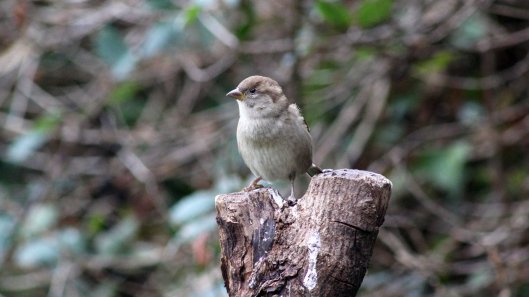
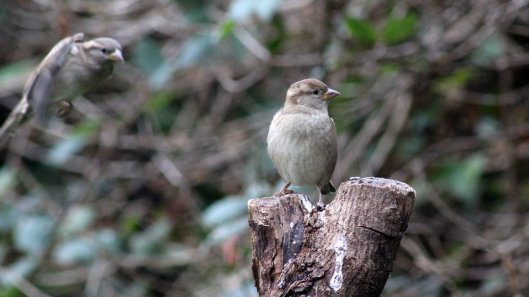
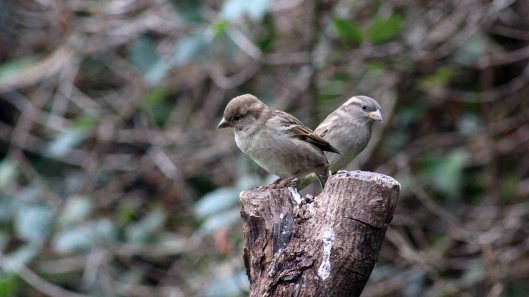
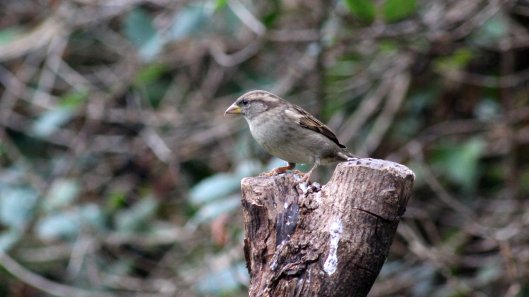
‘I once had a sparrow alight upon my shoulder for a moment, while I was hoeing in a village garden, and I felt that I was more distinguished by that circumstance than I should have been by any epaulet I could have worn.’ ~ Henry David Thoreau. I have not shared Thoreau’s privileged occurrence but I do enjoy watching and listening to sparrows, like these two juveniles seen recently at Forest Farm.

171011 House sparrows (1)171011 House sparrows (2)171011 House sparrows (3)171011 House sparrows (4)171011 House sparrows (5)

Like Loading...

Birding on Gower

10 Tuesday Oct 2017

Posted by sconzani in birds, coastal fauna, nature, seaside, walks

≈ 4 Comments

Tags

birding, birdwatching, British birds, coastal cliffs, dramatic coastline, Glamorgan Bird Club, Gower, Mewslade, Rhossili Beach, Worm's Head

It was a wild and windy but not wet day last week when I ventured for the first time to the incredible Gower peninsula, on a birding trip with my Glamorgan Bird Club friends.
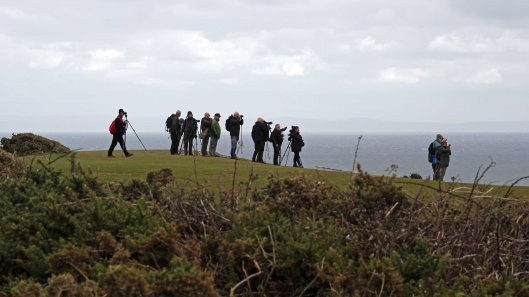
171010 Glamorgan bird clubbers

We parked near Mewslade Beach, then walked a circuit from there along the cliff-top coastal path, across the medieval field system of The Vile, through the little village of Rhossili and then back to the car park. Most of the birds were best viewed through binoculars or ’scopes so I don’t have many images of them to share but the scenery was just stunning! High stone cliffs honed in places to a razor edge by millennia of wind and rain, secret little coves nestled between tall protective hills, the long stretch of golden-sand beach at Rhossili that was recently named the best beach in Britain and one of the world’s top ten – Gower really does deserve the adjective ‘awesome’!

171010 Gower (1)
171010 Gower (2)
171010 Gower (4)
171010 Gower (3)
171010 Gower (5)
171010 Gower (6)

Oh, and getting back to the birds – I saw a total of 34 species: Cormorant, Sparrowhawk, Common Buzzard, Kestrel, Peregrine, Oystercatcher, Lesser Black-backed Gull, Herring Gull, Woodpigeon, Collared Dove, Pheasant, Magpie, Jackdaw, Carrion Crow, Raven, Blue Tit, Great Tit, Coal Tit, Long-tailed Tit, Chiffchaff, Goldcrest, Wren, Blackbird, Robin, Stonechat, Dunnock, House Sparrow, Pied Wagtail, Meadow Pipit, Chaffinch, Goldfinch, Linnet, and the two highlights for me, Common Scoter (a group of perhaps 20 floating together on the sea – seen through a ’scope) and several Gannets, flying low to the waves not far offshore, plus a bonus sighting of at least one Grey seal lolling about in the waves in one of the bays.

171010 Linnets
171010 Meadow pipits
171010 Goldfinches

The group total was 46 species as I was too busy admiring the scenery to notice these: Shag, Kittiwake, Guillemot, Razorbill, Green Woodpecker, Great Spotted Woodpecker, Chough, Rook, Bullfinch, Song Thrush, Common Gull, and Great Black-backed Gull. Thanks to John and Glamorgan Bird Club members for yet another fantastic day out!


171010 Rhossili beach

Like Loading...

A mini challenge

09 Monday Oct 2017

Posted by sconzani in insects, nature

≈ 8 Comments

Tags

biodiversity, Cosmeston Lakes Country Park, flies, galls, leaf mines, Speckled wood, spiders, spotting insects

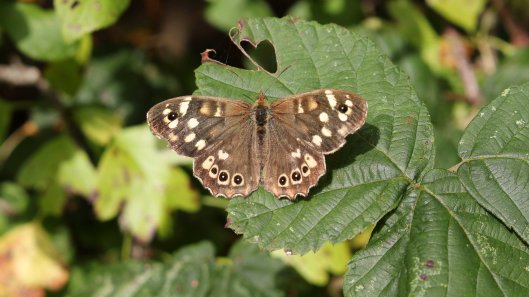
On Friday I went for a wander around one of my favourite local haunts, Cosmeston Lakes Country Park and, while there, I set myself a little challenge. How many critters could I find in one small area, perhaps no more than 2 metres square?

171008 mini challenge

My challenge wasn’t pre-planned: I had seen very little at this point on my walk and was thinking to myself that this was due to autumn and the cooler weather but, when I saw a Speckled wood butterfly at this particular spot – a bank covered with shrubs and small trees – I started wondering how much more there was that I simply wasn’t seeing. So, I stopped and looked harder. There was no poking under grasses or bushes, no sweeping or brushing to encourage movement, just focussing my eyes and ears to really see and hear.

171008 spider (1)
171008 spider (2)
171008 spider (3)

There were, in fact, three Speckled woods – I just hadn’t noticed the other two, plus three different species of spider (the Garden spider was lunching on another critter but it was partly consumed and too tiny to identify), one hoverfly, three species of flies, a gall on Bramble that would’ve been home to the larvae of the tiny gall wasp Diastrophus rubi, and a leaf mine, made by the larva of some unidentified mini-beast. And I’m absolutely sure I didn’t spot everything!

171008 mini challenge (1)
171008 mini challenge (2)
171008 mini challenge (3)
171008 mini challenge (4)
171008 mini challenge (5)
171008 mini challenge (6)
Like Loading...

Bully for you

08 Sunday Oct 2017

Posted by sconzani in birds, nature

≈ 5 Comments

Tags

birding, birdwatching, British birds, British finches, bullfinch, Pyrrhula pyrrhula

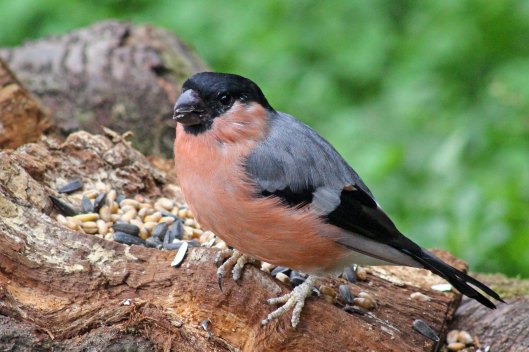
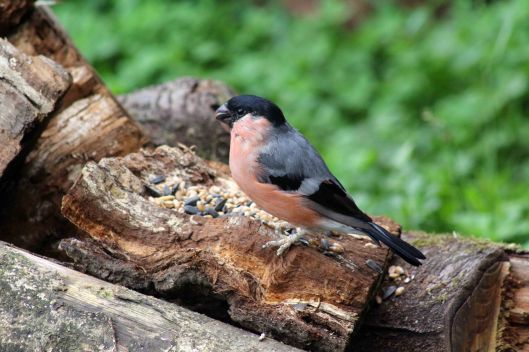
What a dapper fellow this male Bullfinch is, with his apricot-coloured waistcoat, grey jacket, black bowler and tails! The female, shown below, is elegant in a more understated way (I’ve yet to get good close photos of her).

171007 Bullfinch (3)

Sadly, despite its good looks, the Bullfinch (Pyrrhula pyrrhula) has been much persecuted by humans due to its preference for devouring the buds of trees, particularly tasty fruit trees, in the springtime. According to Buczacki’s Fauna Britannica, ‘As long ago as 1566, an Act of Parliament allowed for one penny to be offered for “everie Bulfynche or other Byrde that devoureth that blowth of Fruite”.’ And according to the BTO website, the number of wild birds was further depleted in Victorian times because people preferred to admire the Bulfinch’s gorgeous plumage in cages rather than in woodlands.

171007 Bullfinch (1)
171007 Bullfinch (4)

However, these factors are not the reason for the bird’s declining numbers – there was a sharp decline in the late 1970s, which has upturned slightly since 2000, but is still 36% lower than in 1967. That decline is thought to be a result of decreasing biodiversity in woodlands and of the negative effects of agricultural intensification. I haven’t been able to find any more recent population figures but let’s hope the Bullfinch recovers. What a loss that apricot waistcoat would be!

171007 Bullfinch (2)

Like Loading...

Happy UK Fungus Day!

07 Saturday Oct 2017

Posted by sconzani in fungi, nature

≈ 4 Comments

Tags

bracket fungus, fungi, fungus, National Fungus Day, Trametes versicolor, Turkey tail, Turkeytail, UK Fungus Day

Sadly, I don’t see a lot of fungi in my local parks and nature reserves, and I’ve found this year that other events have clashed with the fungi forays organised by the Glamorgan Fungus Group so I haven’t been out with them much either. However, I have been taking photos of the fungi I do find and so, in honour of today being National Fungus Day here in Britain, I thought I’d share these photos of Turkeytail (Trametes versicolor).

171007 Turkeytail Trametes versicolor (8)

Turkeytail is one of the most common bracket fungi and you can find it growing on dead logs and fallen trees in almost every forest and woodland but what I love about this fungus is its incredible variation. With colours ranging from beige, yellow and orange through to green, brown and even blue, each bracket is a work of art.

171007 Turkeytail Trametes versicolor (1)
171007 Turkeytail Trametes versicolor (2)
171007 Turkeytail Trametes versicolor (3)
171007 Turkeytail Trametes versicolor (4)
171007 Turkeytail Trametes versicolor (5)
171007 Turkeytail Trametes versicolor (6)
171007 Turkeytail Trametes versicolor (7)
171007 Turkeytail Trametes versicolor (9)
Like Loading...

October pinks

06 Friday Oct 2017

Posted by sconzani in autumn, flowers, nature, wildflowers

≈ Leave a comment

Tags

#FloralFriday, autumn flowers, British wildflowers, lilac flowers, pink flowers, purple flowers, wildflowers

‘I’m so glad I live in a world where there are Octobers,’ exclaims Anne one Saturday morning, in L.M. Montgomery’s classic story Anne of Green Gables.

171006 October pinks (1)
171006 October pinks (2)
171006 October pinks (3)
171006 October pinks (4)
171006 October pinks (5)
171006 October pinks (6)
171006 October pinks (7)
Like Loading...

Lucky last?

05 Thursday Oct 2017

Posted by sconzani in flowers, insects, nature, nature photography, wildflowers

≈ Leave a comment

Tags

butterfly quote, Devil's-bit scabious, Irish blessing, Painted Lady

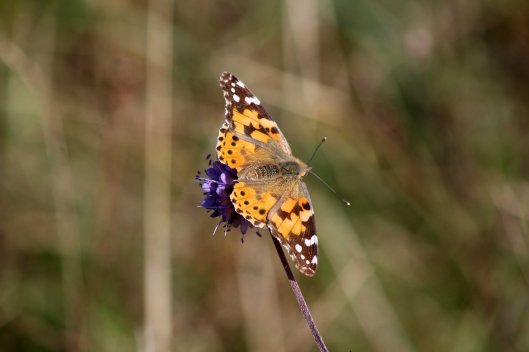
171005 Painted lady on Devil's-bit scabious

May the wings of the butterfly kiss the sun
And find your shoulder to light on
To bring you luck, happiness and riches
Today, tomorrow and beyond.
~  an Irish blessing, to be sure, to be sure, to be sure

Like Loading...

More galls, part 2

04 Wednesday Oct 2017

Posted by sconzani in insects, nature, plants

≈ 1 Comment

Tags

galls, Galls on Cirsium cardui, galls on Creeping thistle, Thistle gall fly, Urophora cardui

Following on from yesterday’s More galls, part 1 …

This second gall’s host is not a tree, it’s a thistle, Creeping thistle (Cirsium cardui) to be precise, and the gorgeous little fly that causes the gall is Urophora cardui, the Thistle gall fly, a member of the Tephritidae or fruit fly family. Interestingly, this fly has been introduced into Canada, from populations originating in Austria, Germany, France and Finland, in an attempt to control Creeping thistle, which is there called Canada thistle and is regarded as an invasive weed. The gall production initiated by the flies disrupts the development of flowers and also significantly reduces the vigour of the thistle by diverting nutrients into the gall.

171003 Urophora cardui Thistle gall fly (1)
171003 Urophora cardui Thistle gall fly (2)

In Britain, the adult Urophora cardui fly can be seen between May and September when, after mating, it lays its eggs on a nearby Creeping thistle. The larvae burrow into the thistle’s stem, often causing a single gall to develop to house several larvae. The larvae also pupate inside the gall, emerging as flies between June and October. I’ll be checking all the Creeping thistles I see for a glimpse of them.

Like Loading...

More galls, part 1

03 Tuesday Oct 2017

Posted by sconzani in insects, nature, plants, trees

≈ 4 Comments

Tags

Cecidomyia salicis-folii, gall flies, gall midges, gall on Salix caprea, gall on willow, galls, Iteomyia capraea

Today’s and tomorrow’s galls are not on the gall-beleaguered Oak tree and, for a change, they are not caused by wasps, as so many galls seem to be. These two galls are caused by tiny members of the enormous order of flies, the Diptera.

171003 Iteomyia capraea on Salix capraea (1)

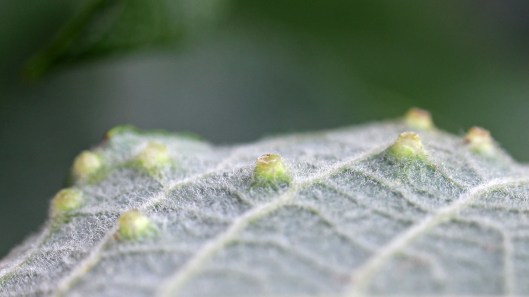
Today’s is Iteomyia capraea (sometimes known as Cecidomyia salicis-folii) (Cecidomyiidae is the family name for gall midges or gall flies). I think I would need better specs to actually see the midge that laid its eggs on this Goat willow (Salix caprea) leaf as it’s only 2-3mm long. Indeed, the galls themselves were pretty small (5-8mm), as you can see from the leafy picture below. When they hatch, the larvae of the midge feed within the leaf tissue causing the willow to develop a gall, sometimes on the midrib of the leaf, sometimes on a thick side vein. I’ve read one report that the larvae are white, another that they are an orange-red colour but I didn’t open up any of the galls for a look at the larva inside so I can’t confirm either report.

171003 Iteomyia capraea on Salix capraea (2)
171003 Iteomyia capraea on Salix capraea (3)

I’ve not been able to discover much about Iteomyia capraea. There are only 215 records showing in the NBN (National Biodiversity Network) database for the whole of Britain, 45 of which are in Wales, but I think that is more a reflection on the under-recording of galls that the rarity of the midge itself. Apparently, the species only breeds a single generation per year and they hibernate over winter in the soil underneath their host tree.

Like Loading...

All the colours of the rainbow

02 Monday Oct 2017

Posted by sconzani in autumn, nature, plants, trees

≈ Leave a comment

Tags

autumn colour, berries, berry, Black Bryony berries, fruit, Hawthorn berries, Sloe

 171002 fruit (1)

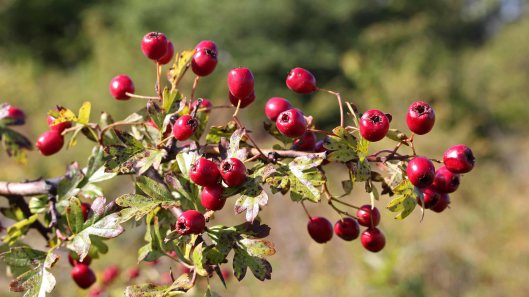
‘Autumn is the mellower season, and what we lose in flowers we more than gain in fruits.’ ~ Samuel Butler, though in this case it’s more about what all the birds and mini-beasts gain in fruits.

171002 fruit (2)
171002 fruit (3)
171002 fruit (4)
171002 fruit (5)
171002 fruit (6)
171002 fruit (7)
Like Loading...
← Older posts
Newer posts →

About me

sconzani

sconzani

I'm a writer and photographer; researcher and blogger; birder and nature lover; countryside rambler and city strider; volunteer and biodiversity recorder.

View Full Profile →

Follow earthstar on WordPress.com

Enter your email address to follow this blog and receive notifications of new posts by email.

Recent blog posts

  • Peak Wild garlic April 26, 2026
  • First damsels of 2026 April 25, 2026
  • NFY: Green-veined white April 24, 2026
  • The return of the Willow warblers April 23, 2026
  • Bug: Harpocera thoracica April 22, 2026

From the archives

COPYRIGHT

Unless otherwise acknowledged, the text and photographs on this blog are my own and are subject to international copyright. Nothing may be downloaded or copied without my permission.

Fellow Earth Stars!

  • Unknown's avatar
  • Unknown's avatar
  • Unknown's avatar
  • Unknown's avatar
  • Unknown's avatar
  • Unknown's avatar
  • Unknown's avatar
  • Unknown's avatar
  • Unknown's avatar
  • Unknown's avatar
  • Unknown's avatar
  • Unknown's avatar
  • Unknown's avatar
  • Unknown's avatar
  • Unknown's avatar
  • Unknown's avatar
  • Unknown's avatar
  • Unknown's avatar
  • Unknown's avatar
  • Unknown's avatar
  • Unknown's avatar
  • Unknown's avatar
  • Unknown's avatar
  • Unknown's avatar
  • Unknown's avatar
  • Unknown's avatar
  • Unknown's avatar
  • Unknown's avatar
  • Unknown's avatar
  • Unknown's avatar
  • Unknown's avatar
  • Unknown's avatar
  • Unknown's avatar
  • Unknown's avatar
  • Unknown's avatar
  • Unknown's avatar
  • Unknown's avatar
  • Unknown's avatar
  • Unknown's avatar
  • Unknown's avatar
  • Unknown's avatar
  • Unknown's avatar
  • Unknown's avatar
  • Unknown's avatar
  • Unknown's avatar
  • Unknown's avatar
  • Unknown's avatar
  • Unknown's avatar
  • Unknown's avatar
  • Unknown's avatar

Blog at WordPress.com.

Privacy & Cookies: This site uses cookies. By continuing to use this website, you agree to their use.
To find out more, including how to control cookies, see here: Cookie Policy
  • Subscribe Subscribed
    • earthstar
    • Join 642 other subscribers
    • Already have a WordPress.com account? Log in now.
    • earthstar
    • Subscribe Subscribed
    • Sign up
    • Log in
    • Report this content
    • View site in Reader
    • Manage subscriptions
    • Collapse this bar
 

Loading Comments...
 

You must be logged in to post a comment.

    %d