• ABOUT
  • BIRDING 2018
  • Birding 2019
  • BLOG POSTS
  • Butterflies 2018
  • Resources

earthstar

~ a celebration of nature

earthstar

Category Archives: nature

Two in two days

04 Tuesday Sep 2018

Posted by sconzani in insects, nature

≈ 4 Comments

Tags

Aplocera plagiata, British moth, moth, moths, Treble-bar

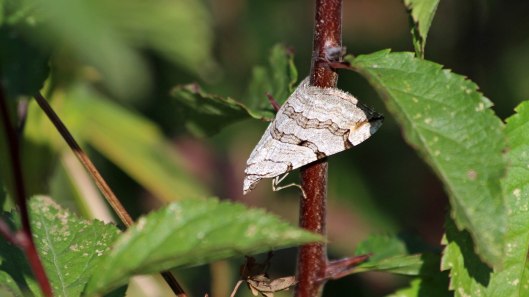
I’d only ever seen this beautifully patterned moth once before so it was a treat last week to see two of them on two consecutive days. Despite having a guide book, I always find moths difficult to identify but this one, the Treble-bar (Aplocera plagiata), lives up to its name rather nicely. Having said that, there is a chance these could be Lesser Treble-bars but they are much less common so I’m assuming they’re not (and I wasn’t able to check the ends of their abdomens to be sure!).

180904 treble bar (1)

These are probably second generation moths, the first having emerged, mated, laid, munched, pupated during May and June, and the second now going through that process during August and September.

180904 treble bar (2)

Like Loading...

Flax

03 Monday Sep 2018

Posted by sconzani in nature, plants

≈ 7 Comments

Tags

British flax, Flax, Linum usitatissimum, New Zealand flax, Phormium tenax

When I was walking through Cosmeston on Saturday, I was reminded that the plant name Flax can mean very different things to different people. In New Zealand, my homeland, Flax is a hefty plant, with thick leathery sword-shaped leaves that will quickly blunt even the sharpest secateurs and tall flower spikes full of a delicious nectar that is the particular favourite of the beautiful Tui. The traditional Flax species is Phormium tenax, though nowadays there are many cultivars in a wide range of colours and sizes.

180903 New Zealand flax (2)

180903 New Zealand flax (1)
180903 New Zealand flax (3)

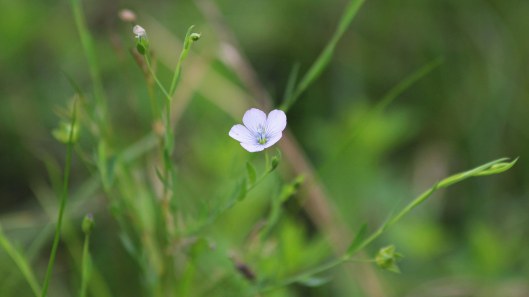
The Flax I see when I’m out wandering in the British countryside couldn’t be more different from the Kiwi version. It is Linum usitatissimum, a small delicate plant, with beautiful pale blue flowers. Despite its seemingly insubstantial structure, the fibres of this plant are used to make linen and that is how the New Zealand plant got its name. According to the Eden Project website:

When Captain James Cook, the great navigator, and Joseph Banks, the great botanist, arrived in New Zealand in 1769, they noticed the native Maori people were wearing a fine cloth similar to linen made from this plant [Phormium tenax]. Linen is made from flax, so this plant became known as New Zealand flax.

180903 British flax (3)

OLYMPUS DIGITAL CAMERA
Like Loading...

Birding out the window: Collared doves

02 Sunday Sep 2018

Posted by sconzani in birds, nature

≈ Leave a comment

Tags

birding, birding out the window, birdwatching, British birds, Collared dove, garden birds

180902 collared dove (1)

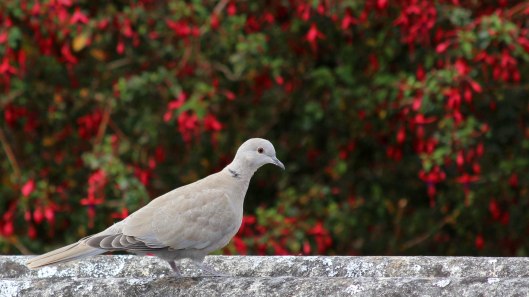
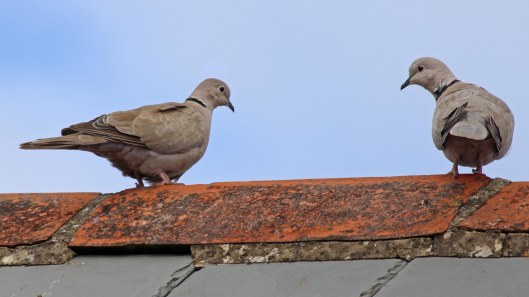
Sometimes you don’t even have to leave home to watch wildlife, even when you live in a first-floor flat with no garden. These two beautiful Collared doves were visiting the garden of a neighbour across the back lane. Although I can’t see them, this kindly person obviously has bird feeders that are always kept topped up with delicious bird treats, as quite a variety of birds visit the garden on a regular basis.

180902 collared dove (2)

I wonder if they’re speculating about whether I also have food for them?

180902 collared dove (4)
180902 collared dove (3)
Like Loading...

More migrants passing through

01 Saturday Sep 2018

Posted by sconzani in birds, nature

≈ 4 Comments

Tags

autumn migration, birding, birdwatching, British birds, Chiffchaff, Cosmeston, Cosmeston Lakes Country Park, migrating birds, Pied plycatcher, Redstart, Wheatear, Whinchat, Whitethroat, Willow warbler

My local country park, Cosmeston Lakes, has been awash with migrating birds this past week. And it’s not just me getting better at finding them – according to birders who’ve been checking the area much longer than I’ve lived nearby, this has been a bumper year for sightings.
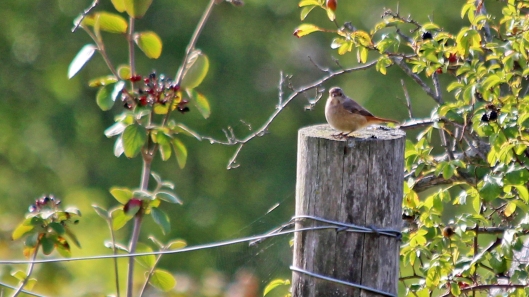
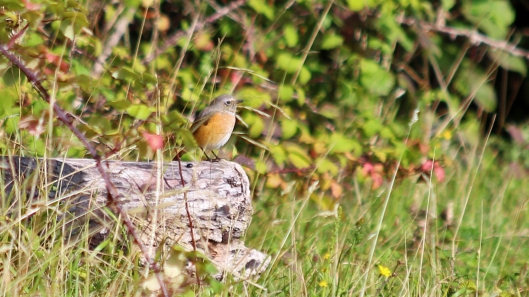
180901 Redstart female 2408180901 Redstart male 2408

On 24 August I found two Redstarts, a male and another that may have been a female or an immature bird that hadn’t yet developed its full adult colouration.
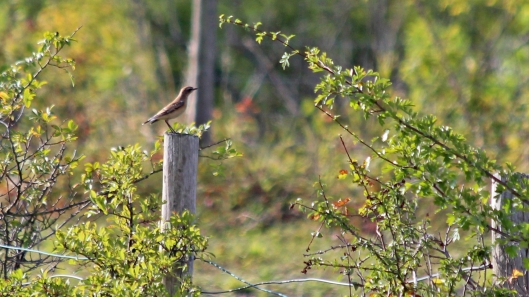
180901 wheatear 2408

Also on the 24th I had a very fleeting view of a Wheatear that popped up from grass to fencepost, then was off in the blink of an eye.

180901 whinchat 2708

On the 27th my birding friend Della texted me to say she’d found a Whinchat. That was the fastest I’d ever walked to Cosmeston and, luckily, the bird waited for me – and, in fact, stayed around most of the week so I saw it several times.
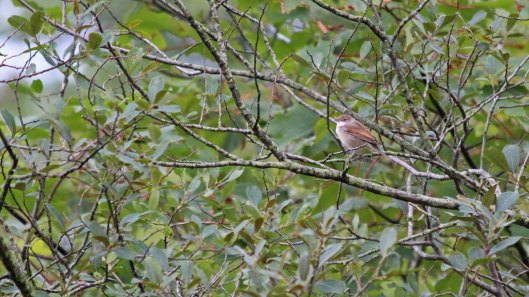
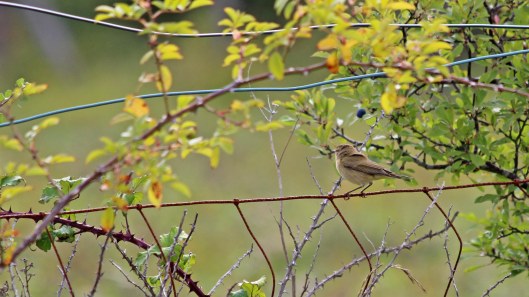
180901 common whitethroat

180901 chiffchaff180901 willow warbler

During my frequent visits to Cossie this week, I’ve seen ones and twos of Whitethroat and Chiffchaff, and tens of Willow warblers. These are the ones I spotted on the 30th.
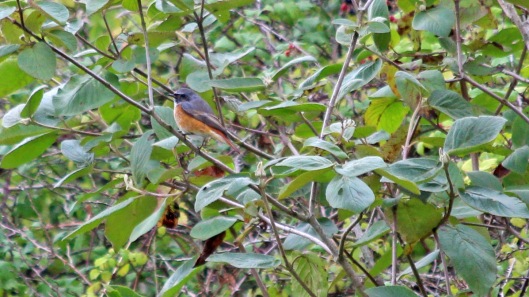
180901 redstart 2908

Also on 30 August, I spotted another Redstart and, from the dark head colours, I could tell this one was definitely a male.
180901 pied flycatcher

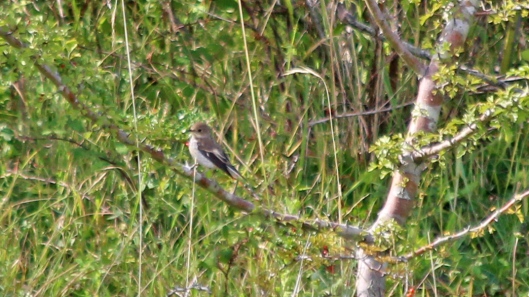
The week ended with a bang! My birding friend, Graham, let me know that he’d seen a Pied flycatcher with a small group of Spotted flycatchers, a most unusual visitor. Luckily, I was on the coastal path heading homeward so was able to divert towards Cosmeston and, with Graham’s help, got distant views of this beautiful little bird catching flies along the tree line. What a stunning week it has been!

Like Loading...

On the scabious

31 Friday Aug 2018

Posted by sconzani in flowers, insects, nature, wildflowers

≈ Leave a comment

Tags

#FloralFriday, bees, British insects, British wildflowers, bumblebees, Devil's-bit scabious, flies, hoverflies, insects on scabious, Lavernock Nature Reserve, Succisa pratensis

180831 devil's-bit scabious (1)

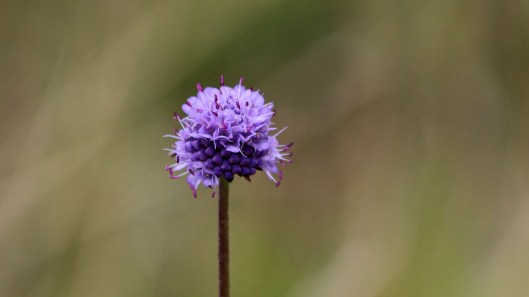
Devil’s-bit scabious (Succisa pratensis) has a beautiful flower that paints the wildflower meadows at Lavernock Nature Reserve in shades of purple lusciousness and provides some very welcome late summer nectar and pollen to a host of insects, particularly bees, flies and butterflies.

180831 devil's-bit scabious (2)
180831 devil's-bit scabious (5)
180831 devil's-bit scabious (6)
180831 devil's-bit scabious (4)
180831 devil's-bit scabious (3)

And that name? Well, the story goes that the devil was not pleased that the plant’s medicinal properties were healing the skin conditions of people suffering from bubonic plague and scabies so, in a fit of rage, he tried to kill off the plant by biting off the ends of the plant’s roots. Ever the party pooper!

180831 devil's-bit scabious (8)
180831 devil's-bit scabious (11)
180831 devil's-bit scabious (10)
180831 devil's-bit scabious (7)
180831 devil's-bit scabious (9)
Like Loading...

One thousand posts!

30 Thursday Aug 2018

Posted by sconzani in birds, nature

≈ 20 Comments

Tags

1000 blog posts, blogging, blogging about nature, personal milestone, Robins, writing a daily nature blog

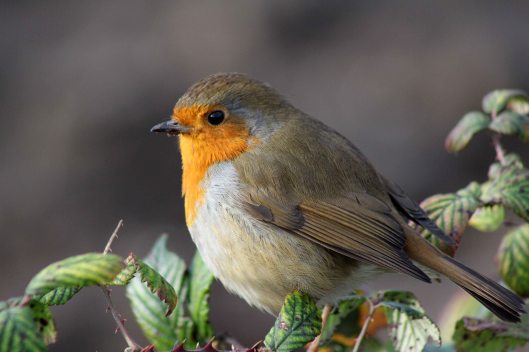
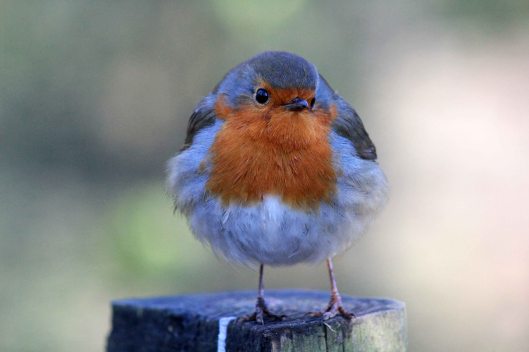
Today marks a personal milestone, as this is my 1000th consecutive post since I started this blog way back on 7 December 2015. My original intention was to make the daily blog a personal challenge for 2016: I’d done ‘photo a day’ challenges previously so the blog was just an extension of that idea. And at the end of 2016, I stayed keen and carried on.

180830 robin (1).jpg

There’s an element of pressure in posting each and every day, constantly trying to find new and interesting topics, always keeping an eye out for good photo opportunities and, when a holiday is in the offing, writing blogs for a week or two in advance, so as to keep the daily posts going. If only I was getting paid for doing it!

180830 robin (2)

Along the way, I’ve amassed a loyal band of followers and enjoyed some lovely interaction with others who love the natural world as much as I do. My sincere thanks to each and every one of you who have hit the ‘like’ button or taken the time to post a comment. Your feedback and support are very welcome.

180830 robin (3)

In future, I may not post every single day but, for as long as I can find something wonderful / marvellous / colourful / stimulating / fascinating / entertaining / smile-inducing to share, this blog definitely will not stop. And as one of my followers, Theresa Green, wrote on her blog everyday nature trails, ‘there’s never nothing to see’.

p.s. Some of your favourite posts have been about Robins so these photos seemed appropriate. 🙂

Like Loading...

Wild word: cocoon

29 Wednesday Aug 2018

Posted by sconzani in insects, nature

≈ 5 Comments

Tags

#WildWords, 5-spot Burnet, 6-spot Burnet, British moths, Burnet moth cocoon, cocoon, Five-spot Burnet moth, moth cocoon, Six-spot Burnet moth, wild words

Cocoon: Noun; A silky case spun by the larvae of many insects for protection as pupae (Oxford Dictionary).
The cocoons in my photos are those of Burnet moths, both 5-spot (below left) and 6-spot (below right): you can’t tell the difference in the cocoons from the outside – I just know which moths were present in the locations where I took my photos.

180828 5-spot burnet moth
180828 6-spot burnet moth

After hatching from their eggs, the caterpillars/larvae of both moths feed on plants from the pea family; the 6-spot burnet is particularly partial to Common bird’s-foot trefoil, which is why I see a lot of these moths at Cosmeston.

180828 occupied 5-spot pupa
180828 occupied 6-spot pupa

When they’re ready to pupate, the caterpillars find themselves a suitable location, often high up on a sturdy grass stem (though I have seen them on other plants), and spin an oval-shaped cocoon. The cocoons pictured above are still occupied by caterpillars in the throes of metamorphosing into moths, a process which takes about two weeks.

180828 empty cocoon (2)
180828 empty cocoon (1)

These are the empty cocoons that remain once the adult moths have emerged (with the remains of the larvae’s pupae cases poking out the tops). The cocoons are quite sturdy: their yellowish-white papery structures often seem to last for a month or more after the adults have departed or even until the grasses themselves collapse with the coming of the wild winds and chilly days of autumn.

Like Loading...

Butterflies 2018

28 Tuesday Aug 2018

Posted by sconzani in insects, nature

≈ 4 Comments

Tags

British butterflies, butterflies, butterflies in Britain, UK butterflies

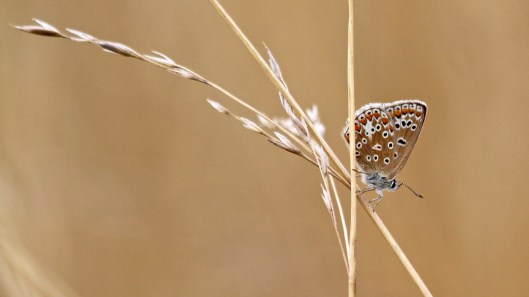
The sharp-eyed amongst you may have noticed that I recently added a new page to this blog (see the link in the top menu). As it says on the page, Butterflies 2018 is a chronological list of the first time I’ve spotted each British butterfly species during 2018. This isn’t like my Birding 2018 challenge, where I’m deliberately trying to see 200 species in a single year – 2018 just happens to have been a very good year for me for seeing more butterfly species than ever before (bear in mind that I’ve only been living in Britain three years, so I haven’t had a lifetime of butterfly watching, and there are plenty more species I’ve not yet seen). And I figured it would be a good idea to have a chronological list as a personal aide-memoire, so I know which butterflies to look out for in which months in future years.

180828 Common blue

Common it may be, but I still think the Common blue is one of Britain’s loveliest butterflies.

Like Loading...

Seeing spots before my eyes

27 Monday Aug 2018

Posted by sconzani in autumn, birds, nature, seasons

≈ Leave a comment

Tags

autumn migration, bird migration, birding, birdwatching, British birds, Cosmeston, Cosmeston Lakes Country Park, Muscicapa striata, Spotted flycatcher

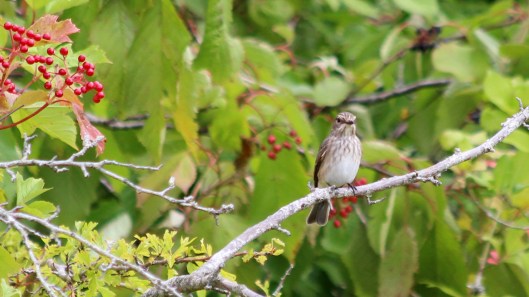
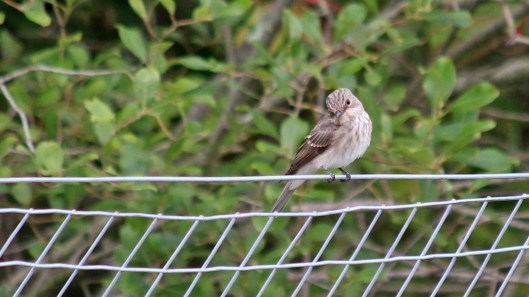
The autumn bird migration is now in full swing in south Wales and almost every day migrating birds are being spotted at Cosmeston Lakes Country Park, where they’re stopping off to refuel before they tackle their long flights to warmer over-wintering locations in Europe and Africa. One that I find particularly charming is the Spotted flycatcher (Muscicapa striata), which is not really spotted at all, more streaky and stripy. The scientific name is more accurate: Muscicapa is a combination of the Latin word musca, meaning fly, and capere, meaning to catch, and the epithet striata is from the Latin striatus, meaning striated.

180827 spotted flycatcher (1)

I saw my first Spotted flycatcher at Cossie on 7 August.

180827 spotted flycatcher (2)
180827 spotted flycatcher (3)

A week later, on the 15th, I had two sightings.

180827 spotted flycatcher (4)
180827 spotted flycatcher (5)
180827 spotted flycatcher (6)

The 20th was a bumper day, with three birds, two obviously travelling together, and another doing its own thing.

180827 spotted flycatcher (7)

And last Friday, the 24th, a birding friend put me on to a single bird, that was catching flies in the paddock I walked through on my way home. Fingers crossed I manage to see a few more before they all disappear for the winter.

Like Loading...

The Chinooks of the hoverfly world

26 Sunday Aug 2018

Posted by sconzani in insects, nature

≈ 6 Comments

Tags

British hoverflies, Great pied hoverfly, Hornet mimic, hoverflies, hoverfly, Penarth Rail Trail, Volucella pellucens, Volucella species, Volucella zonaria

These are a couple of the Volucella species, the Chinooks of the hoverfly world and, if you live in the southern parts of Britain, they’ll be out there hovering along woodland paths and in local parks near you right now. Before you panic and get out your fly swat, these hoverflies may look a little menacing – and some of them even look a bit like Hornets – but, please rest assured, they are all completely harmless. And, if you take a little time for a closer look, you will soon see what incredibly handsome mini-beasties they are.

180826 Volucella zonaria (4) 

180826 Volucella zonaria (3)
180826 Volucella zonaria (2)
180826 Volucella zonaria (1)

With a wing length between 15 and 20mm, Volucella zonaria is the largest British hoverfly and is sometimes known as the Hornet mimic. (There is a very similar species called Volucella inanis but we don’t see them very often in south Wales.) Since arriving in Britain, on England’s south coast, in the 1930s, V. zonaria has made itself at home and has spread west and northwards. During July and August, I’ve seen several of these beauties at Lavernock Nature Reserve and along our local rail trail, a former railway line now a tree-lined foot- and cycling path.

180826 Volucella pellucens (1)

With its large size and black-and-white colouring, Volucella pellucens is a very distinctive hoverfly and easy to identify. You can see why it’s also known as the Great Pied hoverfly. When it’s not feasting on pollen and nectar, it can often be found defending its airspace by hovering around head height along paths and trails. If you stand still, it will sometimes approach to check you out but, once again, it will do you absolutely no harm and move out of your way when you carry on walking. 

180826 Volucella pellucens (2)
180826 Volucella pellucens (3)
180826 Volucella pellucens (4)
Like Loading...
← Older posts
Newer posts →

About me

sconzani

sconzani

I'm a writer and photographer; researcher and blogger; birder and nature lover; countryside rambler and city strider; volunteer and biodiversity recorder.

View Full Profile →

Follow earthstar on WordPress.com

Enter your email address to follow this blog and receive notifications of new posts by email.

Recent blog posts

  • NFY: Orange-tip April 20, 2026
  • All the yellows April 19, 2026
  • Spider: Dysdera crocata April 18, 2026
  • Recent Reed buntings April 17, 2026
  • Tiny but feisty April 16, 2026

From the archives

COPYRIGHT

Unless otherwise acknowledged, the text and photographs on this blog are my own and are subject to international copyright. Nothing may be downloaded or copied without my permission.

Fellow Earth Stars!

  • Unknown's avatar
  • Unknown's avatar
  • Unknown's avatar
  • Unknown's avatar
  • Unknown's avatar
  • Unknown's avatar
  • Unknown's avatar
  • Unknown's avatar
  • Unknown's avatar
  • Unknown's avatar
  • Unknown's avatar
  • Unknown's avatar
  • Unknown's avatar
  • Unknown's avatar
  • Unknown's avatar
  • Unknown's avatar
  • Unknown's avatar
  • Unknown's avatar
  • Unknown's avatar
  • Unknown's avatar
  • Unknown's avatar
  • Unknown's avatar
  • Unknown's avatar
  • Unknown's avatar
  • Unknown's avatar
  • Unknown's avatar
  • Unknown's avatar
  • Unknown's avatar
  • Unknown's avatar
  • Unknown's avatar
  • Unknown's avatar
  • Unknown's avatar
  • Unknown's avatar
  • Unknown's avatar
  • Unknown's avatar
  • Unknown's avatar
  • Unknown's avatar
  • Unknown's avatar
  • Unknown's avatar
  • Unknown's avatar
  • Unknown's avatar
  • Unknown's avatar
  • Unknown's avatar
  • Unknown's avatar
  • Unknown's avatar
  • Unknown's avatar
  • Unknown's avatar
  • Unknown's avatar
  • Unknown's avatar
  • Unknown's avatar

Blog at WordPress.com.

Privacy & Cookies: This site uses cookies. By continuing to use this website, you agree to their use.
To find out more, including how to control cookies, see here: Cookie Policy
  • Subscribe Subscribed
    • earthstar
    • Join 642 other subscribers
    • Already have a WordPress.com account? Log in now.
    • earthstar
    • Subscribe Subscribed
    • Sign up
    • Log in
    • Report this content
    • View site in Reader
    • Manage subscriptions
    • Collapse this bar
 

Loading Comments...
 

You must be logged in to post a comment.

    %d