• ABOUT
  • BIRDING 2018
  • Birding 2019
  • BLOG POSTS
  • Butterflies 2018
  • Resources

earthstar

~ a celebration of nature

earthstar

Category Archives: nature

A Mallow

14 Friday Sep 2018

Posted by sconzani in flowers, nature, wildflowers

≈ 6 Comments

Tags

#FloralFriday, British wildflowers, Mallow, Malva species, Penarth Rail Trail

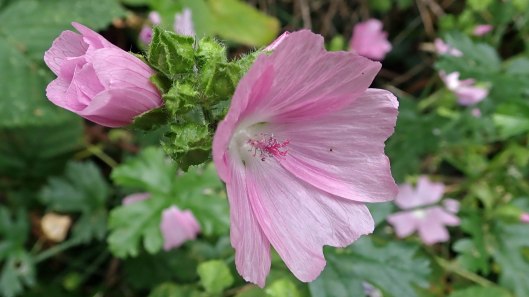
This beauty is definitely a Mallow (Malva sp.) but it seems paler than the Common mallow (Malva sylvestris), whose flowers are usually a much deeper pinkish-lilac with even darker stripes.

OLYMPUS DIGITAL CAMERA

I found it growing on Penarth’s rail trail, a railway line to Barry that fell foul of the Beeching cuts in the 1960s and has since been converted, in part, to a much-used walking and cycle path. The trail is edged on both sides by houses so this plant could very easily have flitted over a back fence or been dropped as seeds by birds. Whichever, its flowers are a very pretty addition to the foliage that lines the trail.

OLYMPUS DIGITAL CAMERA
Like Loading...

White vs Pied wagtails

13 Thursday Sep 2018

Posted by sconzani in autumn, birds, nature

≈ 5 Comments

Tags

autumn migration, birding, birdwatching, British birds, difference between Pied and White wagtail, Motacilla alba alba, Motacilla alba yarrellii, Pied wagtail, White wagtail

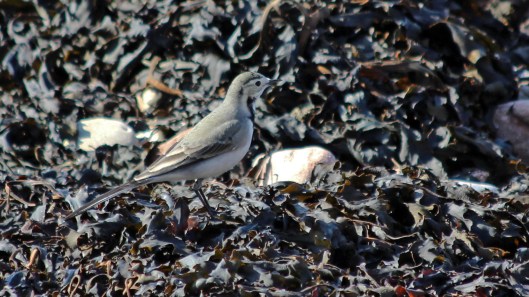
It’s taken me a couple of years to find and recognise White wagtails for myself. I would hear other birders talk about them and look at the photos they posted, but not really see any difference between Pied and White wagtails. Finally, I found some and it was immediately obvious they had a different look.

180913 white wagtail (1)

To be clear, these are not two different species of bird: Pied Wagtails (Motacilla alba yarrellii) and White Wagtails (Motacilla alba alba) are different subspecies of the same species, which rather confusingly is known as the White Wagtail (Motacilla alba).

180913 white wagtail (2)

In Britain, we mostly see Pied wagtails, with the Whites passing through during the spring and autumn migration periods, and the White wagtails tend to have a much lighter grey back and a very clean, white belly and flanks.

180913 white wagtail (4)

Thanks to an excellent blog post I found, I discovered the reason why it was easier for me to tell these particular Whites from the Pied wagtails they were with. The blog has much more detail but, essentially, the Whites complete their moult sooner (usually by the end of August) because of their need to migrate in peak condition from northern latitudes (most of our western Britain White wagtail migrants pass through from Iceland to the southern Mediterranean and Africa, and vice versa), whereas the Pieds, being mostly resident in Britain, don’t complete their moult until mid to late September.

180913 white wagtail (3)

So, the plumage of the Whites I saw looked clean and crisp and fresh, whereas the Pieds were still looking rather scruffy, as you can see below.

180913 pied wagtail (1)
180913 pied wagtail (2)
180913 pied wagtail (3)
180913 pied wagtail (4)
180913 pied wagtail (5)
180913 pied wagtail (6)
Like Loading...

A jovial of Dunnocks

12 Wednesday Sep 2018

Posted by sconzani in birds, nature

≈ 2 Comments

Tags

a jovial of dunnocks, birding, birdwatching, British birds, collective noun for dunnock, dunnock, fledgling birds, fledgling Dunnock, Prunella modularis

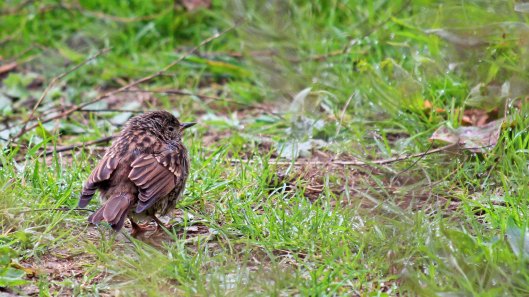
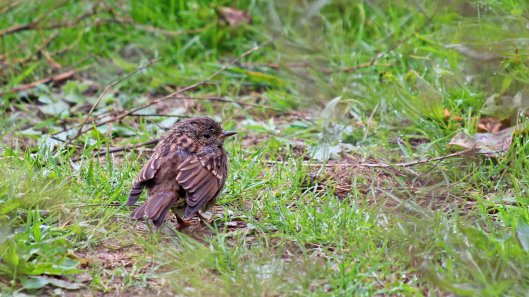
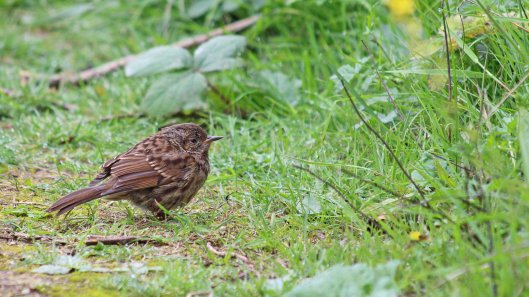
Apparently, a jovial is one of the traditional collective nouns for the Dunnock (Prunella modularis). Now don’t get me wrong, I love these little brown birds, I really do, but jovial is not an adjective I would normally use to describe them.

180912 dunnock (1)

Indeed, I can empathise with the sarcasm of this birder’s comments: ‘Any birdwatcher worth his salt knows of the joy brought about by watching a dull brown bird dullishly dull about in a dull shrub. Indeed, I find myself incredibly jovial every time I think I’ve seen a good bird and it turns out to be a dunnock.’

180912 dunnock (2)

However, while this little fledgling didn’t look anything like jovial, it certainly did make me smile. And, though my wander around Cosmeston produced some nice migrating birds, the highlight of my Monday was watching this little dumpling hopping along the path in front of me.

180912 dunnock (3)

Like Loading...

Rocking the samphire

11 Tuesday Sep 2018

Posted by sconzani in birds, nature, plants, wildflowers

≈ 2 Comments

Tags

British wildflowers, Crithmum maritimum, Lavernock Nature Reserve, Rock pipit, Rock samphire, samphire

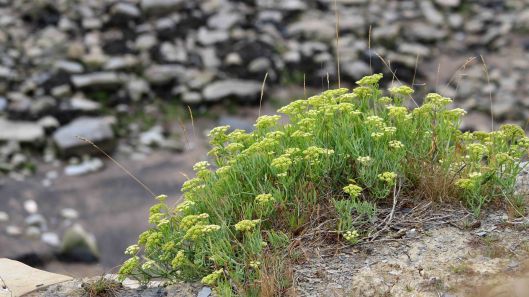
This lovely blast of botannical sunshine I found flowering on the clifftops at Lavernock is Rock samphire (Crithmum maritimum).

180914 Rock samphire (1)

I’ve never eaten it – apart from the occasional blackberry at this time of year, I’m not a forager – I like to leave things to be appreciated by everyone and eaten by the wildlife that needs it more than me (anti-foraging mini-rant over!) – but I believe it can be eaten as a vegetable and is also used in pickling.

180914 Rock samphire (2)

In fact, according to the Oxford Dictionary, the word samphire was once sampiere, from the French (herbe de) Saint Pierre or ‘St Peter(‘s herb)’. And in my trusty Flora Britannica, Richard Mabey writes

In the nineteenth century rock samphire from Dover and the Isle of Wight was sent in casks of brine to London, where wholesalers would pay up to four shillings a bushel for it. Shakespeare knew the plant from the south coast, and in King Lear, in a scene near Dover, has Edgar say to Gloucester, ‘half way down / Hangs one that gathers samphire, dreadful trade!’

180914 Rock samphire (3)

Even if I did want to try this particular Rock samphire, its location is completely inaccessible to all but the most foolhardy. But one huge bonus of photographing a plant that grows along cliff edges is that sometimes, if you’re really lucky, a cute and curious little Rock pipit will pop up to see what’s happening.

180914 Rock samphire and Rock pipit

Like Loading...

A walk along the Taff

10 Monday Sep 2018

Posted by sconzani in autumn, birds, nature, parks, trees, walks, wildflowers

≈ Leave a comment

Tags

Bute Park, Carrion crow, Goosander, Green alkanet, Grey heron, Grey wagtail, Mallard, Mute swan, River Taff, riverside walk, Speckled wood, woodland trail

On Friday, after I’d paid a visit to the tree I’m following, I enjoyed a stroll along the trail in Cardiff’s Bute Park that meanders through mature woodland alongside the River Taff. Despite this summer’s drought conditions, the recent rains have revived the local trees and plants so everything was looking wonderfully lush and vibrant.

180910 Walk by the Taff (1)

A female Goosander sailing down river was a pleasant sight. Both males and females can often be seen on this part of the Taff from autumn through to spring.

180910 Walk by the Taff (2)

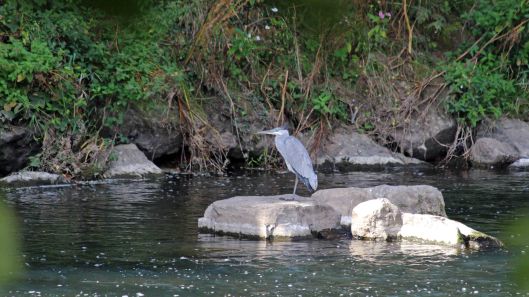
Near the far river bank, a Grey heron stood tall on one of the many exposed rocks and boulders. The river is quite low at the moment.
180910 Walk by the Taff (3)

There weren’t a lot of signs of autumn yet – only the leaves of the Horse chestnuts were yellowing and curling up and beginning to drop.

180910 Walk by the Taff (4)

A Speckled wood was well camouflaged on the woodland floor. There weren’t many butterflies around, just half a dozen Speckled woods and a few Small whites.

180910 Walk by the Taff (5)

A Mallard enjoyed a snooze near the river’s edge.

180910 Walk by the Taff (6)

I liked the colours and patterns of the pebbles and the occasionally blue sky reflected in the river water.

180910 Walk by the Taff (7)

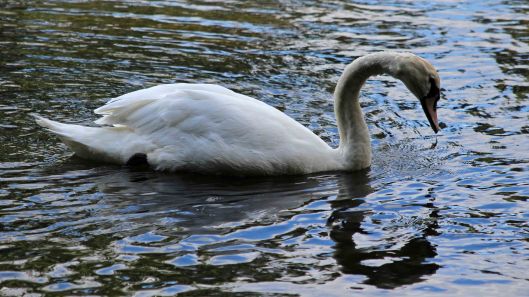
This was one of two Mute swans feeding.
180910 Walk by the Taff (8)

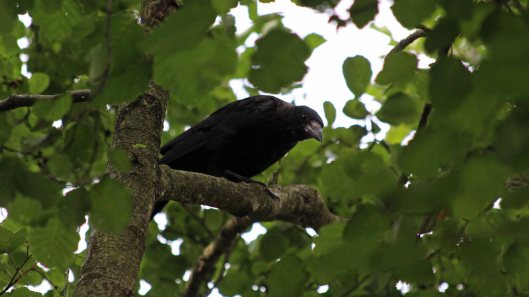
I’ve seen this particular Carrion crow many times before when I’ve walked this way. I know it’s the same crow, not because of how it looks but because it has virtually no voice. It tries to croak but hardly any sound comes out.
180910 Walk by the Taff (9)

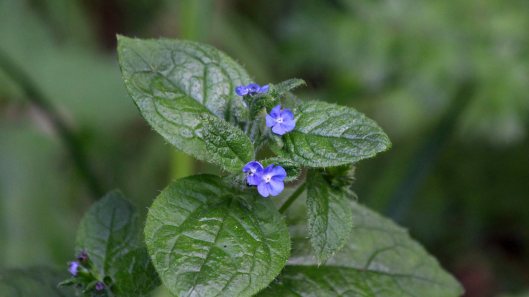
Most of the wildflowers have finished flowering but this Green alkanet was a pretty exception.
180910 Walk by the Taff (10)

Just a few hints of autumn showing here. I love how this path meanders through these magnificent trees.

180910 Walk by the Taff (11)

The woodland trail finishes just below Blackweir, where the current low water level means many rocks and boulders have been exposed. This was the perfect spot for a group of perhaps 20 Grey wagtails to fly-catch, and watching their aerial antics was the perfect end to my wander alongside the Taff.


180910 Walk by the Taff (12)

Like Loading...

I’m following a tree: September 2018

09 Sunday Sep 2018

Posted by sconzani in leaves, nature, parks, trees

≈ 9 Comments

Tags

Acer mono, Acer pictum, Bute Park, I'm following a tree, tree following

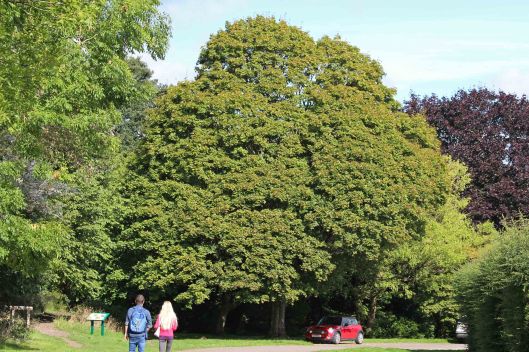
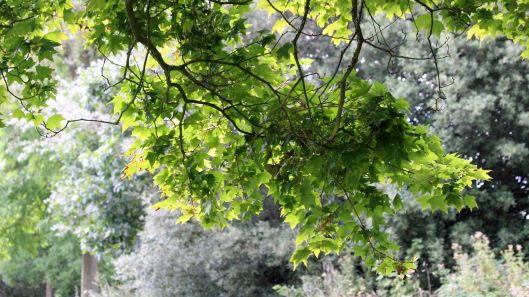
I expected my tree, this magnificent Acer pictum aka Acer mono, to be looking a little autumnal when I visited it in Cardiff’s Bute Park on Friday, but no.

180909 acer mono (1)

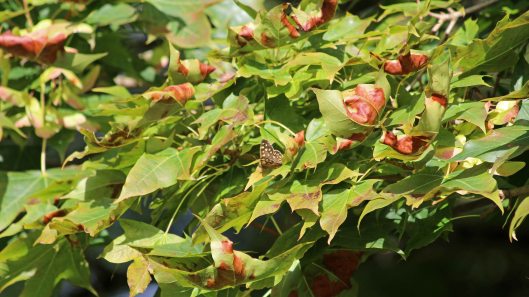
There were leaves that almost looked burnt, were dry and curling up, but that looked more like a hangover from the several weeks of drought and high temperatures we had in July and August, rather than the slow changing of colour you’d expect to see during autumn.

180909 acer mono (2)

Spot the Speckled wood butterfly perched high in the canopy – one of two I saw up there.

180909 acer mono (3)

Most of the foliage was still looking lush and vibrant and very green.

180909 acer mono (4)
180909 acer mono (5)

180909 acer mono (6)

Though a few lay scattered beneath the tree, most of its seeds were also still attached. I brought a couple of seed pods home, thinking to look at the seeds inside them. It wasn’t until I checked them later that I realised all the seeds had burst out of their pods. Next time …

180909 acer mono (7)
180909 acer mono (8)
Like Loading...

A Whinchat family

08 Saturday Sep 2018

Posted by sconzani in autumn, birds, nature

≈ 2 Comments

Tags

autumn migration, bird migration, birding, birdwatching, British birds, Cosmeston, Cosmeston Lakes Country Park, migrating birds, Saxicola rubetra, Whinchat

180908 2 whinchats (1)

One of the highlights of this week at Cosmeston Lakes Country Park has been watching the party of three Whinchats that have stopped off to feed up prior to their migration to central and southern Africa. I think they’re a family group because this one appears still to have the plumage of a juvenile.

180908 whinchat (1)

Another (below) is still part way through the moulting process. I read recently that birds don’t usually migrate until after their moult is complete, as the lack of all their proper flight feathers, in particular, can affect their ability to fly long distances. Perhaps that’s another reason why they’ve broken their journey at Cosmeston.

180908 whinchat (2)

This is the third Whinchat, or Saxicola rubetra, to give it its scientific name.

180908 whinchat (3).jpg

Their common name, as with many birds, reflects their behaviour – whin is another word for gorse, as these little birds are commonly found amongst gorse and bracken and areas of low shrubs and bushes. Chat relates to their call, which combines the sound of two stones being tapped together with a series of melodic whistles.

180908 2 whinchats (2).jpg

Like Loading...

Eyebrights

07 Friday Sep 2018

Posted by sconzani in flowers, nature, wildflowers

≈ 2 Comments

Tags

#FloralFriday, British wildflowers, Euphrasia, Eyebright

I’m not even going to try to put a name to this little flower except to say it’s an Eyebright, one of around 20 very similar (and 60-plus hybrid) species of Euphrasia. They’re pretty and very dainty little plants, though easily overlooked as they’re don’t grow very tall and so are often obscured by surrounding grasses and overwhelmed by other wildflowers.

180907 eyebright (1)

According to Richard Mabey’s Flora Britannica: ‘Their name and old medicinal use are a classic example of the Doctrine of Signatures. The flowers, like tiny violets in shape, are mottled with purple and yellow blotches and stripes, not unlike the colours of a bruised eye, and compresses and tinctures made from them were prescribed for all manner of eye disorders.’

OLYMPUS DIGITAL CAMERA
Like Loading...

I got a Gropper!

06 Thursday Sep 2018

Posted by sconzani in birds, nature

≈ Leave a comment

Tags

birding, birdwatching, British birds, Cosmeston, Cosmeston Lakes Country Park, Grasshopper warbler, Gropper, Locustella naevia

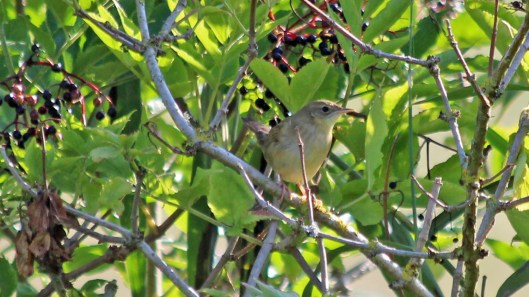
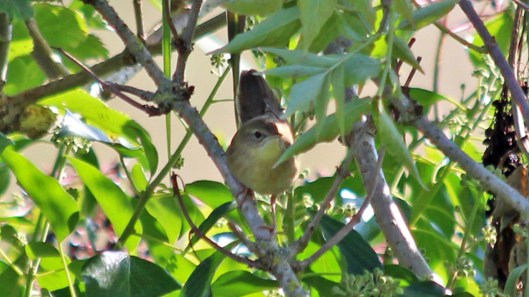
Non-birders will be wondering what on earth my title is about; birders, on the other hand, will immediately recognise the name and understand the reason for my excitement. Gropper is birder shorthand for Grasshopper warbler (Locustella naevia) and this is one difficult bird to photograph, except perhaps in the springtime, when it pops up a little more often to advertise itself to potential mates. Although Groppers are present in many parts of Britain, it’s usually their grasshopper-chirping-like song (called reeling) that lets you know one’s about.

180906 grasshopper warbler (3)

I was alerted to this bird’s presence by my birding friend Graham, who got a photo the previous day, and he’d also seen migrating birds in this general location, one of the outer fields at Cosmeston Lakes Country Park, so I figured it was worth a look.

180906 grasshopper warbler (2)
180906 grasshopper warbler (4)
180906 grasshopper warbler (5)

I found this particular bird and stood still watching it for so long that a grasshopper (the insect, not the bird) started climbing up the inside of my trouser leg, which, sadly, didn’t end well for the grasshopper as I freaked slightly about what it might be. And, to be completely honest, not having seen a Gropper up close before, I actually thought the bird I was watching was an immature Reed warbler. It was only when I sent Graham a photo later that he confirmed its identity. I might just have to go back and see if I can find it again.

180906 grasshopper warbler (1)

Like Loading...

Wild word: feather

05 Wednesday Sep 2018

Posted by sconzani in birds, nature

≈ 5 Comments

Tags

#WildWords, bird feathers, birding, birdwatching, British birds, feather, wild words

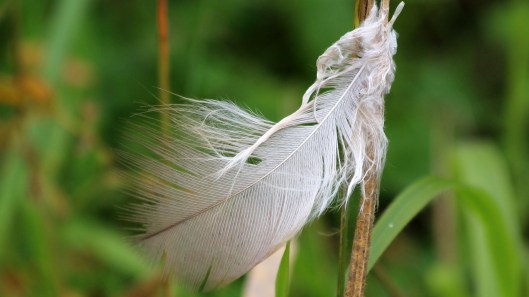
Feather: Noun; any of the flat appendages growing from a bird’s skin and forming its plumage, consisting of a partly hollow horny shaft fringed with vanes of barbs (Oxford Dictionary).

180905 feather (1)

I often come across discarded feathers when I’m out walking and try to guess which birds they’ve come from, though, unless they’re very distinctively patterned, that can be virtually impossible. Sometimes the feather just has to come home with me … like these three below. I think the bottom one’s probably from a Pheasant – not sure about the other two.

180905 feather (3)
180905 feather (4)

180905 feather (5)

Like Loading...
← Older posts
Newer posts →

About me

sconzani

sconzani

I'm a writer and photographer; researcher and blogger; birder and nature lover; countryside rambler and city strider; volunteer and biodiversity recorder.

View Full Profile →

Follow earthstar on WordPress.com

Enter your email address to follow this blog and receive notifications of new posts by email.

Recent blog posts

  • All the yellows April 19, 2026
  • Spider: Dysdera crocata April 18, 2026
  • Recent Reed buntings April 17, 2026
  • Tiny but feisty April 16, 2026
  • NFY: Large and Small whites April 15, 2026

From the archives

COPYRIGHT

Unless otherwise acknowledged, the text and photographs on this blog are my own and are subject to international copyright. Nothing may be downloaded or copied without my permission.

Fellow Earth Stars!

  • Unknown's avatar
  • Unknown's avatar
  • Unknown's avatar
  • Unknown's avatar
  • Unknown's avatar
  • Unknown's avatar
  • Unknown's avatar
  • Unknown's avatar
  • Unknown's avatar
  • Unknown's avatar
  • Unknown's avatar
  • Unknown's avatar
  • Unknown's avatar
  • Unknown's avatar
  • Unknown's avatar
  • Unknown's avatar
  • Unknown's avatar
  • Unknown's avatar
  • Unknown's avatar
  • Unknown's avatar
  • Unknown's avatar
  • Unknown's avatar
  • Unknown's avatar
  • Unknown's avatar
  • Unknown's avatar
  • Unknown's avatar
  • Unknown's avatar
  • Unknown's avatar
  • Unknown's avatar
  • Unknown's avatar
  • Unknown's avatar
  • Unknown's avatar
  • Unknown's avatar
  • Unknown's avatar
  • Unknown's avatar
  • Unknown's avatar
  • Unknown's avatar
  • Unknown's avatar
  • Unknown's avatar
  • Unknown's avatar
  • Unknown's avatar
  • Unknown's avatar
  • Unknown's avatar
  • Unknown's avatar
  • Unknown's avatar
  • Unknown's avatar
  • Unknown's avatar
  • Unknown's avatar
  • Unknown's avatar
  • Unknown's avatar

Blog at WordPress.com.

Privacy & Cookies: This site uses cookies. By continuing to use this website, you agree to their use.
To find out more, including how to control cookies, see here: Cookie Policy
  • Subscribe Subscribed
    • earthstar
    • Join 642 other subscribers
    • Already have a WordPress.com account? Log in now.
    • earthstar
    • Subscribe Subscribed
    • Sign up
    • Log in
    • Report this content
    • View site in Reader
    • Manage subscriptions
    • Collapse this bar
 

Loading Comments...
 

You must be logged in to post a comment.

    %d