119/365 Somebody’s got babies!
29 Monday Apr 2019
Posted in 365DaysWildin2019, birds, nature, spring
29 Monday Apr 2019
Posted in 365DaysWildin2019, birds, nature, spring
28 Sunday Apr 2019
Posted in 365DaysWildin2019, birds, nature, spring
Tags
baby birds, birding, birdwatching, British birds, Cosmeston, Cosmeston Lakes Country Park, Moorhen, Moorhen chicks
I’m delighted to report that the five Moorhen chicks that hatched in the dipping pond at Cosmeston on 1 April are all still alive and thriving. Their parents have obviously been doing a brilliant job of rearing and protecting them – no easy task when there are so many gulls at Cosmeston and a couple of local Buzzards that are always looking for an easy meal.
26 Friday Apr 2019
Posted in 365DaysWildin2019, birds, nature, spring
Tags
birding, birdwatching, British birds, gull nesting among chimney pots, Lesser black-backed gull, nest building, nesting, urban gull nest
So this is what all yesterday’s gull screeching was about!
Mr Lesser black-backed gull was letting the neighbourhood know he had arrived and this was his territory so look out any other gull couples who thought they’d try to muscle in. And today Mr LBB and his mate were getting down to the serious business of nest building amongst the chimney pots across the back lane from my flat – or, at least, Ms LBB was – he just stood watching her do all the work. I do hope the nest goes ahead – what a thrill it would be to watch from my bedroom window as they raise their chicks!
20 Saturday Apr 2019
Posted in 365DaysWildin2019, flowers, nature, plants, spring
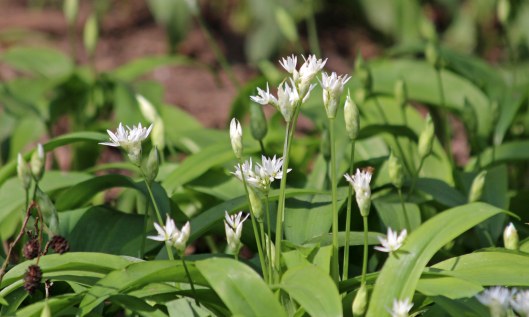
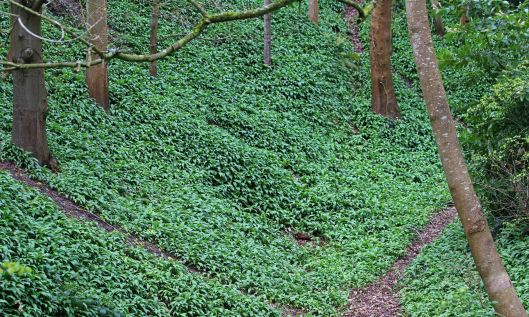
It doesn’t matter what name you call it by – Ramsons, Londoner’s lily or Wild garlic – it smells. Some people even find the smell overwhelming but I don’t mind it, and when you see Ramsons flowering en masse, they’re really very lovely.

According to Richard Mabey in my ever-useful Flora Britannica, Ramsons were ‘unmistakable and abundant enough to figure in Old English place names’ and he gives the following examples: ‘Ramsey Island off Pembrokeshire; Ramsbottom, Lancashire; Ramsdell, Hampshire; Ramsholt, Suffolk; Ramshope, Northumberland; and Ramshorn, Staffordshire’.
Here in Penarth, the banks of the stream that flows alongside Alexandra Park are carpeted with Ramsons at this time of year, and their growth is also lush in the wild gardens in Cardiff’s Roath Park and under the trees in Bute Park’s woodland trail. Get sniffing!

19 Friday Apr 2019
Posted in 365DaysWildin2019, birds, nature, spring
Tags
#365DaysWild, birding, birdwatching, British birds, Common whitethroat, Grangemoor Park, Sylvia communis, Whitethroat
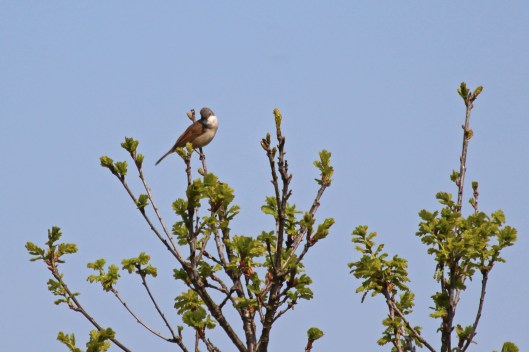
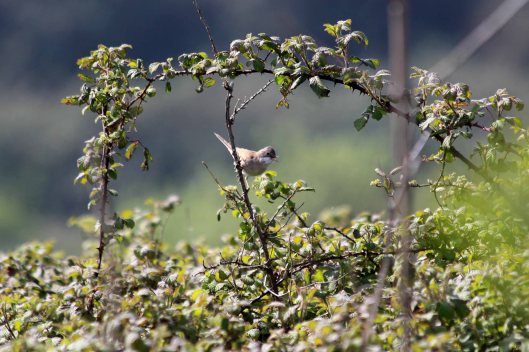
Did you know that the Whitethroat (Sylvia communis, also known as the Common whitethroat to distinguish it from the Lesser whitethroat, Sylvia curruca) is one of thirteen birds on the British list that has the colour white in its name?*

At least this is one bird that is relatively easy to identify, both because of that prominent white throat and because of its distinctive warbling song. And that’s how I managed to spot my first four Whitethroats of the year today at Cardiff’s Grangemoor Park, singing their hearts out, having just arrived back in the country after spending winter in the Sahel, just south of the Sahara.

* This is according to Stephen Moss’s excellent book Mrs Moreau’s Warbler: How birds got their names, Guardian Faber, London, 2018.
17 Wednesday Apr 2019
Posted in 365DaysWildin2019, birds, nature, spring
Tags
#365DaysWild, birding, birds nesting in Cardiff Bay, birdwatching, British birds, Cardiff Bay, Sand martin
I braved the school holiday crowds for a walk around part of Cardiff Bay today ’cause I wanted to see how the Sand martins were settling in to their chosen nooks and crannies. It was a delight to see so many of these charming little birds swooping back and forth over the waterways, merrily chattering all the while, and they seem to be actively nesting in almost every one of the old docks.
I watched them for a long time and loved every moment but I couldn’t help but feel sad that so few of the people there today even noticed them. They were missing something very special.
15 Monday Apr 2019
Posted in 365DaysWildin2019, insects, nature, spring
Tags
#365DaysWild, British butterflies, butterflies, butterfly, Holly blue, Holly blue butterfly, Lavernock Nature Reserve
I walked almost every path, track and trail at Lavernock Nature Reserve today hoping that, in spite of the strong cold southerly wind blowing in off the sea, I might find some butterflies in the more sheltered spots … and I did – four Speckled woods, a fine male Orange-tip, and the one butterfly I had hoped most to see, my first Holly blue and my tenth butterfly species for 2019. And what a beauty it was!

14 Sunday Apr 2019
Posted in 365DaysWildin2019, flowers, nature, spring, wildflowers
I know these gorgeous wildflowers as Cowslips but they have a wealth of other names, including Hey-flowers, Peggles, Paigles, Culverkeys and Bunch of keys, according to the entry in my Flora Britannica. Perhaps you know other local names for them.
One thing I didn’t know until today is that the name Cowslip is a euphemism for ‘cow-slop’ or cow pat because these lovely blooms often grow best in fields that have been well ‘fertilised’ by cows.
p.s. My Facebook friend George has very kindly corrected my flower identification: ‘The first and last photos are false oxlips rather than true cowslips, these are hybrids between cowslips and primroses and have slightly bigger, paler and more open flowers.’ I must pay more attention next time I’m looking at wildflowers!
10 Wednesday Apr 2019
Posted in 365DaysWildin2019, flowers, insects, nature, spring, wildflowers
Tags
#365DaysWild, British butterflies, Cuckooflower, Orange-tip butterfly, Orange-tip egg, Orange-tip female, Orange-tip male
A sequence of events that unfolded before me this afternoon….
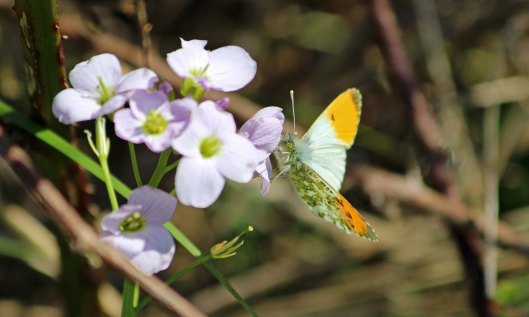
A male Orange-tip butterfly feeding on one of its favourite flowers, and the host plant for its caterpillars, the Cuckooflower.

Finished feeding on that flower, the male flies on and suddenly smells a female. Woohoo!

Sadly for him, this female has already mated, which is why she’s holding her body in that odd upright manner. He remains hopeful for a moment or two, then gets the message and flies off.

I follow the female who flies to another flower. She’s not eating so what’s she’s doing, I wonder.
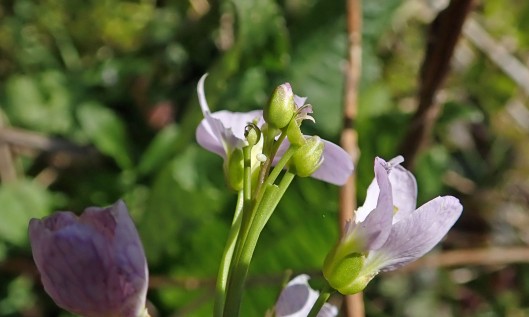
Aha! Can you spot the single egg attached to the flower stalk, in the very centre of the picture? I’ll have to go back in a week or so and see if I can spot any caterpillars on these flowers.

08 Monday Apr 2019
Posted in 365DaysWildin2019, birds, nature, spring
Tags
#365DaysWild, birding, birdwatching, British birds, chaffinch, Chaffinch foraging for food, male Chaffinch

Judging by how single-mindedly this male Chaffinch was searching the ground for food snacks and how he totally ignored me when I moved quite close to him – and, in fact, walked even closer towards me, I’m guessing he had several hungry offspring in a nest somewhere nearby and was feeling pressured to fill those gaping beaks.

You must be logged in to post a comment.