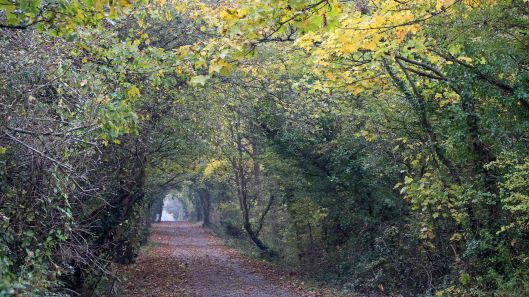
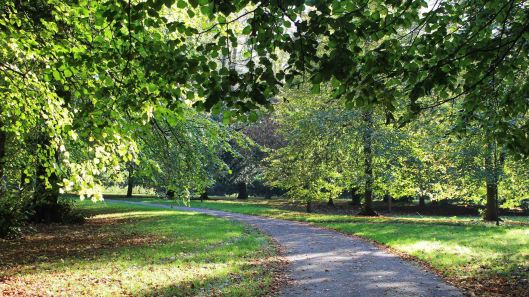
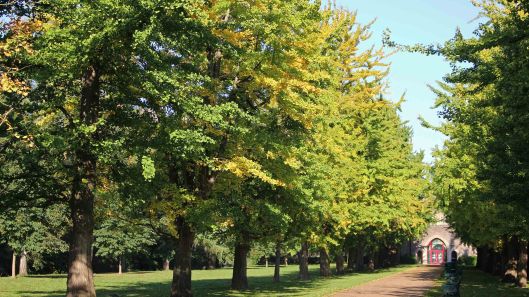
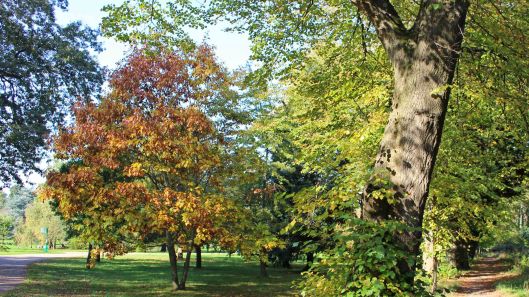
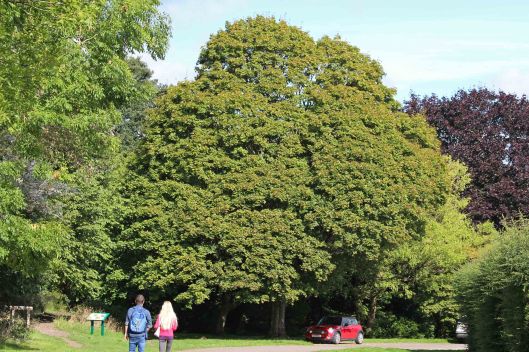
Cosmeston colour
11 Sunday Nov 2018
11 Sunday Nov 2018
07 Wednesday Nov 2018
Tags
#treefollowing, Acer mono, Acer mono ssp pictum, Acer pictum, autumn colour, autumn leaves, Bute Park, I'm following a tree, Mono maple
At the end of September, various circumstances combined to prevent me from visiting my Mono (Acer pictum ssp. mono), the tree I’m following this year, but I did manage to pay it a visit on 19 October. And I’m so glad I did, as I managed to get some photos of it in all its autumn glory, before last weekend’s storm-force winds blew most of its leaves off.

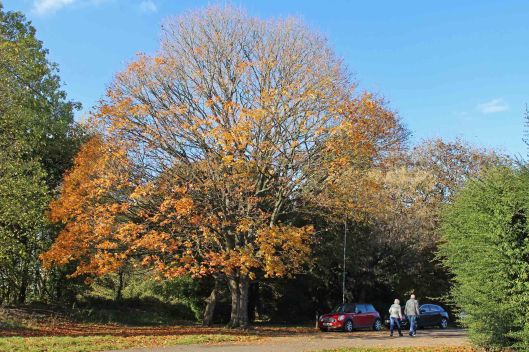
So, here it is on 19 October, a blaze of orange loveliness …


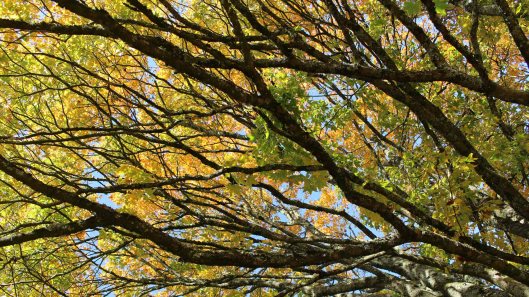
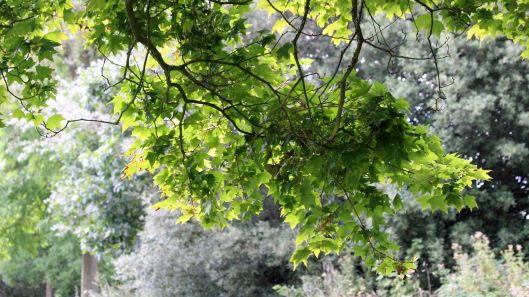
A closer shot of the leaves still on the tree, and another looking up through the canopy from underneath.
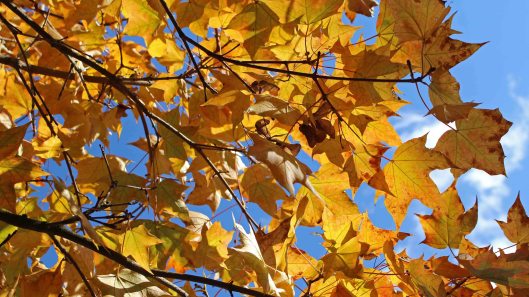
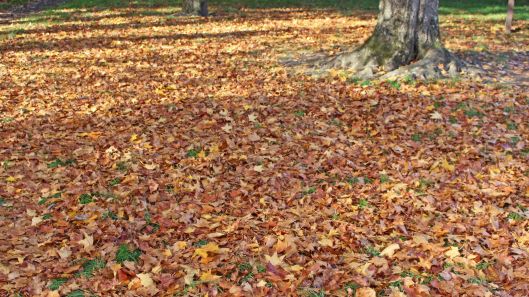
Some close-ups of the leaves on the ground. I love the variety of colours in these.

And here’s Mono on 2 November, a shadow of its former gloriousness, though what remains is a lighter, more yellow colour than before. It’s interesting to note, too, how more leaves remain on the left side of the tree, presumably because that side is a little more shaded and sheltered.

Soon, all that will remain will be this carpet of leaves below the tree and skeletal branches above.

22 Monday Oct 2018
Tags
autumn fungi, bracket fungi, dead tree full of fungi, fungi on tree, gilled fungi, Lycogala sp., slime mould

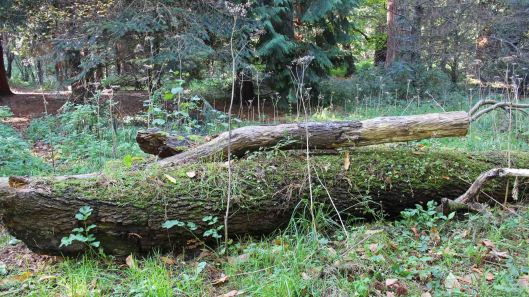
This tree may be dead but it’s teeming with life.
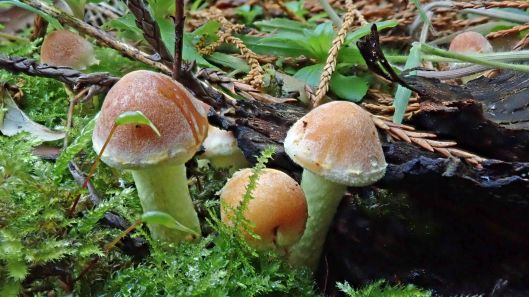
I’m sure it’s chock full of a huge variety of bugs and beetles, slugs and centipedes, and many other mini-beasties, but what caught my eye was the number of different types of fungi it was supporting.
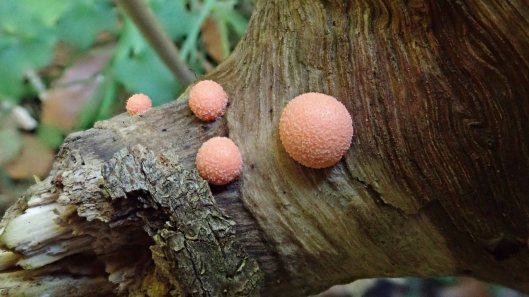
As well as several species of gilled mushrooms, there were also various intriguing brackets, some oozing golden droplets, and a wonderfully vibrant orange Lycogala species of slime mould. Fungi may often be difficult to identify but they never cease to amaze me.


21 Sunday Oct 2018
Tags
autumn, autumn colour, beautiful trees, Bute Park, Bute Park's trees, photographing trees, walk in the park

As I mentioned in yesterday’s blog, I spent several hours of a glorious autumnal Friday wandering amongst the trees in Cardiff’s Bute Park, and it was wonderful. I love trees and this meander reminded me why – their myriad different shapes and sizes, the variety of colours and textures in their leaves and their bark, and how difficult it is to capture all those qualities well in photographs. Since 2015, the year I spent photographing a tree each and every single day, I find I’m a little out of practice. I haven’t decided on next year’s project yet so maybe …


16 Sunday Sep 2018
Tags
autumn colour, berries, fruits, haws, hips, red berries, red fruit, red hips
10 Monday Sep 2018
Tags
Bute Park, Carrion crow, Goosander, Green alkanet, Grey heron, Grey wagtail, Mallard, Mute swan, River Taff, riverside walk, Speckled wood, woodland trail
On Friday, after I’d paid a visit to the tree I’m following, I enjoyed a stroll along the trail in Cardiff’s Bute Park that meanders through mature woodland alongside the River Taff. Despite this summer’s drought conditions, the recent rains have revived the local trees and plants so everything was looking wonderfully lush and vibrant.

A female Goosander sailing down river was a pleasant sight. Both males and females can often be seen on this part of the Taff from autumn through to spring.

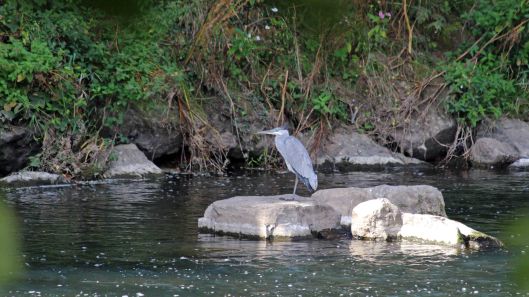
Near the far river bank, a Grey heron stood tall on one of the many exposed rocks and boulders. The river is quite low at the moment.
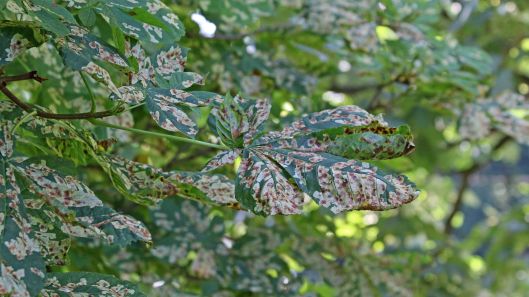
There weren’t a lot of signs of autumn yet – only the leaves of the Horse chestnuts were yellowing and curling up and beginning to drop.

A Speckled wood was well camouflaged on the woodland floor. There weren’t many butterflies around, just half a dozen Speckled woods and a few Small whites.

A Mallard enjoyed a snooze near the river’s edge.

I liked the colours and patterns of the pebbles and the occasionally blue sky reflected in the river water.

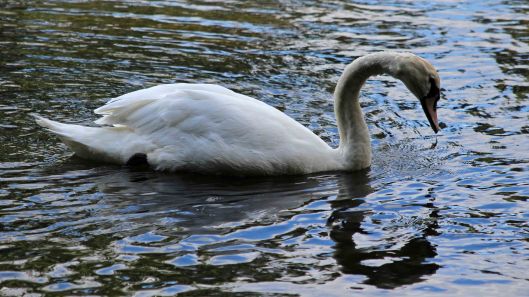
This was one of two Mute swans feeding.
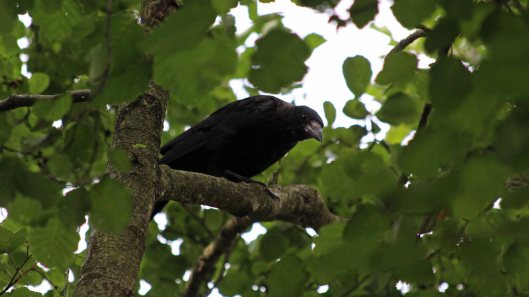
I’ve seen this particular Carrion crow many times before when I’ve walked this way. I know it’s the same crow, not because of how it looks but because it has virtually no voice. It tries to croak but hardly any sound comes out.
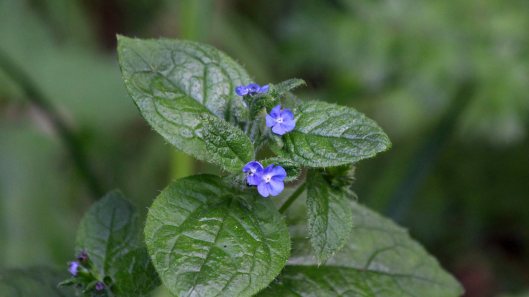
Most of the wildflowers have finished flowering but this Green alkanet was a pretty exception.
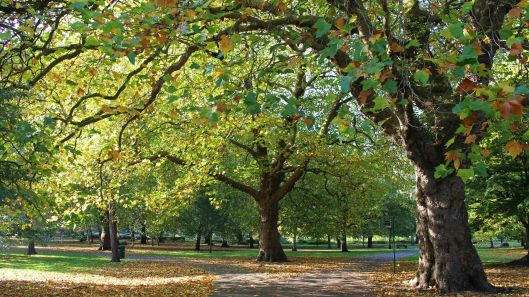
Just a few hints of autumn showing here. I love how this path meanders through these magnificent trees.

The woodland trail finishes just below Blackweir, where the current low water level means many rocks and boulders have been exposed. This was the perfect spot for a group of perhaps 20 Grey wagtails to fly-catch, and watching their aerial antics was the perfect end to my wander alongside the Taff.


09 Sunday Sep 2018
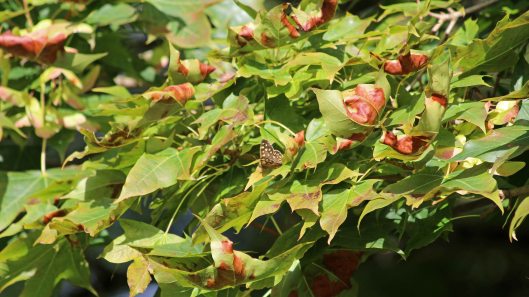
I expected my tree, this magnificent Acer pictum aka Acer mono, to be looking a little autumnal when I visited it in Cardiff’s Bute Park on Friday, but no.
There were leaves that almost looked burnt, were dry and curling up, but that looked more like a hangover from the several weeks of drought and high temperatures we had in July and August, rather than the slow changing of colour you’d expect to see during autumn.

Spot the Speckled wood butterfly perched high in the canopy – one of two I saw up there.

Most of the foliage was still looking lush and vibrant and very green.

Though a few lay scattered beneath the tree, most of its seeds were also still attached. I brought a couple of seed pods home, thinking to look at the seeds inside them. It wasn’t until I checked them later that I realised all the seeds had burst out of their pods. Next time …
30 Monday Jul 2018
Tags
1600-year-old yew tree, ancient tree, Church of St Mary and St Peter in Wilmington, Wilmington yew tree, yew tree
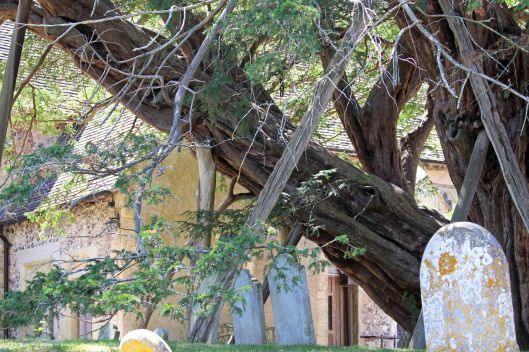
The Church of St Mary and St Peter in Wilmington, and the adjacent priory to which it was once attached, date from about 1100AD. You might think that’s pretty old – and it is – but the Yew tree in the church grounds is even older – it is truly ancient.

Scientific testing has dated the Yew to around 1600 years old, meaning it must have been planted around 400AD. Its girth measures approximately 23 feet (7m), though the trunk has now split in two, and both its trunks and huge branches are supported by a variety of posts and chains. As I only had my zoom lens, I wasn’t able to get a good photo of the entire tree but I hope to revisit next time I’m in East Sussex. It was a truly humbling experience to see such an incredible tree.

23 Monday Jul 2018
Tags
British butterflies, butterflies, butterflies in elm trees, butterflies in oak trees, Favonius quercus, Purple hairstreak, Satyrium w-album, White-letter hairstreak
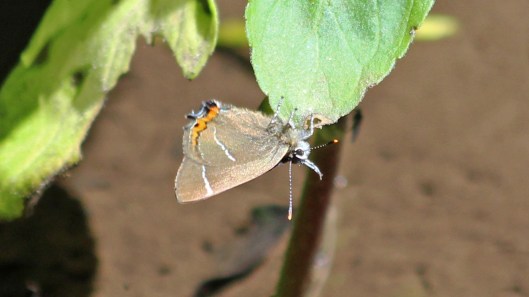
First off, let me just say I have not started blogging about hairstyling: the Hairstreaks are a group of butterflies, so named because of the thin streak of white across their underwings, that usually live their whole lives in the upper canopies of various trees. This year, due to the extremely hot dry weather, their tree-top food sources have dried up, forcing them to come down to ground level for sustenance.

I spotted this lovely little butterfly purely by chance. I was wandering along the Glamorgan Canal in Forest Farm Nature Reserve, north of Cardiff, taking photos of the Demoiselle damselflies, when something small and brown fluttered down to water level, settled briefly on a leaf, then was chased off by one of the Demoiselles (hence the poor images). The White-letter hairstreak (Satyrium w-album) can usually be found in the tops of Elm trees and suffered a severe decline in numbers due to Dutch Elm disease killing off so many Elm trees in the 1970s but it seems slowly to be recovering. Its name comes from the shape of the letter W on its lower underwing.

I can’t take the credit for spotting this Purple hairstreak (Favonius quercus) – my friend Jill noticed it sitting on the woodland trail as we explored Abbot’s Wood in East Sussex last week. (This was my third new butterfly of the week!) Purple hairstreaks usually live in the tops of Oak trees, mostly in southern areas of Britain. Unfortunately, I only managed a couple of quick photos and didn’t get to see its purple-coloured upper wings.
18 Wednesday Jul 2018
Tags
Cameraria ohridella, Horse chestnut leaf-mining moth, Horse chestnut tree, leaf mines, leaf-mining larvae, leafminer, moth larvae, moths
You may well have noticed that many (most?) of the Horse chestnut trees around you are starting to look a bit manky. Their leaves have become covered in white and brown blotches.

Those blotches are actually leaf mines, home to the larvae of Cameraria ohridella, the Horse chestnut leaf-mining moth (the brown blobs in the mines). According to the UK moths website
This species was discovered near Macedonia in 1985, and since then has spread rapidly to other countries in Europe. It was first discovered in Britain at Wimbledon in south-west London in 2002, but possibly had arrived the previous year, as it was quite plentiful. It is thought that the species may be expanding partially due to accidental transportation by man, either by road or rail. It has now been found quite extensively in the south-east of England.
Obviously, since that website entry was written, the moths have now spread from south-east England to south Wales and, indeed, to parts much further north. You’re mostly likely to see the blotches between June and September and, though you might not like the look of them, they’re not thought to inflict any permanent damage on the tree because, of course, the leaves are shed in the autumn anyway.

You must be logged in to post a comment.