• ABOUT
  • BIRDING 2018
  • Birding 2019
  • BLOG POSTS
  • Butterflies 2018
  • Resources

earthstar

~ a celebration of nature

earthstar

Category Archives: wildflowers

133/366 First Common blue

12 Tuesday May 2020

Posted by sconzani in insects, nature, wildflowers

≈ 6 Comments

Tags

British butterflies, British wildflowers, butterfly, Common blue butterfly, wildflowers on road verges, wildflowers on roadsides

One of the benefits of some local councils not mowing all the road verges at the moment is that wildflowers that would normally be strimmed to death are now being allowed to grow and bloom.

200512 Common blue butterfly (1)

Not only does this mean we get to enjoy their glorious rainbow of colours but the wildflowers’ pollen and nectar also provide a nutritious feast for all the newly emerging insects.

200512 Common blue butterfly (2)

And it was on one such uncut verge that I spotted my first Common blue butterfly of the year today, this stunning, pristine, little male.

200512 Common blue butterfly (3)

If only the councils would mow less all the time, then we’d be able to enjoy both the flowers and the insects all through spring and summer, and it would also go a little way to reversing the huge decline in insect life that’s happening all over the world.

200512 Common blue butterfly (4)

Like Loading...

131/366 New bloomers

10 Sunday May 2020

Posted by sconzani in nature, spring, wildflowers

≈ 5 Comments

Tags

Bittersweet nightshade, British wildflowers, Common milkwort, Cut-Leaved crane’s-bill, Flax, Goat's-beard, Spring colour, Wood avens

Here are this week’s newly flowering wildflowers …

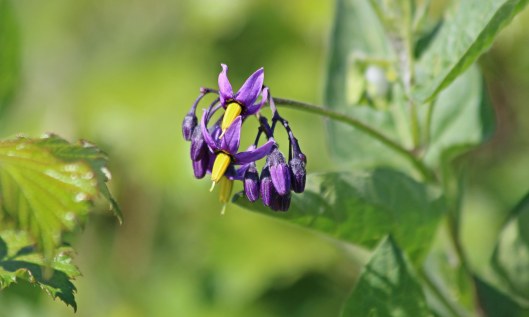
200510 bittersweet nightshade

Bittersweet nightshade (Solanum dulcamara), also known as Woody nightshade and Deadly nightshade, though my Flora Britannica assures me this is actually one of the less poisonous members of the nightshade family.

200510 cut-leaved crane's-bill

Cut-leaved crane’s-bill (Geranium dissectum), one of the many lovely members of the extended Geranium family.

200510 flax

Flax (Linum usitatissimum), a small delicate plant, with beautiful pale blue flowers. This is rather different from the plant I, as a New Zealander, usually associate with this name – see my September 2018 post Flax.

200510 goat's-beard

Goat’s-beard (Tragopogon pratensis). As well as producing these glorious large sunny flowers, this wildflower, also known as Jack-go-to-bed-at-noon, has the most wonderful seedheads.

200510 wood avens

Wood avens (Geum urbanum) – you may know this wildflower by its alternate name of Herb Bennet.

200510 milkwort

Common milkwort (Polygala vulgaris). Discovered during my walk to Lavernock Nature Reserve earlier this week, this was the first time I’d seen this pretty little plant, though it’s very small and was almost hidden amongst the other wildflowers and grasses so it may be that I had simply overlooked it on previous visits.

One theory behind its common name is that the flowers of milkwort are shaped like udders and so medieval herbalists, following the ‘signature’ belief (that body parts can be treated by plants that resemble them), used to prescribe this plant to nursing mothers to increase their milk flow.

Like Loading...

124/366 Ragged robin

03 Sunday May 2020

Posted by sconzani in nature, spring, wildflowers

≈ 7 Comments

Tags

Bee-fly, British wildflowers, Grangemoor Park, Lychnis flos-cuculi, Ragged robin, Silene flos-cuculi, Spring colour, spring flowers

At Grangemoor Park on Friday, I spotted my first flowering Ragged robin for the year.

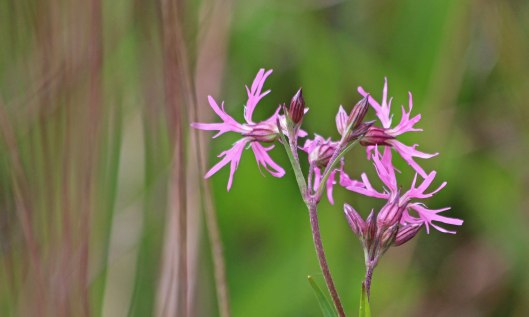
200503 ragged robin (1)

This gorgeous wildflower was formerly known as Lychnis flos-cuculi, but is now Silene flos-cuculi – from a scientific article I browsed, this seems a complicated story of almost constant reclassification of the species! You will still see both names used in books and on line, which is why I’ve mentioned both here.

200503 ragged robin (2)

According to a couple of books I discovered on the ‘language of flowers’, Ragged robin’s symbolic meaning is ‘wit’, and it is dedicated to Saint Barnabas. The ever-informative First Nature website says:

Lychnis, the genus name, comes from the Greek noun lychnos, meaning lamp; it refers to the use of a plant in this genus as the wick of an oil lamp. The specific epithet flos-cuculi means ‘flower of the cuckoo’ and was probably chosen because the first flowers of Ragged Robin appear just as the first cuckoos are being heard (in Britain and Ireland at least) in May.

200503 ragged robin (3)

A special moment: to try to stop it swaying in the breeze so I could get a sharp photo, I was holding one of the blooms when a bee-fly decided to zoom in for a feed of nectar. That super long proboscis comes in handy for long narrow flowers like these.

200503 ragged robin (4)

Like Loading...

117/366 It’s Pea time

26 Sunday Apr 2020

Posted by sconzani in nature, spring, wildflowers

≈ Leave a comment

Tags

British wildflowers, Bush vetch, Common bird's foot trefoil, Common vetch, Grass vetchling, Red campion, Spring colour, spring wildflowers

You know the summer’s not far away when members of the extensive Pea family start to flower and, during this week’s exercise walks, I’ve spotted four Pea species newly come in to flower. The first were three of the vetches …

200426 Bush vetch

Bush vetch (Vicia sepium)

200426 Common vetch

Common vetch (Vicia sativa) … and friends.

200426 Grass vetchling

Grass vetchling (Lathyrus nissolia)

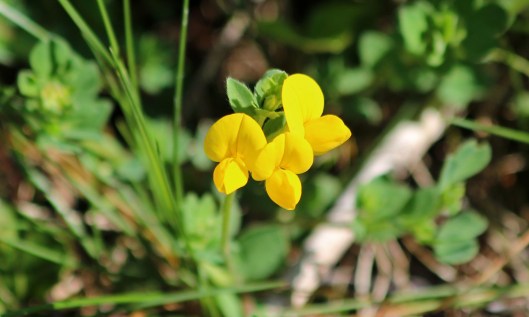
200426 bird's-foot trefoil

And, also, one of my all-time favourites – possibly because it’s also a favourite with a lot of the butterflies and day-flying moths I adore so much, Common bird’s-foot trefoil (Lotus corniculatus).

200426 Red campion

Oh, and this week’s new blooms also included one not-a-pea wildflower, the always lovely Red campion (Silene dioica).

Like Loading...

110/366 Even earlier purples

19 Sunday Apr 2020

Posted by sconzani in flowers, nature, spring, wildflowers

≈ 2 Comments

Tags

British orchids, Early purple orchid, native orchids, Orchis macula

I spotted 8 flower spikes of Early-purple orchid (Orchis macula) during my walk last Wednesday, 15 April, though not all the flowers were yet open.

200419 early-purple orchids (1)

This sighting was earlier than last year’s, which was on 23 April and which the locals told me was earlier than usual. It seems like climate change keeps changing the goal posts for these orchids.

200419 early-purple orchids (2)
200419 early-purple orchids (3)

200419 early-purple orchids (4)

Like Loading...

103/366 A week of new wildflowers

12 Sunday Apr 2020

Posted by sconzani in nature, spring, wildflowers

≈ 8 Comments

Tags

British wildflowers, Cleavers, Cowslip, False oxlip, Garlic mustard, Ground ivy, Lords-and-ladies, spring wildflowers, Yellow archangel

Spring is really starting to ramp up a notch now – shame we can’t get out and enjoy more time in the wild world. Still, if I choose the right route for my daily exercise walk, I can still hear the birds and see the flowers, and I appreciate them now even more than I usually do. Here’s a catch up with the latest plants I’ve found in flower this week.
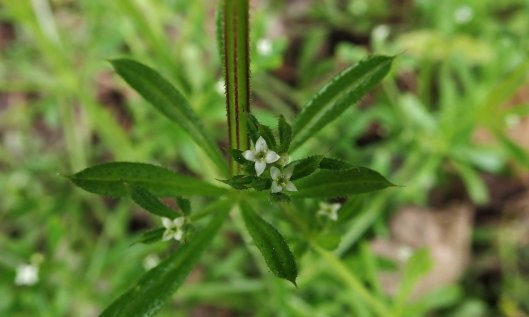
200412 1 cleavers

Cleavers (Galium aparine) : I’m sure everyone has their own favourite among the wide variety of common names for this plant: Sticky Bob, Kisses, Goosegrass are just a few – take your pick, or tell me what you call it.

200412 2 cowslip
200412 3 false oxlip

I’m lumping these two together as a comparison: on the left is Cowslip (Primula veris) and on the right is False oxlip (Primula veris x vulgaris), the hybrid of Cowslip and Primrose. I’ve previously had trouble identifying these correctly but one clue I’ve read recently is that Cowslip flowers all nod in a single direction, whereas False oxlips flop around in all directions.
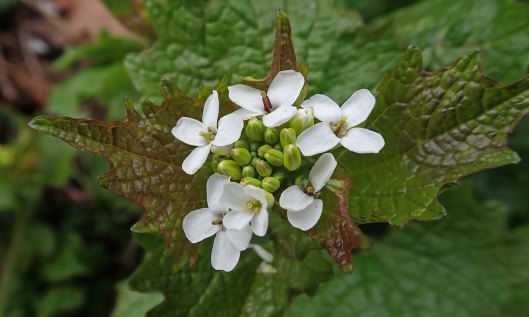
200412 4 garlic mustard

Garlic mustard (Alliaria petiolata) : these lovely plants seem almost to have sprung up overnight under every local hedgerow. You may know them by one of their vernacular names, Jack-by-the-hedge.
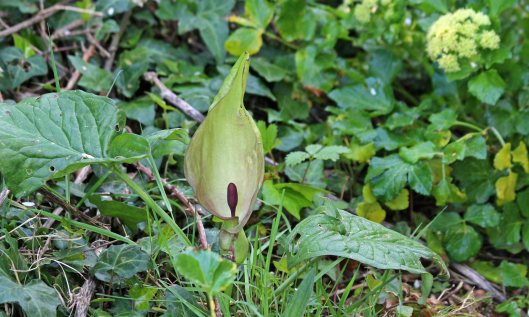
200412 5 lords-and-ladies

Lords-and -ladies (Arum maculatum), another plant with a ‘Jack’ vernacular name, in this case Jack-in-the-pulpit. I’ve seen so many leaves of these plants and quite a few sheathed flowers but, this week, I finally saw some open flowers.
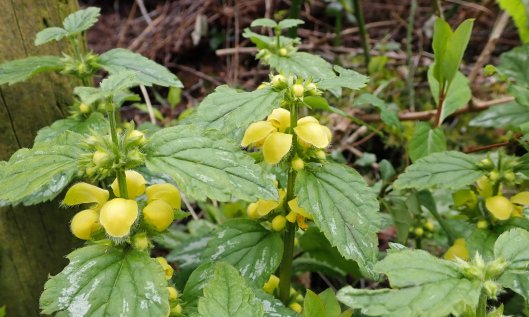
200412 6 Yellow archangel

Yellow archangel (Lamium galeobdolon) : these may well have been a garden escape as they were growing along a lane near a large area of allotments but I’m still counting them. From their appearance, it’s easy to tell that these are part of the Dead-nettle family (my favourite kinds of nettles!).
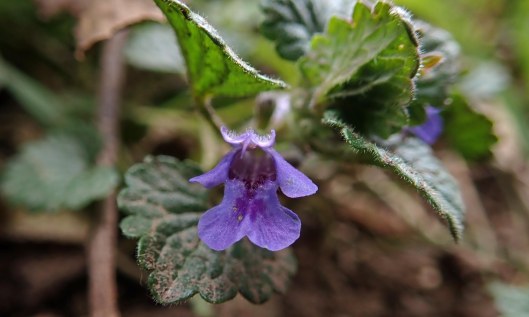
200412 7 ground ivy

Ground ivy (Glechoma hederacea) : I found these decorating the edges of the same lane as the Yellow archangel, down low beneath the brambles and assorted shrubs and bushes. And, also like the Yellow archangel, Ground ivy is a member of the Dead-nettle family.

Like Loading...

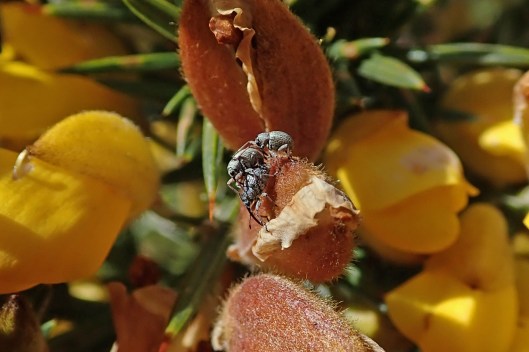
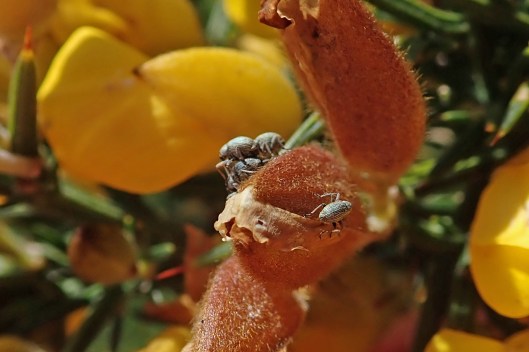
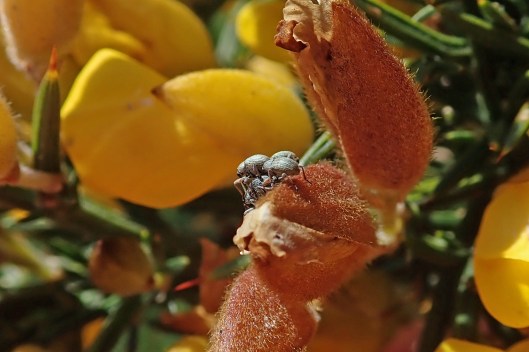
98/366 Social distancing?

07 Tuesday Apr 2020

Posted by sconzani in insects, nature, spring, wildflowers

≈ 2 Comments

Tags

British weevils, gorse, Gorse flowers, Gorse weevil, mating weevils

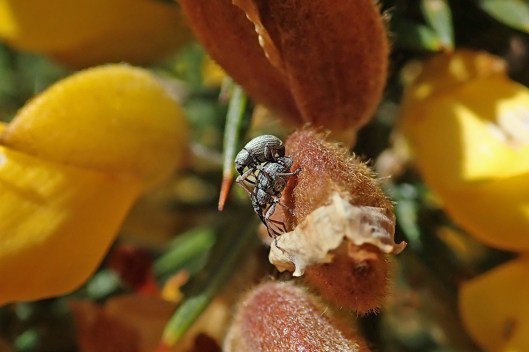
Two’s company.

Three’s a crowd.

Uh oh!

Four’s … an orgy? The Gorse weevils I observed during yesterday’s exercise walk in a local park were blatantly ignoring the social distancing rules. Please don’t act like Gorse weevils!

Like Loading...

96/366 On the wall

05 Sunday Apr 2020

Posted by sconzani in flowers, nature, spring, wildflowers

≈ 2 Comments

Tags

#wallplants, #WildflowerHour, British wildflowers, spring wildflowers, wildflowers growing on walls

This week’s WildflowerHour challenge was to find wildflowers, in bloom, growing on walls. You might think walls would be inhospitable places for plants to grow but it turns out that rather a lot of our British wildflowers relish life on a wall. It’s certainly a good place for a plant to find shelter, and a wall might also supply reflected or stored heat so, for those plants that are able to push their roots into tiny cracks and crevices and don’t mind a life of hanging around, a wall can be an ideal habitat.
Here are the wall-bound wildflowers I found during this week’s exercise walks: Daisy, Dandelion species, Forget-me-not, Groundsel, Herb Robert. Ivy-leaved toadflax (this seems to be growing in abundance on every local wall!), Red valerian, and, my favourite, Yellow corydalis.

This slideshow requires JavaScript.

Like Loading...

91/366 The bells are ringing

31 Tuesday Mar 2020

Posted by sconzani in flowers, nature, spring, wildflowers

≈ 6 Comments

Tags

blue flowers, Bluebells, British wildflowers, spring flowers

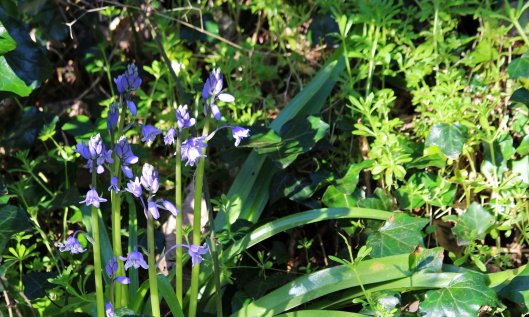
The Bluebells are in bloom!

200331 bluebells (1)

Sadly, these are not native Bluebells but they were growing in a semi-wild location rather than in a park. As I passed along the edge of one local park yesterday, I noticed the Bluebells inside are also starting to open their gorgeous flowers but, as the park is currently closed, I can’t get in to enjoy them. Are the Bluebells out yet where you live?

200331 bluebells (2)

Like Loading...

89/366 This week’s new wildflowers

29 Sunday Mar 2020

Posted by sconzani in nature, spring, wildflowers

≈ 10 Comments

Tags

Barren strawberry, British wildflowers, Common Stork's-bill, Dog violet, Honesty, marsh marigold, Ramsons, Spring colour, spring flowers, Wild garlic

During this week’s walks, which have, of course, in our current lockdown situation, been shorter and much more restricted than my usual meanderings, my mood has been brightened by the sight of our beautiful flowering wild plants, especially those that have just come into bloom in recent days. They’re a heartening reminder of better times to come … eventually. These are those I’ve found this week.

200329 barren strawberry

Barren strawberry (Potentilla sterilis): It seems a shame that this species of strawberry doesn’t produce the luscious fruit we all enjoy in the summer months. Instead, its berries are small and quite hard.

200329 Common stork's-bill

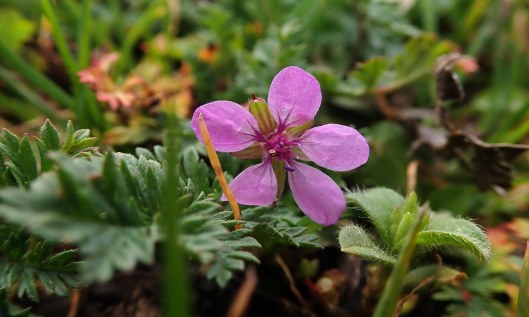
Common stork’s-bill (Erodium cicutarium): I was delighted to spot these pretty little things. I’m a big fan of the whole Geranium family, the crane’s-bills and the stork’s-bills.

200329 dog-violet

Dog-violet (Viola sp.): The photos I took weren’t good enough for me to work out whether these are Early dog-violets or Common dog-violets but they’re pretty nonetheless.

200329 honesty

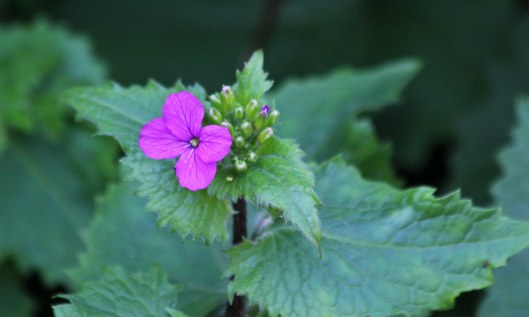
Honesty (Lunaria annua): When I had a garden I used to grow Honesty, partly for its lovely flowers but also to harvest the branches of seed pods once they’d dried. I love their fragility and the way they glisten in the sunshine. Their vernacular name, Moonpennies, is so appropriate.

200329 marsh marigold

Marsh-marigold (Caltha palustris): These were growing in the depths of a small dingle right in the middle of the town where I live, the flowers are little bright lights beaming up from the gloom.

200329 ramsons

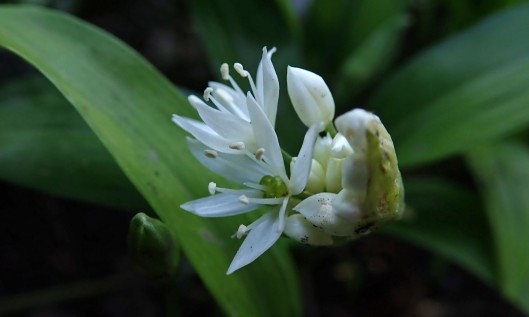
Ramsons (Allium ursinum): That same valley where I found the Marsh-marigolds is also home to swathes of Ramsons, also known to many of us as Wild garlic. There must be thousands of these plants in the valley and along the sides of the stream bed that leads from there down towards the sea.

Like Loading...
← Older posts
Newer posts →

About me

sconzani

sconzani

I'm a writer and photographer; researcher and blogger; birder and nature lover; countryside rambler and city strider; volunteer and biodiversity recorder.

View Full Profile →

Follow earthstar on WordPress.com

Enter your email address to follow this blog and receive notifications of new posts by email.

Recent blog posts

  • Springtime invasives March 22, 2026
  • Singing Dunnocks March 21, 2026
  • New cat: Large yellow underwing March 20, 2026
  • Curious Coal tit March 19, 2026
  • A huddle of 7-spots March 18, 2026

From the archives

COPYRIGHT

Unless otherwise acknowledged, the text and photographs on this blog are my own and are subject to international copyright. Nothing may be downloaded or copied without my permission.

Fellow Earth Stars!

  • Unknown's avatar
  • Unknown's avatar
  • Unknown's avatar
  • Unknown's avatar
  • Unknown's avatar
  • Unknown's avatar
  • Unknown's avatar
  • Unknown's avatar
  • Unknown's avatar
  • Unknown's avatar
  • Unknown's avatar
  • Unknown's avatar
  • Unknown's avatar
  • Unknown's avatar
  • Unknown's avatar
  • Unknown's avatar
  • Unknown's avatar
  • Unknown's avatar
  • Unknown's avatar
  • Unknown's avatar
  • Unknown's avatar
  • Unknown's avatar
  • Unknown's avatar
  • Unknown's avatar
  • Unknown's avatar
  • Unknown's avatar
  • Unknown's avatar
  • Unknown's avatar
  • Unknown's avatar
  • Unknown's avatar
  • Unknown's avatar
  • Unknown's avatar
  • Unknown's avatar
  • Unknown's avatar
  • Unknown's avatar
  • Unknown's avatar
  • Unknown's avatar
  • Unknown's avatar
  • Unknown's avatar
  • Unknown's avatar
  • Unknown's avatar
  • Unknown's avatar
  • Unknown's avatar
  • Unknown's avatar
  • Unknown's avatar
  • Unknown's avatar
  • Unknown's avatar
  • Unknown's avatar
  • Unknown's avatar
  • Unknown's avatar

Blog at WordPress.com.

Privacy & Cookies: This site uses cookies. By continuing to use this website, you agree to their use.
To find out more, including how to control cookies, see here: Cookie Policy
  • Subscribe Subscribed
    • earthstar
    • Join 668 other subscribers
    • Already have a WordPress.com account? Log in now.
    • earthstar
    • Subscribe Subscribed
    • Sign up
    • Log in
    • Report this content
    • View site in Reader
    • Manage subscriptions
    • Collapse this bar
 

Loading Comments...
 

You must be logged in to post a comment.

    %d