Two’s company.
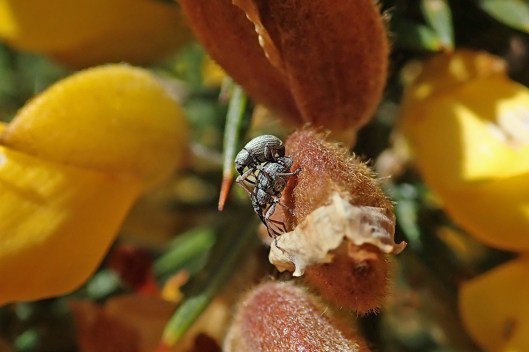
Three’s a crowd.
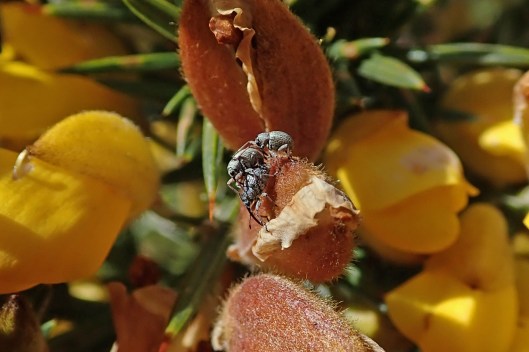
Uh oh!
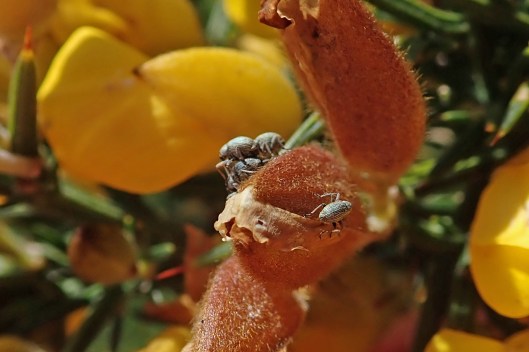
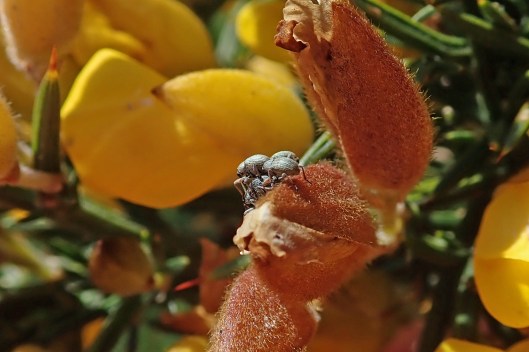
Four’s … an orgy? The Gorse weevils I observed during yesterday’s exercise walk in a local park were blatantly ignoring the social distancing rules. Please don’t act like Gorse weevils!

07 Tuesday Apr 2020
Posted in insects, nature, spring, wildflowers
Two’s company.
Three’s a crowd.
Uh oh!
Four’s … an orgy? The Gorse weevils I observed during yesterday’s exercise walk in a local park were blatantly ignoring the social distancing rules. Please don’t act like Gorse weevils!
05 Sunday Apr 2020
Posted in flowers, nature, spring, wildflowers
Tags
#wallplants, #WildflowerHour, British wildflowers, spring wildflowers, wildflowers growing on walls
This week’s WildflowerHour challenge was to find wildflowers, in bloom, growing on walls. You might think walls would be inhospitable places for plants to grow but it turns out that rather a lot of our British wildflowers relish life on a wall. It’s certainly a good place for a plant to find shelter, and a wall might also supply reflected or stored heat so, for those plants that are able to push their roots into tiny cracks and crevices and don’t mind a life of hanging around, a wall can be an ideal habitat.
Here are the wall-bound wildflowers I found during this week’s exercise walks: Daisy, Dandelion species, Forget-me-not, Groundsel, Herb Robert. Ivy-leaved toadflax (this seems to be growing in abundance on every local wall!), Red valerian, and, my favourite, Yellow corydalis.
31 Tuesday Mar 2020
Posted in flowers, nature, spring, wildflowers
The Bluebells are in bloom!
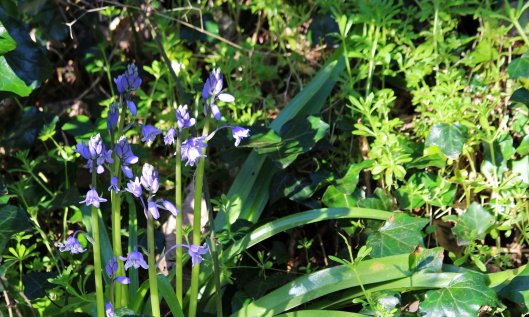
Sadly, these are not native Bluebells but they were growing in a semi-wild location rather than in a park. As I passed along the edge of one local park yesterday, I noticed the Bluebells inside are also starting to open their gorgeous flowers but, as the park is currently closed, I can’t get in to enjoy them. Are the Bluebells out yet where you live?

29 Sunday Mar 2020
Posted in nature, spring, wildflowers
Tags
Barren strawberry, British wildflowers, Common Stork's-bill, Dog violet, Honesty, marsh marigold, Ramsons, Spring colour, spring flowers, Wild garlic
During this week’s walks, which have, of course, in our current lockdown situation, been shorter and much more restricted than my usual meanderings, my mood has been brightened by the sight of our beautiful flowering wild plants, especially those that have just come into bloom in recent days. They’re a heartening reminder of better times to come … eventually. These are those I’ve found this week.

Barren strawberry (Potentilla sterilis): It seems a shame that this species of strawberry doesn’t produce the luscious fruit we all enjoy in the summer months. Instead, its berries are small and quite hard.
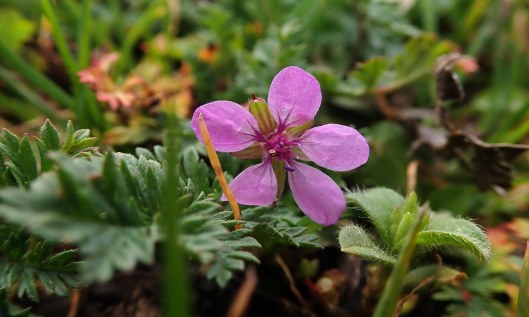
Common stork’s-bill (Erodium cicutarium): I was delighted to spot these pretty little things. I’m a big fan of the whole Geranium family, the crane’s-bills and the stork’s-bills.

Dog-violet (Viola sp.): The photos I took weren’t good enough for me to work out whether these are Early dog-violets or Common dog-violets but they’re pretty nonetheless.
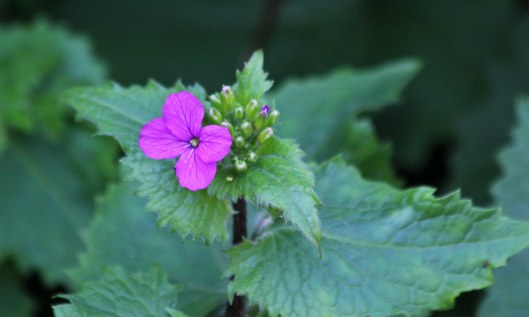
Honesty (Lunaria annua): When I had a garden I used to grow Honesty, partly for its lovely flowers but also to harvest the branches of seed pods once they’d dried. I love their fragility and the way they glisten in the sunshine. Their vernacular name, Moonpennies, is so appropriate.

Marsh-marigold (Caltha palustris): These were growing in the depths of a small dingle right in the middle of the town where I live, the flowers are little bright lights beaming up from the gloom.
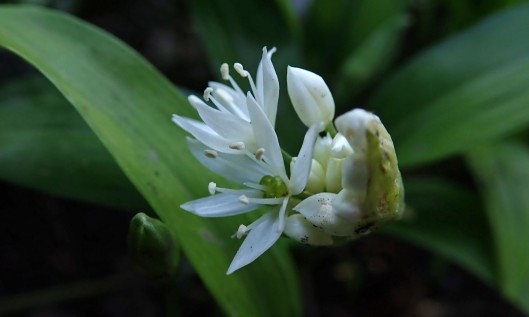
Ramsons (Allium ursinum): That same valley where I found the Marsh-marigolds is also home to swathes of Ramsons, also known to many of us as Wild garlic. There must be thousands of these plants in the valley and along the sides of the stream bed that leads from there down towards the sea.
26 Thursday Mar 2020
Posted in insects, nature, spring, wildflowers
Tags
Brimstone, Brimstone butterfly, British butterflies, British wildflowers, dandelion, Gonepteryx rhamni, Grangemoor Park
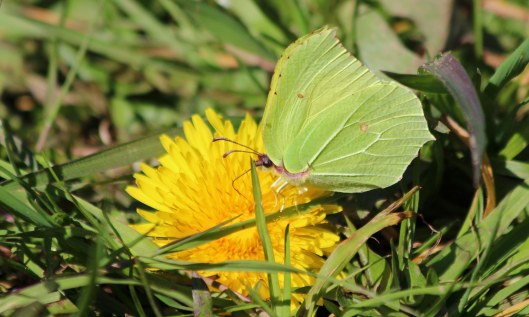
Here’s why it should be an offence to cut, spray or otherwise destroy blooming wildflowers – in this case, Dandelions, in particular.

During yesterday’s daily exercise walk around Grangemoor Park I saw at least five Brimstone butterflies. These were all males, newly emerged from hibernation and already flying frantically back and forth along their chosen path-sides and hedgerows, seeking out females to mate with.

As there aren’t yet many wildflowers in bloom at Grangemoor, when it came time to refuel for their next patrol flight, every single one of these Brimstones stopped and supped on Dandelion nectar. In fact, once I twigged to what they were doing, I took to checking every Dandelion I saw, just in case it held a butterfly. So, please, PLEASE, leave your Dandelions for the insects to feed on.
22 Sunday Mar 2020
Posted in nature, spring, wildflowers
Tags
American winter-cress, Brassicas, British wildflowers, Common whitelowgrass, Cuckooflower, Hoary mustard, Sea radish, Shepherd's purse, Wavy bitter-cress
This week’s challenge for #Wildflowerhour was to find as many of the Brassica family in flower as possible. I’m rather pleased with the number I’ve found, though I’m not 100% sure of my plant IDs, so if you think I’ve got any wrong, please do comment below. And I’ll edit this post if I need to, to reflect the corrected information.
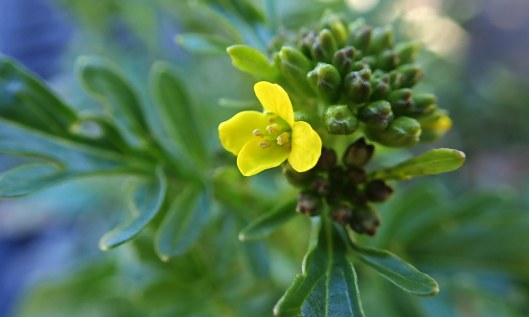
American winter-cress (Barbarea verna): this is the identification I’m least confident about, as it’s a plant I’ve not seen before, and only a couple of flowers were actually open, but the leaf shape seems to fit.

Common whitlowgrass (Erophila verna): his plant is very common in my area but it’s one I often overlook because of its small size. It’s a pretty wee thing though.

Cuckooflower (Cardamine pratensis): found earlier this week but this is a new photograph as I’ve since revisited the site. It’s certainly earlier in this particular location than in the other places I’ve usually found this plant, which, I suspect, is due to aggressive cutting by the local council in those other locations (Cardiff Bay and Hamadryad Park).
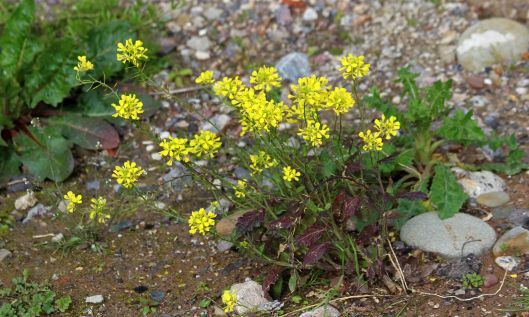
Hoary mustard (Hirschfeldia incana): Argh, so many plants that look similar! The only reason I’m reasonably confident about this one is that I’ve posted a photo of it previously on Twitter and an expert named it for me.

Sea radish (Raphanus raphanistrum ssp maritimus): This is another plant previously identified by one of the Twitterati and, though this was a slightly different location, it was also on the shores of Cardiff Bay so hopefully I’ve got this one right.
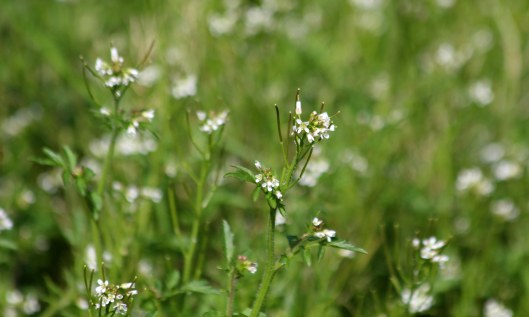
Wavy bitter-cress (Cardmine flexuosa): The bitter-cresses always confuse me but, though it’s hard to see them, these flowers have six stamens, which is a key ID point to confirm this as Wavy rather than Hairy bitter-cress.

Shepherd’s-purse (Bursa pastoralis): The purse-shaped seedpods of this lovely little plant make it unmistakable, thank goodness.
18 Wednesday Mar 2020
Posted in nature, spring, wildflowers
Yesterday’s star finds, during a walk around Grangemoor Park, were my first Cuckooflowers of 2020. They’re such dainty little beauties and, with a newly arrived Chiffchaff calling in the trees behind, it felt like Spring really had arrived.
15 Sunday Mar 2020
Posted in nature, plants, wildflowers
With its spotted leaves and flowers that start out pink but change quickly to blue, Common lungwort (Pulmonaria officinalis) is a very attractive plant. I’ve blogged before about the origin of its name and some of its other common names but the Royal Horticultural Society website has an even longer long list of vernacular names for this plant: Jerusalem sage, Adam and Eve, Bedlam cowslip, beggar’s basket, bugloss cowslip, Jerusalem cowslip, lady’s cowslip, lady’s milk, Mary’s honeysuckle, Mary’s tears, sage of Bethlehem, soldiers and sailors, spotted dog, and Virgin Mary’s honeysuckle.
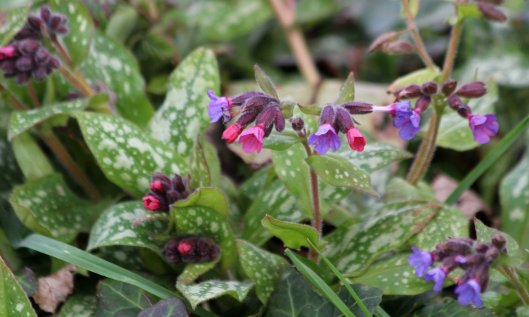
I’m sure many of the Lungwort plants I see are relatively recent garden escapes but the plants shown in today’s photos may perhaps be a little older. They were growing along the boundary fence of the medieval village at Cosmeston Lakes Country Park, a village which is a reconstruction of the actual buildings that existed on this site around 600 years ago. Was it one of the herbal plants used by the locals in those days? I like to think so.


08 Sunday Mar 2020
Posted in nature, spring, wildflowers
Tags
#PavementPlants, #WildflowerHour, British wildflowers, Coltsfoot, Common cornsalad, Daisy, dandelion, Herb Robert, Lesser Celandine, primrose, Red dead-nettle, Shepherd's purse
Now that Spring has sprung, the folks who run #WildflowerHour on social media are issuing weekly challenges for followers to focus their searches around. This week it was #PavementPlants, searching for any plants in bloom that were growing in the cracks or along the edges of their local pavements. Challenges like this do mean you get some odd looks from people when you’re photographing your finds but I’m very used to that these days.
Here’s what I found: Coltsfoot (I love how tenacious these plants are – they were pushing up between the cracks in an old set of steps connecting two local streets); Common cornsalad; Daisy; Dandelion; Herb Robert; Lesser celandine; Primrose; Red dead-nettle; and Shepherd’s-purse.
02 Monday Mar 2020
Posted in insects, nature, spring, wildflowers
Tags
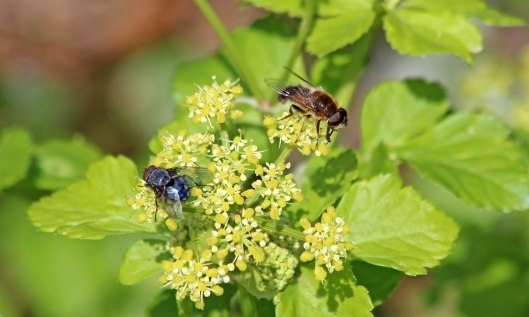
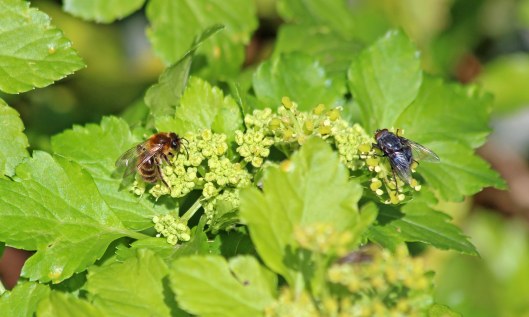
A little bit of sunshine and a sheltered spot, plus a few blooming wildflowers – in this case, dandelions and Alexanders, alongside a south Wales coastal road – and out came the flying critters: solitary bees a’buzzing, various species of flies a’flying and hoverflies a’hovering. Spring is off to a flying start!


 earthstar
You must be logged in to post a comment.