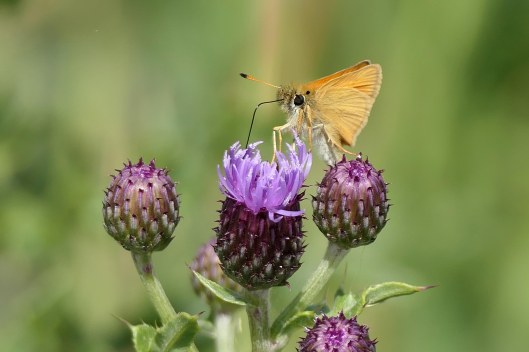
Posing perfectly to show off those distinctive black antennae tips, my first Essex skipper of the year popped up to greet me last Friday.

01 Saturday Jul 2023
Posted in insects
Posing perfectly to show off those distinctive black antennae tips, my first Essex skipper of the year popped up to greet me last Friday.
30 Friday Jun 2023
Posted in insects
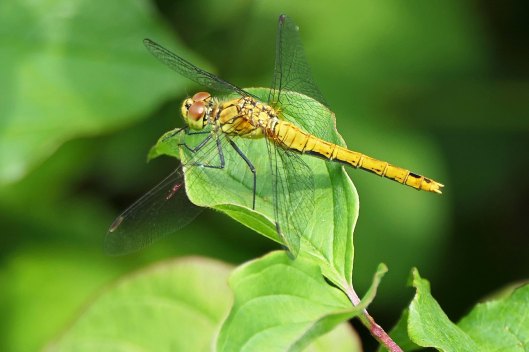
I’m on an odonata roll! Last week my first Small red-eyed damsel, this week my first Ruddy darter, though I’ll be the first to admit that I didn’t know it was a Ruddy darter when I took this photograph. Initially, I thought I was seeing my first Common darter of the year. But, when I got home and looked more closely at the couple of photos I got, I realised it didn’t look right for a Common darter. This dragonfly had all-black legs (no yellow stripe down them) and the top of the thorax was all one colour (no contrasting stripes). I consulted my book and thought I’d worked it out but sent my photo to the county recorder for dragonflies to check. His response came back fairly quickly – it was a Ruddy darter (Sympetrum sanguineum), a female so not ruddy in colour as the male is. The British Dragonfly Society website has excellent photos of both genders, as well as comparison shots with other dragonflies, which I find really useful.
29 Thursday Jun 2023
Posted in insects
Tags
British damselflies, damselfly, Erythromma viridulum, Odonata, Roath Park Lake, Small red-eyed damselfly
One day last week, for a change of scene, I headed to north Cardiff, for a wander around the area where I flatted when I first moved to Cardiff almost eight years ago. By chance, when I was wandering through the wild area at the northern end of Roath Park I bumped into a birder I know, who also happens to be a park ranger. I told him I was heading for Roath Brook to look for the Banded demoiselles I’ve seen there in the past, and he mentioned the Small red-eyed damselflies to be found around the lake. I’d never seen one of those so I made it my day’s mission to find one.
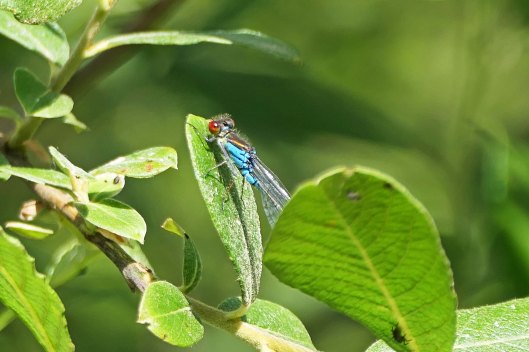
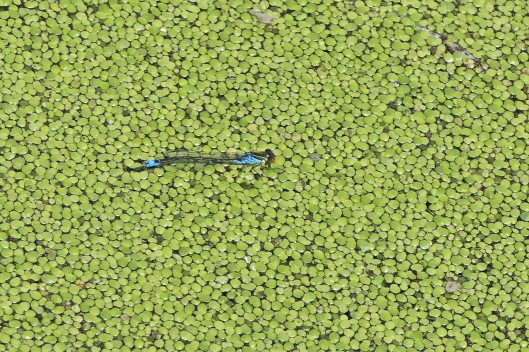
It was hot standing in the full sun, staring at the vegetation, trying to check all the blue damselflies, but it was worth the effort. I found my first Small red-eyed damselfly (Erythromma viridulum) at the northern end of the lake. And then, at the southern end, by peering over the railing of the dam, I spotted several more flitting about and perching on the duckweed. My photos aren’t very good, I’m afraid, but the British Dragonflies website has some crackers.
28 Wednesday Jun 2023
Posted in insects
I saw my first Small tortoiseshell butterfly for the year on the first day of May and then none at all until this one, on19 June. During those six weeks, things were happening: eggs were hatching, family groups of caterpillars were munching happily on Stinging nettles, larval skins were being shed when they got to bursting point, metamorphosis was happening within pupae. And then, as if by magic, the next generation of Small tortoiseshells emerged to begin the process all over again.

27 Tuesday Jun 2023
Posted in birds
Among the many frazzled parents and demanding fledglings I’m seeing around me during my daily walks, I was delighted late last week to spot a family of Blackcaps feeding in a nearby tree. Though the youngsters were attempting to feed themselves, they were also following their parents very closely, watching what they were finding, hopping over quickly to beg for whatever delicious titbits might be on offer.

26 Monday Jun 2023
Posted in insects, plants, wildflowers
Tags
British moths, Enchanter's nightshade, leafmines on Enchanter's nightshade, leafmining moths, Mompha terminella, moth larvae in leaf mines
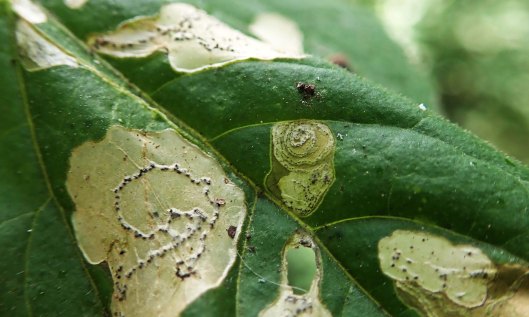
Just look at all these leafmines on Enchanter’s nightshade (Circaea lutetiana); you can hardly see the leaves for the mines.

Back in July 2021, I blogged about these mines, made by the larvae of the tiny moth Mompha langiella, in Leafmines: Enchanter’s nightshade but, when I was looking at these nightshade plants on Wednesday, I noticed one that looked different – the mine started as a spiralling gallery before widening out into a blotch. This was later confirmed as the larval mine of Mompha terminella, another tiny moth whose adult form can be seen on the UK Moths website. The mines are usually seen between August and September but, as with many things this year, this larva was active much earlier than usual.
25 Sunday Jun 2023
Posted in flowers, wildflowers
In my Flora Britannica, Richard Mabey relates
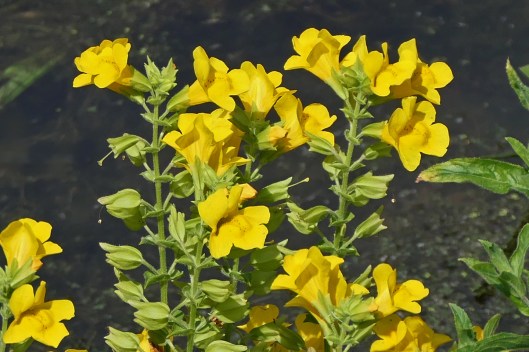
Monkeyflower, Mimulus guttatus, was first discovered and brought to English gardens from the damp and foggy islands off the Alaskan coast in 1812. But it crops up in damp places right down the west coast of America, as far south as the mountains of New Mexico, and it has been just as catholic in its choice of British habitats since it was first naturalised in the 1820s. It now occurs by the banks of burns, streams, lowland lakes, rivers and canals throughout Britain.
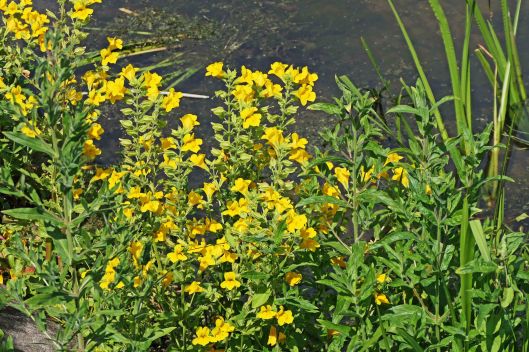
Given that last sentence, I can’t believe it’s taken me so many years to see Monkeyflower for myself but, during Wednesday’s walk around Cardiff’s Roath Park, I saw several of these plants, both around Roath Lake and along Roath Brook.
24 Saturday Jun 2023
Posted in insects
Tags
Autographa gamma, British moths, Burnet companion, Chrysoteuchia culmella, Euclidia glyphica, Garden Grass-veneer, moth, Silver Y
During my recent wanders, particularly through areas of long grass, moths tiny and large have been flitting up and flying a short distance, before fluttering back into the grass. Ninety-nine percent of the time, the moths have seemingly disappeared, so capable of stillness have they been and so well camouflaged. Fortunately for me, in the other one percent of instances I’ve managed to get photographs. Here are some of these flitters …

– Burnet companion (Euclidia glyphica)
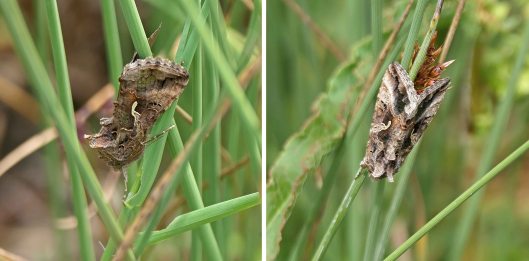
– Silver Y (Autographa gamma)

– Garden grass-veneer (Chrysoteuchia culmella)
23 Friday Jun 2023
Tags
birding, birdwatching, British birds, Coot, Coot family, cootlet, turtle
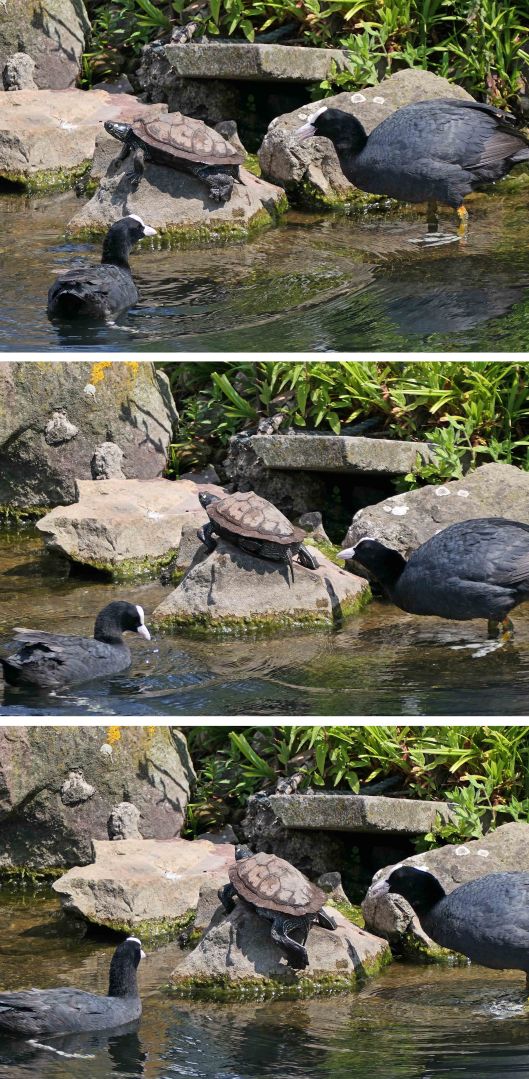
I was concerned this situation was going to end badly for the tiny cootlets – one snap of that turtle’s jaws and they’d be goners!
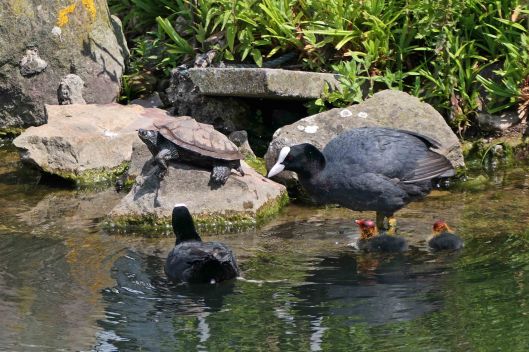
I should’ve had more faith in the Coots – after all, these birds are known for their stroppy attitude. These Coot parents were quickly on the turtle’s case, jabbing at its legs and tail to move it away.
22 Thursday Jun 2023
Posted in insects
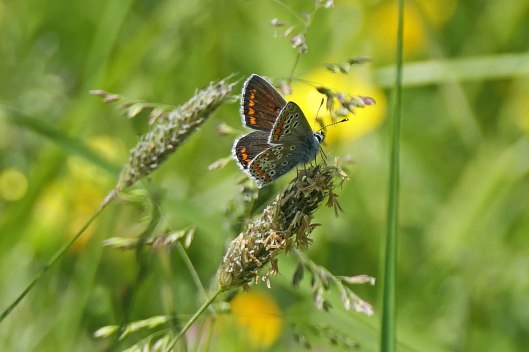
In his magnificent publication Life Cycles of British & Irish Butterflies, Peter Eeles quotes the words of James Tutt, from his 1906 work A Natural History of British Lepidoptera, about the flight pattern of the beautiful Brown argus (Aricia agestis)
This species may be called the ‘zigzagger’, for it darts swiftly to and fro in flight, showing first its grey underside and then its black upperside, so that one can hardly follow it with the eye.

Tutt describes the Brown argus’s movement perfectly. If you take your eye off this tiny butterfly for a second, it disappears, and I’ve spent many a minute, or ten, waiting patiently for it to move again before being able to get a good enough view first to identify the butterfly and then to edge close enough for photos. It’s certainly worth the wait though.
 earthstar
You must be logged in to post a comment.