Graylings are go

Tags

, , , ,

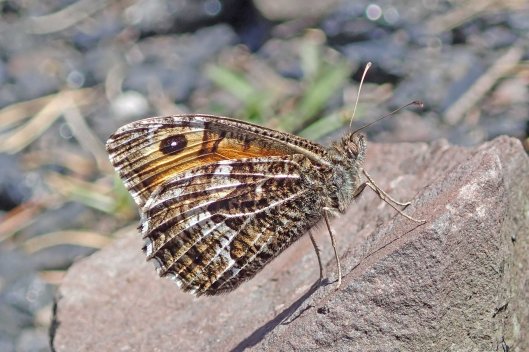
I think I picked the hottest day of the year so far to head to the top of the Aberbargoed coal spoil tip to look for Graylings but it was worth every drop of perspiration to spend time with these gorgeous butterflies.
220708 grayling (1)

I hadn’t realised before yesterday how territorial Graylings are. They are so well disguised that it’s almost impossible to see them so, as I wandered carefully across the slope of coal spoil, they would fly up almost from under my feet. Then they would land, I’d try to get close for a photo, and they would immediately flit up and around, buzzing me, even landing on me (my shoes twice, see the image below), as if saying ‘this is my place, you’re not welcome’. It wasn’t just the intrusive human they were bombarding – they were defending their territories against each other too. Fascinating to watch.

220708 grayling (2)

Thistle tortoise beetle larvae

Tags

, , , , , , , ,

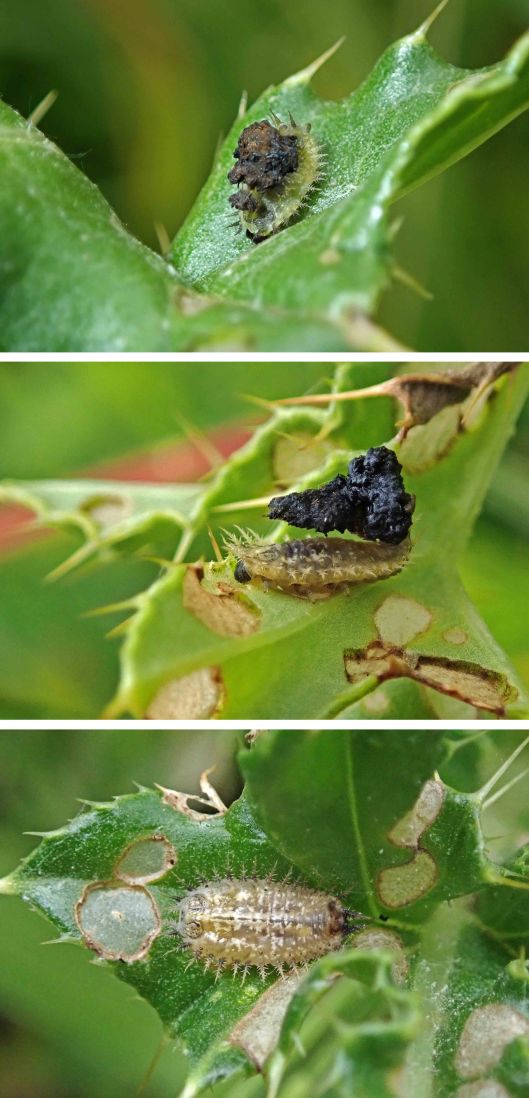
This is one of the most bizarre things I’ve ever seen. These are the larvae of the Thistle tortoise beetle (Cassida rubiginosa) but, at a quick glance, they look just like little lumps of poo on the leaves of Creeping thistle. And that’s exactly what you can see because these amazing creatures employ a faecal shield as a protective device, carrying their own excretions above their back as a disguise. There are very few local records for this beetle but, as has happened to me before, once I found one – and so knew what to look out for, I then found more in other locations (including a couple of larvae without their shield), so this is another case of something being rarely recorded rather than actually rare.

220707 thistle tortoise beetle larvae

Scarlet tiger, deceased

Tags

, , , ,

Though I know death is inevitable for all living creatures, I’m always sad when I find something dead. On a practical level, of course, it’s often an opportunity to look more closely at that creature, which is what happened with this Scarlet tiger moth (Callimorpha dominula) I found on a pavement last week. That scarlet colour is just glorious!

220706 scarlet tiger

The chocolate butterfly

Tags

, , ,

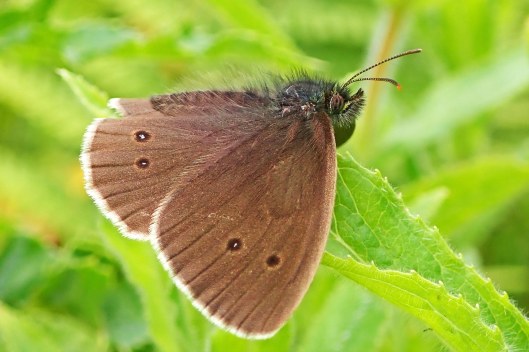
What’s not to love about a butterfly whose colour is described as chocolate … except that you can’t eat it.

220705 ringlet (1)

Its rich brown colour enables the Ringlet (Aphantopus hyperantus) to warm itself more quickly than light-coloured butterflies, which means it can be seen bobbing its way through the long grass even on overcast days.

220705 ringlet (2)

The Ringlet is named for the marks on its underwings, the circles of white, black and caramel, which can vary considerably in size and shape.

220705 ringlet (3)

Leafmines: Liriomyza eupatorii

Tags

, , , ,

This week’s leafminers are little artists, beginning their feeding going round and round in half a dozen spirals before heading off along the leaf in a long meandering gallery mine. These miniature artworks have been created by the larvae of the tiny fly Liriomyza eupatorii and, though I found these on Hemp agrimony (Eupatorium cannabinum), the British Leafminers website lists several other possible host plants, including Goldenrod and Common hemp-nettle. With two broods each year, during spring and summer, there’s still plenty of time to spot these little miners in action.

220704 Liriomyza eupatorii

Oxeyes and friends

Tags

, , , , ,

These photos were taken over 3 days, as I meandered around the local fields and meadows. The ‘friends’ are a wide variety of creatures that all pollinate Oxeye daisies just by flitting/hopping/flying from one to the other, including ladybirds and their larvae; an as-yet-unidentified mirid bug; at least two spider species, including crab spiders using their colour to camouflage their presence; a wide variety of flies; crickets young and old; solitary bees; good numbers of Swollen-thighed beetles, male and female; and a very confiding Meadow grasshopper – they usually hop off when I approach. And these are just the insect species I managed to photograph – I know there are more I missed.

Picture-winged flies on Burdock

Tags

, , ,

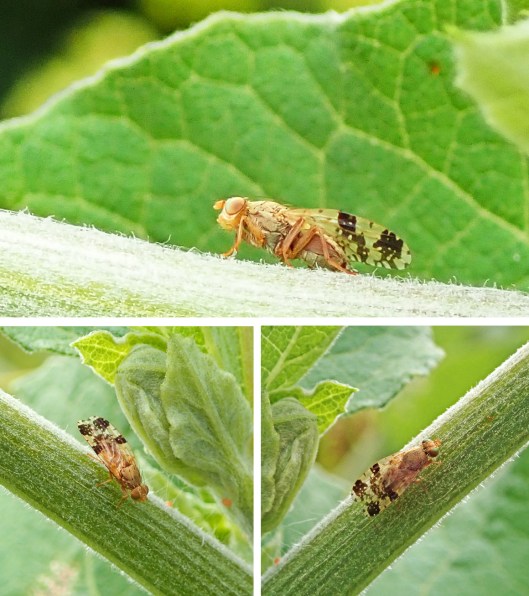
There are two picture-winged flies that live exclusively on Burdock, using the plant for their larvae to munch on. The Banded burdock fly (Terellia tussilaginis) is one (see my blog Burdock beasties, August 2020) and today’s featured fly is the other. This is Tephritis bardanae, a tiny fruit fly that can be found flapping its speckled wings on Burdock any time from spring through to autumn. Apparently, the larvae make a gall, so I’m going to revisit this particular plant to check for those.

220702 Tephritis bardanae

Commas, again

Tags

, , , , ,

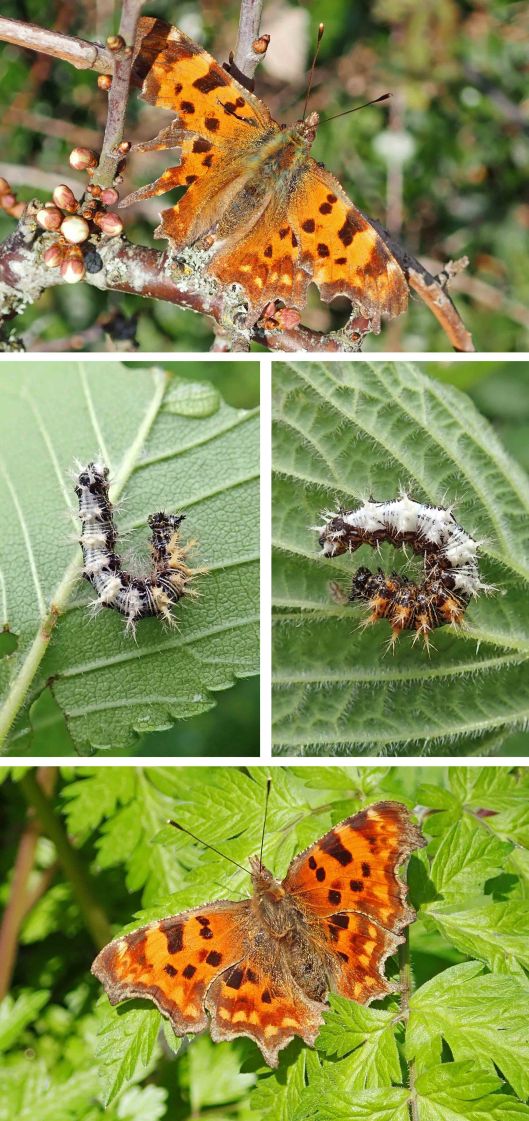
I saw my first Comma butterfly on 18 March and continued to spot them quite regularly until the end of April, by which time they were looking increasingly tatty. Although the adults then died off, the next generation was underway, and I saw my first ever Comma caterpillars on two consecutive days in mid May. Now, the pristine adults have begun to appear, floating along the hedgerows and woodland rides, trying very hard to convince me they’re really Silver-washed fritillaries. Their vibrant orange-and-black patterning is a joy to behold.

220630 comma

The Bees are buzzing

Tags

, , ,

Yesterday I went for a meander to check how the orchids were doing this year on the Cardiff side of the River Ely. You might remember in early June last year I blogged about the Fiesta of Bee orchids happening along the verges of Ferry Road near Cardiff Bay. I hoped I hadn’t left it too late for this year’s display; the verges are a little more overgrown, the grasses taller, but the Bee orchids are flowering again in their hundreds and look just as amazing.

220629 bee orchids