Whooper swan

Tags

, , , , , ,

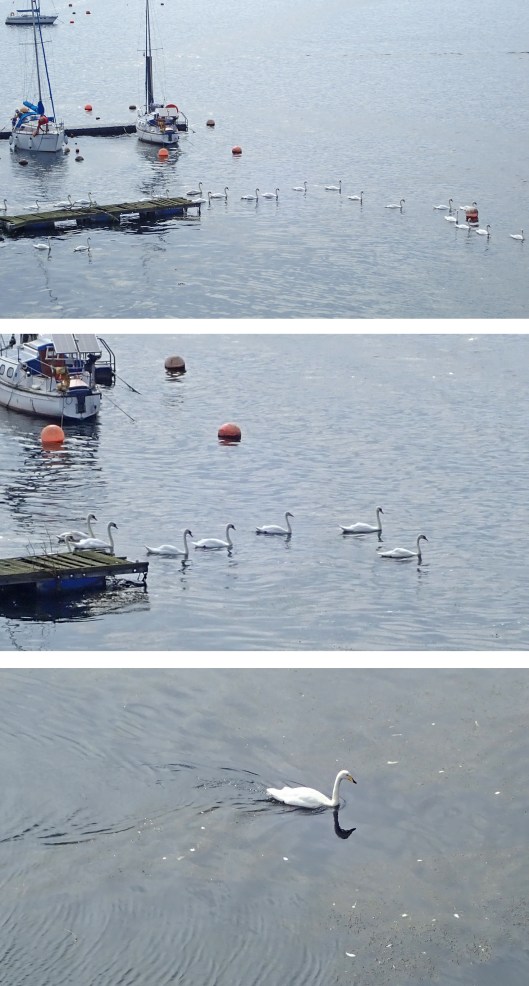
Patch birding list number 108 for 2022 is a delightful surprise, a Whooper swan (Cygnus cygnus), hanging out with the Mute swans in Cardiff Bay. The Whooper isn’t a swan I’ve seen very often as they don’t usually spend their winters in this part of Wales but, with its yellow face patch, its distinctive head shape and its erect bearing, it was easier than expected to pick out from the swan crowd. And, if you’re in this area, the bird will be around for a few weeks yet as it’s currently undergoing its primary moult (i.e. growing new primary wing feathers) so will be unable to fly until the moult is complete. (My photos don’t show this but, if you’re on Twitter, check out @CardiffBirder Peter Howlett’s excellent photos – in fact, I recommend you follow Peter for all the amazing wildlife photos he shares.)
220718 whooper swan

New from the woods

Tags

, , , , , ,

These new-to-me plant finds served as a welcome reminder that I should vary my walking routes more often, as I spotted both along a woodland path I don’t often wander.

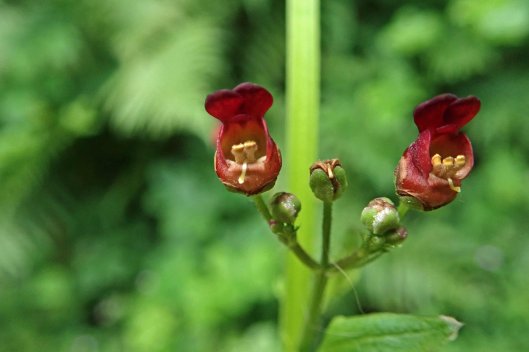
220717 common figwort

This first plant is Common figwort (Scrophularia nodosa). Richard Mabey, in Flora Britannica, explains the name: ‘The “fig” in figwort is an old word for piles [haemorrhoids], which both the globular red flower-buds and the root-protuberances were thought to resemble. Figwort was recommended for piles and also for the tubercular swellings of scrofula, “the King’s Evil”.’

Common figwort is a rare plant locally so I returned to the site during last Friday’s walk, hoping for another look and better photos, but I was both dismayed and angered to find that the Woodland Trust’s maintenance team had been through shortly before I got to the location, and their overly aggressive strimming of the path’s edges had destroyed the plant. Sadly, this is just the latest in a series of issues I have noted with the Woodland Trust’s mismanagement of this glorious ancient woodland.

220717 wood vetch

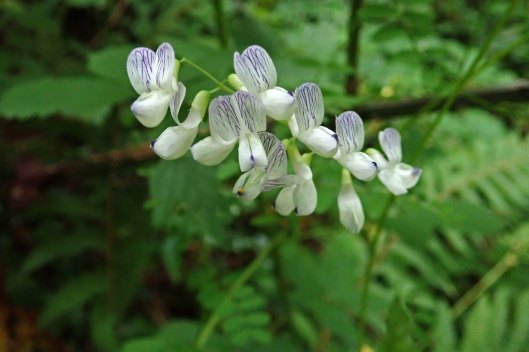
Fortunately, the Wood vetch (Vicia sylvatica) had not been affected, probably because it was scrambling along a backward-sloping bank so out of the strimmers’ line of attack. At a glance, this vetch’s flowers look white but a closer look reveals the delicate beauty of their fine purple lines.

Hawkers

Tags

, , , , ,

The latest odonata species to fly on to my 2022 sightings list is the Southern hawker (Aeshna cyanea), a blue-and-green-coloured male patrolling the woodland rides at a local woodland last Sunday 10 July and, yesterday, a brown-and-green female perched on the bramble poking through a mesh fence bordering a local high school. These beautiful beasties fly from June to October and are often seen quite a distance from water, as mine were.

220716 southern hawkers (1)

Dragonflies fascinate me, especially their ‘flying mechanism’, that part of their thorax where the two pairs of wings are attached to their body. My Europe’s Dragonflies field guide describes how ‘Dragonfly wings are remarkably strong and light, but flexible, with a complex highly evolved structure. They are powered by strong muscles in the thorax, with neurons connected directly to the brain.’

220716 southern hawkers (2)

Big butterfly count 2022

Tags

, , ,

Starting today and running until 7 August, this year’s big butterfly count is underway. The general public – that’s you! – are crucial in assessing the state of the nation’s butterflies by taking part in this annual count. There’s still time to get involved, as you can download the necessary materials from the Butterfly Conservation website, and it only takes 15 minutes of watching and counting the butterflies in your back garden, your local park or green space, then logging those counts online. Easy peasy! And a massive thank you to everyone who takes the time to make a difference!

220715 butterflies

Mating hairstreaks

Tags

, , , , ,

Saturday’s walk to my local woodlands started with a magical experience when I spotted these mating hairstreaks sitting, almost hidden, on a leaf of a small sapling. The tree was a young Oak, so I assumed the butterflies were Purple hairstreaks but a closer look showed these were actually White-letter hairstreaks, though there were no Wych elms, their usual habitat, anywhere in sight. The lessons for me were twofold: I should always check rather than make assumptions, and butterflies don’t always do what you expect them to. And, though I felt a little like a voyeur, the butterflies were a joy to see so close, and they stayed quite still while I took this series of photographs.

220714 mating white-letter hairstreaks

Mottled grasshopper

Tags

, , , , ,

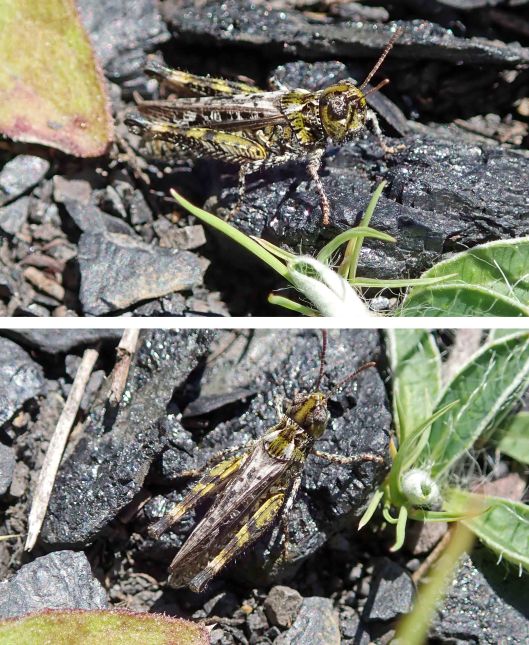
While I was sweltering in the heat on the Aberbargoed tip last week, I was being serenaded by the local wildlife, the twee-twee-twee of Siskin calling to each other in the scattered trees above me, and the rasping of grasshoppers on the scree slopes around my feet. When one of those little raspers stayed still long enough for a few photos, I realised they were a species I’d not seen before, Mottled grasshoppers (Myrmeleotettix maculatus). Their preference for dry places means the south-facing slopes of the coal spoil provide the perfect habitat, and they are a common sight on the former coal tips of the Welsh Valleys.

220713 mottled grasshopper

Sawfly larva on Oak

Tags

, , , ,

Another day, another sawfly larva. This one looks more like a weird slug than a caterpillar, which presumably explains its common name of Oak slug sawfly (Caliroa annulipes). I found it fascinating to look at the veins of the Oak leaf that this larva was uncovering as it ate the tissue.

220712 oak slug sawfly

Small or Essex?

Tags

, , , , , ,

I’ve blogged about this before but, as it’s the skipper time of year and there are quite a few newbies following along here, I thought I’d do a repeat post. For anyone who finds the little skippers confusing, I hope this helps you. The first two photos illustrate the differences in the length and angle of the male scent brands on the upper wings of the Small and Essex skippers.

220711 small or essex (1)

Small skipper on the left, Essex skipper on the right

And the two photos below show the differences in the colour of their antenna tips viewed head on, orange on the Small skipper and black on the Essex.

220711 small or essex (2)

Small skipper on the left, Essex skipper on the right

Sawfly larvae on Birch

Tags

, , , ,

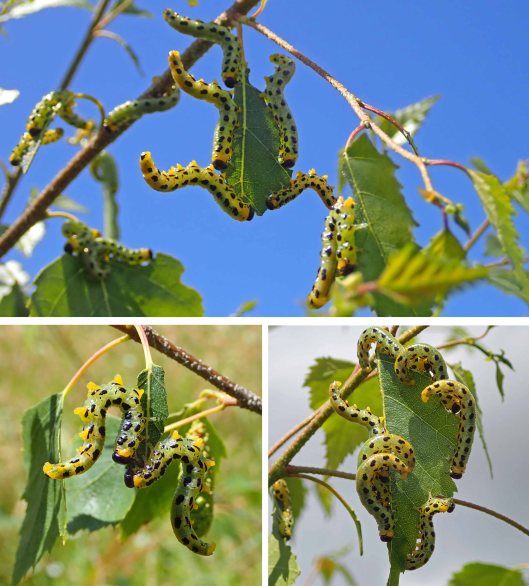
When I spotted these mini-beasties, they were doing a very good job of munching their way through about half the tasty young leaves of a Birch sapling. I knew they were sawfly larvae – that bottom-in-the-air pose is very characteristic of sawfly larvae – and, naturally enough, I assumed they were the Birch sawfly (Cimbex femoratus), but a quick image google showed I was wrong. It took a while to track them down but it seems these are the larvae of Nematus septentrionalis (formerly Craesus septentrionalis).

220709 Nematus septentrionalis

I was rather concerned for the health of the Birch as it is one of a relatively new plantation at the local country park but, when I revisited the site just a few days later, all but a couple of the larvae had disappeared. I don’t think they would have grown to pupation stage that quickly, so I assume a local bird or two had enjoyed them.