A Blackcap nest

Tags

, , , , ,

Blackcap males are singing from every available tree or patch of promising scrub at the moment, trying to impress females with their melodies.

220420 blackcap

And, during a recent walk, I spotted this nest, which, sadly, won’t get used as it had been exposed by people cutting back scrub, something that is, in fact, illegal during bird-nesting season. A BTO-nest-recording birder friend has advised that this is a Blackcap nest. He says: ‘The male builds a few “cock” nests before [the] final site is chosen. Hoping that was one!’ I hope so too.

220420 blackcap nest

A bug and its eggs

Tags

, , , , ,

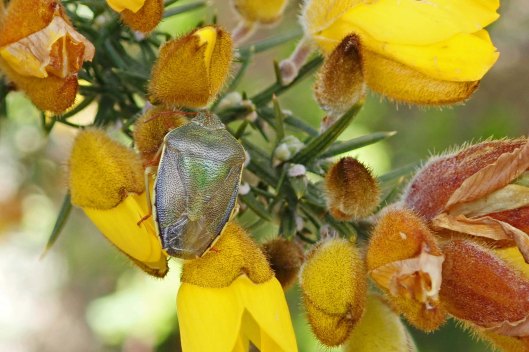
The sunshine yellow flowers of gorse always draw my eye and I can seldom resist a quick sniff of their delicious scent (does gorse smell of coconuts or do coconuts smell like gorse?). This time, as I drew close to the flowers, I noticed a Gorse shieldbug (Piezodorus lituratus) enjoying the Spring sunshine.

220419 gorse shieldbug

And then, of course, I had to have a quick search for more. I didn’t spot any further adult bugs but I did find two lots of their distinctive black-and-white barrel-shaped eggs. Apparently, the eggs hatch within a week so I’ll have to revisit this plant soon to see if I can find the nymphs.

220419 gorse shieldbug eggs

Purple and gold

Tags

, , ,

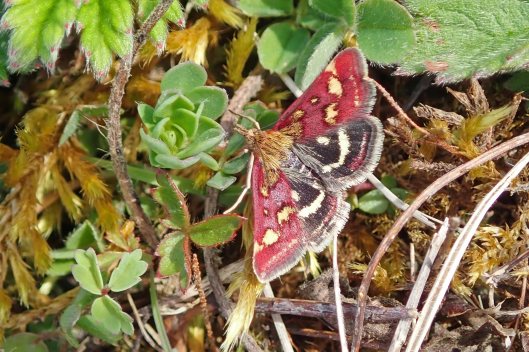
Apart from Colin, the Angle shades moth I reared from a caterpillar, this tiny beauty was my first moth of the year. This is Pyrausta purpuralis, also known as Common purple & gold, one of two quite similar Purple & gold species, though P. purpuralis can be identified by the extra yellow spot on its hindwings. I was surprised to read that the larval plants for these wee moths are Corn mint and Thyme, neither of which plant I recall having seen at Cosmeston Lakes Country Park though the moths are quite common there. I’ll need to investigate further.

220418 Pyrausta purpuralis

Two sedges

Tags

, , , , ,

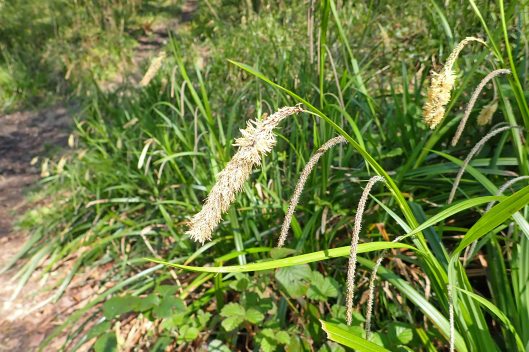
Sedges are new territory for me, a tentative step into the vast myriad of grasses, rushes and sedges I have yet to identify and recognise. This first, Pendulous sedge (Carex pendula), lines the rides in a local ancient woodland, where it thrives on the heavy clay soil. It’s quite a tall plant, growing up to five feet, and its flower spikes drape gracefully along the track edges.

220417 pendulous sedge

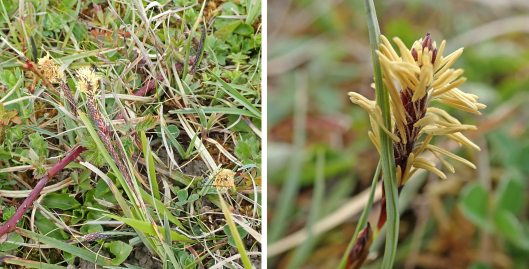
I think this second plant is Glaucous sedge (Carex flacca), though there are a number of smaller sedges and they can be tricky to identify. This plant is much smaller than its stately cousin, though it also prefers the damp, living in ditches and moist meadows.

220417 glaucous sedge

More woodland rusts

Tags

, , , , , ,

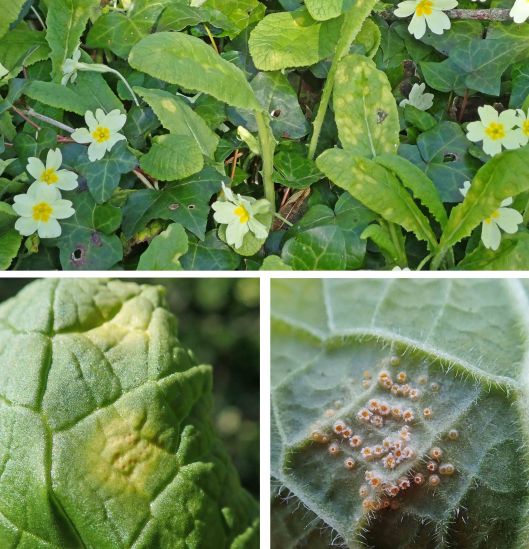
I was admiring the glorious display of Primrose in a local wood when I noticed that many of the plants’ leaves had yellowish spots on their upper leaves. Rust, I thought, and, sure enough, on turning the leaves over, I could see the tiny cup-shaped aecia on the undersides, which confirmed this as Primrose rust (Puccinia primulae).

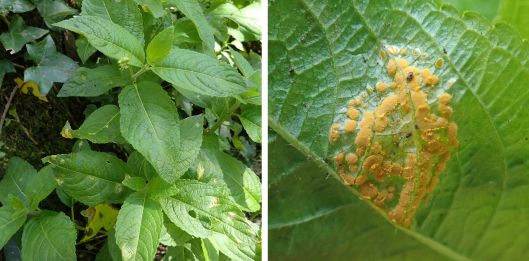
I found this second rust during today’s woodland meander. It’s Melampsora populnea on Dog’s mercury (Mercurialis perennis). Once again, there are yellowish marks on the upper leaves and, this time, rather than cups, there are minuscule splodges of yellow underneath. Neither of these rusts seems to do much harm to the plants.

First Whitethroats

Tags

, , , , ,

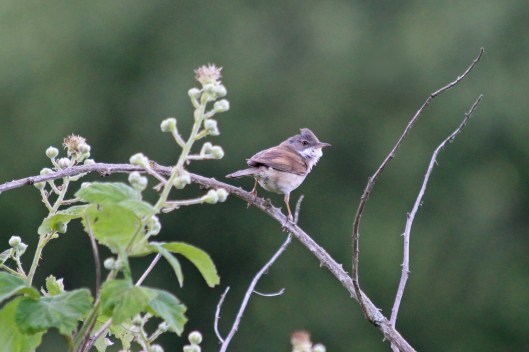
I was watching a Moorhen feeding its five tiny chicks when I heard it, the unmistakeable scratchy song of a Whitethroat (Sylvia communis), my first for 2022. And then, forty minutes later, I was walking along a hillside when I heard it again – not the same bird, of course, but my second scratchy tune of the year. As I’m still without a reasonable camera, today’s photo shows a Whitethroat I encountered last year.

220414 whitethroat

And a Speckled wood Sunday

Tags

, ,

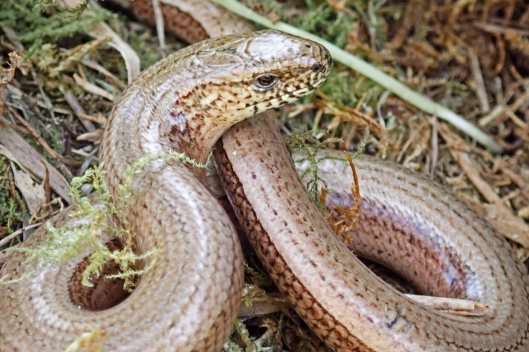
S was for a sunny Sunday saunter and a superb surprise Slow-worm and this stunning Speckled wood,

220412 speckled wood

My first two Speckled woods of the year appeared during a walk on 23 March and then another three graced a local walk on 28 March but I hadn’t seen any more until this little beauty fluttered up from a bush on Sunday. After our week of glorious warm weather in March, it’s been mostly cold and wet and windy so the butterflies have disappeared again.