In which I share a little video of the latest wildflowers to bloom in my neck of the woods …

10 Sunday Apr 2022
Posted in flowers, spring, wildflowers
In which I share a little video of the latest wildflowers to bloom in my neck of the woods …
09 Saturday Apr 2022
Posted in insects
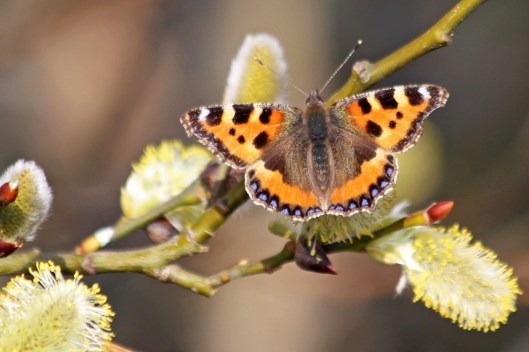
Much to my surprise, a Small tortoiseshell was the very first butterfly I saw this year, back on 27 February, and there have been 11 more that have blessed me with their presence so far. The February date was earlier than usual for me – I don’t normally see Small tortoiseshells until mid to late March. These particular butterflies have not fared well in Britain in recent decades so I’m hoping the good numbers I’ve seen so far augur well for the rest of the year, and for their population numbers in general.
08 Friday Apr 2022
Tags
Celandine clustercup fungus, Melampsora epitea, rust fungi, rust on Lesser celandine, rust on Soindle, rusts on plant leaves, Uromyces dactylidis
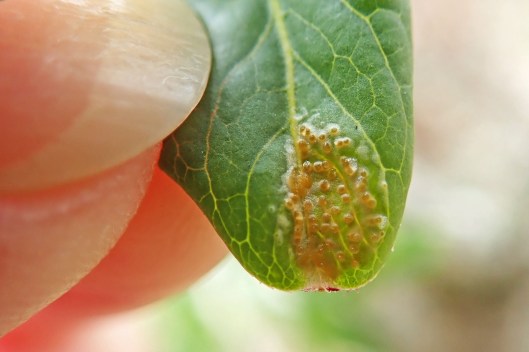
During my wander through a local woodland earlier this week, while admiring the golden carpets of Lesser celandine, I noticed small spots on some of the leaves. Closer examination and some photos showed that this was the rust Uromyces dactylidis, also known as Celandine clustercup fungus for the clusters of tiny orange cup-shaped aecia on the undersides of the leaves.


Once I had my ‘rust eye’ in, I then noticed more on other plants. Many, like Bluebell rust (Uromyces muscari) I have covered here before but this one, Melampsora epitea on Spindle (Euonymus europaeus), was a new one for me.
07 Thursday Apr 2022
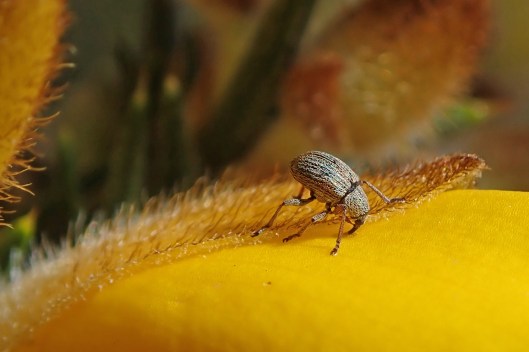
Woot! This teeny tiny beastie is my first weevil of 2022, as you can probably guess from the yellow flower it’s sitting on, a Gorse weevil (Exapion ulicis). I’ve read that they usually feed by poking their snout (properly known as a rostrum) into gorse stems and seeds but this one had its snout so firmly inserted into the flower that it looked like it would almost tip over.
06 Wednesday Apr 2022
Posted in insects
Tags
British bees, mining bee nests, mining bees, solitary bee nests, solitary bees, tiny piles of dirt
I can’t take the credit for the title of today’s post: by sheer coincidence, after returning from a walk with photos of these tiny dirt mountains, I spotted a tweet about the mini volcanoes of the bee Andrena fulva, and it seemed a very appropriate description. Mine may not be the work of that same bee species but they do indicate where solitary bees have dug out nest burrows for their young. I’m not sure whether these bee volcanoes are from newly hatched bees emerging from their winter nests or these volcanoes have only recently been excavated for the adult bees to lay this year’s eggs.


05 Tuesday Apr 2022
Posted in bryophytes, plants
I really should look down more often. I mean to say: how could I never have noticed before the miniature forest landscape that is Common liverwort (Marchantia polymorpha)?

According to the Naturespot website, the ‘umbrella-like reproductive structures [are] known as gametophores. Those of female plants consist of a stalk with star-like rays at the top. These contain the organs which produce the ova. Male gametophores are topped by a flattened disc and produce the sperm.’

04 Monday Apr 2022
Posted in birds
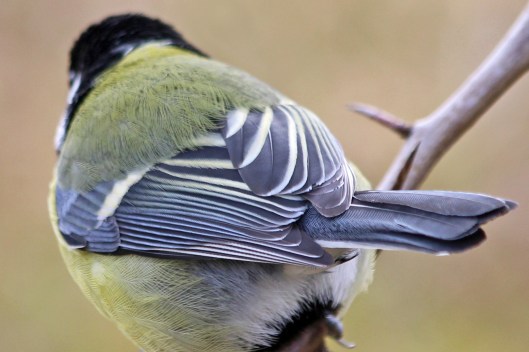
An alternate view of a Great tit, to show that the subtle shades and distinctive markings of its feathers from this angle are just as attractive as a front view.
03 Sunday Apr 2022
Posted in spring, wildflowers
Tags
Arum maculatum, British wildflowers, Cardamine pratensis, Cuckoo-pint, Cuckooflower, Lady's-smock, Lords-and-ladies, Milkmaid
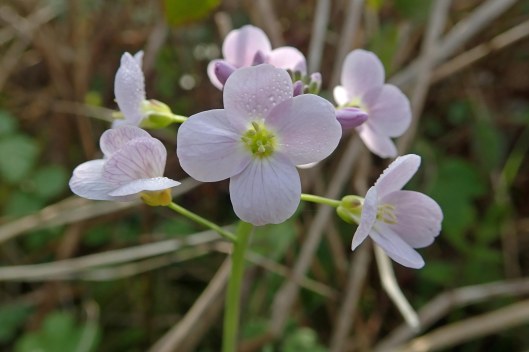
The coincidence of the pale and delicate Cuckooflower (Cardamine pratensis) coming into bloom at the same time as the first Cuckoos arrive back from over-wintering in Africa is the likely origin of this wildflower’s common name, though several other wildflowers also bloom at this time and, with the climate changing, the flower’s blooming and the bird’s arrival no longer coincide very precisely. Perhaps the alternate Lady’s-smock and Milkmaid are more appropriate names.
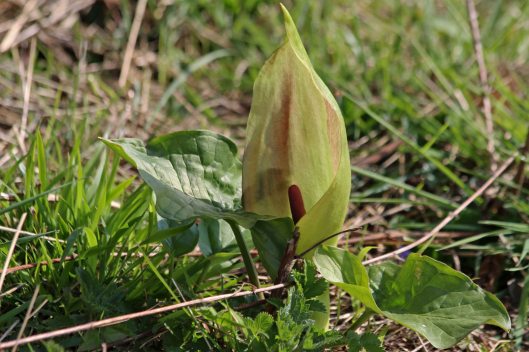
Another wildflower that is known in some areas as Cuckoo flower, as its flowers open around this time, is Arum maculatum. I know it best as Lords-and-Ladies, but many call it Cuckoo-pint (rhymes with mint), for which there is a somewhat more risqué explanation: pint is short for pintle, meaning penis. I’m sure you can all see why.
02 Saturday Apr 2022
Posted in birds
Spot the latest in Crow nest accessories …
So when you get home from a hard day’s crowing, you can hang up your feathers before snuggling in for the night.

01 Friday Apr 2022
This pale lime beauty was my sixteenth Brimstone of the year (I saw my first on 27 February) but she was the first female, and the first to stay still long enough for a few photos. Male Brimstones usually emerge first from their winter hibernation (as adults) and can be seen flying purposefully up and down hedgerows, footpath edges and woodland rides, searching for females, which emerge a little later than their male suitors.

 earthstar
You must be logged in to post a comment.