O is for orchid

Tags

, , , ,

Perhaps O should really be for obsession, as it seems I have a bit of an obsession for orchids: they have featured in no fewer than nine blog posts this year. Early-purple orchids were the first to flower back in May, followed soon afterwards by the Common spotted-orchids, which also featured in a second post in late June about the variation in their colours and markings. Also in June, the Bee orchids showed their jolly faces, and I tried to get to grip with identifying Southern marsh-orchids. In July, more orchid species that like damp places were in the spotlight, first the Heath spotted-orchids of Aberbargoed, followed soon after by Rhoose Quarry’s magnificent Marsh helleborines. The late-summer-blooming Broad-leaved helleborines featured on the first day of August, and the first days of autumn were brightened by the sight of spiralling Autumn lady’s-tresses. What a feast for the senses these flowers are!

N is for nettle

Tags

, , ,

This is a plug for the much-maligned Nettle, a plant most of us humans quickly learn to recognise in order to avoid its stings, though most wildlife seems well able to avoid them. I’ve read that Nettles support 40 species of insect but I wonder if that number is on the conservative side. Here are a few insects I spotted on them earlier this year: 7-spot ladybird larva, the 1st instar of a Common green shieldbug, Grypocoris stysi, Nettle weevil, the larva of the hoverfly Scaeva pyrastri, and a Speckled bush-cricket nymph.

M is for Marsh fritillary

Tags

, , , ,

I was so very pleased when the Covid regulations were relaxed enough during the summer to allow me to visit Aberbargoed National Nature Reserve to see my beloved Marsh fritillaries, particularly as I hadn’t managed to see any in 2020. These are just such magical butterflies that I actually braved the train journey four times. Though I was too early on my first visit and only a few faded, jaded individuals remained when I visited for the final time in late June, I remember my mask hiding a beaming smile all the way home on those other train journeys.

211218 marsh fritillary

L is for leafhoppers

Tags

, , , ,

Given my frequent recent posts, you might have been forgiven for thinking that I would choose leafmines for the letter L, but no. Leafhoppers, more formally known as the Cicadellidae, are another family of insects I sometimes dabble in but am determined to look more closely at in 2022 as there are so many species lurking under leaves that I have yet to discover. Back in July, I blogged about the first new species I was able to add to my list for 2021, Eupterycyba jucunda.
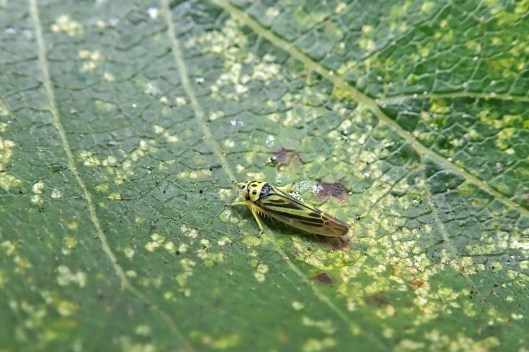
211217 Eupterycyba jucunda

And, more recently, on 28 November, I found another, Linnavuoriana sexmaculata. Once again, this was found by turning over leaves, in this case one of the Salix genus – willows, sallows, osiers, as we more commonly call them. Though some species of leafhopper can be tricky to identify, both its host plant and the bug’s markings (sexmaculata means six-spotted) made this one a little easier.


211217 Linnavuoriana sexmaculata

K is for Kestrel

Tags

, , ,

Though I’m lucky enough to see Kestrels quite frequently when I walk the footpaths along the coast and through local farmland, I don’t often manage to photograph them, and the Kestrel has only starred once in this year’s blogs, quite recently with a co-starring Buzzard in BoPs. A few days after that post however, I spotted this bird during a walk around Cardiff Bay and was pleased to get this image of a decidedly urban Kestrel.

211216 kestrel

J is for Jay

Tags

, , ,

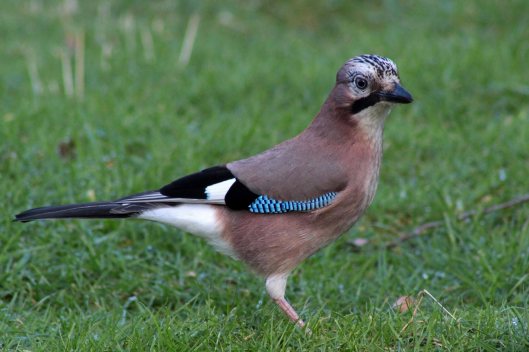
I was tossing up between Jackdaw and Jay when I heard a Jay screeching during today’s walk in the woods and that clinched my choice for this letter. Jays haven’t featured much in this blog in 2021, though I did report on a feather with a tinge of blue found back in February, and have since found another of these exotic treasures, which is now glued to the relevant page of my nature journal. The vivid blue stripes always make me think of more tropical locations than these often gloomy isles.

211216 jay

I is for inkcap

Tags

, , ,

Time to add some fungi to this countdown. Earthstars would be too predictable so I’ve chosen instead to focus on some of the more common fungi that we all see when we’re out on our wanders: the inkcaps. They come in many shapes and sizes, grow in grass and dense woodland, are not always easy to identify, and are often to be found in a state of deliquescence (dissolving into black mush). Here’s a selection of this year’s finds.

H is for hairstreak

Tags

, , , , ,

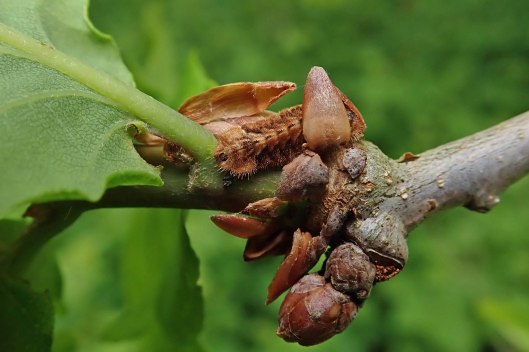
Another day, another letter, more butterflies but this has been a great year for hairstreak butterflies. The first highlight was finding my first ever Purple hairstreak larva at the end of May. I spotted it on two subsequent visits before it disappeared, hopefully to pupate.

211213 purple hairstreak larva

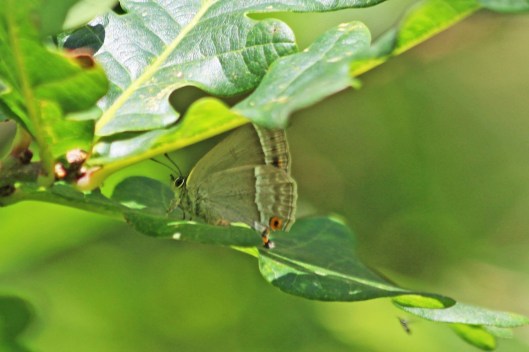
I only saw one Purple hairstreak butterfly in that woodland – in a different area so probably not the metamorphosed larva – but did see the butterflies at two other local sites.

211213 purple hairstreak

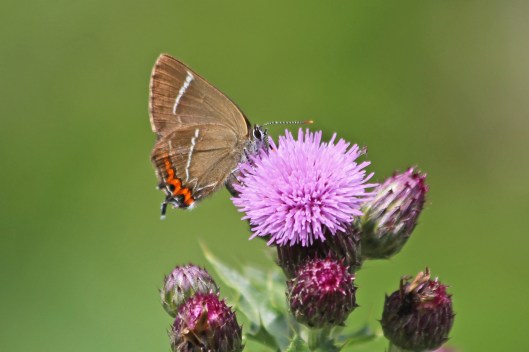
And, though I was delighted with my Purple hairstreak sightings this year, I was even more thrilled by the many White-letter hairstreaks I saw. This comes partly from learning to recognise and remember where the Wych elms grow in my local area but also partly from luck – my best sighting of the year, my white-letter day, was simply a case of being in the right place at the right time.

211213 white-letter hairstreak

G is for Grayling

Tags

, , ,

Though I was delighted and encouraged by the number of Grayling butterflies I saw on a coal tip up the Welsh valleys back in July, my experience does not reflect the reality of the present situation for the Grayling in Britain. Butterfly Conservation has recently released its ‘New Red List of British butterflies’ and, unfortunately, the status of the Grayling has moved from vulnerable to endangered. What my sighting tells me, though, is how truly important the former coal spoil tips are. They are often dismissed as useless brownfield sites but, in fact, former industrial sites like these are often rich in biodiversity and need to be preserved.

211212 grayling