194/366 Watching, waiting

Tags

, , ,

During my lockdown meanders around Cardiff’s Grangemoor Park, I’ve been keeping an eye on these Broad-leaved helleborines, watching and waiting for them to bloom. Though I’d only found them in one location in previous years, this year I’ve spotted them in three different places around the park.
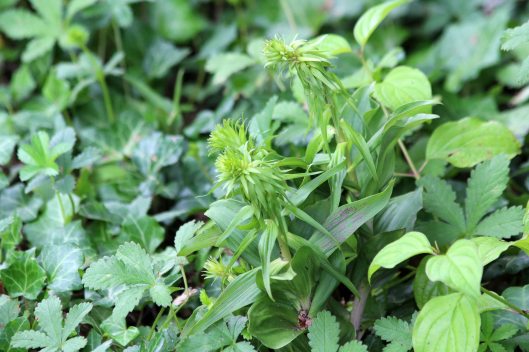
200712 broad-leaved helleborine 17 june (2)

Here they are on 17 June, looking healthy, with lots of lush foliage.

200712 broad-leaved helleborine 17 june (1)

Just over a week later, on 25 June, flower spikes have developed well on a couple of plants, so I’m hopeful of a good display.

I don’t manage to get back this way until 11 July, but I’m full of expectation of a mass of blooms. Unfortunately, though we’ve had plenty of rain, a couple of plants look brown and slightly withered (as they’re adjacent to a well-used footpath, I wonder if passing dogs might have urinated on them). A couple of other plants look as if they’ve been trampled.

Luckily, I have found two plants with spikes intact and a couple of flowers open on each. Such pretty little things.
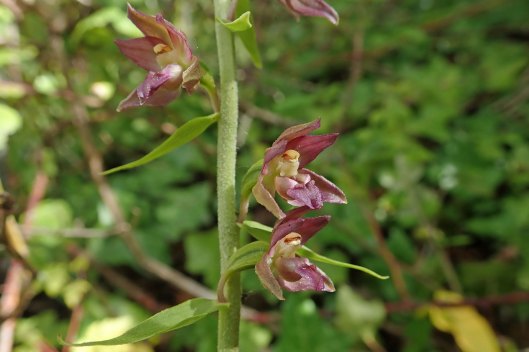
OLYMPUS DIGITAL CAMERA

193/366 Moth macro

Tags

, , , ,

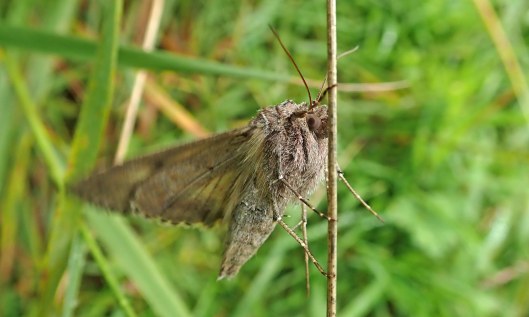
We’ve had cooler, greyer, wetter weather in recent days, which isn’t so good for seeing hosts of butterflies and other insects flying around the wildflowers but, if you can find them, it does slow those insects down a bit making macro photography a little easier … sometimes. A slow, quiet, stealthy approach is still required as, to take macro photos with my Olympus camera, I need to get as close as an inch to my subject. Mostly, the insects fly or scuttle off, but this stunning Silver Y moth was a rather lovely exception to my usual failures.
200711 Silver Y moth

192/366 Damsels and dragons

Tags

, , , , , ,

Last summer was so hot and dry that many of the local ponds dried up completely, which may be why I’m not seeing as many damselflies and dragonflies as I have in previous years – perhaps their larvae didn’t survive that dry period. Here are a few I have seen in recent weeks …

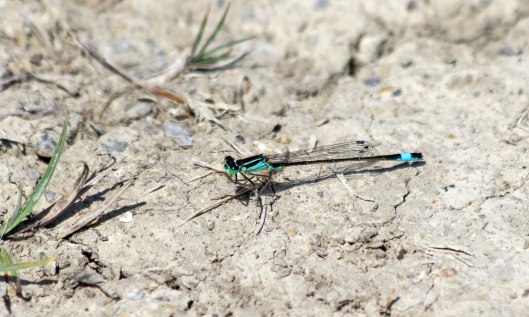
200710 blue-tailed damselfly

Blue-tailed damselfly: though the females come in several colour forms, both they and the males, like this one, have the blue spot on their lower abdomen, which is how they got their name.

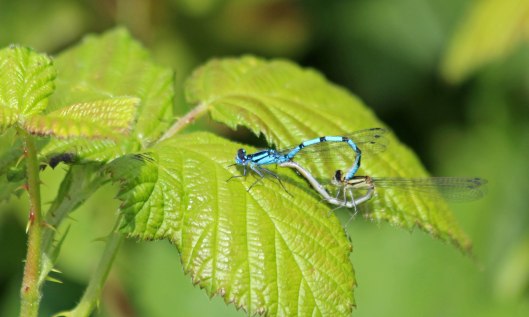
Common blue damselflies, here an immature female, a male and, below, a pair in classic mating pose.

200710 common blues mating200710 broad-bodied chaser

And the dragons: a glowing female Broad-bodied chaser

200710 common darter

I’ve seen my first two Common darters in recent days, which is late, as they can appear as early as May.

200710 emperor female ovipositing

A female Emperor laying her eggs (ovipositing) under the vegetation of a local pond. Let’s hope that pond retains enough water this year for her offspring to survive the winter months.

191/366 Snail sex

Tags

, , , ,

I’ve noticed snails cwtched up together many times in the past but I’d never observed the nitty gritty of what they were actually doing until I saw this pair. Because they’d pulled slightly apart, it was possible to see their ‘apparatus’ in action.

200709 mating snails (1)

And what about the tiny white spike on the snail at left? Is that one of the love darts that snails stab their mates with? I don’t know enough about snails to be sure but, for more on this point, you can read about the sharp end of snail sex on the National Geographic website here.

200709 mating snails (2)

190/366 For the love of thistles

Tags

, , , ,

Many people would consider the thistle – any thistle, all thistles – to be a weed but one look at these photos will show just what a diverse range of insects find the humble thistle an essential source of food. From flies and hoverflies, bees and wasps, to beetles and butterflies, the Creeping thistle (Cirsium arvense) is a favourite of them all. And when the flowers are finished, it will be the turn of the birds to find nourishment in the thistle seeds. What an amazing wildflower this is!

This slideshow requires JavaScript.

189/366 Keepers of the gate

Tags

, , ,

It’s a week since I spotted my first Gatekeepers of the year and, in the past seven days, I’ve seen them in several of my local walking places, though so far only males .

200707 gatekeeper (1)

They grab the wandering eye, as their bright orange pops from the vibrant green of the hedgerows and woodland rides, and in the long grass of fence lines and the gates that divide them.

200707 gatekeeper (2)

You can read more about these gorgeous butterflies in my previous blogs The Gatekeeper, July 2018, and Sexing Gatekeepers, July 2019.

200707 gatekeeper (3)

188/366 Arachnophilia

Tags

, , , , , ,

I’m not a huge spider fan but, as I’ve been spying a few during recent meanders, I thought I should show them a little love, so …

200706 1 crab spider

White crab spiders (Misumena vatia) like this one are usually very good at camouflaging themselves, lurking on white or pale-coloured flowers, but this little one was being bold, and so made for a good subject for a photo.

200706 2 spider and eggs

A spot of leaf-turning revealed several Paidiscura pallens spiders and their weirdly shaped egg sacs. You can read more about these tiny creatures in my previous blog The sputnik spider, July 2017.

200706 3 spider and eggs

One of the meadows where I walk has a lot of long grass, some of which is now woven together by the silken threads of Nursery web spiders (Pisaura mirabilis). These spiders don’t spin webs to catch food; instead, their webs are constructed to keep their spiderlings safe while they grow in to adults.

The adult spiders are a pale brown in colour, with a pattern of darker brown and black stripes running vertically along their bodies.

200706 6 spider and eggs

The Wildlife Trust website has this fascinating information about Nursery web spiders:
‘Mating is a dangerous game for male Nursery web spiders, so they present a gift of food to the female while laying perfectly still and pretending to be dead. When the female investigates the food, the male will suddenly jump up and mate with her.’

186/366 Miscellaneous minis

Tags

, , , , ,

These are a few recent insect that have caught my eye …

200704 1 common green shieldbug

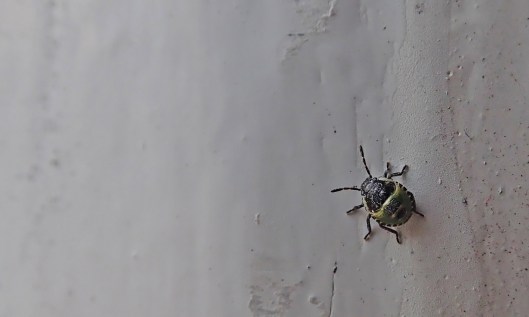
First up, the 4th instar of a Common green shieldbug that was walking along the outside of a building as I passed. These mini-beasties go through five different instars (stages) before becoming adults. For more see A (shield)bug’s life, September 2016.

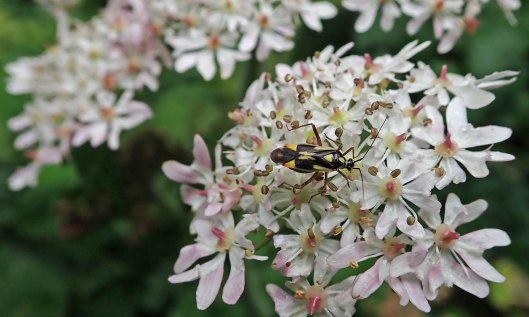
200704 2 Grypocoris stysi

A flower bug that loves umbellifers, Grypocoris stysi. You can read more about him/her in my previous blog, Get a Gryp-o!, July 2016.

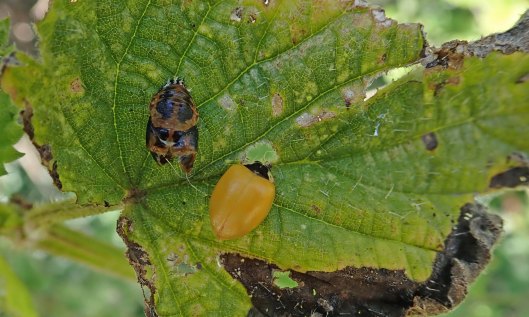
I found this Orange ladybird browsing on leaves covered with a white mould, their favourite food. See more on these little cuties in A Blast of Orange, July 2017.

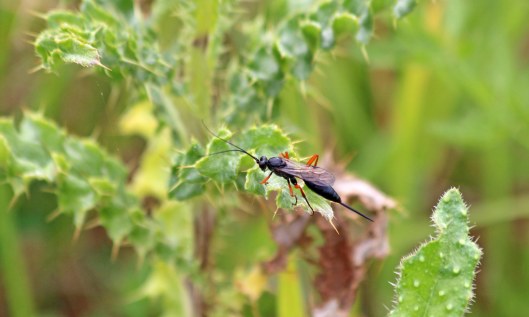
200704 5 wasp black ichneumonid

I’ve been spotting a lot of Ichneumonid wasps this year. Most are quite difficult to identify, as you need to photograph them from several different angles to capture all the identifying features and I find they don’t usually stay still long enough.

200704 6 ladybird harlequin

And, last for today, what I think is a Harlequin ladybird, judging from the patterns on the now-empty pupa case. When newly emerged, ladybirds are often pale coloured and dot-less – the colours darken and the spots emerge in their first few hours as adults.

185/366 Grounded

Tags

, , ,

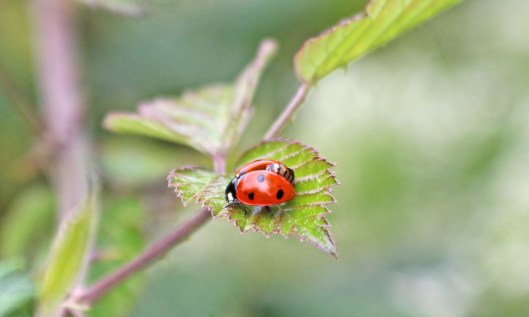
This is a bit of a sad story. During yesterday’s walk, I spotted this Seven-spot ladybird sitting on a leaf alongside the path.

200703 7spot ladybird (1)

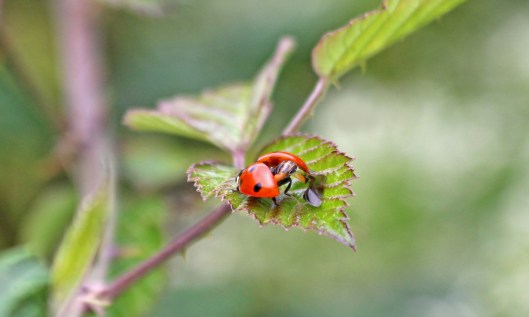
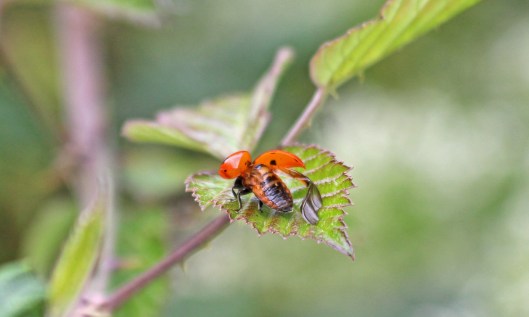
It was acting a bit strangely: opening its elytra (wing cases), raising its abdomen, shutting its elytra, over and over again. It took me a minute to realise that it only seemed to have one full-size wing; the other appeared stunted or perhaps it had been damaged and was no longer able to be extended.

200703 7spot ladybird (2)

I presume the ladybird was trying to remedy the problem through its movements but they didn’t seem to have any effect, and I fear this ladybird may be forever grounded.

200703 7spot ladybird (3)