204/366 Musk thistle

Tags

, , , ,

This gorgeous thistle was a new plant for me when I discovered it in a local farm field a couple of days ago. It’s a Musk thistle (Carduus nutans), also known as Nodding thistle, and it’s precisely the nodding habit of its growth that alerted me to something new.

200722 musk thistle (1)

Its flowers, though a glorious and vibrant pinky purple, droop downwards, nodding on long spineless stems and, in fact, compared to the upright habit of other thistles I see, this one’s growth habit overall is very droopy. It’s a bit of a sloucher, though, as its name suggests, those flowers have a musky smell that bees find particularly attractive, and several butterflies seemed to like it too.

200722 musk thistle (2)

The Plantlife website provides some interesting facts about the Musk thistle: apparently ‘its fleshy stem is edible and said to be delicious after peeling and boiling’ and ‘medicinally, the leaves have been used as a tonic to stimulate liver function, whereas the flowers have been used to reduce fevers and purify the blood.’

200722 musk thistle (3)

203/366 Preening Stonechat

Tags

, , , , , ,

For the first time in who knows how long a pair of Stonechats overwintered at Cosmeston Lakes Country Park and, came the Spring, they bred, the first time this has ever been recorded at Cosmeston. The two offspring are now well grown juveniles and, if you’re lucky, the family can be seen feeding and flitting about together along the hedgerows and amongst the wildflowers in Cosmeston’s meadows. I caught up with them during a walk last Thursday and was delighted that at least one of the family was happy to be photographed and videoed.

202/366 More misc minis

Tags

, , , , , , , , , ,

Some snippets from the insect world around me:

200720 common red soldier beetles

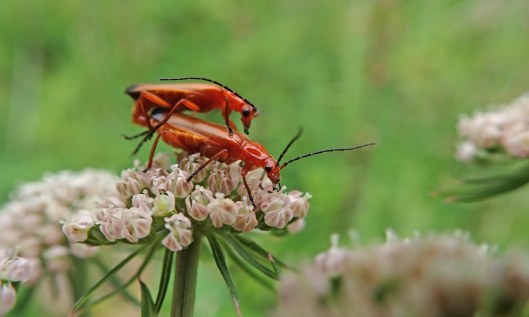
A sure sign that it’s now high summer, Common red soldier beetles (Rhagonycha fulva) can be seen everywhere, especially on the flowers of umbellifers, demonstrating why they are often called bonking beetles.

Also caught copulating, these Green-veined white butterflies (Pieris napi) were being annoyed by a third of their kind, trying to get involved in the action.

200720 small copper

On the subject of butterflies, the second brood of Small coppers (Lycaena phlaeas) is now on the wing. This stunning specimen was only the second Small copper I’d seen this year, so was a very welcome sighting.

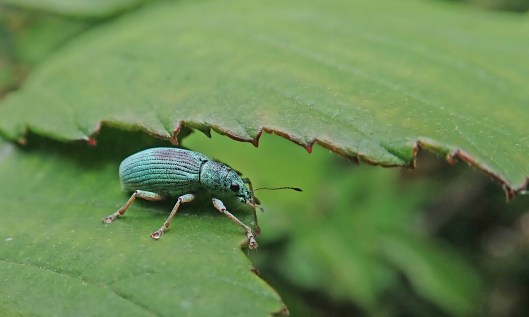
200720 nettle weevil

There’s nothing cuter than a weevil. This one is, I think, a Nettle weevil (Phyllobius pomaceus).

I found this odd: a colony of ants, farming a horde of aphids on this ragwort plant, have extended their nest up the very stem of the plant.

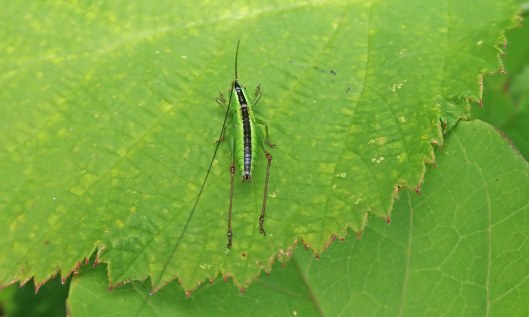
200720 meadow grasshopper

To finish this post, first, a Meadow grasshopper (Chorthippus parallelus) nymph and …

200720 long winged cone-head nymph

… another nymph, also often a meadow dweller, this time a cricket species, a Long winged cone-head (Conocephalus fuscus).

201/366 Small and white

Tags

, , , , , ,

Many of the local wildflowers currently in bloom have small, white flowers. These are some of them …

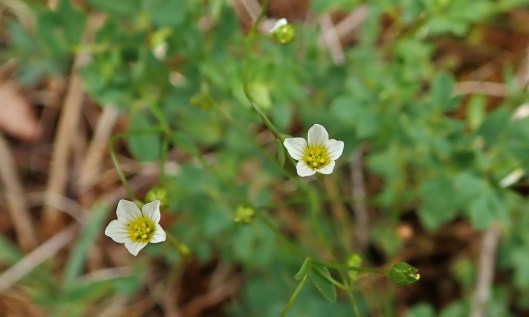
200719 fairy flax

Fairy flax (Linum catharticum): this is the smallest, a tiny delicate plant that appears to shake and quiver even in the lightest breeze. It is also known as Purging flax as, in past times, herbalists prescribed it as a laxative.

Hedge bedstraw (Galium mollugo): not the bedstraw that was used to sweeten the smell of straw mattresses (which is the yellow-flowered Lady’s bedstraw), but its close cousin, which can be found scrambling along hedgerows, particularly on calcareous soils.

Eyebright (Euphrasia sp.): I didn’t know until I checked this plant on the Plantlife website that the various species of Eyebright are semi-parasitic, stealing the nutrients of other plants, like grasses.

200719 common mouse ear

Common mouse-ear (Cerastium fontanum): A type of chickweed, which many gardeners will know as a persistent ‘weed’, this little plant gets its mouse-ear name from its hairy leaves that grow in pairs on either side of the plant’s stem.

200719 common centaury (1)

Common centaury (Centaurium erythraea) is usually pink flowered (see the variations below) but many of the plants I see locally, like those above, have white flowers. The Plantlife website gives the fascinating information that centaury is ‘named after the centaur Chiron, who, according to legend, discovered its healing power and used it to cure himself from the effects of a poisoned arrow.’

200/366 Purple hairstreak

Tags

, , , , , , ,

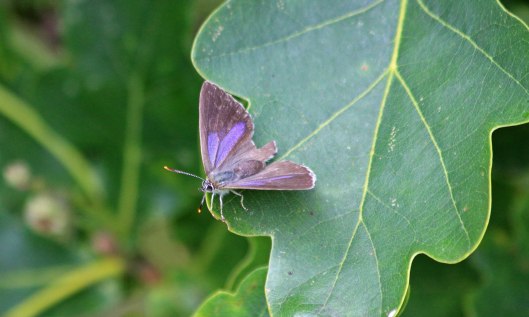
The key to where to locate this gorgeous butterfly, the Purple hairstreak, is in its scientific name Favonius quercusquercus is the genus of the Oak tree – and I suspect that there are many more colonies of Purple hairstreaks living in our old Oak trees than we currently know about, as these butterflies spend much of their time unseen, high in the leafy boughs, feasting on honey dew.

200718 purple hairstreak (2)

There is a colony at Lavernock, and I’ve seen these butterflies at a couple of locations along the road that leads to Lavernock Point, but they were the only local sites I knew about. So, you can perhaps imagine my delight when, during Thursday’s walk at Cosmeston Lakes Country Park, I came face to snout with a female Purple hairstreak, which had ventured down to head height, and was happily running her yellow proboscis over the honey-dew-covered leaves.

200718 purple hairstreak (1)

This was the closest I’d been to one of these lovely creatures and had previously seen neither the purple sheen on their open wings nor the yellow proboscis. I was in butterfly heaven!

200718 purple hairstreak (3)

199/366 A cycle of life and death

Tags

, , , , ,

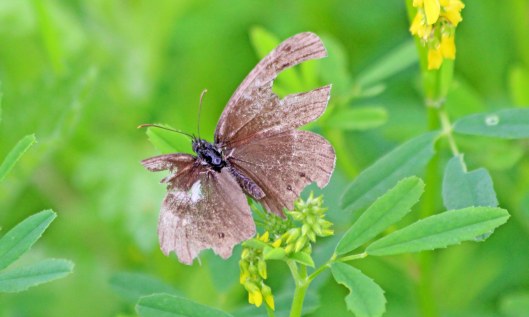
I am constantly reminded of how transitory life can be for the smaller creatures that share our planet. Take, for instance, the Ringlet butterfly. The adults usually emerge in the second half of June and only a few survive into August. In their few short weeks of life they experience a frantic rush to reproduce …

200717 1 ringlets mating

… a time full of danger from pecking birds, of collisions with damaging foliage …

200717 2 ragged ringlet

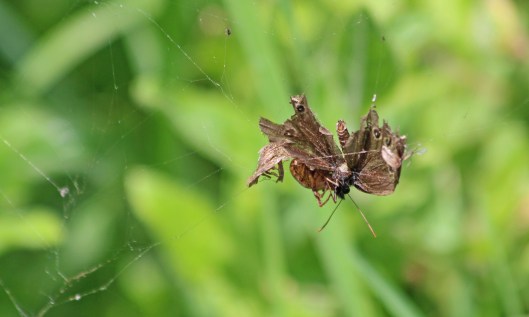
… before death takes them – unless, like this rather ragged creature, they are caught in a spider’s web, die prematurely but, in so doing, give life to another creature.

200717 2 ringlet caught by spider

198/366 Sneezewort

Tags

, , , ,

Sneezewort (Achillea ptarmica) is not a wildflower I see very often so I was delighted to find a few plants of it blooming in a local meadow during yesterday’s wander.

200716 sneezewort (1)

The First Nature website explains its scientific name: Achillea ‘stems from the belief that Achilles used flowers of this genus to cure his soldiers’ wounds; ptarmica … comes from the Greek and means to cause a sneeze’. And, as well as Sneezewort, it has a host of other wonderful common names, including Sneezeweed, Bastard pellitory, Fair-maid-of-France, and Goose tongue.

197/366 A Starling family

Tags

, , , , ,

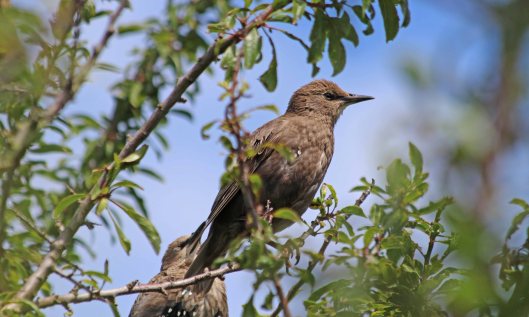
As I was walking down a narrow country lane last Sunday, I was delighted to come across this family of Starlings – Mum, Dad and several juveniles – perched in the tops of the hedgerow that bordered the lane.

200715 starling (1)

Young birds are often more trusting than adults but, in this case, the whole family was content to sit and chatter and poke about in the bushes, so I managed to get a few reasonable photos.

200715 starling (2)

To me, juvenile Starlings are a bit like the proverbial ugly duckling – they start out quite plain but develop into exceedingly beautiful birds. As you can see, these young ones are just beginning to get their magnificently iridescent adult plumage.

200715 starling (3)

196/366 First Brown argus of 2020

Tags

, , , ,

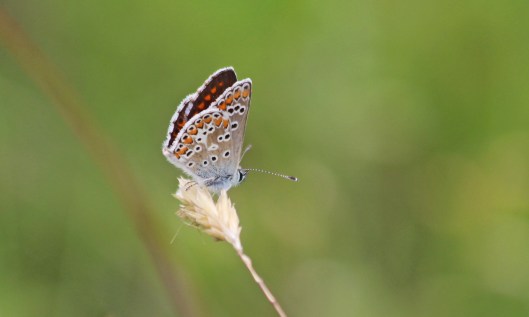
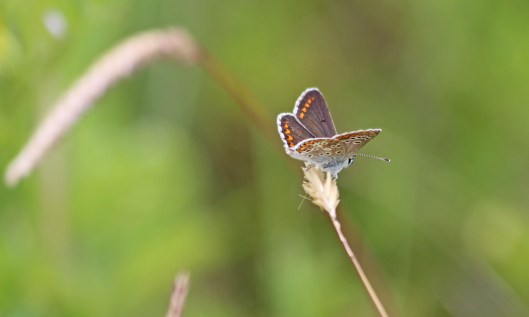
By this date last year, I had managed to find Brown argus butterflies at two different local sites (and one of those was the first Cardiff record in eight years). This year I only spotted my first Brown argus last Saturday, almost two months later than last year. The Polyommatinae family (that’s the blues and arguses) are not faring well in my part of south Wales this year, which is a great shame, as they are all gorgeous little butterflies.

200714 brown argus (1)

If you’re having trouble telling a Brown argus from a Common blue female, my blog Flying on the wings of Confusion, July 2018, has ID pointers and photos that should help.

200714 brown argus (2)

195/366 An inkcap in the grass

Tags

, , ,

One thing about the rain, it brings out the fungi.

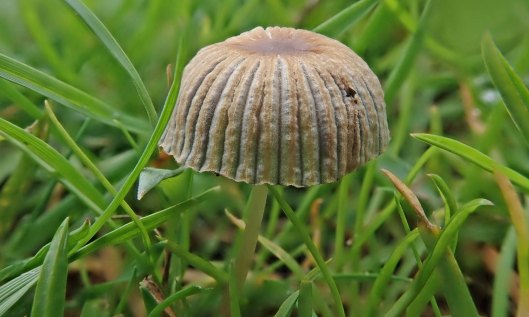
200713 inkcap (2)

This might be a Goldenhaired inkcap (Parasola auricoma), which can often be found growing on bark chips in gardens, or it could be a Pleated inkcap (Parasola plicatilis), which mostly grow in short grass, or it might also be a Bald inkcap (Parasola Leiocephala), which likes short grass and woodland edges. Though my specimen looks like it’s surrounded by grass, there were twigs, small branches and pieces of bark in amongst the grass, and woodland trees nearby, so the habitat doesn’t aid with identification.

200713 inkcap (1)

As I don’t own a microscope and don’t want to get in to the often complicated process of identifying fungi, I simply enjoyed seeing this little surprise that had popped up along my path.