Common purple & gold

Tags

, , , , , , ,

Every step I take across the west paddock at Cosmeston seems to send at least two tiny beige-looking insects flicking off in different directions in front of me. At first, I think they might be grasshoppers or crickets, springing quickly out of the way of my trampling feet but no – these creatures are not making straight leaps, they are fluttering and flying. They’re not easy to follow – as soon as they touch the ground they seem to disappear so I have to focus intently to follow each flight and then approach very slowly to discover what they are.

180820 Pyrausta purpuralis (1)

It turns out they’re not beige at all – they’re a quite striking combination of maroon and yellow, hence their common name, Common purple & gold. This is Pyrausta purpuralis, not to be confused with Pyrausta aurata, a very similar moth of the same family (see more here).

180820 Pyrausta purpuralis (2)

With a wingspan of just 20mm, this moth really is tiny but it’s relatively common throughout Britain, particularly on chalky downs and dry grasslands. The moths I’m seeing now in such abundance are the second brood of the year and fly, both during the day and at night, from July to August. I saw their parents during May and June, though they didn’t seem as plentiful. Perhaps this is a moth species that has enjoyed our hot dry weather this summer.

180820 Pyrausta purpuralis (3)

Lunch … mmmmmm!

Tags

, , , , , , ,

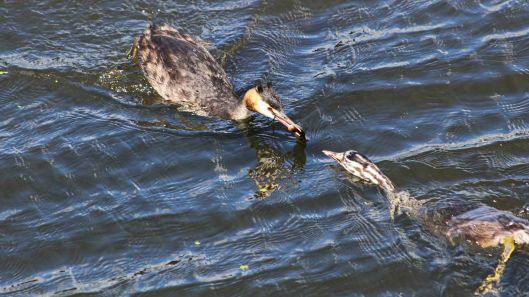
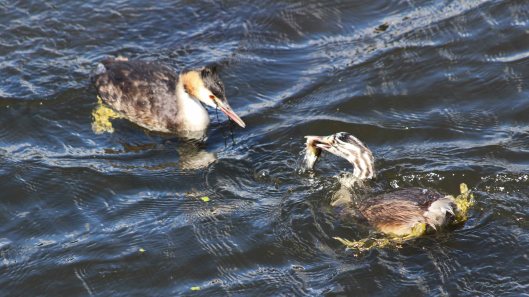
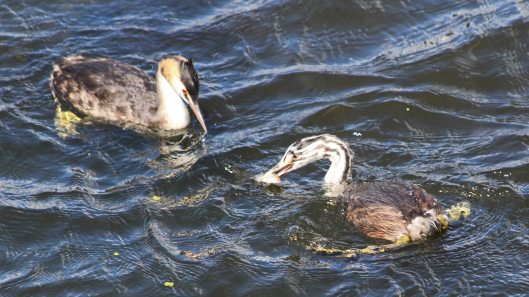
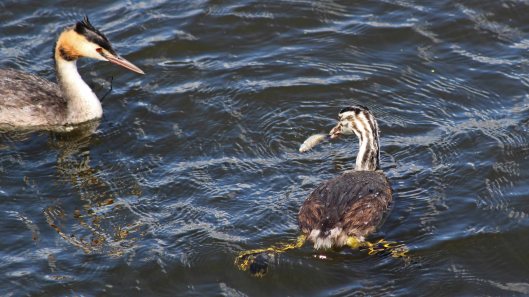
Raw fish might not be everyone’s idea of a tasty lunch but it’s the staple diet for this juvenile Great crested grebe.

180818 great crested grebe (1)

And here it comes now …

180818 great crested grebe (2)

‘Thanks, Mum.’

180818 great crested grebe (3)

‘It’s a slippery sucker.’

180818 great crested grebe (4)

‘It’s a bit big, Mum. I’m not sure how to eat this thing.’

180818 great crested grebe (5)

‘Ooops, almost dropped it.’

180818 great crested grebe (6)

Seeing the young one struggling to down its lunch, a Black-headed gull swoops in to try to steal the fish. Both grebes dive immediately.

180818 great crested grebe (7)

‘Where’d they go?’

180818 great crested grebe (8)

Seconds later, the gull flies off, Mum and junior both surface, and Mum’s come up with the second course.

This is one contented-looking Great crested grebe!

180818 great crested grebe (11)

Bugs are like buses

Tags

, , ,

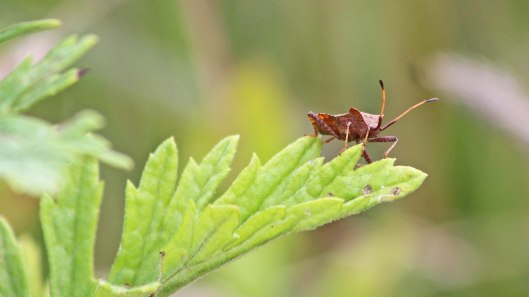
I hadn’t seen any Dock bugs (Coreus marginatus) for a couple of months and then suddenly, at Cosmeston the other day, I saw 11 on one plant!

180816 dock bugs (3)

Now that I’ve read up on them, I understand the sightings gap: it seems adults mate and lay their eggs in the springtime, the nymphs munch away on dock and their other favourite plants for a couple of months and, by August, they have developed into new adults. And here they are …

The aphid-eaters

Tags

, , , , , , , , ,

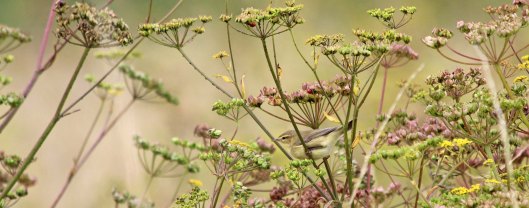
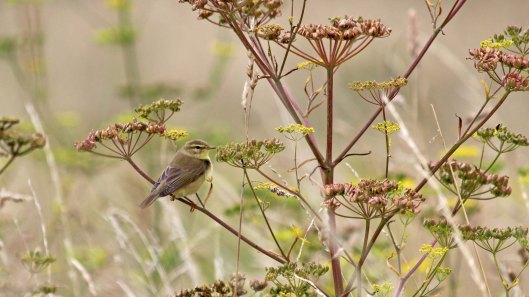
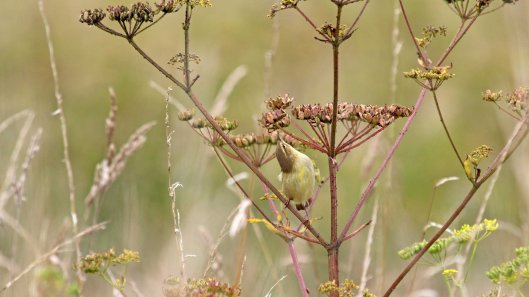
180815 willow warbler (5)

Do you remember last Friday I blogged about the abundance of ladybirds at Cosmeston? They were feasting on the huge numbers of aphids on the Wild parsnip plants. Well, it turns out the ladybirds have had some competition for those aphids this week, as the migrating Willow warblers move through. I don’t think we need to worry though – there are more than enough aphids to go around!

180815 willow warbler (1)180815 willow warbler (2)180815 willow warbler (3)180815 willow warbler (4)

Cardiff’s lovely Little gull

Tags

, , , , , , , , ,

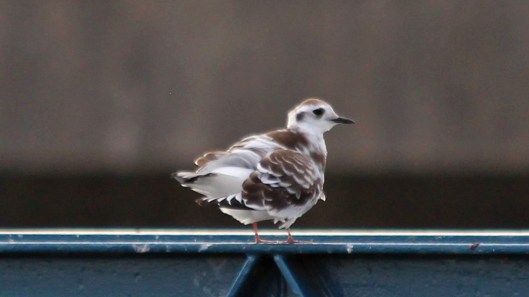
I mentioned a few days ago, in my post about the autumn passage of birds now getting  underway, that a juvenile Little gull has recently been spending time in Cardiff Bay. As it’s such a lovely creature, I thought I’d go back and try for another look and more photos. My camera gear’s not the best so these shots aren’t the crispest you might see but I think you’ll agree this is one beautiful small gull.

180815 Little gull (1)

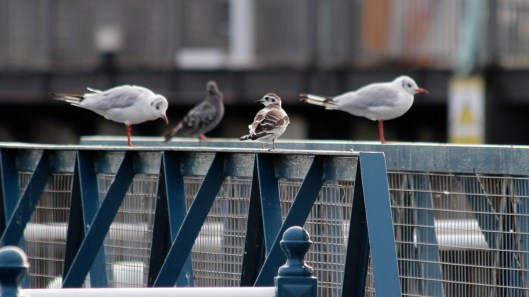
The Little gull (Hydrocoloeus minutus) is perfectly named (minutus, as you might have guessed, means small, minute): in the photo below you can clearly see its petite stature in comparison to the Black-headed gulls and Feral pigeon perched near it.

180815 Little gull (2)

According to the RSPB website, between 400-800 Little gulls over-winter in Britain but, locally, here in south Wales, they are uncommon visitors, mostly seen on passage in spring or autumn. My first-ever Little gull sighting was during this year’s spring passage, in Cardiff Bay on 10 April, but that bird spent much of its time flying around in the centre of the bay, visible only through ’scopes and binoculars.

So, it’s been especially nice that our current visitor has been flying, perching and feeding much closer to shore where I, and many other people, have been able to get a better look at it. Soon, I’m sure, it will head south to meet up with others of its kind who will spend their winter around the coastlines of the Mediterranean and western Europe. Fly well, little beauty!

180815 Little gull (5)

Encounters with Green woodpeckers

Tags

, , , , , ,

180813 Green woodpecker (2)

I’m sure I’ve written before on here that Green woodpeckers can be darn tricky to get good views of. They’re very skittish birds, taking fright and flying off at the slightest noise, yaffling as they go.

180813 Green woodpecker (3)

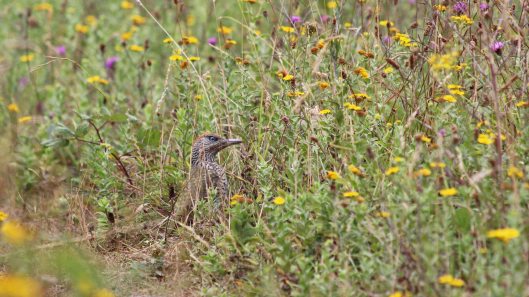
So, I was really thrilled at Lavernock Nature Reserve last Wednesday to get quite close to two of these beautiful birds. Initially, I wasn’t sure if I had seen the same bird in different parts of the reserve, as the sightings were an hour apart, or whether these were two different birds, but a close look at their facial markings has confirmed they are different – a real bonus!

180813 Green woodpecker (1)

I think the reason I did manage to get reasonably near both times is that these are juvenile Green woodpeckers (Picus viridis) – you can tell that from the black mottling in their plumage – so they haven’t yet learnt to fear all humans or, perhaps, their senses aren’t yet as acutely honed as their parents’.

These are both male birds – you can tell from the red feathers in the ‘moustache’ markings on either side of their beaks. And both were intent on feeding on ants from the many anthills that dot the wildflower meadows at Lavernock (as you can see in the very short video below). Perhaps that’s another reason why they were not so concerned about me.

Green woodpecker feeding

The quickness of the wing

Tags

, , , ,

‘The quickness of the wing deceives the eye.’ So write Brett Westwood and Stephen Moss in their brilliant book Wonderland: A year of Britain’s wildlife day by day (John Murray, London, 2017). They’re describing those butterflies that ‘fly so haphazardly and so fast that they are little more than hallucinations, a flicker of motion at the edge of our vision, making us question whether we’ve seen one at all.’

The Small copper (Lycaena phlaeas) is one such butterfly but, I find, with a pinch of stealth, a sprinkle of luck and a tablespoonful of patience, it will settle and even pose for photos. And the outcome is no hallucination but rather a delicious creation, even a gourmet would admire.

The autumn migration is underway

Tags

, , , , , , , , , , ,

It’s that time of year, tinged ever so slightly with sadness but enlivened with occasional moments of great excitement, when bird populations begin their autumn migration. My local Swifts have headed south for the winter and I shall miss their dawn and dusk screaming, the sound of summer for me, and there have been good numbers of Swallows and House martins swirling above Cardiff Bay, in a final feeding frenzy before they too head south.

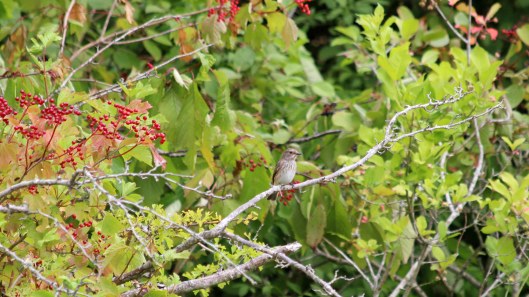
I’ve spotted small flocks of Willow warblers and Chiffchaffs, moving through my local nature reserves and parks, stocking up on nutrients before they also begin their long flights. And, this week, a Spotted flycatcher became my 186th bird species for 2018, when I saw it passing through Cosmeston.

180811 3 Spotted flycatcher

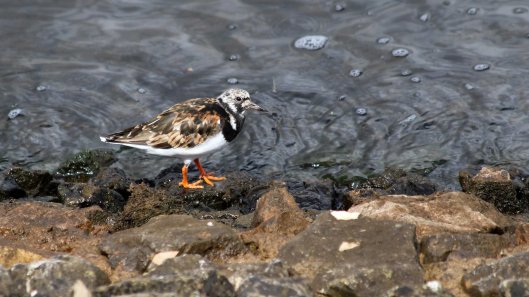
As well as those birds that are departing for sunnier wintering spots, there are also birds returning from their colder breeding locations to spend the winter in Britain’s relatively warm climes. I saw my first two returning Turnstones, still in their summer plumage, during a wander along the Ely embankment on Wednesday.

180811 4 turnstone

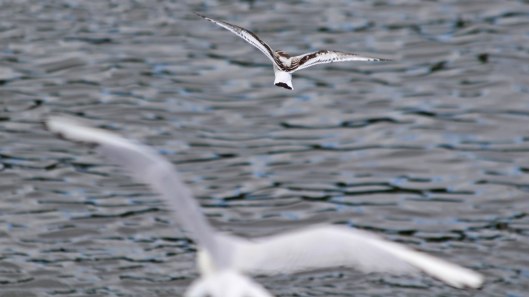
Also at Cardiff Bay this week have been a couple of those birds that provide birders, local and distant alike, with a quickening of the heart rate. First, a first summer Arctic tern arrived to join the Cardiff Bay bird population, and then a juvenile Little gull also joined the party, though neither bird has been welcomed by the local gulls.

180811 5 arctic tern

I saw both birds being chased and mobbed on Wednesday, and a little later that same day my friend John caught some amazing shots of a Black-headed gull almost drowning the Little gull – luckily, it escaped. (Bird xenophobia? No one seems to know why the local gulls are being so aggressive.)

180811 8 arctic tern being chased

Above, Arctic tern being chased; below, Little gull also being pursued

180811 9 little gull being chased

Let’s hope further newcomers are given a warmer welcome to our local waters and, indeed, let’s just hope for further newcomers – there’s nothing quite like an exciting sighting to quicken a birder’s pulse!