• ABOUT
  • BIRDING 2018
  • Birding 2019
  • BLOG POSTS
  • Butterflies 2018
  • Resources

earthstar

~ a celebration of nature

earthstar

Author Archives: sconzani

Urophora stylata gall flies

02 Wednesday Jul 2025

Posted by sconzani in insects, plants

≈ Leave a comment

Tags

British gall flies, Bulb thistle gall fly, Cirsium vulgare, gall fly on Spear thistle, Spear thistle, thistle gall flies, Urophora stylata

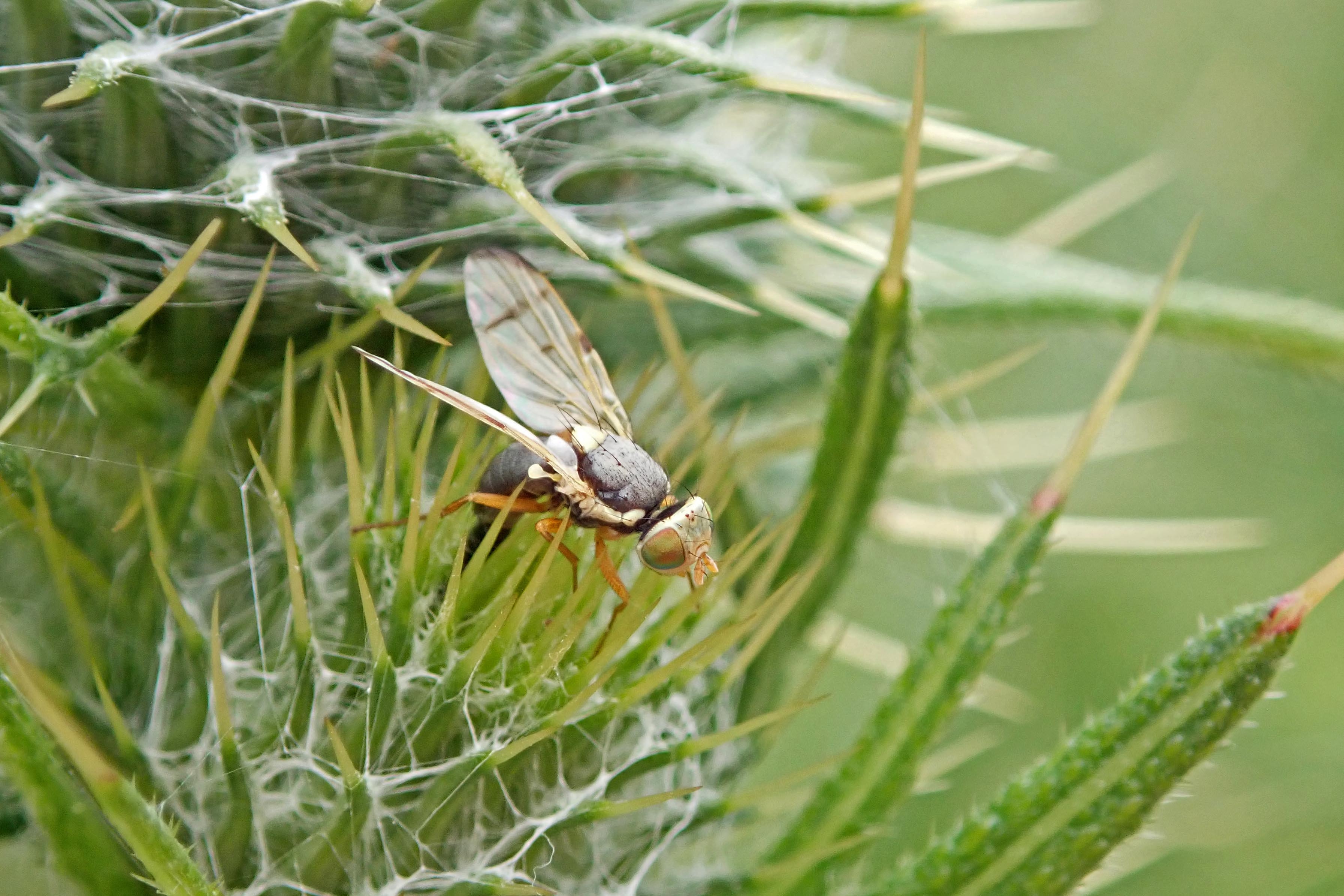
I was having a mooch around an area of rough ground on the edge of some local recreation grounds when I spotted a healthy and robust-looking Spear thistle, so wandered over for a closer look as thistles often provide a home for interesting insects. And I was in luck for there, on top of the first flower I peered at, was this handsome little gall fly, Urophora stylata.
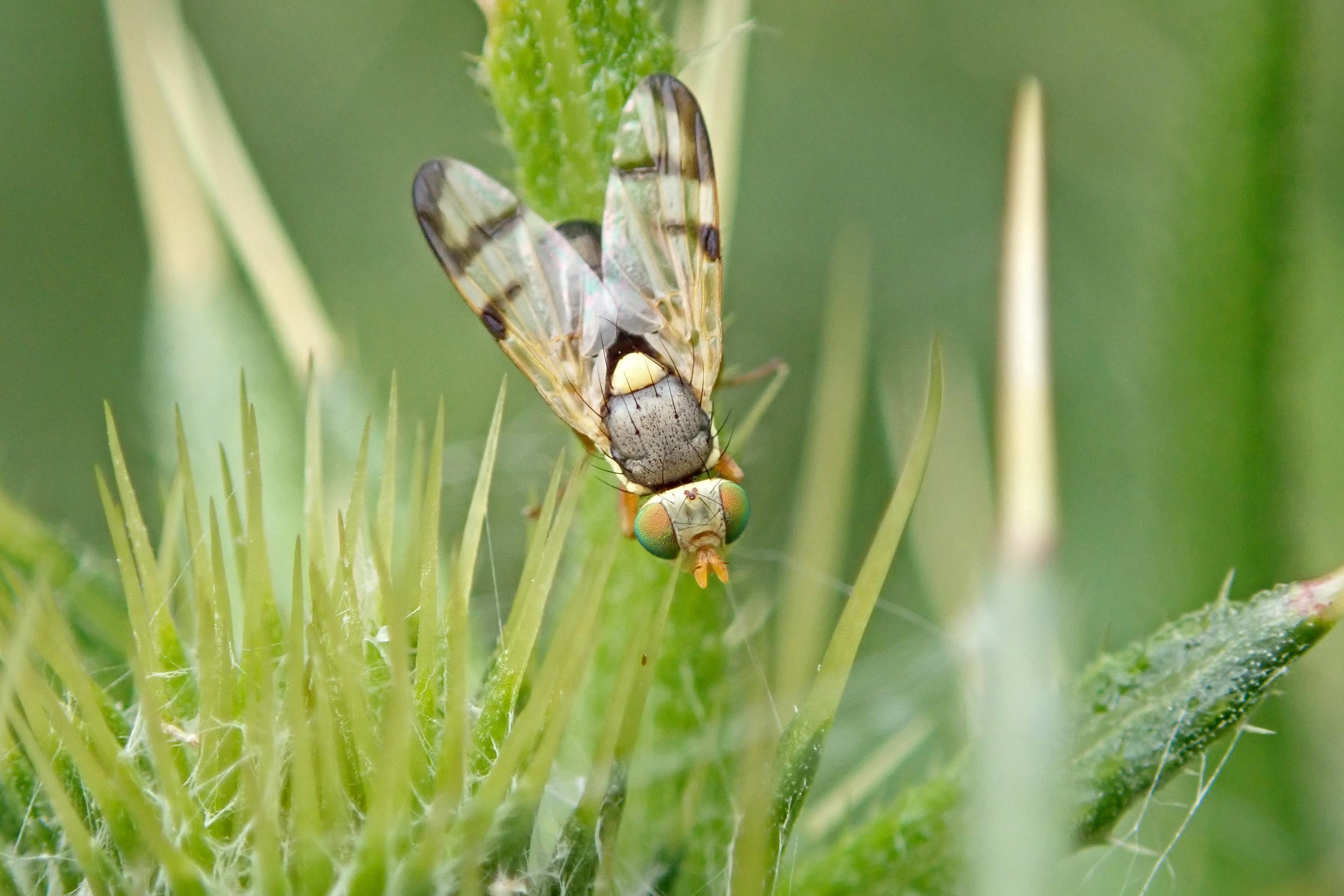
This was my first sighting of this species but, fortunately for me, the Urophora gall flies have quite distinctive patterns on their wings and they each have a preference for a particular species of thistle. Unfortunately for some of you, this gall fly is mostly seen in southern Britain but, according to my internet research (see, for example, this guide from the Montana State Government), it is also present in parts of North America, where it was introduced as a biological control for the Spear thistle, which has been classified as an invasive species in some locations.
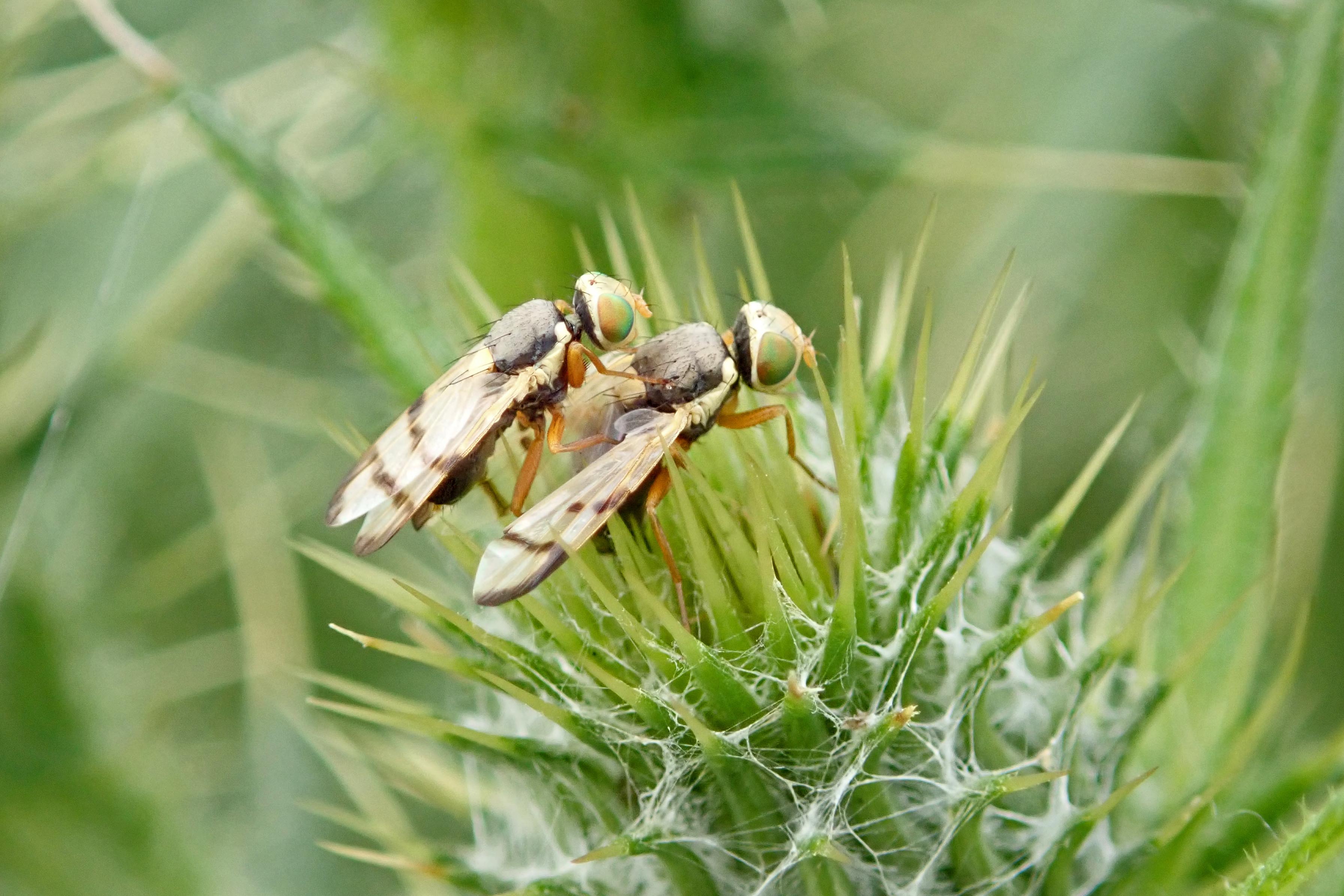
After mating, as per my voyeuristic photo above, the female fly lays her eggs, as shown below, after inserting her sturdy ovipositor into the flower heads of the Spear thistle (Cirsium vulgare). The actions of the subsequent larvae cause woody galls to grow within the flower head. The Naturespot website says that these galls are not obvious to the naked eye but ‘can be felt as hard lumps by squeezing dead flower heads’. How to explain that to a passing stranger who politely asks what you’re doing?
Like Loading...

Ruby-tailed wasp

01 Tuesday Jul 2025

Posted by sconzani in insects

≈ 2 Comments

Tags

British wasps, Chrysididae, kleptoparasitic wasps, kleptoparasitism, parasitic wasps, Ruby-tailed wasp, wasp

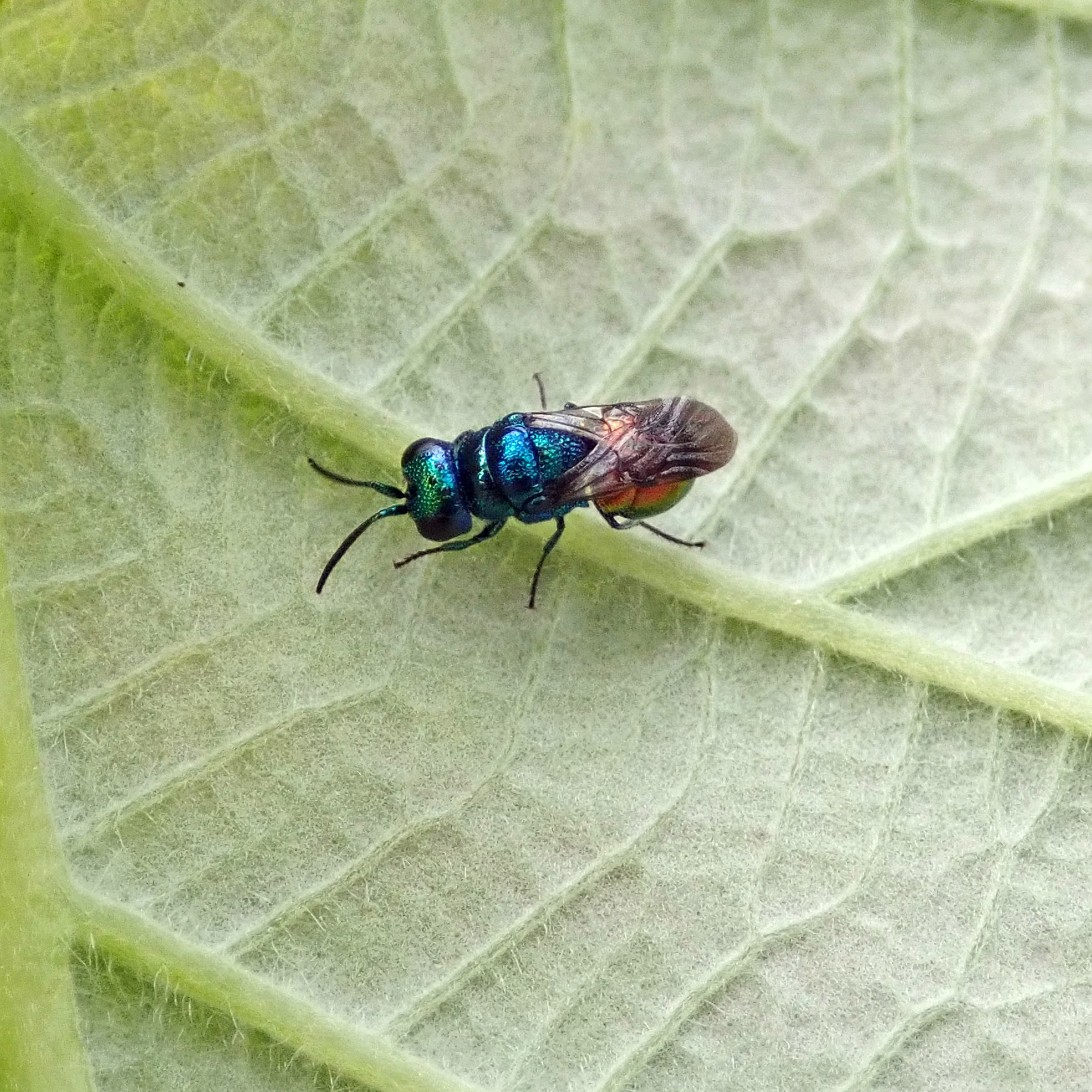
This gorgeous creature, clad in glimmering metallic colours of blue and green and red, is one of the Ruby-tailed wasps, the Chrysididae, and that’s as close to a definitive identification as I can come. According to an article I found on the BWARS (Bees, Wasps and Ants Recording Society) website, there are currently 38 species of Chrysid wasps in the British Isles and Channel Islands. Seven of those 38 species are shown on the Naturespot website, and they all look remarkably similar to my eye so I’m not even going to try to put an exact name to the one shown here. And, to be honest, I’m just incredibly pleased that this tiny wasp didn’t immediately fly away as I approached but, instead, allowed me to get reasonably good photos to share with you.

Now, just to be clear, though they look stunning, the Ruby-tailed wasps are almost all parasitic in nature. Some parasitise the eggs and larvae of other invertebrates, including other wasp species and bees; others are kleptoparasites, stealing the food other solitary wasps leave in their nests for their own larvae. Beauty and the beast encased in one tiny but beautiful bundle.

Like Loading...

Depressaria daucella larvae

30 Monday Jun 2025

Posted by sconzani in insects, plants, wildflowers

≈ 2 Comments

Tags

British moths, caterpillar eating Hemlock water-dropwort, Depressaria daucella, Hemlock water-dropwort, moth larvae, Oenanthe crocata, Water-dropwort brown, Water-dropwort brown larvae

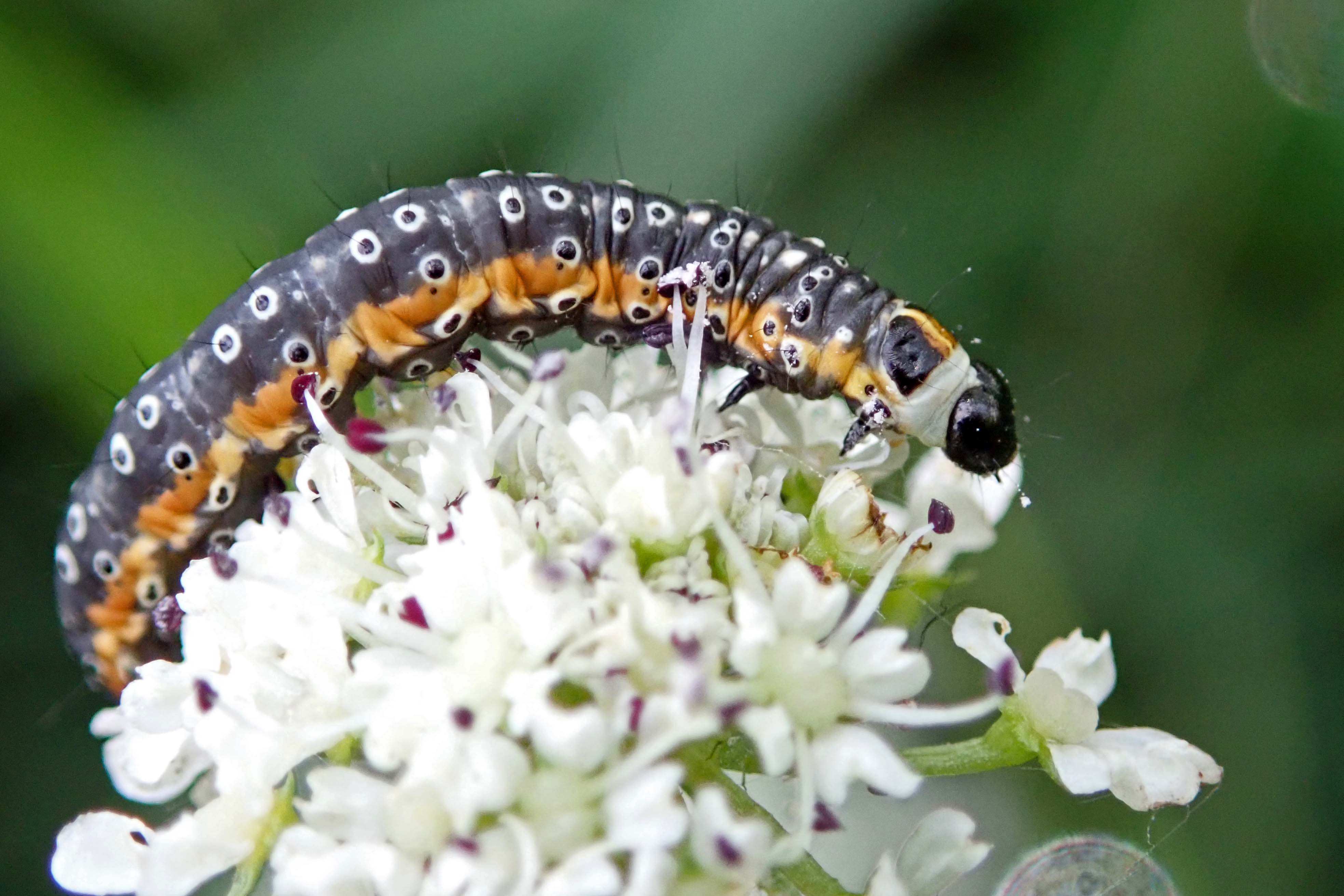
All parts of Hemlock water-dropwort (Oenanthe crocata) are highly poisonous; from the roots to the leaves, no part of it should be ingested, and the Royal Horticultural Society even recommends wearing gloves to handle the plant. Yet, somewhat surprisingly, when I was wandering around the RSPB Radipole Lakes reserve, where Hemlock water-dropwort is abundant, I found a huge number of these small caterpillars happily munching away on its stems and flowers.

These very attractive creatures are the larvae of the moth Depressaria daucella, common name Water-dropwort brown. They can be seen, on this and a few other species of plants, in the months of June and July, either out in the open when eating or resting within a loosely woven silken spinning.

The UK Moths website rather flatteringly says that the adult moth is a ‘fairly distinctive species with its chestnut-brown ground colour and darker streaking’; all I see is yet another little brown job, rather drab when compared to its caterpillars.

Like Loading...

Unbranched bur-reed

29 Sunday Jun 2025

Posted by sconzani in flowers, wildflowers

≈ Leave a comment

Tags

aquatic plants, British wildflowers, Bur-reed family, plants growing in water, Sparganium, Sparganium emersum, Unbranched bur-reed

When I popped down to the edge of the River Ely during last Monday’s walk, I was hoping for dragons and damsels. Instead, I saw flowers I’d not seen before; these plants with the rather lovely towers of globular spiky white blooms are members of the Bur-reed or Sparganium family of aquatic plants that grow both in moving and still fresh water.

There are four species of Bur-reed in Britain: Branched, Unbranched, Least and Floating. From the fact that there is a single unbranched flower spike (raceme), with just one group of the smaller, more compact male flowers at the top means that the species I found was Unbranched bur-reed (Sparganium emersum).

Like Loading...

Bug: Deraeocoris flavilinea

28 Saturday Jun 2025

Posted by sconzani in insects

≈ Leave a comment

Tags

British miridae, bug, bugs on Field maple, bugs on Sycamore, Deraeocoris flavilinea, mirid bugs, Miridae

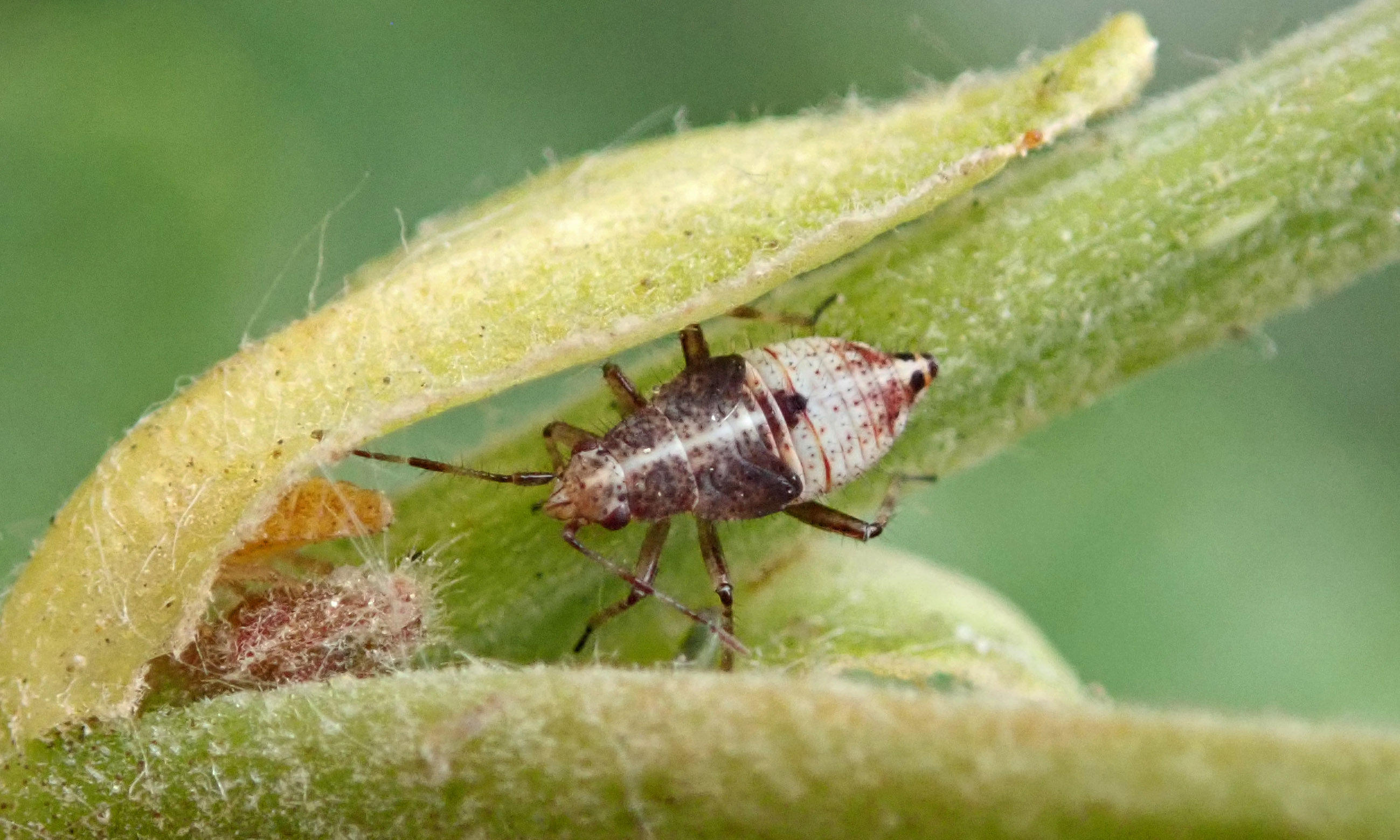
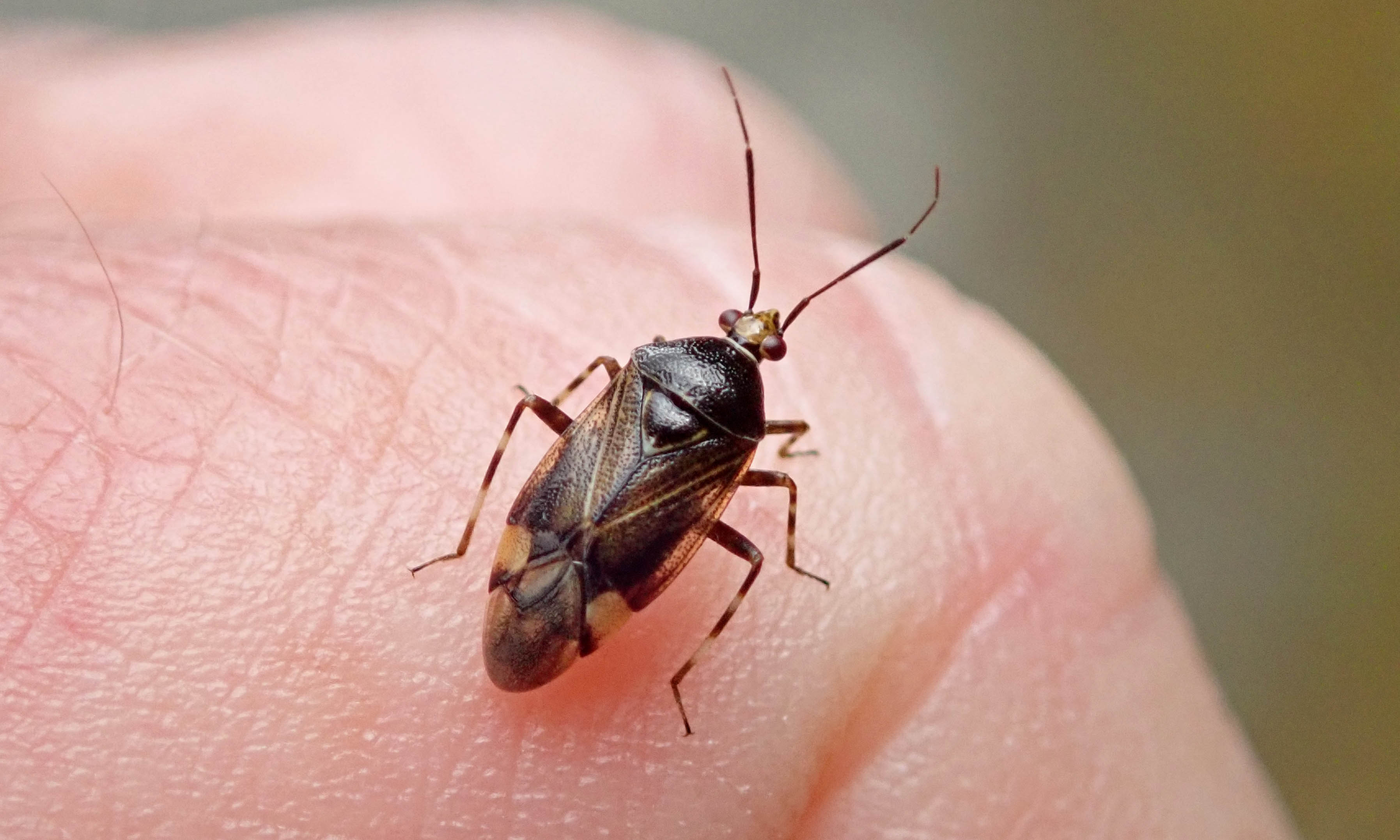
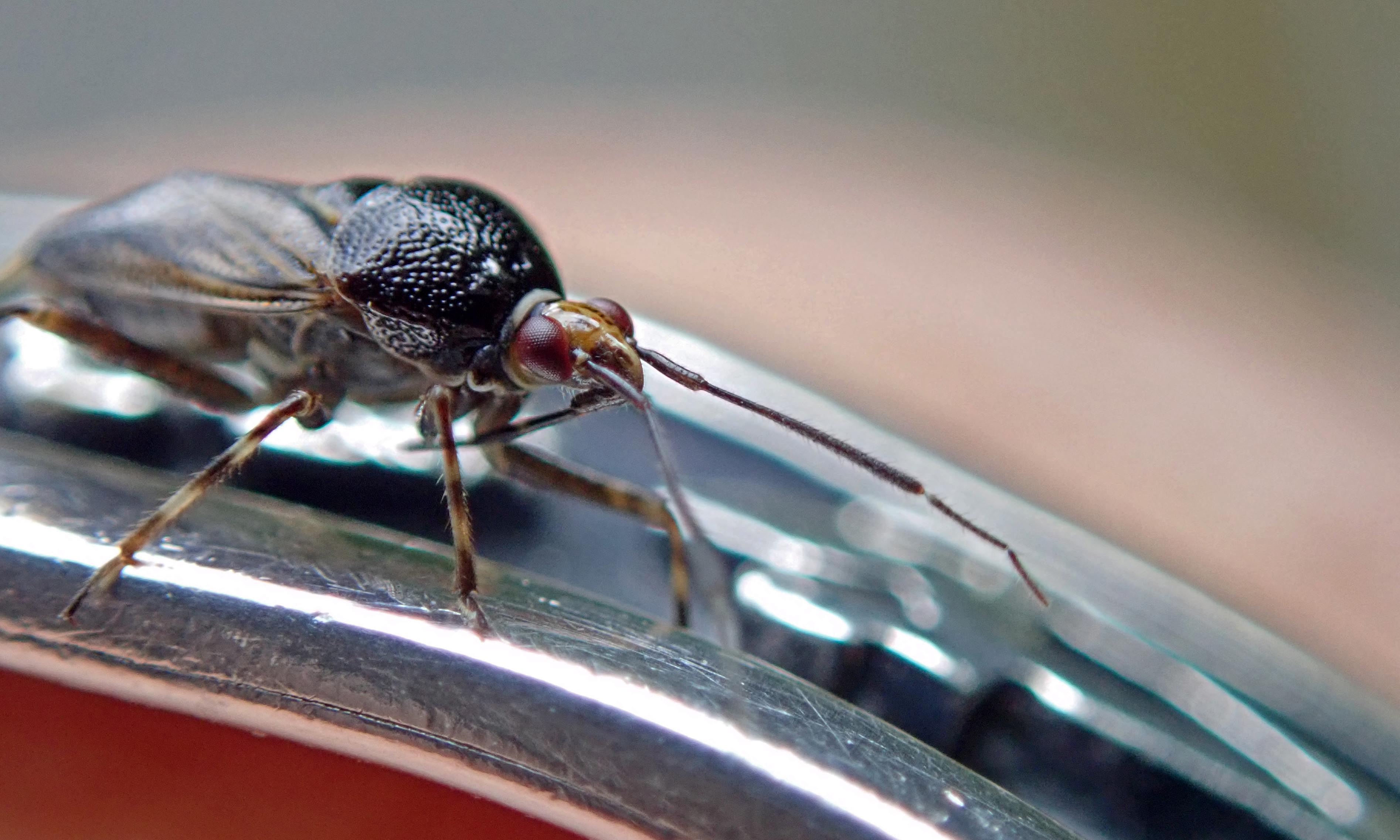
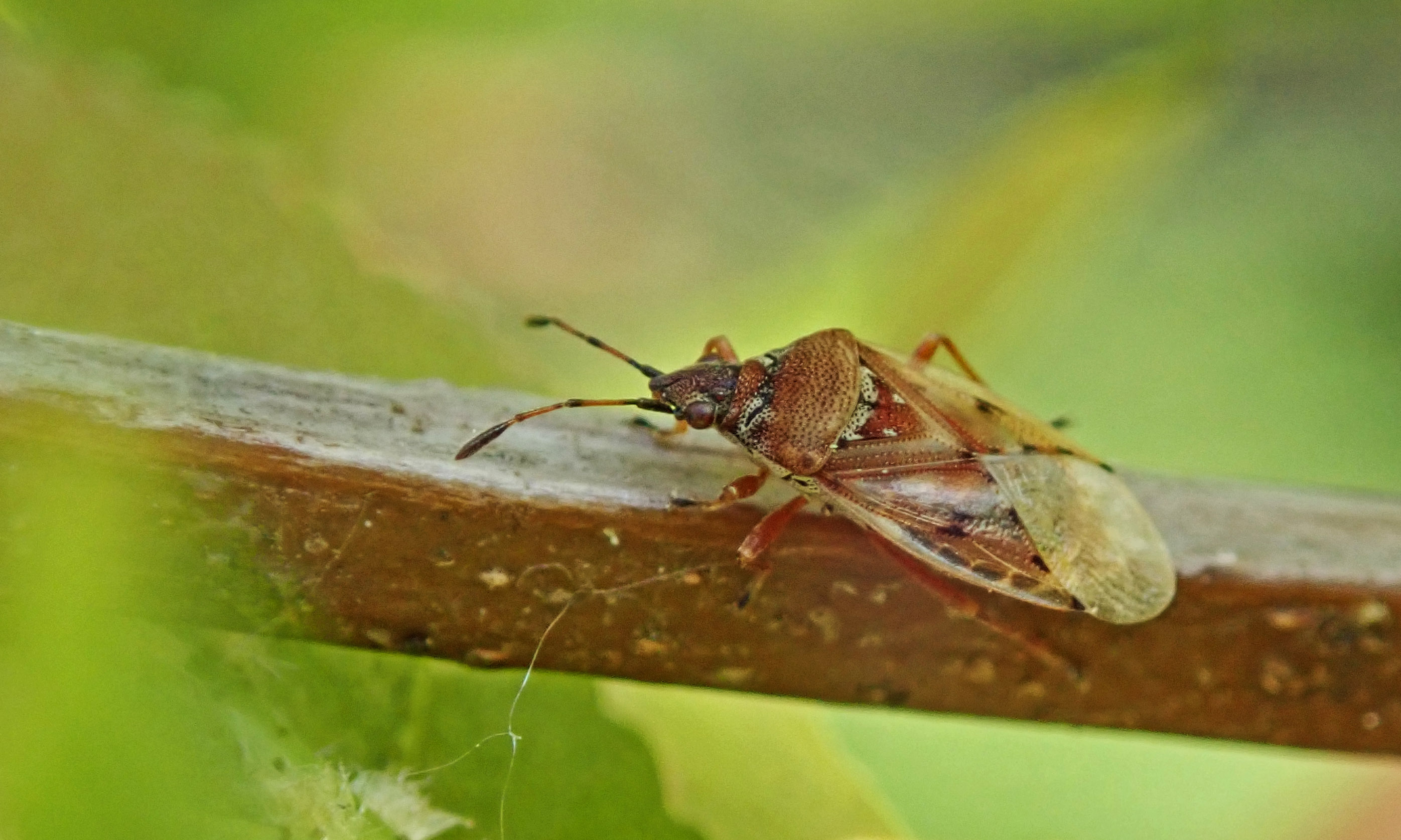
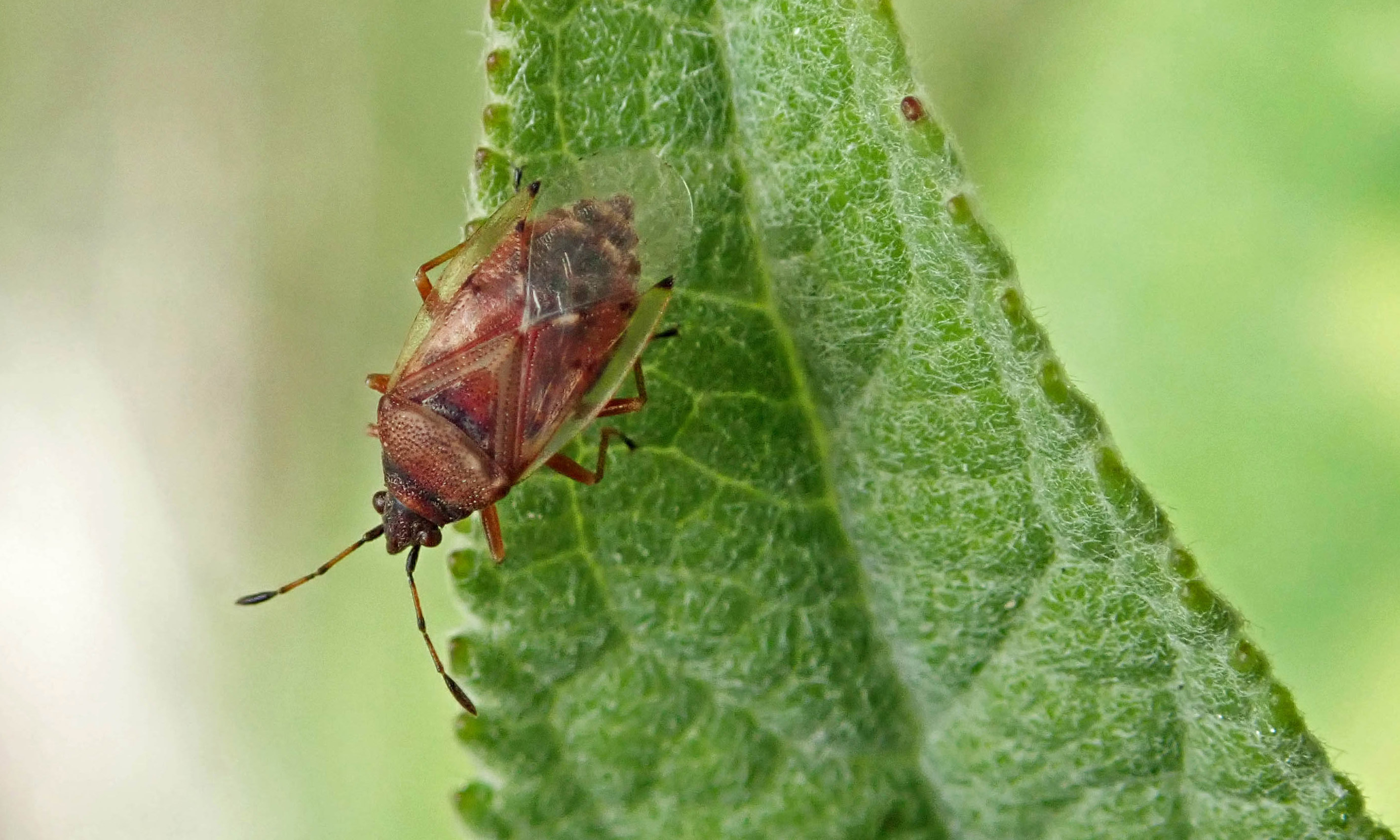
How bugs are able to colonise places as rapidly as many seem to do always surprises me, and this new-to-me Mirid bug is one of those. Deraeocoris flavilinea was first reported in the UK in 1996.

In the interim 29 years between then and now it has made itself at home across most of the southern and central parts of Britain. Perhaps the fact that this bug’s larvae feed on Field maple and Sycamore, both very common tree species, has helped with its rapid colonisation efforts.

I saw my first, the nymph shown above, on 12 May and, at the end of May, saw my first adult. Since then, I’ve seen several more, even had one walking sedately up my arm, down again and on to my hand, which allowed for a nice close up as my final photo shows.

Like Loading...

Bug: Kleidocerys resedae 

27 Friday Jun 2025

Posted by sconzani in insects

≈ Leave a comment

Tags

British bugs, bugs on Birch, insects of Birch, Kleidocerys resedae, Lygaediae, seed bugs

As I think I’ve mentioned previously, I’ve been fortunate to find several new bugs and beetles this year. This is one of those, now seen twice one month apart. Let me introduce you to the Birch catkin bug (Kleidocerys resedae), a member of the Lygaediae, the seed bugs that live in, on and around the seeds of various plants. In this case, as you can tell from the name, Kleidocerys resedae can be found on Birch trees (Betula species), the nymphs in particular munching on the catkins.

These are attractive little bugs, generally red-brown in colour, with some paler markings and transparent wings. There is a darker form Kleidocerys resedae f. privignus, which can be found around Alder trees, and I wonder if the bug shown below might be one of those. I actually spotted it on scrub underneath some trees, one of which was an Alder.

Birch catkin bugs can be found throughout Britain, as well as in North America and Europe, and you might be lucky enough to see them at any time of year, as they overwinter as adults (though they are thought to hibernate in colder climates).

Like Loading...

House martins, home and away

26 Thursday Jun 2025

Posted by sconzani in birds

≈ 2 Comments

Tags

birding, birdwatching, British birds, House martin, House martin nests, nesting House martins

Maybe I haven’t been walking in the right locations this summer, but it seems to me that I haven’t seen as many House martins this year. When I was in Weymouth, I was surprised to spot the birds shown below only just starting to build their nests on one of the old mansions along the seafront – that was on 10 June, which seemed rather late.

Last week, once I was back home again, I made a point of walking the streets where I’ve seen nests in the past. Here in the town, I saw only one nest in a street where the ledges on the houses had previously been clustered with little mud cups. Fortunately, the situation was a little better on the houses around the local marina, and I was grinning as I watched the little sweetie shown below.

This House martin had, in fact, already fledged but, rather than hunting for its own food, it was taking short flights from the nest, only to return when its parents returned with food. Sneaky!

Like Loading...

Foxes in the garden!

25 Wednesday Jun 2025

Posted by sconzani in animals, mammal

≈ 4 Comments

Tags

adult Foxes, British fox, British mammals, family of Foxes, fox, fox cubs, young Foxes

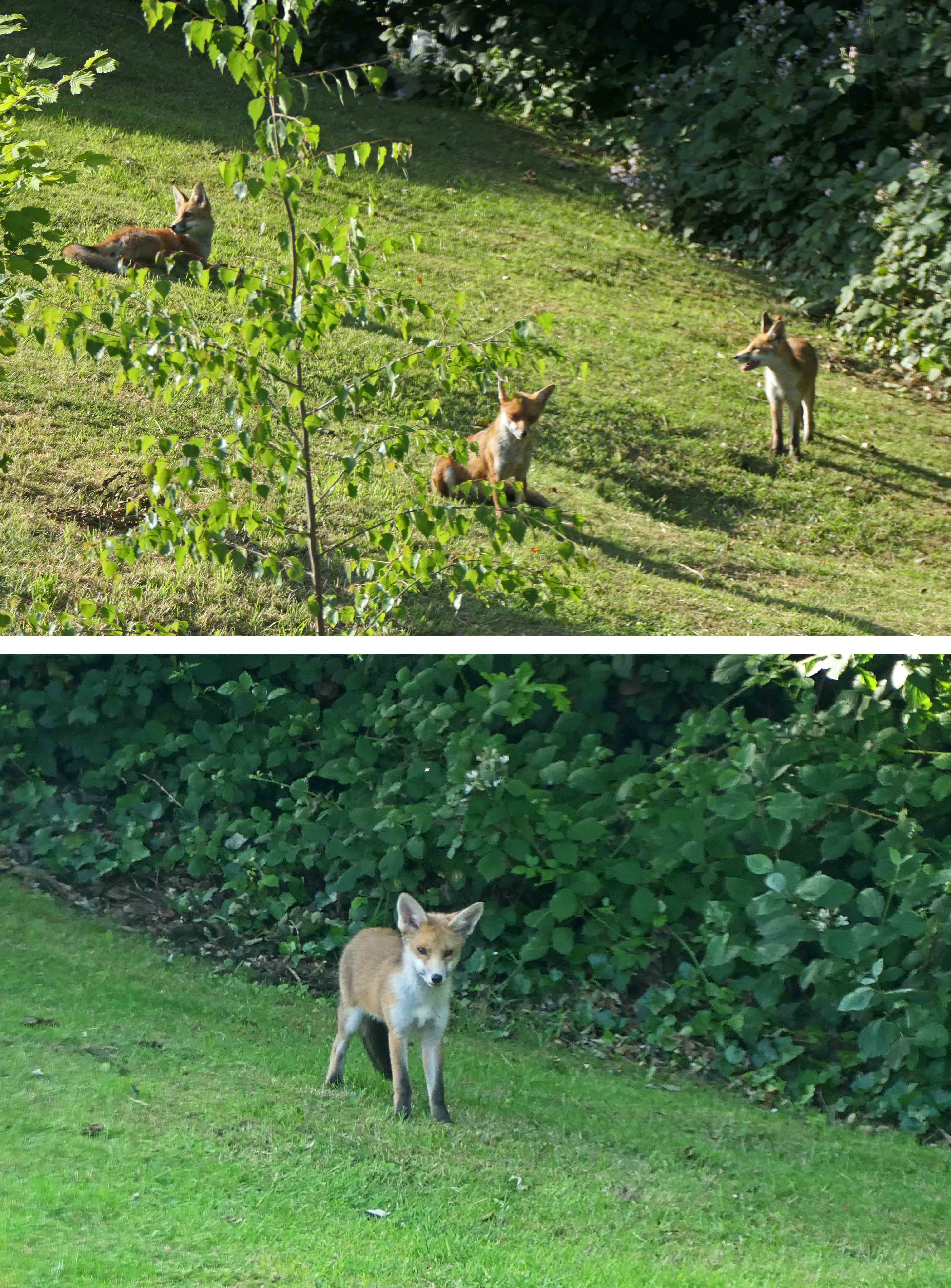
I’d been told by a couple of other flat owners that we have Foxes living in the woodland that borders one side of the communal garden where I now live, but I’d also been told that they are rarely seen, and the sightings are mostly late at night by those who live on the street side of the building, presumably as they’re venturing out into the town searching for food – the Foxes not the flat owners!

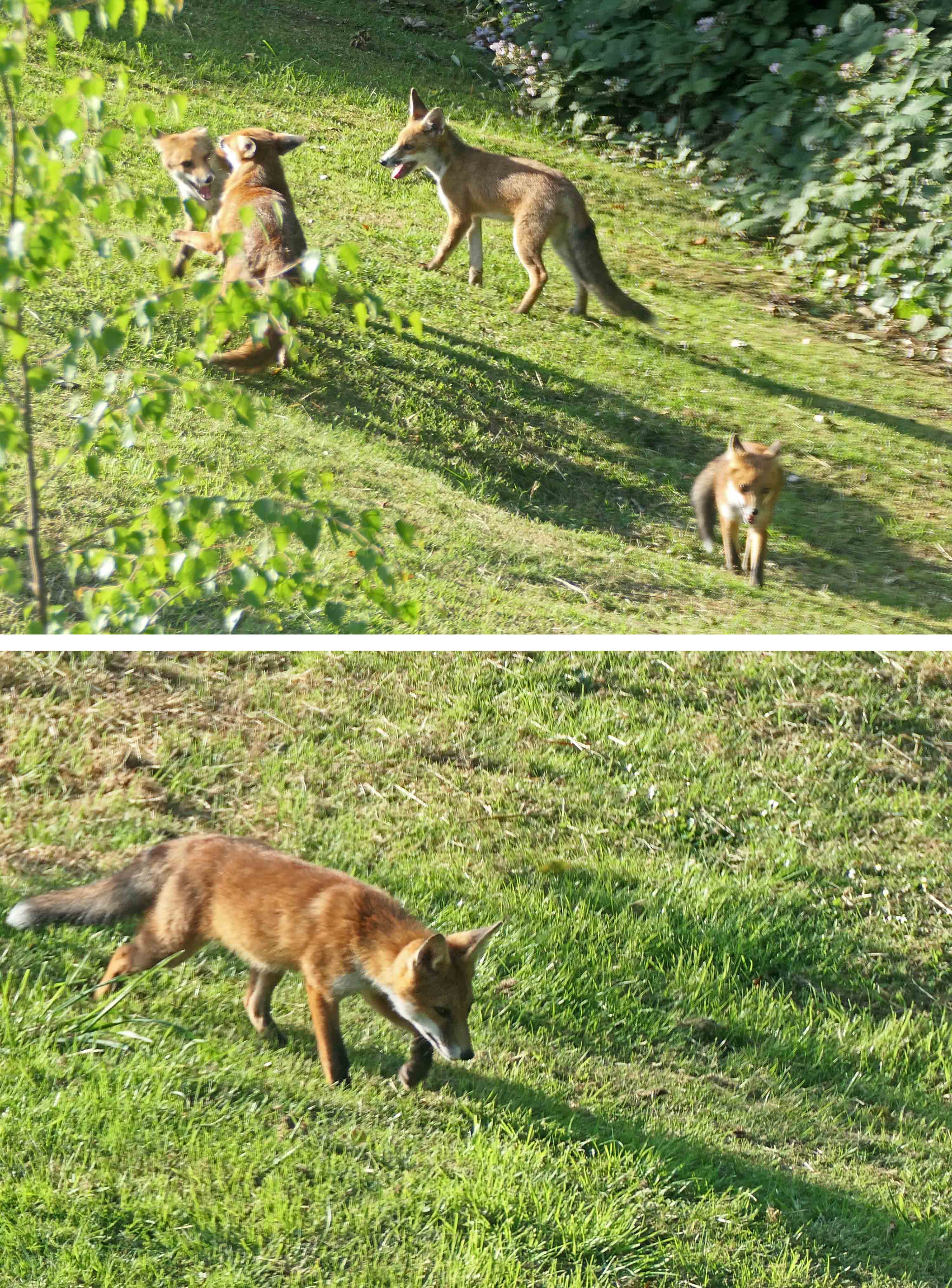
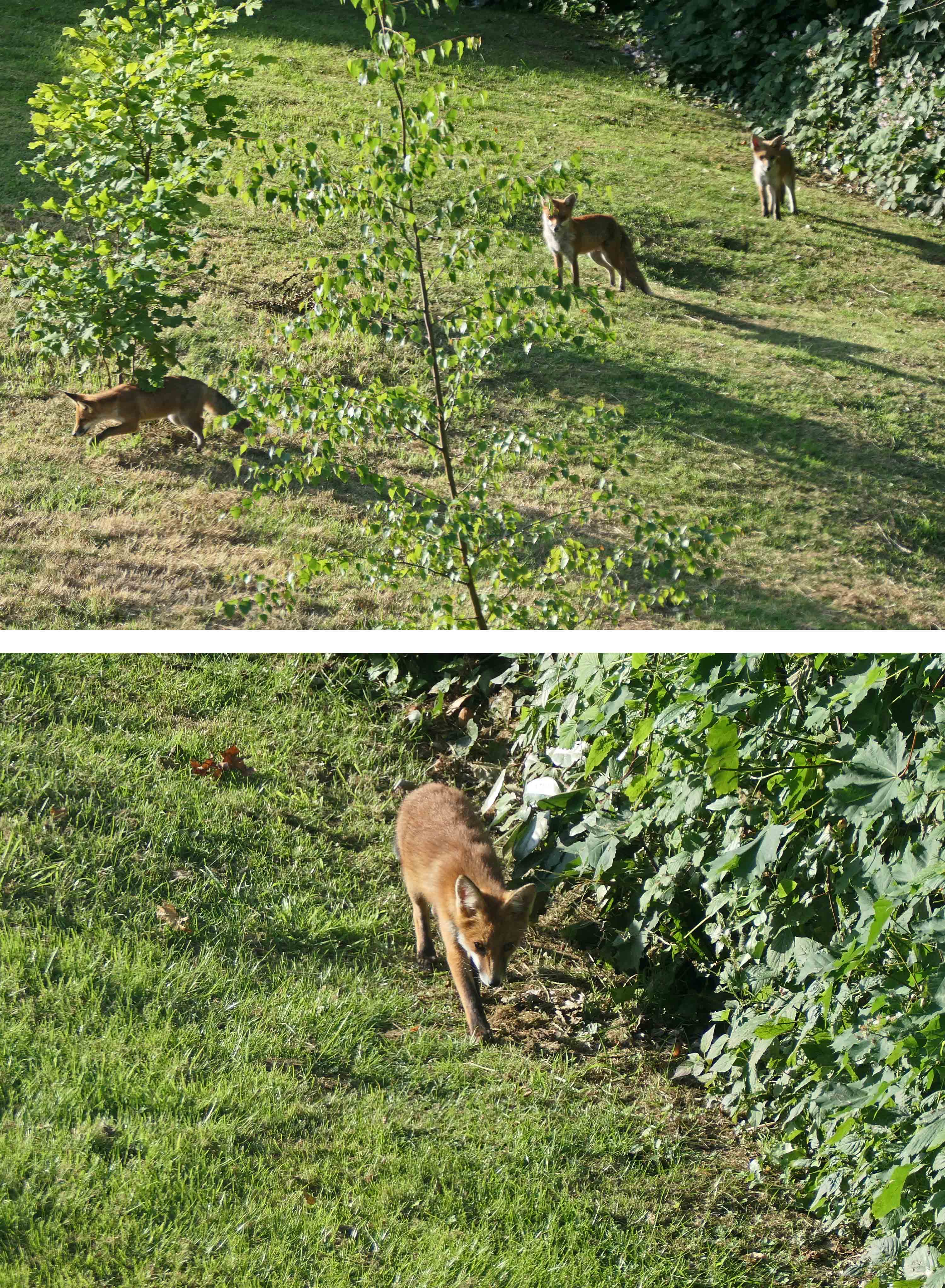
So, you can imagine my excitement and amazement and total delight when I looked out my window early one morning last week to see a whole family of Foxes frolicking together in the garden. From the look of them and the way they were interacting, I assume these are the male and female adults and two young cubs.

I watched them for perhaps 10 minutes before something alarmed them and the group quickly disappeared through a gap between the grass and the trees. But, within five minutes, they were out again, the adults sniffing warily around the garden edges, the youngsters climbing all over each other play-fighting. Once again, they withdrew after 10-15 minutes – I guess more people were up and about by then, pulling back curtains, opening windows, and that type of activity sent the Foxes back to the safety of their den for the day.

Even more surprisingly, I saw one of the adults just as it was getting dark the following evening, heading purposefully along the edge of the trees, heading out into the urban landscape to forage for scraps. It may even be that people locally feed them, as, fortunately, growing numbers of people are now happy to share our towns and cities with these handsome creatures.

Like Loading...

Large whites and parasitism, part 2

24 Tuesday Jun 2025

Posted by sconzani in insects

≈ Leave a comment

Tags

British butterflies, butterfly, butterfly pupae, Large white butterfly, Large white pupae, parasitic wasp, Pteromalus puparum, wasp parasitising Large white pupae, White butterfly pupal parasitoid wasp

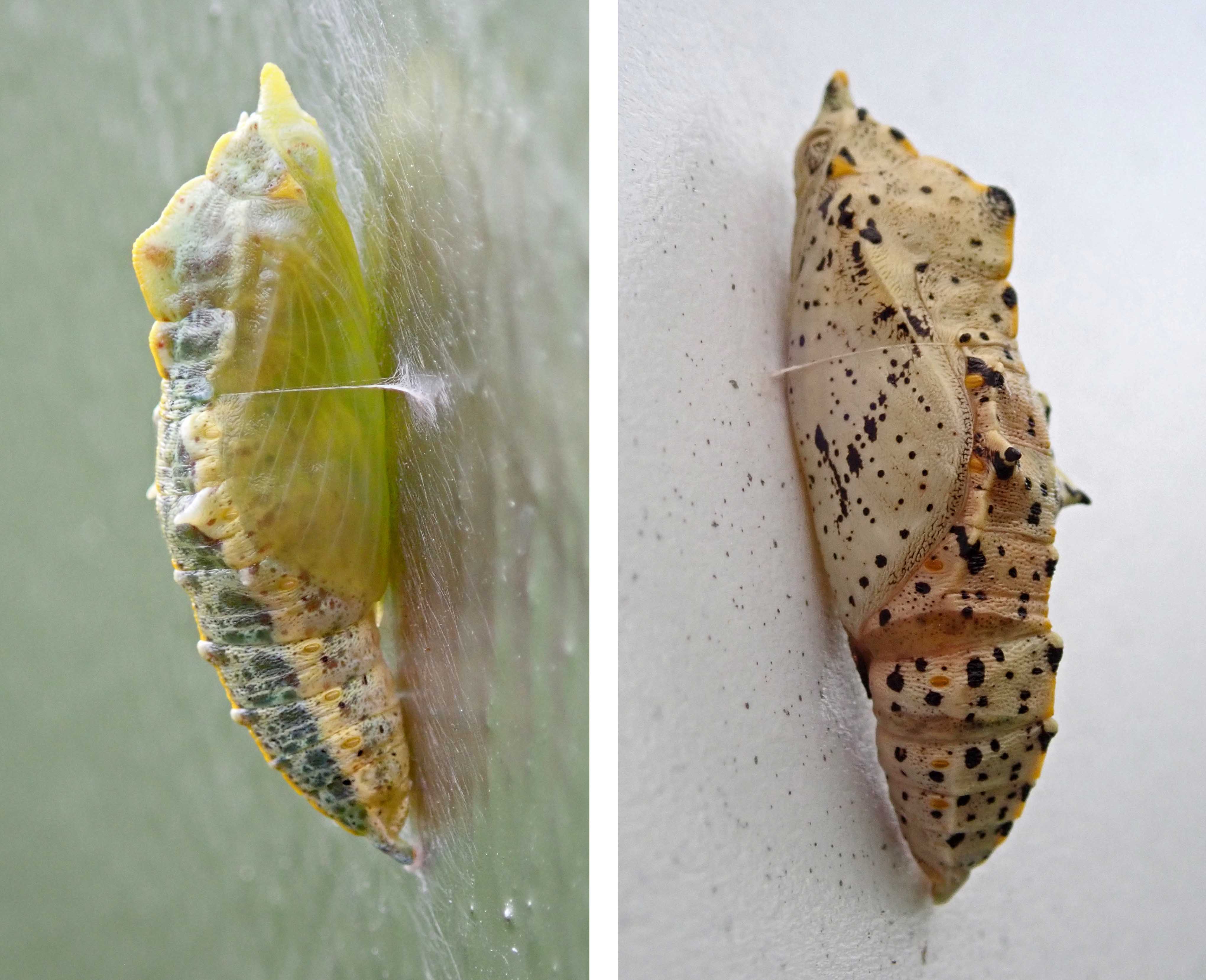
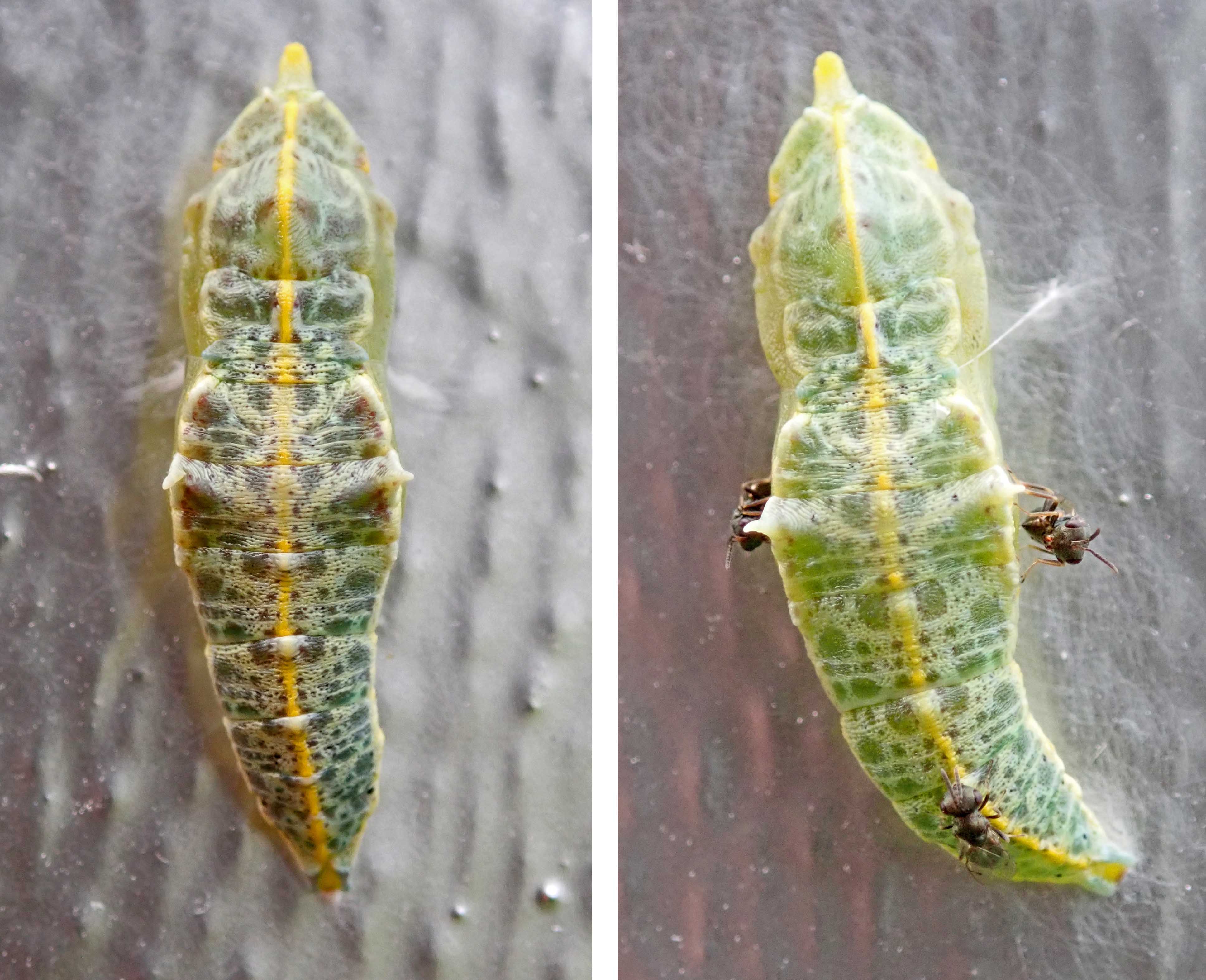
A week after my sighting of Large white butterfly larvae that had been parasitised by wasps (see yesterday’s blog post) I returned to the same location to see what might have changed during that time and was surprised to see six pupae, beautiful sculptural objects whose markings varied depending on how long it was since they had pupated. These can’t have been the parasitised larvae I don’t think, so there must have been a large number of larvae munching unnoticed in the grassy area below the signage they were on.

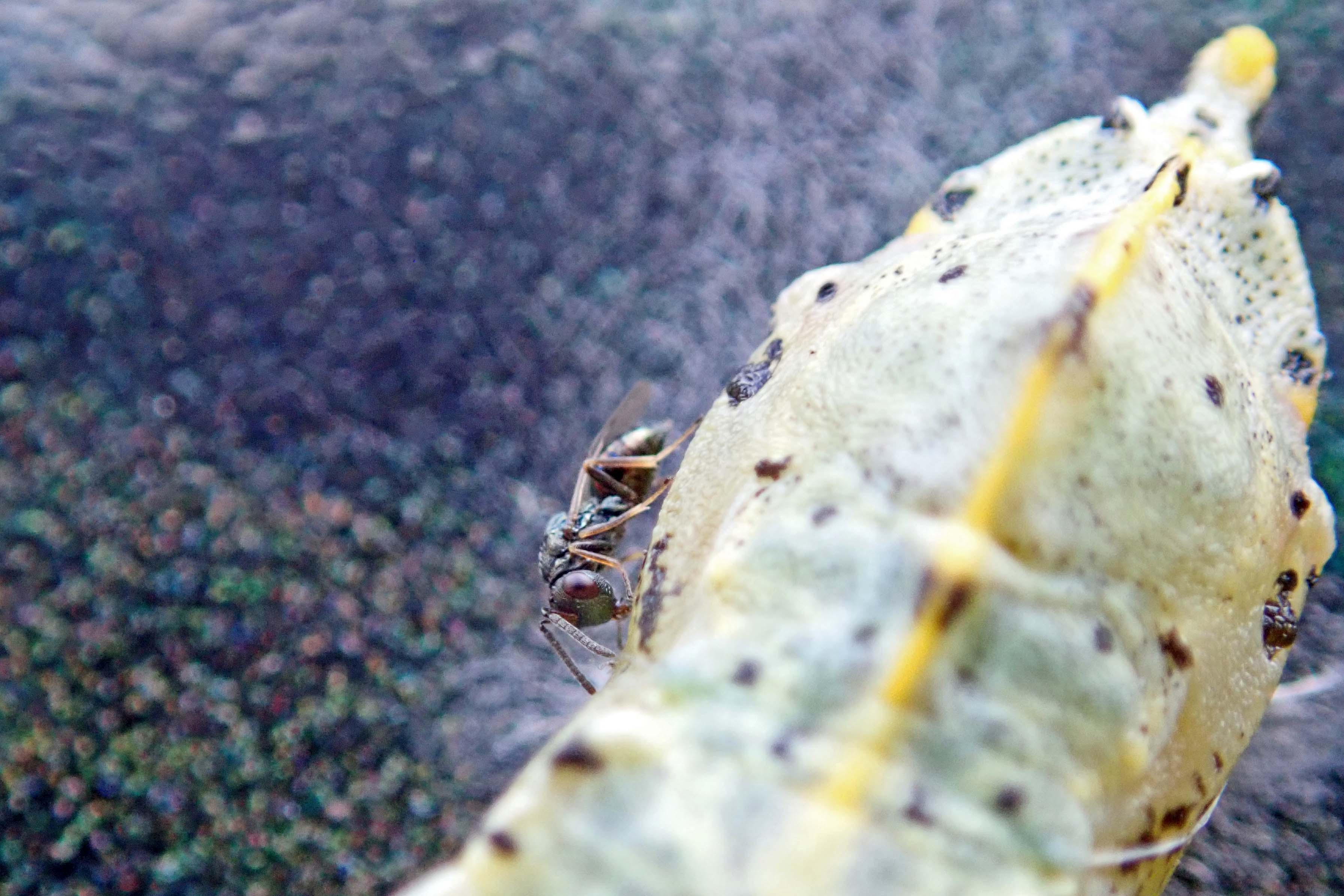
This time, as well as these pupae, a few parasitised larvae and a few caterpillars that looked normal but may still have had wasp larvae in their bodies, there was a new species of parasitic wasp in residence. They looked completely different to the wasp I’d seen the previous week and, rather than the larvae, these tiny wasps were all congregating around the Large white pupae.

As usual, I took a lot of photos and, when I got home, set about researching the possibilities. This time, my guide book offered no assistance but googling produced one probable answer. There exists a wasp that is actually named the White butterfly pupal parasitoid wasp, scientific name Pteromalus puparum, which seems the likely culprit, though this hasn’t yet been confirmed by any experts. I’m intending to revisit the site to see what’s happened while I’ve been away on my little holiday.

Like Loading...

Large whites and parasitism, part 1

23 Monday Jun 2025

Posted by sconzani in insects

≈ Leave a comment

Tags

British butterflies, Cotesia glomerata, hyperparasitism, Large white butterfly, parasitic wasps, parasitism of butterfly larvae, parasitism of Cotesia glomerata, parasitism of Large white larvae

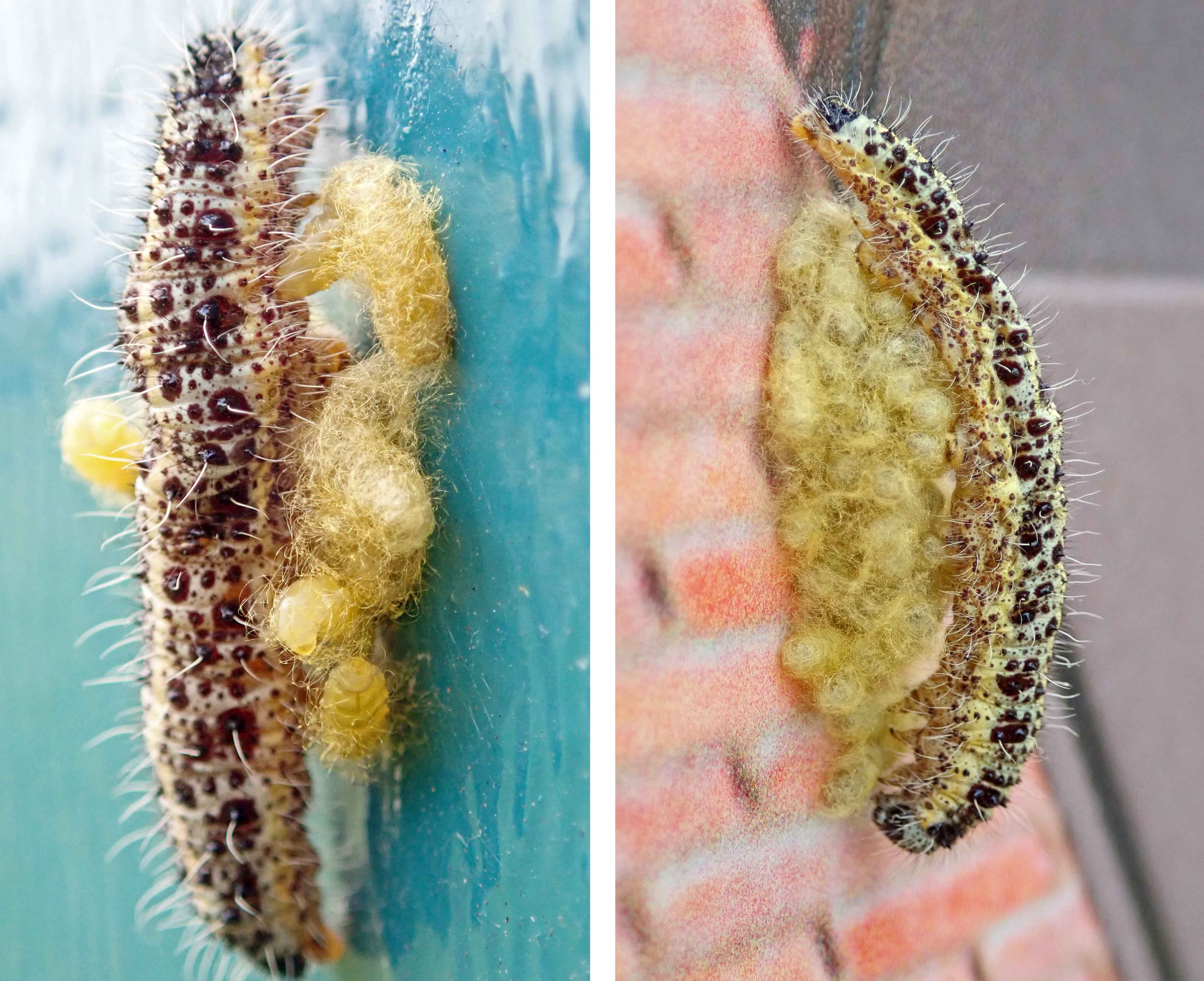
Though I’ve been in Wales almost 10 years and was fascinated by British butterflies even before I settled here, I only saw my first Large white caterpillars in June last year. So, when I spotted several more on the large advertising signage fencing off a local building site, I was delighted … until I looked more closely (and just a warning, this is a bit gruesome!).

The larvae were surrounded by small yellow cocoons and, when I looked even closer, I could see small yellowish larvae squirming between the bodies of the caterpillars and the cocoons. It is highly likely that the Large whites have been parasitised by the wasp Cotesia glomerata. In Life Cycles of British & Irish Butterflies, Peter Eeles writes that the wasp

deposits between 15 and 80 eggs inside each young larva that it parasitizes. The wasp larvae feed on the layer of fat beneath the skin of their host, thereby avoiding vital organs, and, when their host is fully grown, break through the skin and pupate within yellow cocoons on or near their host.

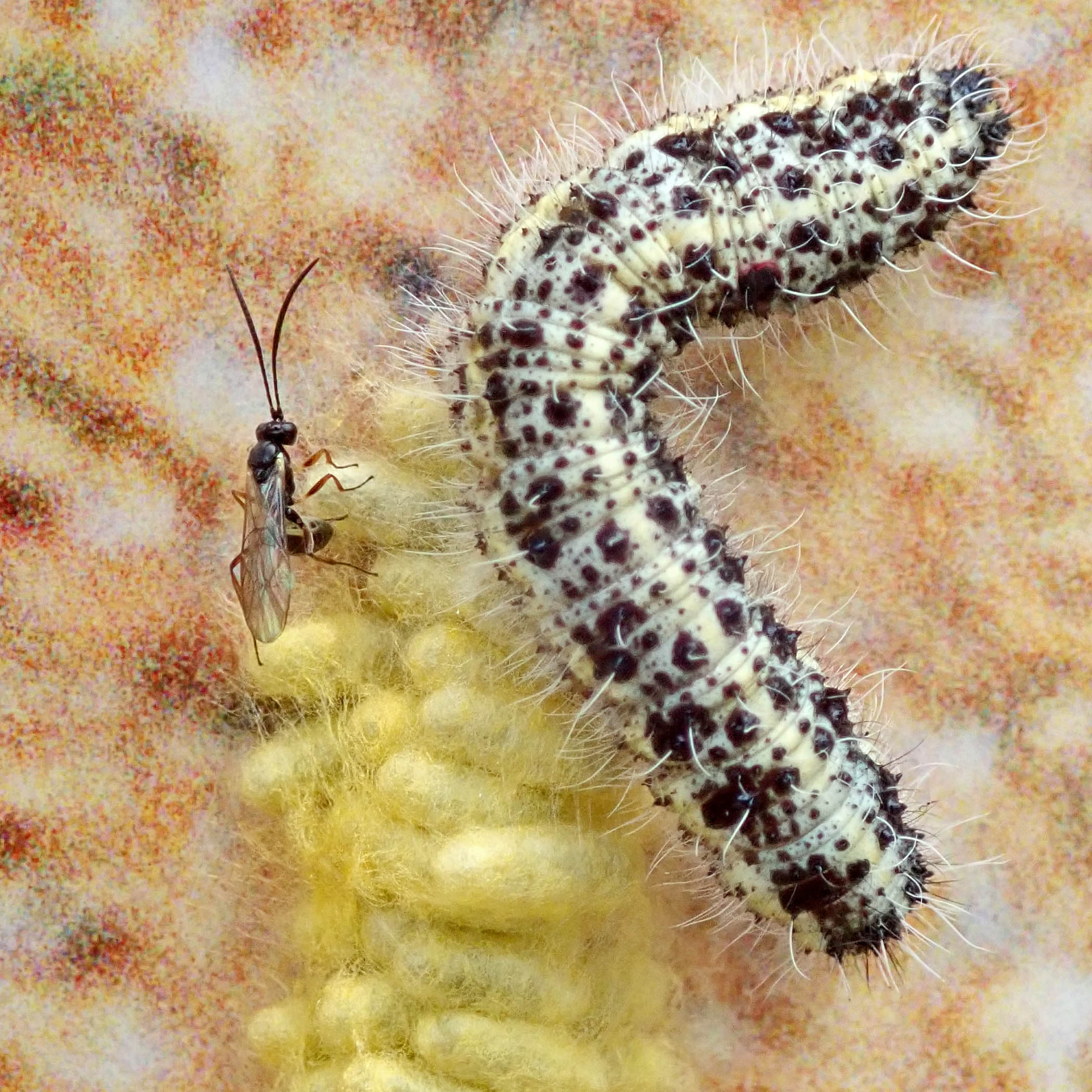
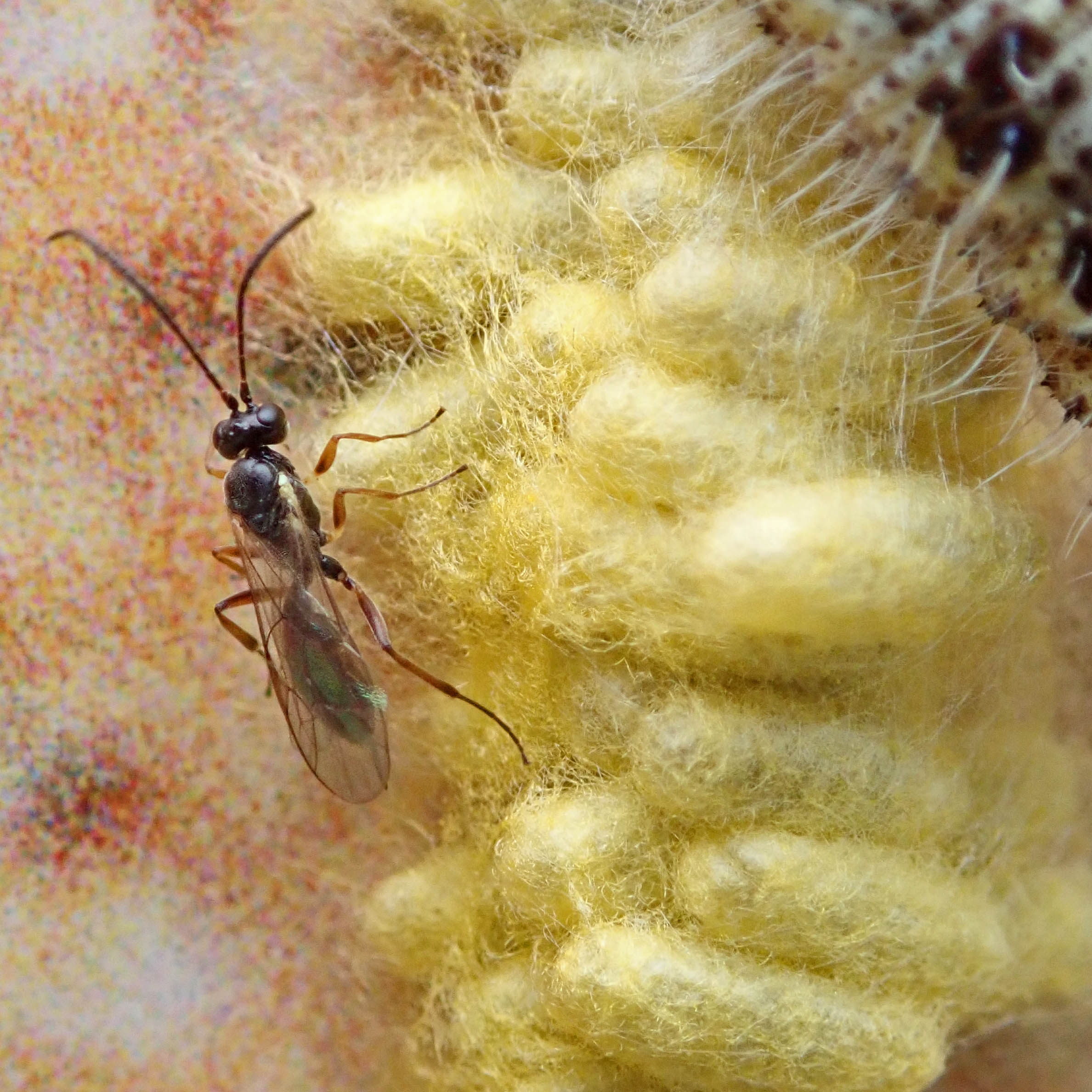
If this wasn’t gruesome enough for one morning’s finds, I then noticed a tiny wasp amongst the cocoons. At first, I thought it must be one of the Cotesia glomerata that had hatched, but no. When I checked at home later, a quick internet image search revealed that this did not resemble C. glomerata and, on Wikipedia, I found the information that C. glomerata is itself parasitised by a couple of other wasp species, Lysibia nana [it is listed as L. nanus in British taxonomic listings] and Gelis agilis. I’ve just been reading that the female G. agilis is wingless so I’m wondering if the wasp I saw is L. nanus. As this species is rarely recorded and there are no Welsh records, I’ve sent a query to the parasitic wasp expert at the Natural History Museum; I’ll update this post if/when I get an answer.

**UPDATE** This is the response I received from Dr Gavin Broad from the Natural History Museum: ‘You are correct, your wasps are most probably Lysibia nanus. There is a very similar species, Lysibia tenax, more rarely recorded but with much the same hosts. I don’t believe it is actually a separate species and L. nanus is certainly the usual suspect reared from Cotesia glomerata cocoons.’

Like Loading...
← Older posts
Newer posts →

About me

sconzani

sconzani

I'm a writer and photographer; researcher and blogger; birder and nature lover; countryside rambler and city strider; volunteer and biodiversity recorder.

View Full Profile →

Follow earthstar on WordPress.com

Enter your email address to follow this blog and receive notifications of new posts by email.

Recent blog posts

  • Nesting material April 28, 2026
  • Lifer: Box bug April 27, 2026
  • Peak Wild garlic April 26, 2026
  • First damsels of 2026 April 25, 2026
  • NFY: Green-veined white April 24, 2026

From the archives

COPYRIGHT

Unless otherwise acknowledged, the text and photographs on this blog are my own and are subject to international copyright. Nothing may be downloaded or copied without my permission.

Fellow Earth Stars!

  • Unknown's avatar
  • Unknown's avatar
  • Unknown's avatar
  • Unknown's avatar
  • Unknown's avatar
  • Unknown's avatar
  • Unknown's avatar
  • Unknown's avatar
  • Unknown's avatar
  • Unknown's avatar
  • Unknown's avatar
  • Unknown's avatar
  • Unknown's avatar
  • Unknown's avatar
  • Unknown's avatar
  • Unknown's avatar
  • Unknown's avatar
  • Unknown's avatar
  • Unknown's avatar
  • Unknown's avatar
  • Unknown's avatar
  • Unknown's avatar
  • Unknown's avatar
  • Unknown's avatar
  • Unknown's avatar
  • Unknown's avatar
  • Unknown's avatar
  • Unknown's avatar
  • Unknown's avatar
  • Unknown's avatar
  • Unknown's avatar
  • Unknown's avatar
  • Unknown's avatar
  • Unknown's avatar
  • Unknown's avatar
  • Unknown's avatar
  • Unknown's avatar
  • Unknown's avatar
  • Unknown's avatar
  • Unknown's avatar
  • Unknown's avatar
  • Unknown's avatar
  • Unknown's avatar
  • Unknown's avatar
  • Unknown's avatar
  • Unknown's avatar
  • Unknown's avatar
  • Unknown's avatar
  • Unknown's avatar
  • Unknown's avatar

Blog at WordPress.com.

Privacy & Cookies: This site uses cookies. By continuing to use this website, you agree to their use.
To find out more, including how to control cookies, see here: Cookie Policy
  • Subscribe Subscribed
    • earthstar
    • Join 642 other subscribers
    • Already have a WordPress.com account? Log in now.
    • earthstar
    • Subscribe Subscribed
    • Sign up
    • Log in
    • Report this content
    • View site in Reader
    • Manage subscriptions
    • Collapse this bar

Loading Comments...

You must be logged in to post a comment.

    %d