• ABOUT
  • BIRDING 2018
  • Birding 2019
  • BLOG POSTS
  • Butterflies 2018
  • Resources

earthstar

~ a celebration of nature

earthstar

Category Archives: autumn

The sea mouse

18 Thursday Sep 2025

Posted by sconzani in autumn, birds

≈ Leave a comment

Tags

birding, birdwatching, British birds, Calidris alpina, Dunlin, Ferrybridge birding

Having blogged twice already about my recent afternoon at Ferrybridge, between Weymouth and the Isle of Portland, it occurred to me to show you what it looks like. This photo was taken at the end of the couple of hours I spent there, by which time the tide was well out and the weather that was rolling in was looking quite ominous: time to beat a hasty retreat!

Today’s blog is about the third species I managed to get reasonably close to and spent quality time watching that afternoon, a cousin to the Sanderling and Knot, with which it shares the sandy shores and mud flats, the Dunlin (Calidris alpina).
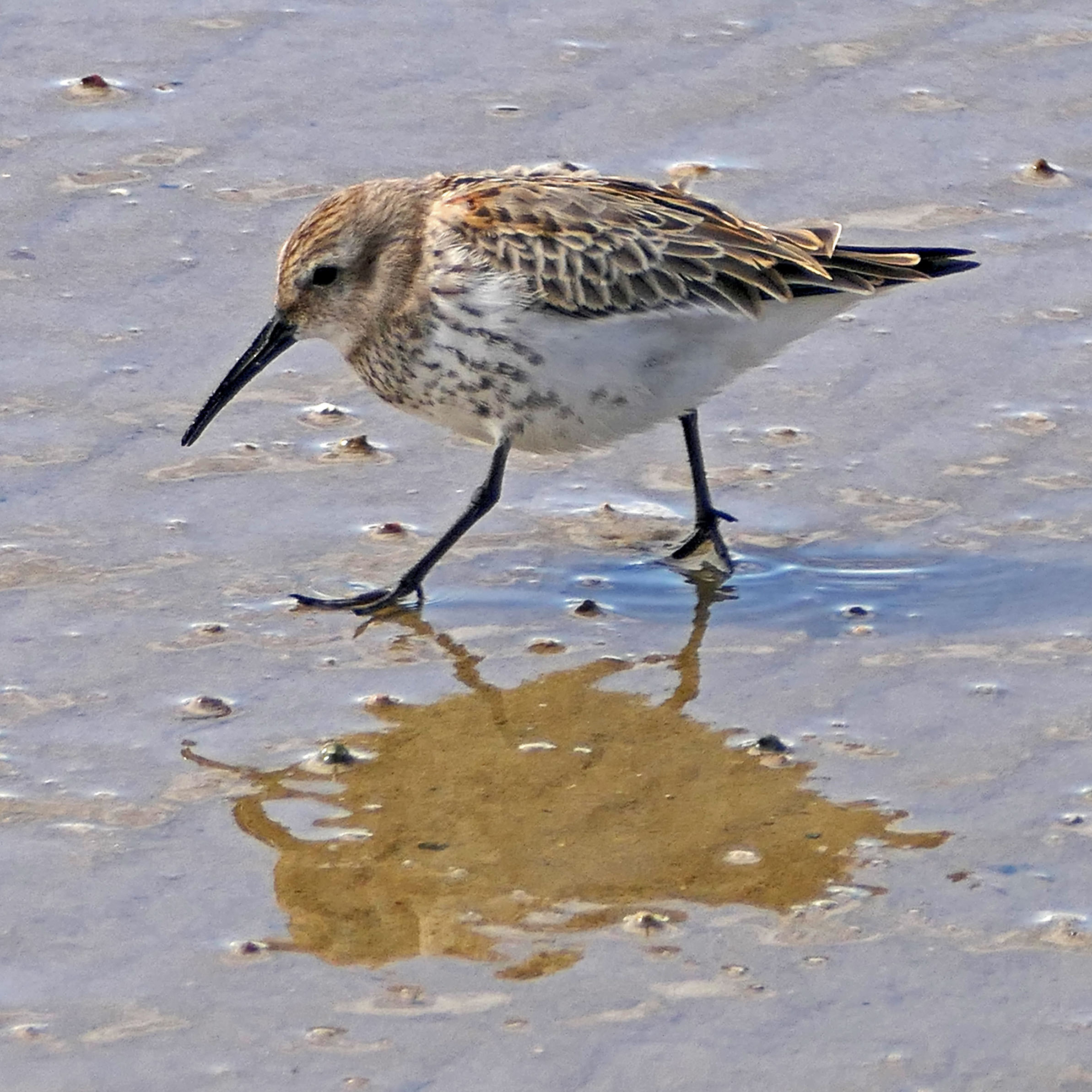
The Dunlin has some wonderfully evocative vernacular names, according to my Fauna Britannica: ebb cock (by the Shetlanders), pickerel (Scotland, in general), sandy (Northumberland), sand mouse (Westmorland), and sea mouse (Dumfries and Lancashire), amongst many others. Each name suggests an image of the bird’s habit of scurrying back and forth along the sandy shores as it forages for tiny sea creatures.
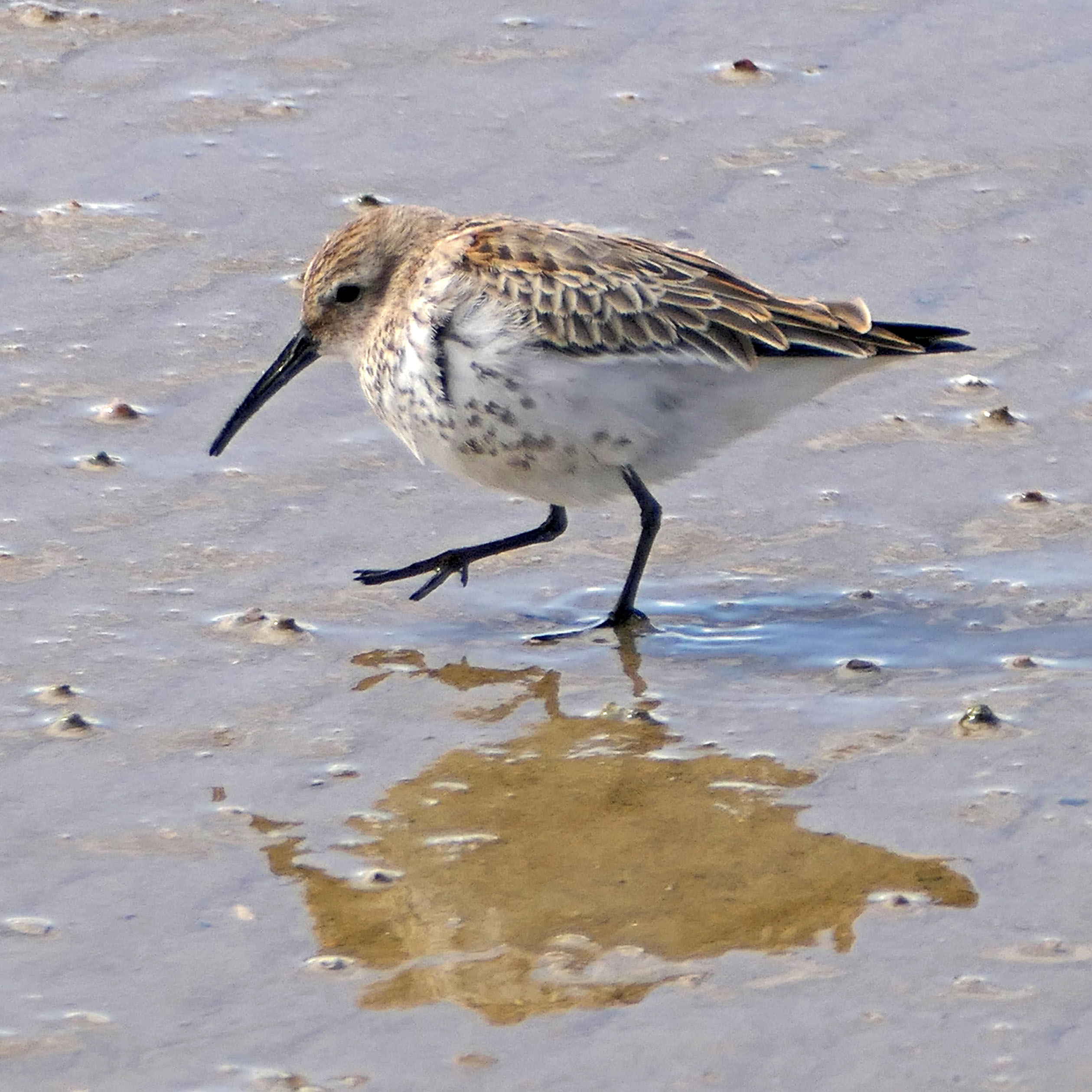
Luckily for me, there were several Dunlin and Ringed plover foraging along the top of the beach when I arrived, and I managed to find a spot, crouched in the lee of a shed out of the blasting wind and camouflaged by some scrubby vegetation where I could spend time watching these wonderful little waders going about their business.

Though the Dunlin seems common and ubiquitous around the British coastline, its numbers are in serious decline here, with the BTO reporting a 24% decline in the over-wintering population between 1997 and 2022. So, although the bird is listed as of ‘least concern’ internationally, here in Britain it is red-listed. It would be a tragedy to lose this sublime little sea mouse so let’s hope its population somehow manages to recover.

Like Loading...

King Canut’s favourite bird?

17 Wednesday Sep 2025

Posted by sconzani in autumn, birds

≈ Leave a comment

Tags

autumn migration, birding, birdwatching, British birds, Calidris canutus, Ferrybridge birding, Knot

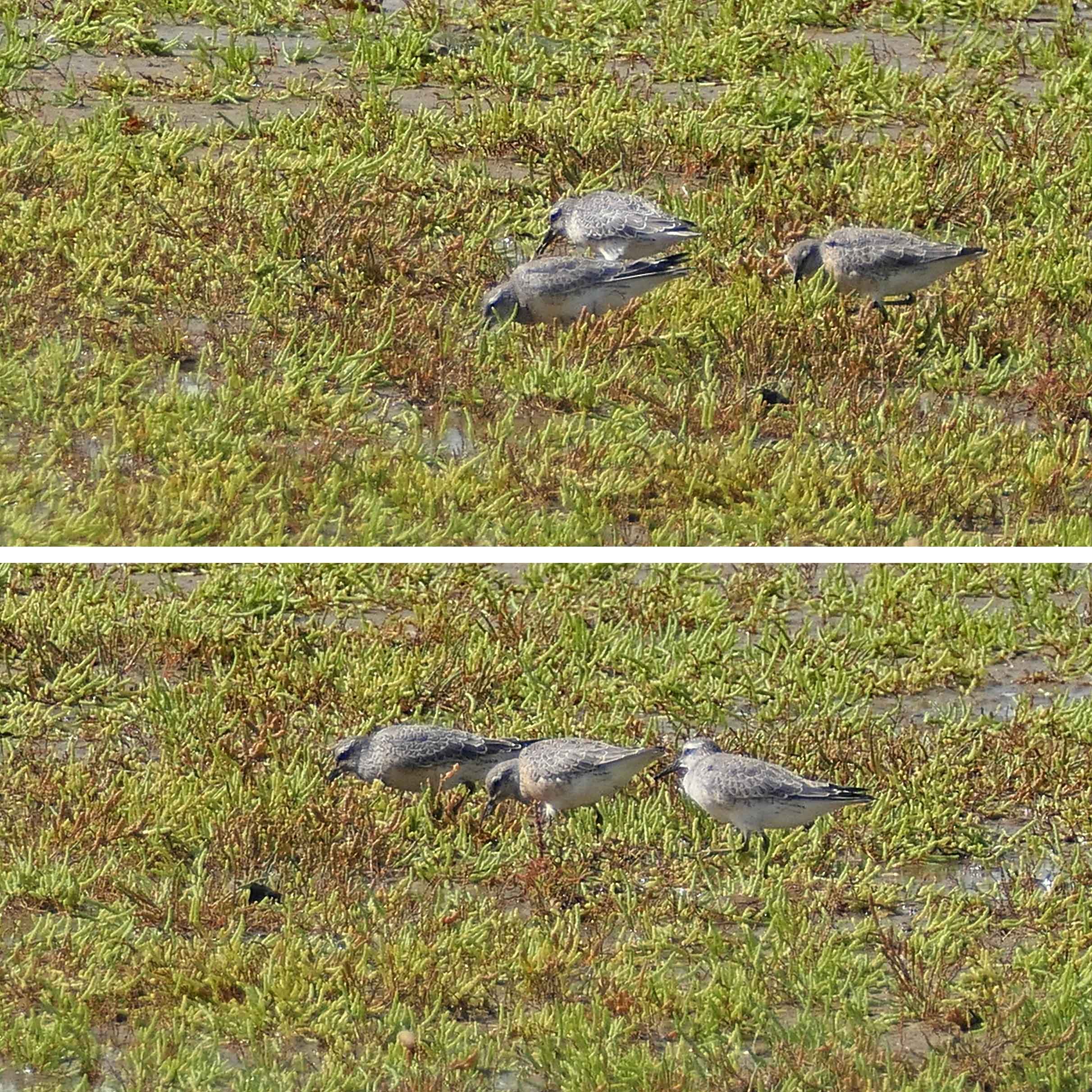
My afternoon being battered by the strong winds at Ferrybridge also provided several other nice bird sightings, including these Knot (Calidris canutus).

I was intrigued by the epithet canutus in the bird’s scientific name; fortunately, Stefan Buczacki provides the answer in Fauna Britannica:

The name ‘Knot’ imitates the rather low, grunt-like call and dates back to the fifteenth century … there is a poorly founded belief that the name ‘Knot’ has some connection with King Canut and that the Knots were his favourite birds (hence Calidris canutus), presumably on the basis that they behave much as he did, foolishly playing around the tide-line.

The Knot is a relatively large wading bird – you can see a size comparison with a Dunlin in my first photograph. Both birds belong to the genus Calidris, a long list of waders that look rather alike and all breed in the high Arctic. We are fortunate to enjoy their presence during the winter months, when large flocks often form around parts of the British coastline. You can read more about the Knot on the BTO website.

Like Loading...

Reddening Glasswort

14 Sunday Sep 2025

Posted by sconzani in autumn, plants, wildflowers

≈ Leave a comment

Tags

autumn colour, Glasswort, reddening plant, RSPB Lodmoor, Salicornia species, saltmarsh plants, seaside plants

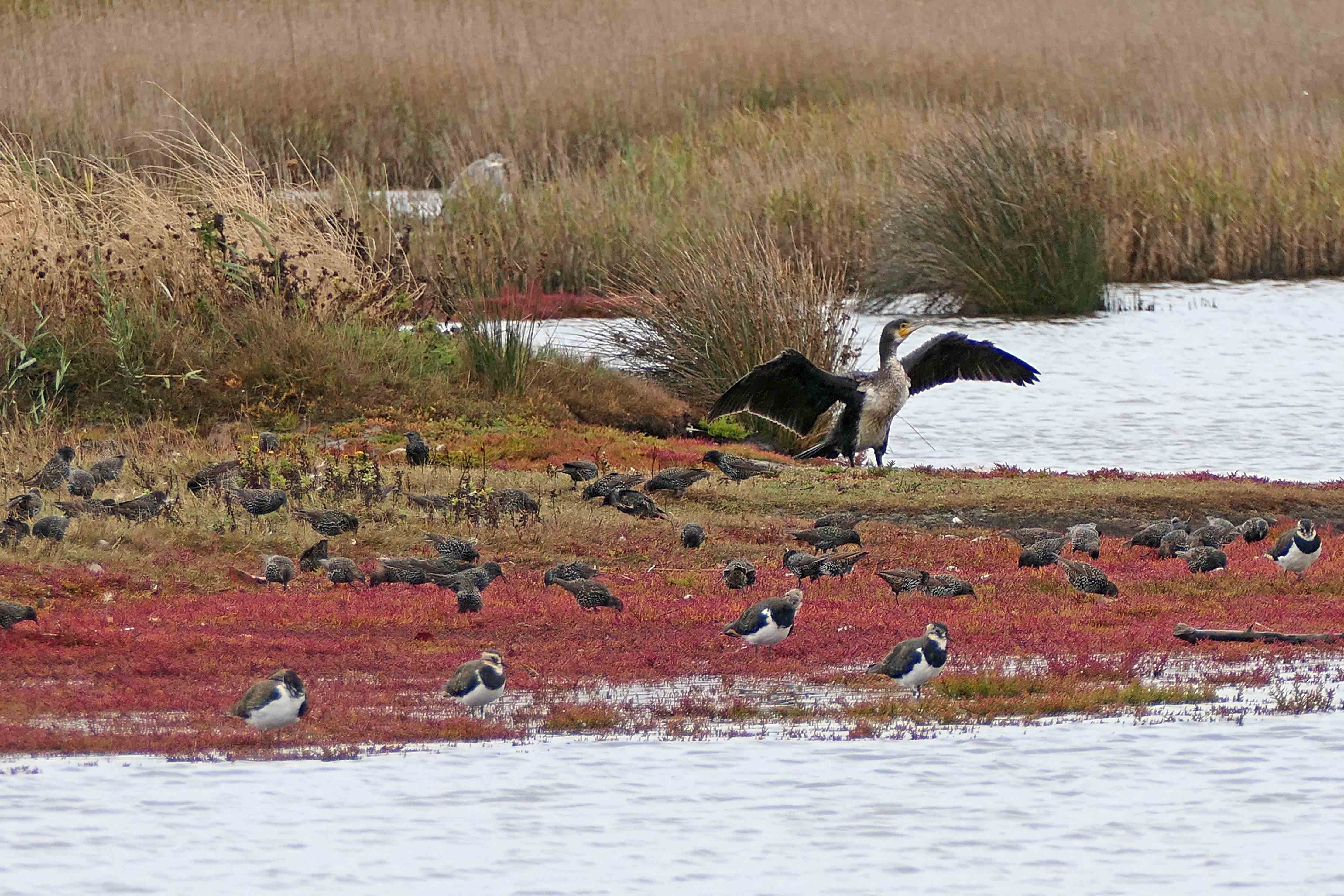
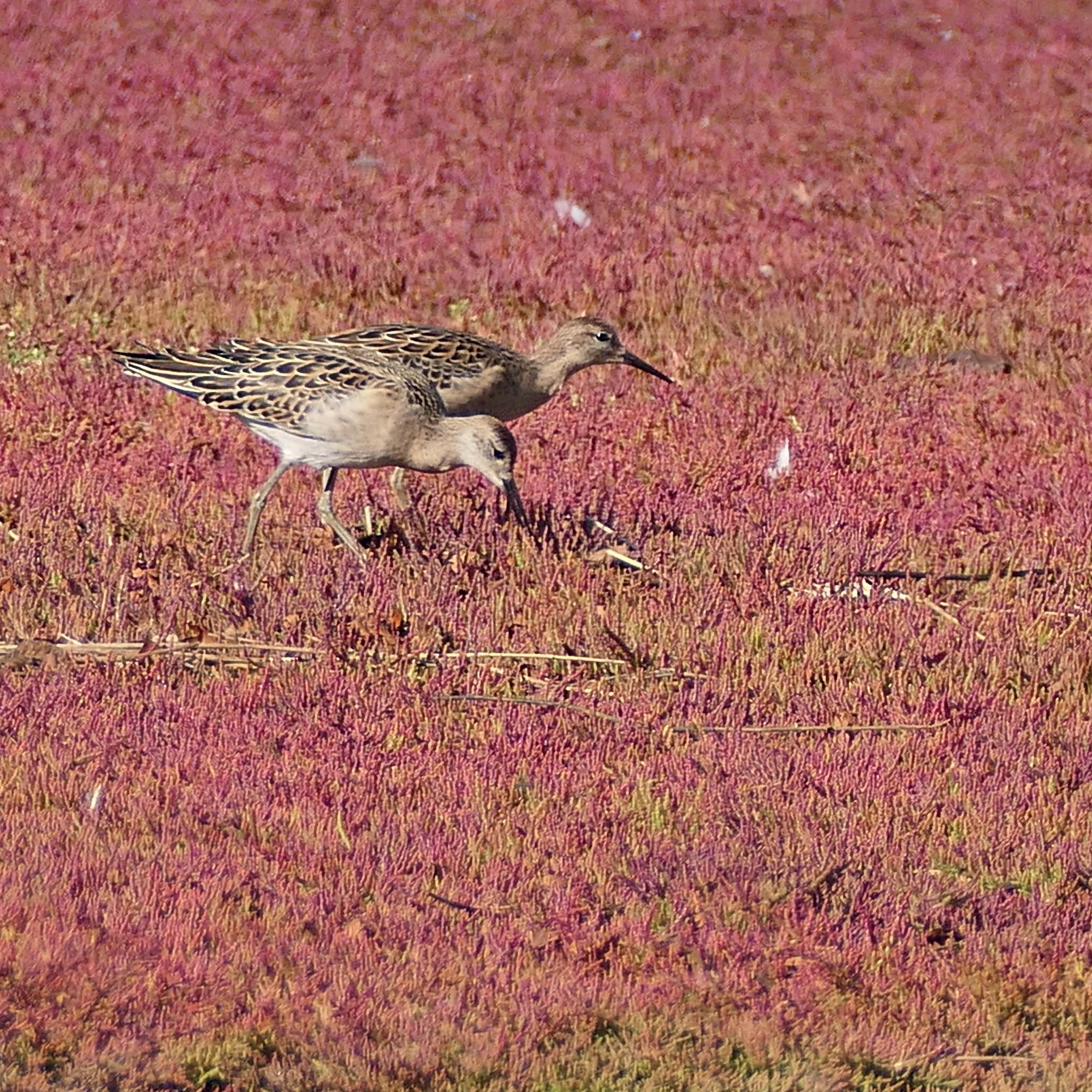
You may have noticed, in a couple of yesterday’s Ruff photos – as in the photo below (which includes Lapwings, Starlings, a Cormorant drying its wings, with a Grey heron lurking in the background) – the birds are moving around amongst a reddish-coloured plant.

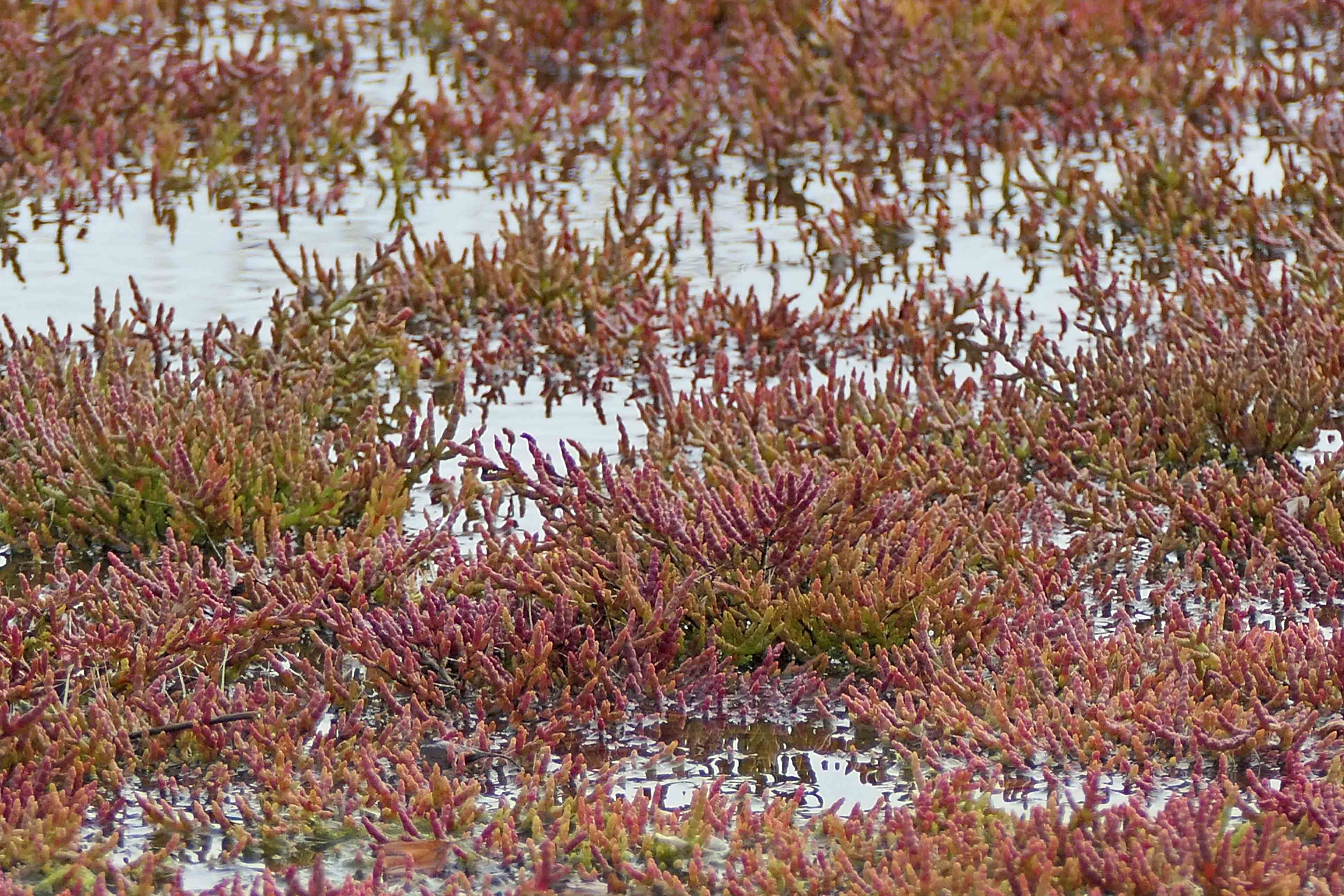
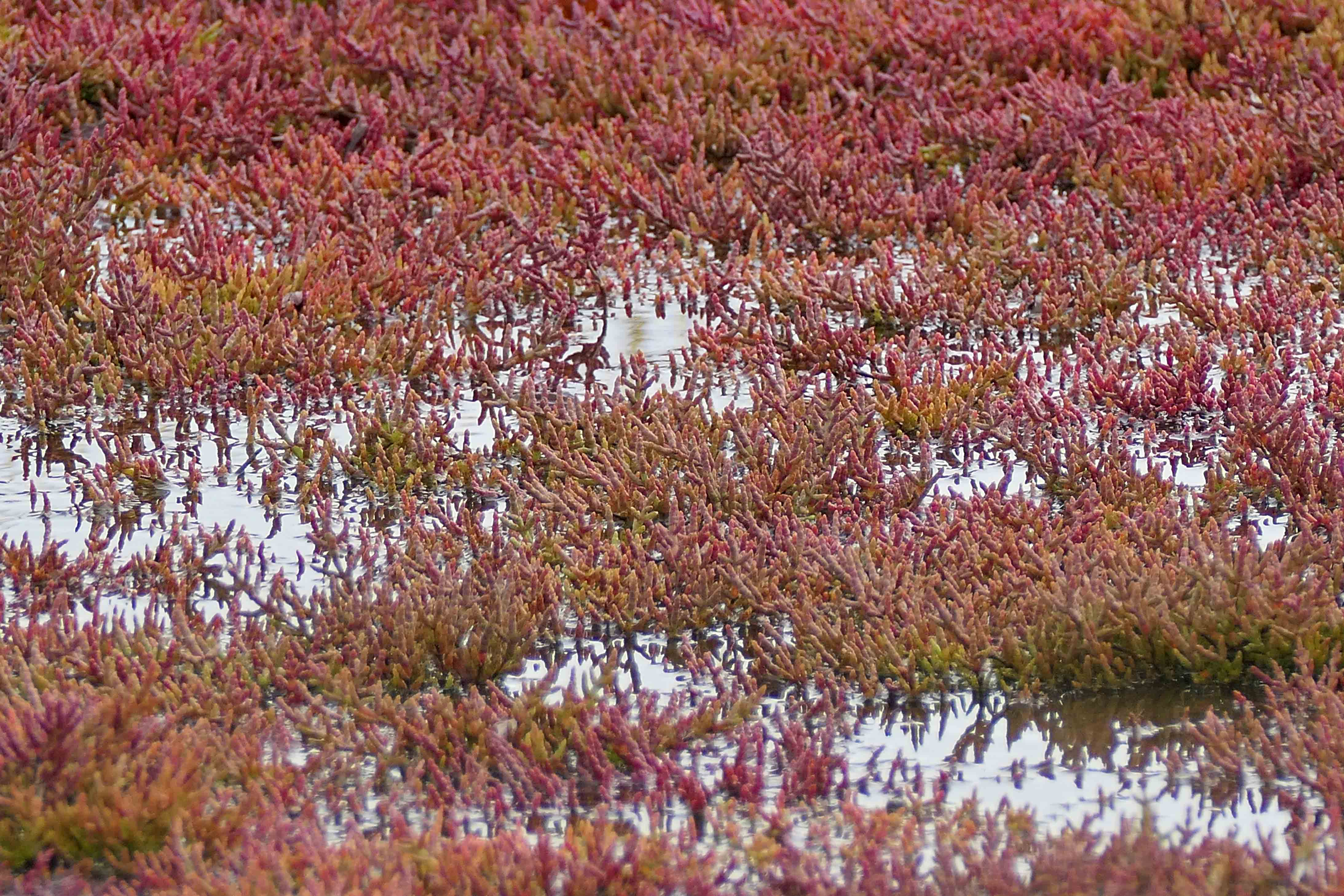
This is Glasswort, one of the Salicornia species, though I don’t which of several species this might be. For one thing, due to the watery environment in which Glassworts thrive, I couldn’t get close to any of the plants, but also these plants can be tricky to distinguish one from the other. If you see Glasswort and want to give it a try, the Wildflower Society website has a downloadable pdf ‘A Guide to the Identification of the Glassworts of the British Isles’.

The Glassworts are plants of seasides and saltmarshes, and are common all around the British coastline. Until this latest visit to RSPB Lodmoor, I hadn’t particularly noticed these plants but this time, as the season is changing from summer to autumn, the Glassworts begin to change colour, and, I think, look stunning. I’m sure the photographers amongst you will also appreciate what a wonderful backdrop this colour provides for images of the local birds.

Like Loading...

Ruffing it

13 Saturday Sep 2025

Posted by sconzani in autumn, birds

≈ Leave a comment

Tags

autumn migration, birding, birdwatching, British birds, female Ruff, Philomachus pugnax, Reeve, RSPB Lodmoor, Ruff

I’ve just returned from another few days on England’s south coast, in Weymouth and on the Isle of Portland, this time, due to its being migration season and the often inclement weather, mostly birding. And, despite the blasting westerly winds and the frequent heavy rain, it was wonderful!

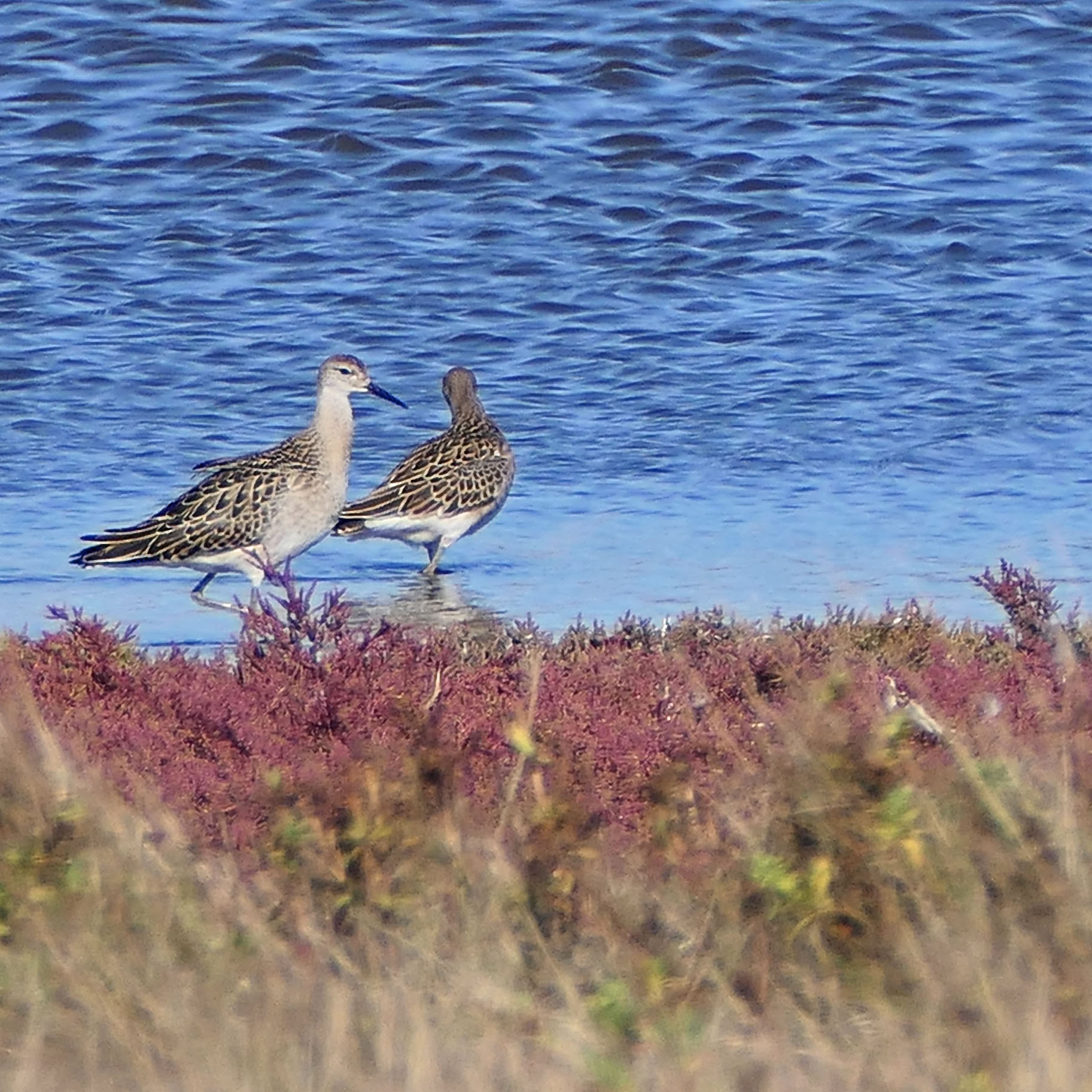
After arriving mid afternoon on Monday, I took myself on a walk – to stretch my old body after five hours’ train travel and to get some fresh air in my lungs – to RSPB Lodmoor. It’s such a convenient distance from Weymouth town centre and always has something to delight my birding senses. And Monday’s visit did not disappoint, providing my first sighting this year of Ruff (Philomachus pugnax).

The story of the Ruff in Britain is a sad one. My guide book recounts that Ruff became extinct as a breeding bird in Britain around 1850, though it managed to re-establish itself in East Anglia for a time in the 1960s. Now, few if any young are raised in Britain, with the bird’s main breeding grounds ranging from Scandinavia as far east as Siberia, and south as far as the Netherlands. Though some Ruff are present throughout the year in Britain, and several hundred over-winter here, most are seen during autumn migration when the birds pass through on their way to Africa, some flying as far as South Africa.

The Ruff is red-listed in Britain and is globally threatened, as its population has declined dramatically and its breeding and non-breeding ranges have also declined. The two birds I saw are female (though the species name is Ruff, the male bird is known as Ruff due to its extraordinary breeding plumage, while the female is known as Reeve). I felt very privileged to enjoy reasonably close sightings of these large waders and spent quite a lot of time watching them feeding up for their long journey south.

Like Loading...

Five in one day

20 Wednesday Aug 2025

Posted by sconzani in autumn, birds

≈ 2 Comments

Tags

autumn bird migration, autumn migration, bird migration, birding, birdwatching, British birds, Spotted flycatcher

We may still be complaining about – or enjoying, if you like the hot temperatures – this summer’s heatwaves but, for our local birds, autumn migration is already well underway. I haven’t seen a Swift for a couple of weeks, most of the Sand martins have already left, and a lot of the local House martin nests are empty now too.

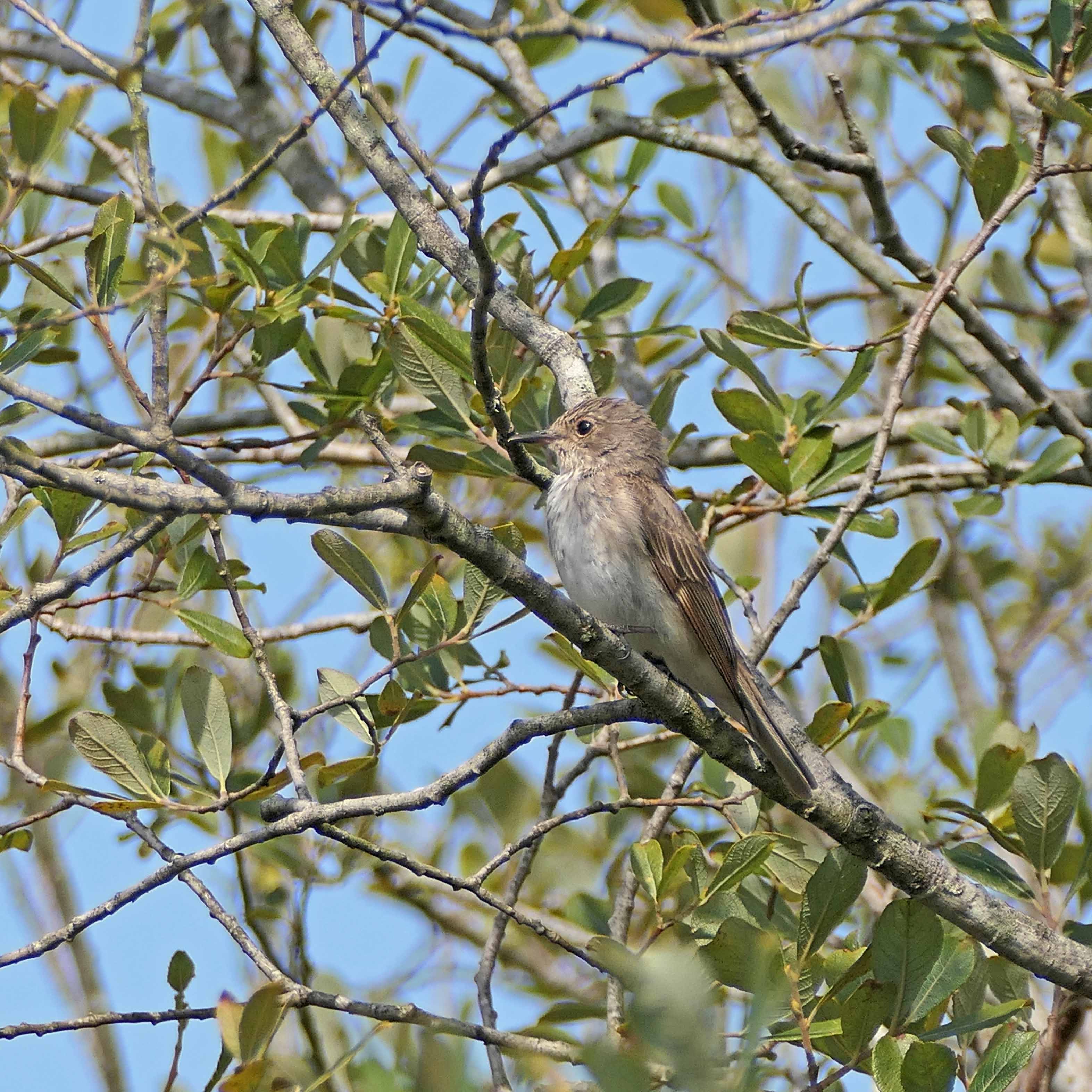
The birds that nest further north of my locale have also begun to head south; last Monday, 11 August, I saw my first Redstart of the season and my first Spotted flycatcher. And, amazingly, my new garden held a Spotted flycatcher the following day; I had the joy of watching it from my flat window for at least a couple of hours as it was flitting out and back from the trees and shrubs.

My best day of watching the migration in action so far this season was last Friday, the 15th, when I saw not one, not two, but a terrific total of five Spotted flycatchers during my walk around the paddocks at Cosmeston Lakes Country Park. This is a magical time of year for those of us who love birds, as you neither know which species, nor how many birds, you might see, so there’s always a sense of expectation and excitement every time you go for a walk. I hope all of you get to experience these magical migration moments as well.

Like Loading...

Ballerinas and friends

22 Friday Nov 2024

Posted by sconzani in autumn, fungi

≈ Leave a comment

Tags

Ballerina waxcap, British fungi, Cathays Cemetery, Clavaria fumosa, Clavulinopsis corniculata, Cuphophyllus virgineus, Meadow coral, Pink waxcap, Porpolomopsis calyptriformis, Smoky Spindles, Snowy waxcap

I do like to take my friends walking in all the best places so, when I caught up with my friend Sharon last week (Hi, Shar!), part of our time was spent wandering around Cardiff’s Cathays Cemetery. This might sound a bit morbid but the cemetery is one of the best places I know for fungi. Here are some of the delights we found …

241122 ballerina waxcap

My first Pink (Ballerina) waxcaps (Porpolomopsis calyptriformis) of the year

241122 snowy waxcap

And also my first Snowy waxcaps (Cuphophyllus virgineus)

241122 smoky spindles

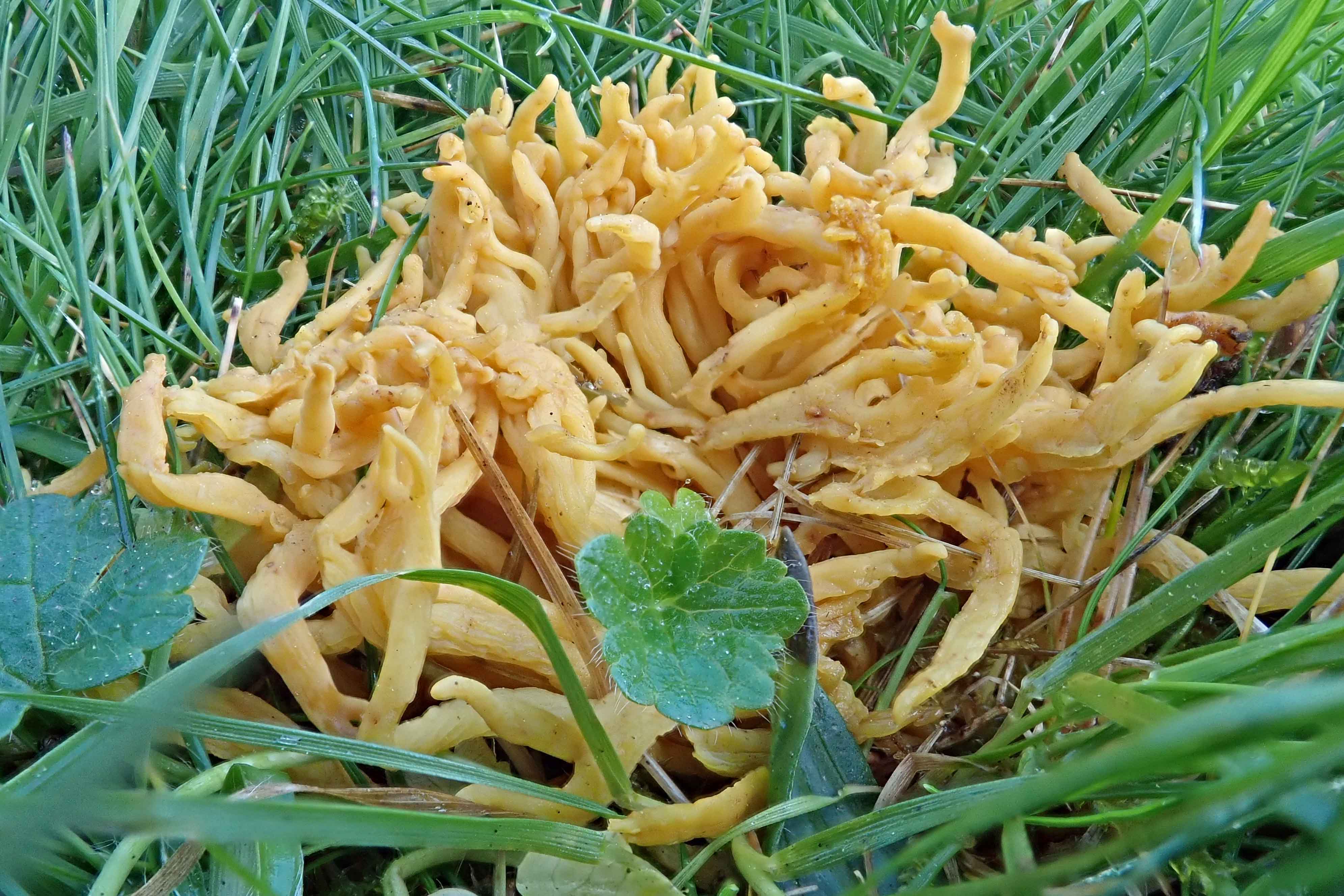
There were several clumps of Smoky spindles (Clavaria fumosa), most just past their best

241122 meadow coral

And this clump of Meadow coral (Clavulinopsis corniculata) was a lovely find.

Like Loading...

Winter 16 wildflowers

20 Wednesday Nov 2024

Posted by sconzani in autumn, wildflowers

≈ Leave a comment

Tags

British wildflowers, wildflowers in bloom

Those of us who love wildflowers are now checking each week to see which wildflowers we can find that are still in bloom. These are a selection of those I found when wandering around my local area last Sunday. I thought they’d make a nice cheery mid-week post, especially as the temperatures have now plunged towards winter levels and flower numbers will no doubt diminish accordingly.

241120 winter16

My image shows Bramble, Bush vetch, Creeping buttercup, Creeping thistle, Daisy, Dandelion, Field madder, Hedge woundwort, Herb Robert, Knapweed, Mayweed, Nipplewort, Pineapple weed, Ragwort, Self heal, and Sun spurge.

Like Loading...

Autumn in Bute Park

17 Sunday Nov 2024

Posted by sconzani in autumn, leaves, trees

≈ 2 Comments

Tags

autumn colour, autumn in Bute Park, autumn leaves, autumn trees, Bute Park

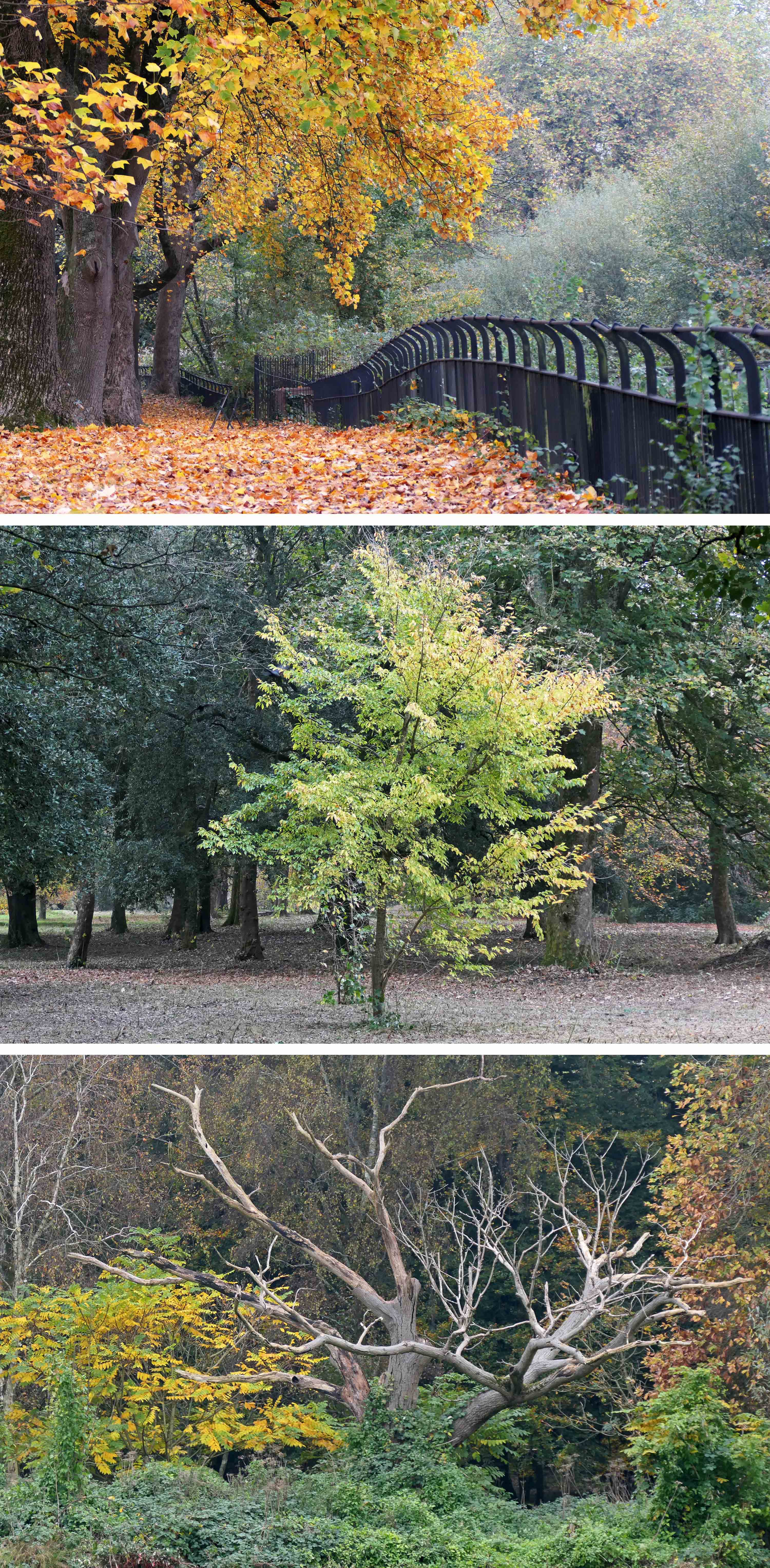
As mentioned in yesterday’s post, I recently enjoyed a long meander around Bute Park, in Cardiff, delighting in the kaleidoscope of autumn colours.

241117 autumn in bute park (1)241117 autumn in bute park (2)

The 130-acre park is part parkland, part playing fields, part woodland, and part landscaped garden, including an arboretum full of spectacular trees from around the world, so my photos include not only native but also exotic trees.

241117 autumn in bute park (3)241117 autumn in bute park (4)

Like Loading...

Lucky last?

14 Thursday Nov 2024

Posted by sconzani in autumn, insects

≈ 2 Comments

Tags

autumn butterflies, autumn colour, British butterflies, butterfly, Red Admiral

Is this the last butterfly I’ll see in 2024? Quite possibly, as the overnight temperatures have now started to fall to single digits. Still, Red admirals are very resilient and, though they should have migrated south by now, I’m seeing reports of the odd one, like this beauty I spotted in a local field on Tuesday, still flying when the sun occasionally appears.

241114 red admiral

Like Loading...

Leafmines: Ectoedemia argyropeza

11 Monday Nov 2024

Posted by sconzani in autumn, insects, leaves, trees

≈ Leave a comment

Tags

Aspen, British leafmines, Ectoedemia argyropeza, leaf-mining moth larvae, leafmines on Aspen

The new leafmines are coming thick and fast this year, not because my skills are improving but rather because I’m following the right people on social media and take my inspiration for searching from what they’re finding.

241111 Ectoedemia argyropeza (1)

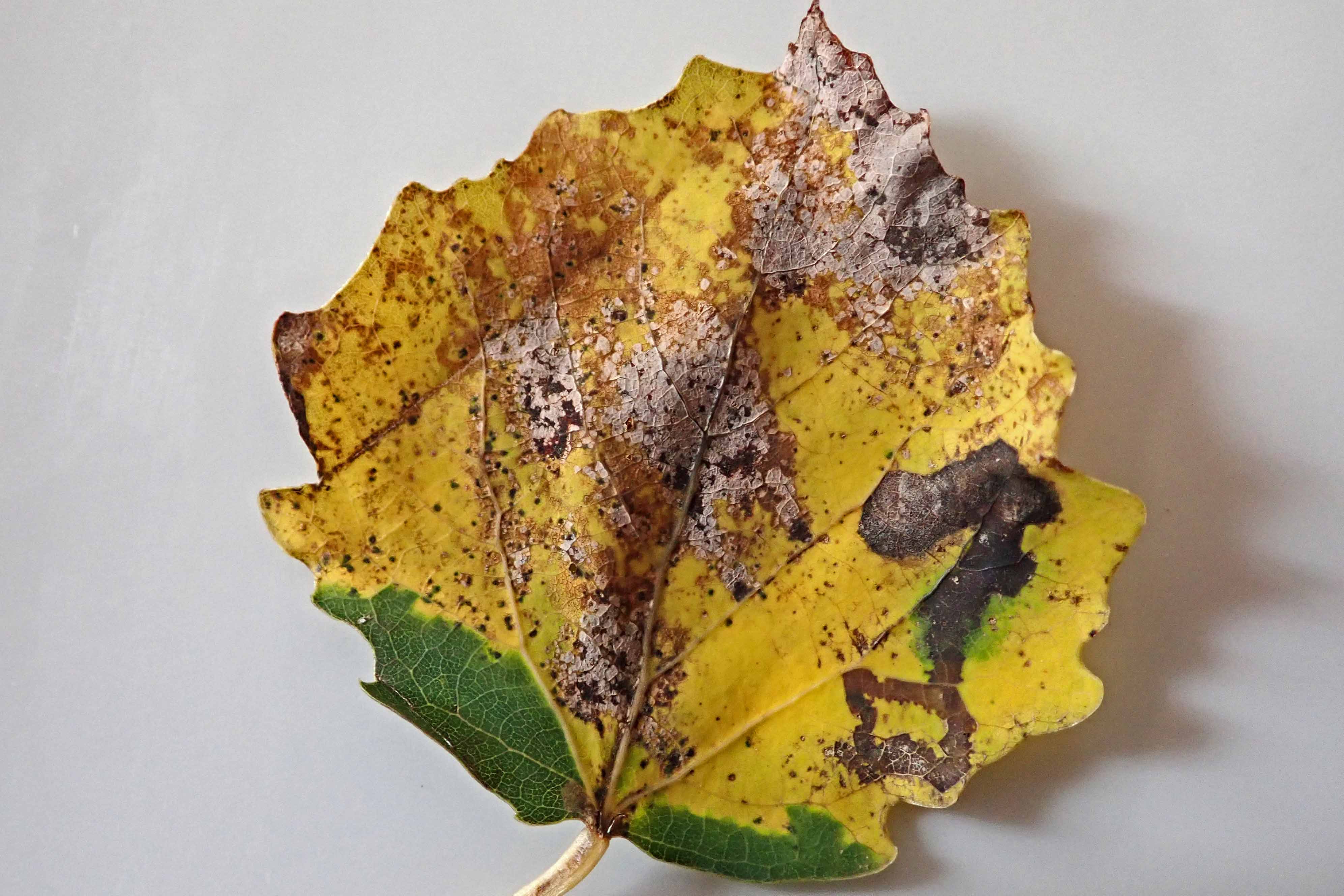
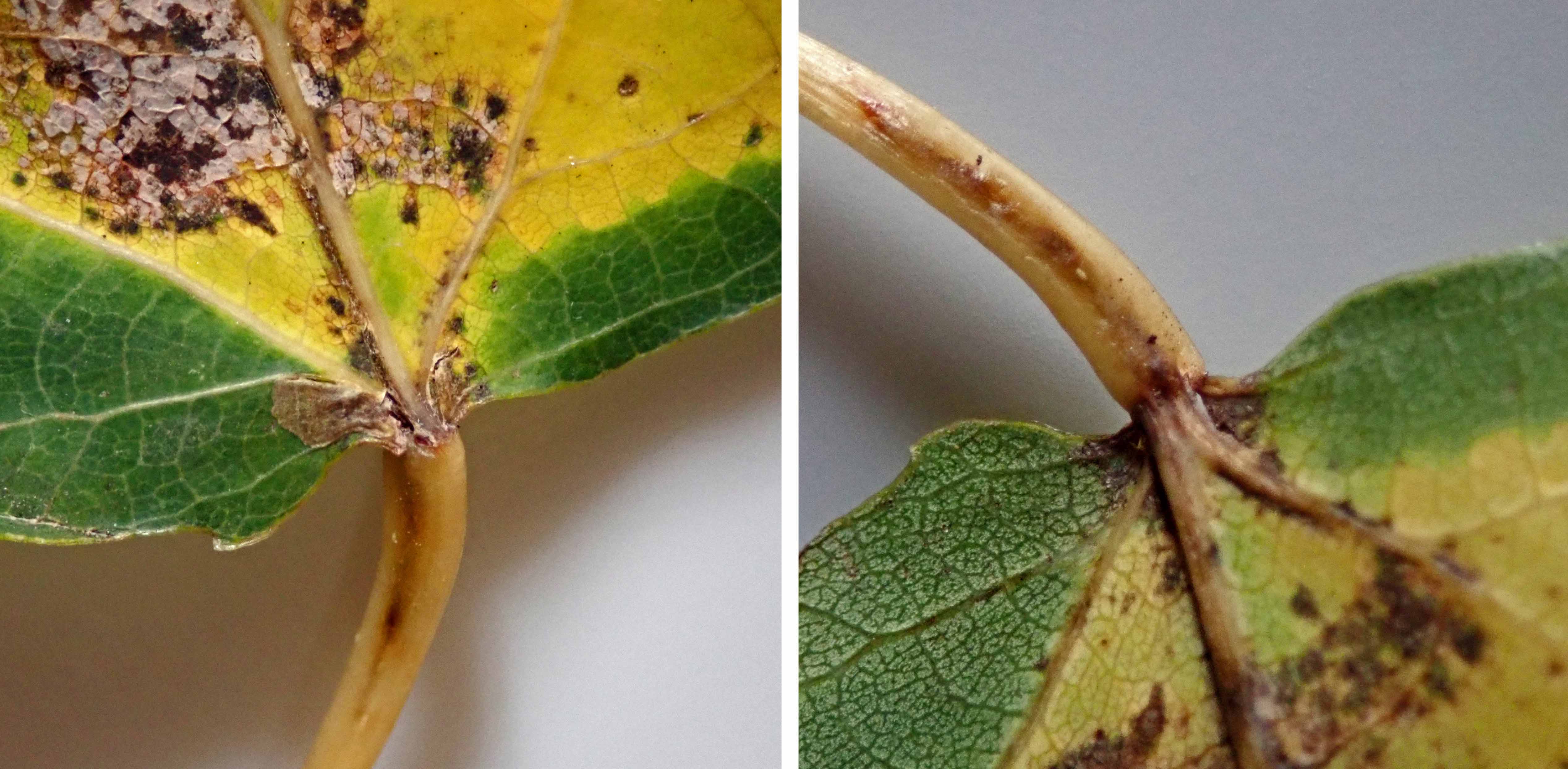
Today’s leafmines, made by the larvae of the moth Ectoedemia argyropeza, can be found on Aspen (Populus tremula) between July and November. They are easier to spot later in the season when the leaves turn brown and begin to fall as the mines cause the surrounding leaf area to remain green – the so-called ‘green islands’ that some moth species have the ability to create through the chemicals they secrete, which allows them to continue feeding in their portion of the leaf. The other thing to look for with these miners is the brown mark in the leaf petiole, where the mine originated.

241111 Ectoedemia argyropeza (2)

Though I don’t often bring home the mines I find, in this instance I had been unable to get good photos along the busy road so brought home one leaf. I temporarily forgot about the leaf for a couple of days and , when I opened the little pot it was in, found the larva had left the mine so I am also able to show you what it looks like, below.

241111 Ectoedemia argyropeza (3)

Like Loading...
← Older posts
Newer posts →

About me

sconzani

sconzani

I'm a writer and photographer; researcher and blogger; birder and nature lover; countryside rambler and city strider; volunteer and biodiversity recorder.

View Full Profile →

Follow earthstar on WordPress.com

Enter your email address to follow this blog and receive notifications of new posts by email.

Recent blog posts

  • First large spider February 20, 2026
  • Our celebrity Redshank February 19, 2026
  • My first moth of the year February 18, 2026
  • Three Common sandpipers February 17, 2026
  • Beetle: Athous bicolor February 16, 2026

From the archives

COPYRIGHT

Unless otherwise acknowledged, the text and photographs on this blog are my own and are subject to international copyright. Nothing may be downloaded or copied without my permission.

Fellow Earth Stars!

  • Unknown's avatar
  • Unknown's avatar
  • Unknown's avatar
  • Unknown's avatar
  • Unknown's avatar
  • Unknown's avatar
  • Unknown's avatar
  • Unknown's avatar
  • Unknown's avatar
  • Unknown's avatar
  • Unknown's avatar
  • Unknown's avatar
  • Unknown's avatar
  • Unknown's avatar
  • Unknown's avatar
  • Unknown's avatar
  • Unknown's avatar
  • Unknown's avatar
  • Unknown's avatar
  • Unknown's avatar
  • Unknown's avatar
  • Unknown's avatar
  • Unknown's avatar
  • Unknown's avatar
  • Unknown's avatar
  • Unknown's avatar
  • Unknown's avatar
  • Unknown's avatar
  • Unknown's avatar
  • Unknown's avatar
  • Unknown's avatar
  • Unknown's avatar
  • Unknown's avatar
  • Unknown's avatar
  • Unknown's avatar
  • Unknown's avatar
  • Unknown's avatar
  • Unknown's avatar
  • Unknown's avatar
  • Unknown's avatar
  • Unknown's avatar
  • Unknown's avatar
  • Unknown's avatar
  • Unknown's avatar
  • Unknown's avatar
  • Unknown's avatar
  • Unknown's avatar
  • Unknown's avatar
  • Unknown's avatar
  • Unknown's avatar

Blog at WordPress.com.

Privacy & Cookies: This site uses cookies. By continuing to use this website, you agree to their use.
To find out more, including how to control cookies, see here: Cookie Policy
  • Subscribe Subscribed
    • earthstar
    • Join 670 other subscribers
    • Already have a WordPress.com account? Log in now.
    • earthstar
    • Subscribe Subscribed
    • Sign up
    • Log in
    • Report this content
    • View site in Reader
    • Manage subscriptions
    • Collapse this bar
 

Loading Comments...
 

You must be logged in to post a comment.

    %d