• ABOUT
  • BIRDING 2018
  • Birding 2019
  • BLOG POSTS
  • Butterflies 2018
  • Resources

earthstar

~ a celebration of nature

earthstar

Category Archives: insects

An Ivy bee mating ball

24 Sunday Sep 2017

Posted by sconzani in insects, nature, plants

≈ 5 Comments

Tags

bee mating frenzy, bees, bees on ivy, British bees, Colletes hederae, Ivy bee, Ivy bee mating ball, ivy flowers

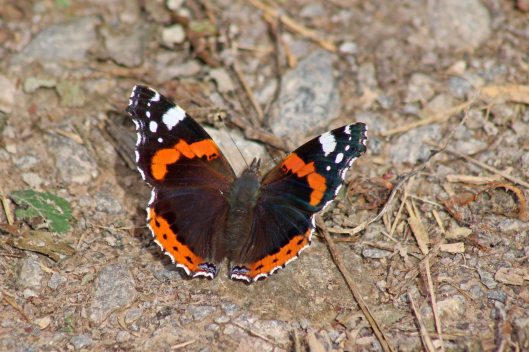
Some days are just magical! I went out looking for birds – instead I got mobbed by Red admiral butterflies while walking along the coastal path, which made me grin like a Cheshire cat, and then I found these little buzzers.

170924 Ivy bees Colletes hederae (4)
170924 Ivy bees Colletes hederae (5)

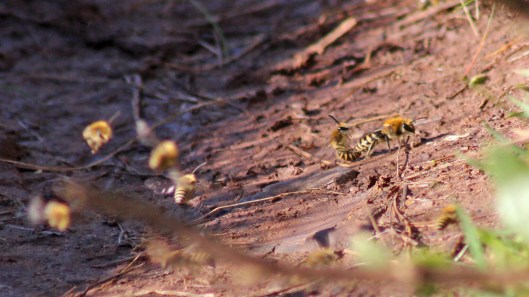
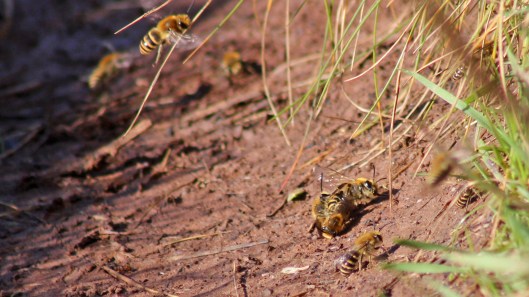
They’re Ivy bees (Colletes hederae) and, as their name suggests, they feed on ivy flowers so they don’t appear until early autumn, when most other bees are winding down activities for the year. With an orange woolly thorax and orange-and-black striped abdomen, these bees are easy to identify, though Colletes hederae was only described as a separate species back in 1993 (before that it was confused with two other species of Colletes). Ivy bees only arrived in Britain from Europe in 2001 but have since gradually spread across southern England and in to south Wales: the extent of their spread is being tracked by BWARS, the Bees, Wasps and Ants Recording Society, so please do log your sightings, either on their website here or with your local records centre.

170924 Ivy bees Colletes hederae (6)
170924 Ivy bees Colletes hederae (7)

I had seen my first Ivy bees for the year the previous week but this new sighting was more special because it was a colony. Though the Ivy bee is a solitary bee (it doesn’t form a hive), a group of females will often excavate their individual burrows and underground chambers together in a sandy bank or similar area of loose earth. And, as the BWARS website explains, male bees often wait by the burrows for females to return and then pounce on them. When the other males spot what’s happening, they also want a piece of the action, jumping on the mating couple to form a writhing mass or mating ball. I was lucky enough to see one of these happen, as shown below.
170924 Ivy bees Colletes hederae (1)170924 Ivy bees Colletes hederae (2)170924 Ivy bees Colletes hederae (3)

Like Loading...

Autumn migration: Red admiral

21 Thursday Sep 2017

Posted by sconzani in insects, nature

≈ 2 Comments

Tags

autumn migration, British butterflies, butterflies, butterflies on migration, butterfly, migrating butterflies, Red Admirable, Red Admiral

170921 Red admiral (3)
170921 Red admiral (1)

During my walk along the coastal path near Penarth earlier this week, I saw more than 20 Red admiral butterflies. Now, it may be that they had gathered in such large numbers in that particular location because the ivy flowers had recently opened and they fancied drinking deeply of their nectar (as did a huge number of bees and hoverflies) but it may also be that they were heading south on their autumn migration to southern Europe and north Africa.

170921 Red admiral (4)

The Red admiral (Vanessa atalanta) was once known as the Red admirable – a bit of a mouthful, which is probably why the name changed – and has a surprisingly ominous history. In Bugs Britannica Richard Mabey reviews the evidence, in various texts and old paintings, and concludes that the Red admiral was once thought to represent sin or temptation:

The flickering band of scarlet on the butterfly’s forewings, vivid against a dark, smoky background, suggests the flames of a smithy – hence its French name, le Vulcain, after Vulcan, the blacksmith of the Gods. But, to Christians, it also suggested the flames of Hell … This surprisingly hellish image of the Red admiral was gradually forgotten during the Enlightenment, when artists started to draw butterflies for their own sake. But perhaps the story of a ‘red butterfly’ said to have been hunted in the north of England and the Borders as a witch is an echo of a previous, more sinister characterisation.

How anyone could imagine something as beautiful as this harmless butterfly could be so malevolent is beyond me!

170921 Red admiral (2)

Like Loading...

Shaped like a fallen leaf

19 Tuesday Sep 2017

Posted by sconzani in insects, nature

≈ 5 Comments

Tags

British butterflies, butterflies, butterflies that hibernate, butterfly, Comma, Comma butterfly, Polygonia c-album

170919 Comma (1)

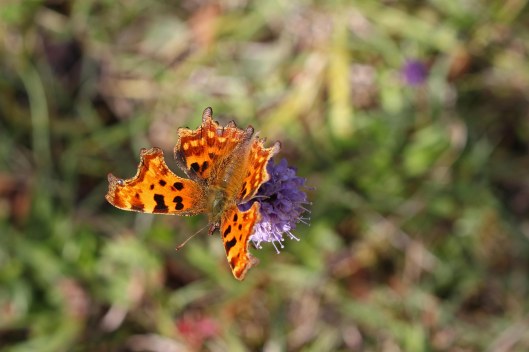
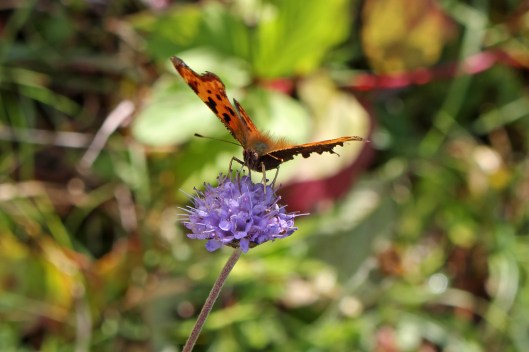
In Fauna Britannica, Stefan Buczacki describes this butterfly’s ragged outline as being the ‘shape of a fallen leaf’ and its colours, too, are quite autumnal. This is the most grammatically correct of Britain’s butterflies, the Comma, Polygonia c-album.

170919 Comma (2)170919 Comma (3)

Though I have no personal experience of this, the Comma is, apparently, one of the three butterflies most likely to be found hibernating in sheds and outhouses – the other two are the Small tortoiseshell and the Peacock. Adult Commas can usually be seen flying between March and September so maybe these ones I’ve seen recently were having their last feeds before looking for a cosy spot to snooze away the cold months of winter. If I had a shed, they’d be most welcome.

170919 Comma (4)

Like Loading...

Oak galls: ram’s-horns and silk buttons

18 Monday Sep 2017

Posted by sconzani in insects, nature, trees

≈ 12 Comments

Tags

Andricus aries, gall wasps, galls on oak trees, Neuroterus numismalis, oak galls, oak tree, Ram’s-horn gall wasp, Silk button gall wasp

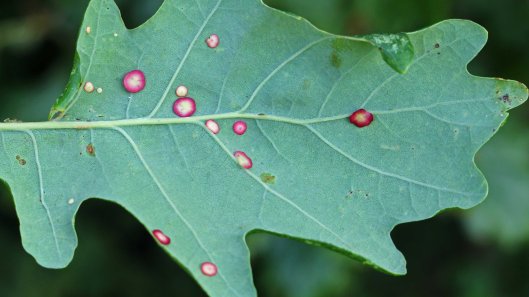
I can’t resist just one more post about oak galls, because I’ve just this week found one that’s not commonly recorded. So, today we have one that’s uncommon and one that’s very common. Let’s start with the former.

First identified in eastern Europe in 1859, the Ram’s-horn gall wasp, Andricus aries, has slowly been heading westwards and finally reached Britain in 1997. Since that first sighting in Berkshire, it has spread over much of southern England and into Wales. Though there are only a few records in the Aderyn database of Welsh biological records, two of my friends have also found Ram’s-horn galls in the past week so I suspect it’s more common that records suggest.

170918 Andricus aries Ramshorn gall wasp on oak (1)
170918 Andricus aries Ramshorn gall wasp on oak (2)
170918 Andricus aries Ramshorn gall wasp on oak (3)

Like other gall-inducing wasps, Andricus aries lays its eggs on various species of oak and its larvae cause the oak to produce a gall, in this case with an elongated, sometimes spiralling shape, hence aries and its common name Ram’s-horn. Not much is yet known about this wasp, so if you see the gall, please do record it.

170918 Neuroterus numismalis Silk button gall wasp (3)

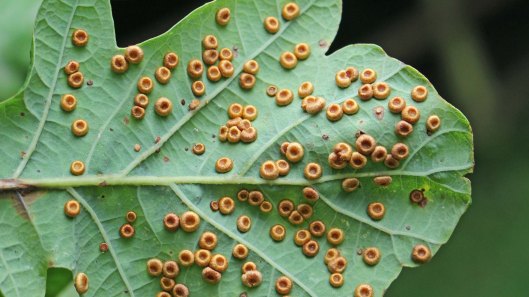
My second gall today is one many people will have seen, I’m sure, as its beautifully crafted silk-like button-shaped galls are very common on the undersides of oak leaves during the summer months. This gall contains the agamic generation (females needing no males to reproduce) of the Silk button gall wasp, Neuroterus numismalis. The galls fall to the ground in autumn and the larvae within pupate over the winter months. When the all-female wasps emerge in springtime, they lay their eggs on the edges of oak leaves and on the male catkins, where their larvae cause a different blister-shaped gall – that’s another one for me to seek out next spring. It is the female and male wasps of this second, sexual generation produced in the Blister gall that go on to mate and lay the eggs that result in the silk buttons. And so the cycle continues …

170918 Neuroterus numismalis Silk button gall wasp (1)
170918 Neuroterus numismalis Silk button gall wasp (2)
Like Loading...

Hello, hello, hello!

17 Sunday Sep 2017

Posted by sconzani in insects, molluscs, nature

≈ 3 Comments

Tags

critters say hello, slug, Speckled wood, Swollen-thighed beetle

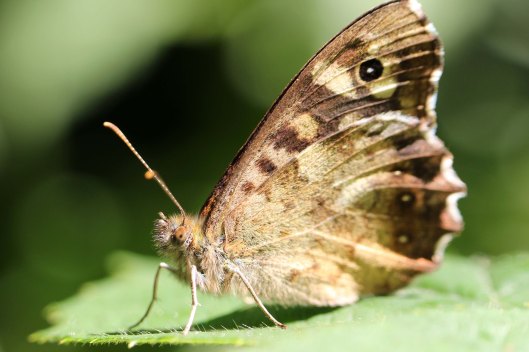
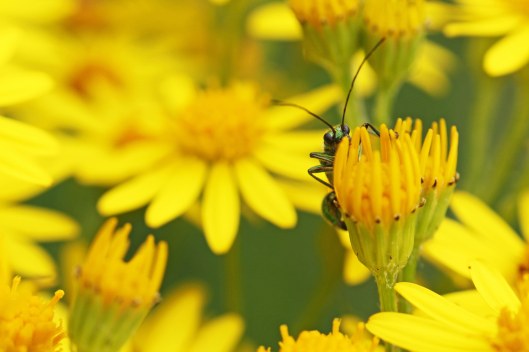
The critters say hello!

170917 Hello from a slug170917 Hello from a Speckled wood170917 Hello from a Swollen-thighed beetle

Like Loading...

What’s on the scabious?

16 Saturday Sep 2017

Posted by sconzani in flowers, insects, nature, wildflowers

≈ 6 Comments

Tags

bumblebee, Comma, Devil's-bit scabious, hoverflies, insects on scabious, scabious, Six-spot burnet, Small tortoiseshell, Small white

Perhaps it would be easier to ask ‘What’s not on the scabious?’ because it seems that almost every type of fly, bee, butterfly and beetle loves this plant, though that may also be because the Devil’s-bit scabious flowers in late summer – early autumn, when most wildflowers have finished flowering, and so it provides a last delicious taste of summer’s sweetness.

170916 6-spot burnet
170916 beetle
170916 Bumble bee
170916 comma
170916 Common carder & hoverfly
170916 helophilus pendulus
170916 Meadow brown
170916 Melanostoma scalare
170916 Sericomyia silentis
170916 Small tortoiseshell
170916 Small white
170916 unidentified bee
170916 unidentified hoverfly (2)
170916 unidentified hoverfly (3)
170916 unidentified hoverfly (4)
170916 unidentified hoverfly (5)
170916 unidentified hoverfly
170916 Volucella zonaria
Like Loading...

Small tortoiseshells

13 Wednesday Sep 2017

Posted by sconzani in insects, nature

≈ 4 Comments

Tags

Aglais urticae, British butterflies, butterflies, butterfly, Small tortoiseshell

I’ve just realised that I haven’t shared any photos of Small tortoiseshells (Aglais urticae) this year – how very remiss of me!

170913 Small tortoiseshell (3)

My excuse is that I’ve hardly seen any and, now that I’ve checked my photos, I’ve also realised that I’ve only seen them on three occasions this summer, the first on 21 August and the most recent on the 27th (though on that last date, at Aberthaw, when I was out with my bird group, a total of fifteen were seen).

170913 Small tortoiseshell (1)

It’s still a worry though, as the population of Small tortoiseshells has plummeted in recent years, down 73% since the 1970s according to the Butterfly Conservation website. Speculation about the reasons for such a severe decline vary from pollution and climate change to predation by the grubs of a parasitic fly that’s popped over from Europe and made itself at home, especially in southern Britain. I hope my few sightings this year are not the norm but somehow I doubt it.

170913 Small tortoiseshell (2)

Like Loading...

Keeping it in the family

12 Tuesday Sep 2017

Posted by sconzani in insects, nature

≈ 3 Comments

Tags

British insects, Green shieldbug, Lesser burdock, shield bugs, shieldbug

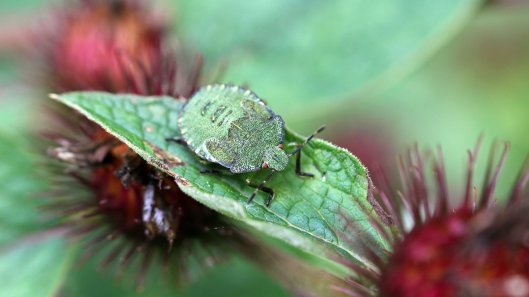
I was checking out a Burdock plant the other day (I rather like their flowers and seed heads, and they have their own special fly) when I suddenly noticed this Green shieldbug and then another one, and another one, and another one …

170912 Green shield bug family (1)

Turns out there was at least one adult and six nymphs, though more may have been lurking undiscovered. I’m assuming they were all members of the same family, but that is pure surmise.

170912 Green shield bug family (2)
170912 Green shield bug family (3)
170912 Green shield bug family (4)
170912 Green shield bug family (5)
170912 Green shield bug family (6)
170912 Green shield bug family (7)
Like Loading...

Oak galls: spangles & oysters

09 Saturday Sep 2017

Posted by sconzani in insects, nature, trees

≈ 1 Comment

Tags

gall wasps, galls on oak trees, Neuroterus albipes, Neuroterus anthracinus, Oak gall wasps, oak galls, oak tree, Oyster gall, Smotth spangle gall

I know you’re all just dying to find out more about oak galls, right? RIGHT? I also know that I covered spangles in a previous post (see Currants & spangles here) but there are two different spangle galls to be found on the much be-galled oak tree: one is the hairy Common spangle and this is the second, the Smooth spangle gall.

170909 Smooth spangle gall (1)

This pretty little gall comes in combinations of pink and yellowish-green. It’s the work of Neuroterus albipes, a tiny wasp that you will probably never see, and inside each colourful saucer is a single larva that you will also probably never see. The galls drop to the ground in autumn and the larvae pupate over winter then female-only wasps hatch out in Spring to lay eggs that cause the entirely different Schenck’s gall (not one I’ve yet seen), from which male and female wasp hatch in the summertime. And so the cycle begins again.

170909 Smooth spangle gall (2)
170909 Smooth spangle gall (3)
170909 Smooth spangle gall (4)

This second gall, the Oyster gall, is also caused by a tiny wasp that has two distinct generations and forms two different galls. The wasp is Neuroterus anthracinus and the Oyster gall also contains the agamic generation of wasps (i.e. the females that need no males to fertilise their eggs). As you can see, these galls form on the veins on the undersides of oak leaves – once they’ve fallen to the ground, you can still see the two brown flaps of tissue where they were attached to the veins. 

170909 Oak Oyster gall (1)
170909 Oak Oyster gall (2)

Once again, the sexual generation of wasps hatch in the Spring to mate and lay their eggs, this time in the buds of the oak tree, hence the name of the gall they produce: the April-bud gall. That’s another I need to look out for come the Spring.

170909 Oak Oyster gall (3)


Like Loading...

It’s a miracle!

07 Thursday Sep 2017

Posted by sconzani in insects, ladybird, nature

≈ 4 Comments

Tags

Halyzia 16-punctata, Halyzia secedimguttata, ladybird, ladybird larva, ladybird lifecycle, ladybird pupa, ladybug, Orange ladybird

I believe I may have an addiction to ladybirds! When I decided to write this post, I thought I’d just check that I hadn’t covered this topic already: of course, I knew I had written about ladybirds before but I didn’t realise quite how many times. There’s a post here and here and again here and another one here. Well, in spite of all those, here’s another one because, when I found all the Orange ladybirds pictured here within five minutes of each other yesterday, I was struck yet again by just how incredible is their transformation from egg to larva …

170907 Orange ladybird (1)

to pupa …

170907 Orange ladybird (2)
170907 Orange ladybird (3)
170907 Orange ladybird (4)

to ladybird. It really is quite miraculous!

170907 Orange ladybird (5)

Like Loading...
← Older posts
Newer posts →

About me

sconzani

sconzani

I'm a writer and photographer; researcher and blogger; birder and nature lover; countryside rambler and city strider; volunteer and biodiversity recorder.

View Full Profile →

Follow earthstar on WordPress.com

Enter your email address to follow this blog and receive notifications of new posts by email.

Recent blog posts

  • NFY: Orange-tip April 20, 2026
  • All the yellows April 19, 2026
  • Spider: Dysdera crocata April 18, 2026
  • Recent Reed buntings April 17, 2026
  • Tiny but feisty April 16, 2026

From the archives

COPYRIGHT

Unless otherwise acknowledged, the text and photographs on this blog are my own and are subject to international copyright. Nothing may be downloaded or copied without my permission.

Fellow Earth Stars!

  • Unknown's avatar
  • Unknown's avatar
  • Unknown's avatar
  • Unknown's avatar
  • Unknown's avatar
  • Unknown's avatar
  • Unknown's avatar
  • Unknown's avatar
  • Unknown's avatar
  • Unknown's avatar
  • Unknown's avatar
  • Unknown's avatar
  • Unknown's avatar
  • Unknown's avatar
  • Unknown's avatar
  • Unknown's avatar
  • Unknown's avatar
  • Unknown's avatar
  • Unknown's avatar
  • Unknown's avatar
  • Unknown's avatar
  • Unknown's avatar
  • Unknown's avatar
  • Unknown's avatar
  • Unknown's avatar
  • Unknown's avatar
  • Unknown's avatar
  • Unknown's avatar
  • Unknown's avatar
  • Unknown's avatar
  • Unknown's avatar
  • Unknown's avatar
  • Unknown's avatar
  • Unknown's avatar
  • Unknown's avatar
  • Unknown's avatar
  • Unknown's avatar
  • Unknown's avatar
  • Unknown's avatar
  • Unknown's avatar
  • Unknown's avatar
  • Unknown's avatar
  • Unknown's avatar
  • Unknown's avatar
  • Unknown's avatar
  • Unknown's avatar
  • Unknown's avatar
  • Unknown's avatar
  • Unknown's avatar
  • Unknown's avatar

Blog at WordPress.com.

Privacy & Cookies: This site uses cookies. By continuing to use this website, you agree to their use.
To find out more, including how to control cookies, see here: Cookie Policy
  • Subscribe Subscribed
    • earthstar
    • Join 642 other subscribers
    • Already have a WordPress.com account? Log in now.
    • earthstar
    • Subscribe Subscribed
    • Sign up
    • Log in
    • Report this content
    • View site in Reader
    • Manage subscriptions
    • Collapse this bar
 

Loading Comments...
 

You must be logged in to post a comment.

    %d