One of the side benefits of searching the scabious for rare bees (see yesterday’s piece, Searching the scabious, 1) is that my search also revealed how many other insects were enjoying the essential late summer-early autumn food supply provided by the beautiful wildflower, Devil’s-bit scabious. Amongst them were these five butterflies and a moth: Large white, Red admiral, Small copper, Small tortoiseshell, Small white and a Silver Y.
And also these five hoverflies: Eristalis intricarius, Helophilus trivittatus, Sericomyia silentis, Volucella pellucens and Volucella zonaria.
In recent weeks, when the weather has been fine and the air relatively still, I’ve been spending time searching the Devil’s-bit scabious for bees. Not just any bees, but four scarce and endangered bees. This is part of Buglife’s ‘Searching for Scabious’ project, which
aims to improve our understanding of the distribution and conservation status of some of Wales’ rarest and most threatened solitary bees – the Large Scabious Mining Bee (Andrena hattorfiana) and its associated cuckoo, the Armed nomad bee (Nomada armata), and Small Scabious Mining Bee (Andrena marginata) and its cuckoo, the Silver-sided nomad bee (Nomada argentata).
I wasn’t familiar with these bees and am not very good at bee identification in general but Liam Olds, Buglife’s local conservation officer, has put together an excellent explainer video, which can be accessed on YouTube, so I thought I’d join the search.
Unfortunately, I haven’t managed to find any of the scarce bees at the two local sites where Devil’s-bit scabious grows in abundance (and neither has Liam, which was reassuring for me re my search skills but bad news for the bees). The bees I did find most commonly were the appropriately named Common carder (Bombus pascuorum) (below, left) and the Buff-tailed bumblebee (Bombus terrestris) (below, right).
Liam very kindly helped to identify the other small bees I found. These lovely little furrow bees are either the White-zoned furrow bee (Lasioglossum leucozonium) or the Bull-headed furrow bee (Lasioglossum zonulum) – the two species are too similar to tell them apart without closer examination.
I also found several of these more distinctive individuals, the Wood-carving leafcutter bee (Megachile ligniseca). You can find out more about them, and watch a little video of their nest-building skills, on the BWARS website. Meantime, I’m heading back to the scabious for another look.
My title says ‘inspection’ but I was tempted to invent a new word and write ‘insection’, as my inspection was really a personal challenge to see how many different insects I could find on the copious number of Common ragwort plants currently in bloom at Cosmeston Lakes Country Park. All except three of these photos were taken during one 45-minute period on Wednesday – the Small copper and two flies were seen the following day. The broad diversity of species just shows how important Ragwort is as a late summer food plant for insects.
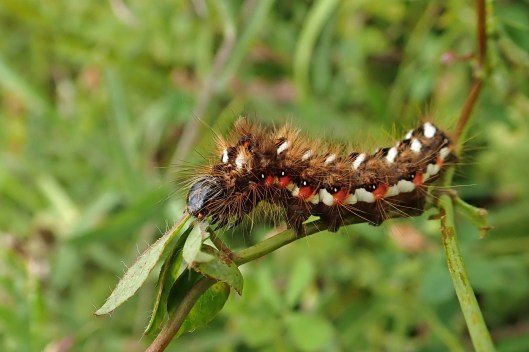
When I spotted this caterpillar yesterday, I didn’t think I’d seen one like it before but, when one of my Twitter pals later identified it for me, I realised I had seen one previously, though a younger model.
These are the larvae of the Knot grass moth (Acronicta rumicis), a moth I’ve never seen (you can see what the adult moth looks like and read more about it on the UK Moths website). I think the larva above, found munching on Dyer’s greenweed at Cosmeston on 4 June, is an early instar, whereas the larva below, found feeding on Common ragwort at Lavernock Nature Reserve on 10 September and a real stunner, is almost ready to pupate for the winter.
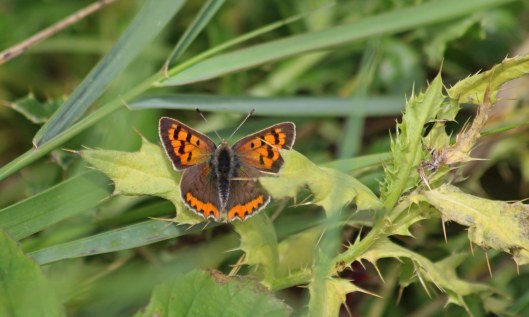
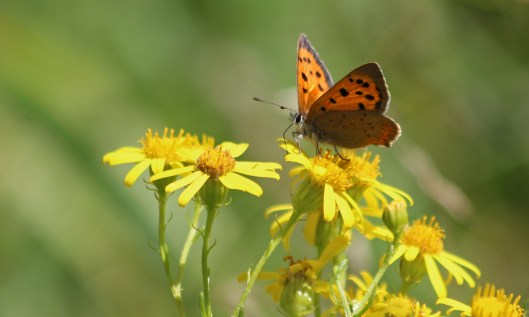
I was in seventh heaven yesterday because I found seven Small coppers, my favourite butterflies, at Cosmeston, the most I’ve ever seen in one place on one day. Here they are, the little beauties.
Bumblebees and Teasels – I’m not sure why but they seem to be a match made in heaven.
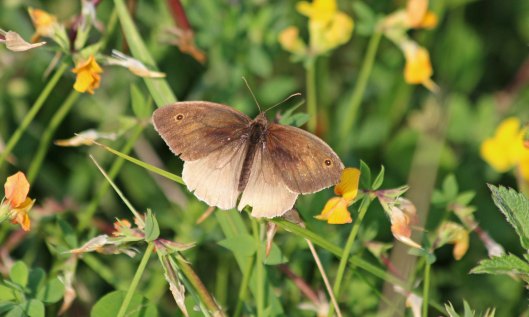
In fact, bumblebees are the insects I see most often nectaring on Teasels, though the Burnet moths also find Teasel to their taste, as did this Meadow brown butterfly yesterday.
Actually, it rained before my walk, during my walk and after I got home, but ‘Small creatures between showers’ was a bit long for a title. Here, then, are the said creatures …
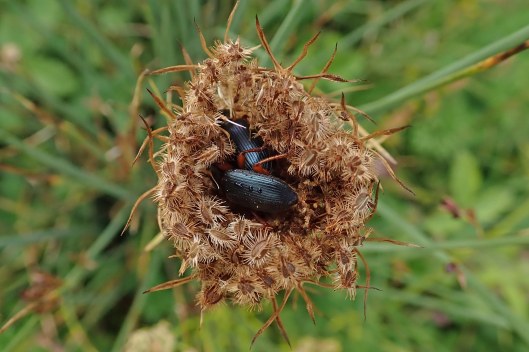
First up, these beetles were cosying up in an umbellifer flower head. I couldn’t see enough to identify them and wasn’t going to disturb their comfort to find out more.
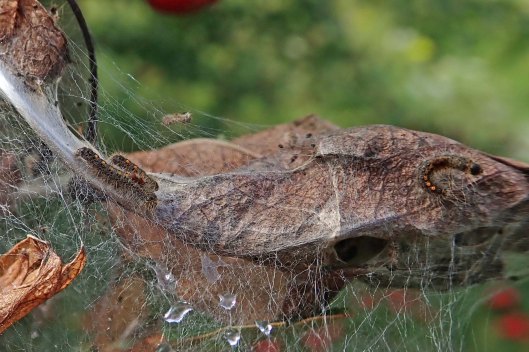
This is a web of Brown-tail moth larvae, the ones some people freak out about because their hairs can irritate the skin. The solution to that problem is, of course, easy: look, enjoy, wonder, admire, but don’t touch!
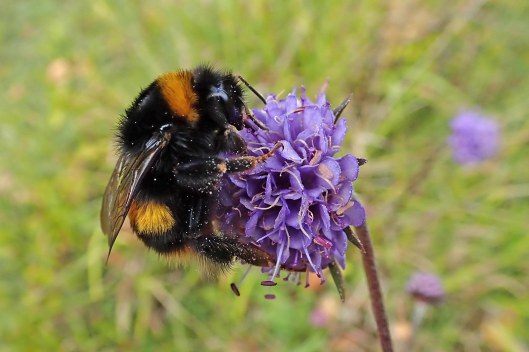
There weren’t many flying critters about but bumblebees will fly whatever the weather, as shown by this gorgeous queen Buff-tailed bumble.
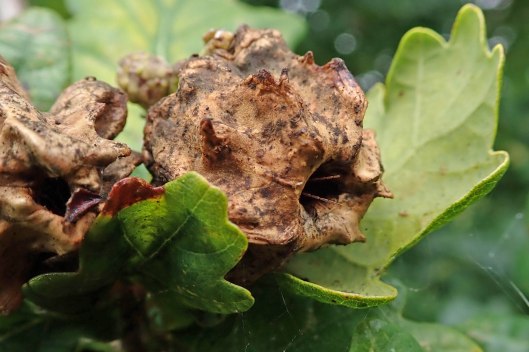
Perhaps the littlest creature, though I didn’t look in to investigate, was the one that was lurking in this Knopper gall (spot the antennae!).
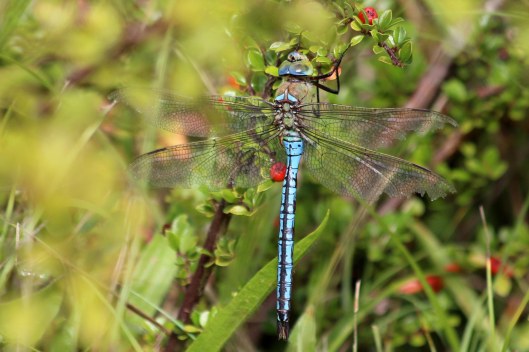
And, the prize for the most magnificent, was this male Emperor dragonfly. I had to linger a while, waiting for him to settle, and then sneak up behind the bushes, but His Imperial Majesty was definitely worth the wait. What a handsome creature he is, despite his somewhat ragged wings.
To celebrate – or, perhaps, to mourn – the last calendar day of summer, here’s a tribute to some of the beautiful butterflies I’ve seen in recent days, just because, when they’re gone, I’m really going to miss their magic.
A Comma doing what they do so well when their wings are closed – blending in.
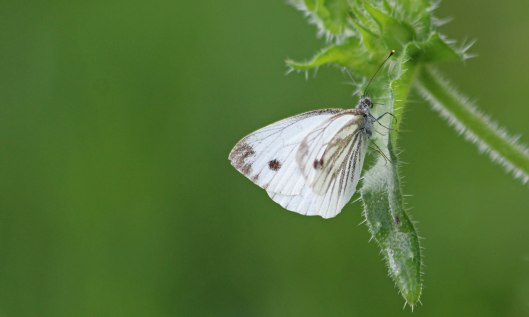
Most of the white butterflies I’ve seen lately have been Small whites so this Green-veined white stood out from the crowd.
Here’s another that stood out – an aberrant Meadow brown. There always has to be one!
The heat wave a couple of weeks ago seems to have brought in a small influx of Painted ladies, though nothing like the numbers we had last year.
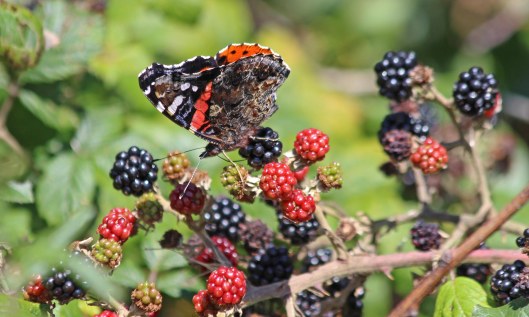
Have you ever noticed how much Red admirals like blackberries? And their colours blend in to this background rather well.
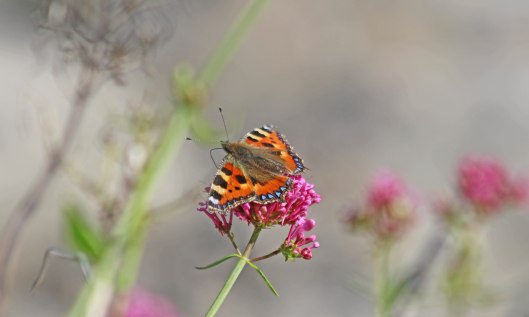
Small tortoiseshells have been having a good year locally, which has been a real treat. I even found two feeding on Red valerian right at the edge of one of the local beaches this morning.
A delightful surprise from Saturday’s walk at Cosmeston, a pristine Small copper.
I don’t know about you but, when I’m out walking at this time of year, I’m often tempted to pluck and devour one of the luscious-looking blackberries growing on the bramble-covered fences and hedgerows.
Well, not any more. Not now I’ve seen how many flies like to suck at them and run their dirty little feet all over them. Just look at all those fly bottoms!
And let’s not even mention the very real possibility of getting stung by a wasp that’s jealously guarding ‘its’ berries. From now on, the berries are all for the beasties!










 earthstar
You must be logged in to post a comment.