• ABOUT
  • BIRDING 2018
  • Birding 2019
  • BLOG POSTS
  • Butterflies 2018
  • Resources

earthstar

~ a celebration of nature

earthstar

Category Archives: insects

140/366 Finally, an admiral

19 Tuesday May 2020

Posted by sconzani in insects, nature

≈ 2 Comments

Tags

British butterflies, butterfly, Red Admiral, Vanessa atalanta

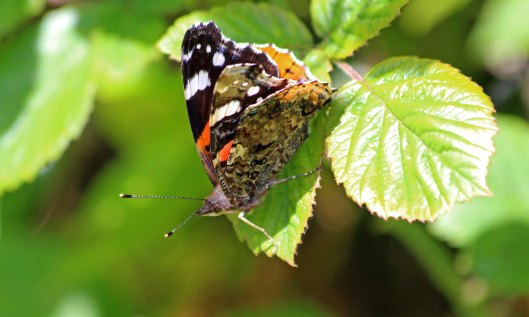
Red admiral, that is. Last year, this was the first butterfly I saw, and it was early, in January. In fact, I saw two of them before January 2019 came to a close. This year it’s taken four and a half months but, finally, on Saturday, when I was enjoying a lovely wander along a local path, admiring the tall frothy loveliness of masses of Cow parsley, this little beauty floated towards me and settled, very obligingly, on a bramble bush right next to the path. Butterfly bliss!

200519 red admiral

Like Loading...

139/366 A tale of two galls

18 Monday May 2020

Posted by sconzani in insects, nature

≈ 3 Comments

Tags

Bedeguar gall wasp, British wasps, Diplolepis rosae, Orthopelma mediator, parasite of Bedeguar gall wasp, parasite of Diplolepis rosae, parasitic wasp, Robin's pincushion

This is a tale of two galls. One gall (below, left) was created by the Thistle gall fly (Urophora cardui), the other (below, right) by the Bedeguar gall wasp (Diplolepis rosae). I harvested the first gall late last year, the second early this year and, when I brought that second gall home, I made a rookie error – I put it in the same jar as the first gall. Why was that an error? Because it meant that if/when anything emerged from the galls, I wouldn’t know which gall it came from.

200429 2 thistle gall fly gall
200516 diplolepis rosae gall (2)

A few weeks ago, in late April, creatures began emerging from one or other or both of the galls. At the time, because I found an empty pupa case poking out of a hole in the Thistle gall, I assumed the creatures had emerged from it – I wrote about that in What’s in a gall?, April 2020. It turns out I was wrong.
200518 3 bedeguar gall wasp and orthopelma mediator

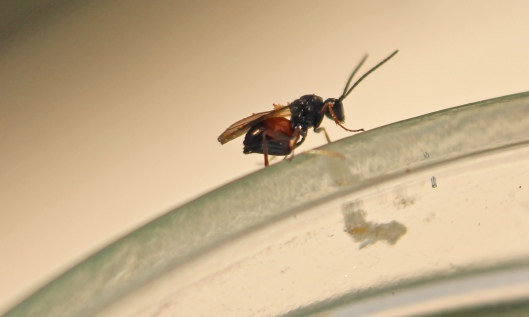
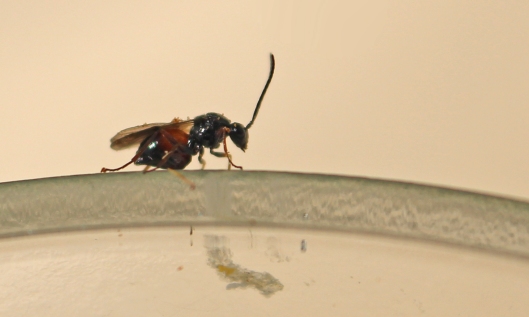
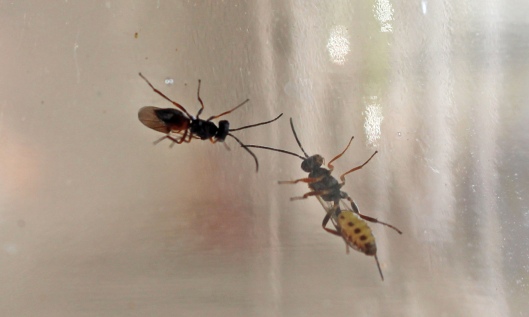
After writing that piece, I decided to place the galls in two separate jars and, as I wrote in a post last week, two different wasp species have subsequently emerged from the Bedeguar gall wasp’s gall, the gall causer itself (Diplolepis rosae) (above, left) and a second wasp (above, right), which turns out to be the same species of wasp I wrote about in April and which, at the time, I thought had emerged from the Thistle gall fly’s gall.
200518 4 Orthopelma mediator

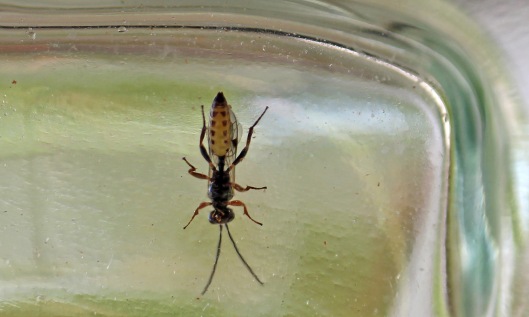
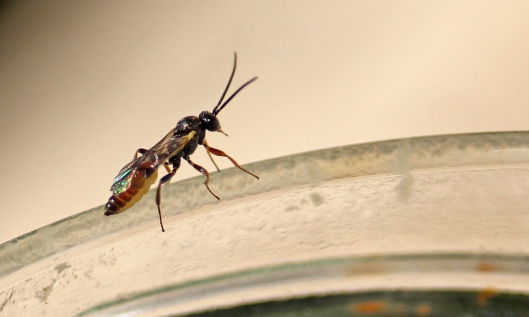
The empty pupa case is now a mystery but the second wasp’s identity has been confirmed as Orthopelma mediator, a parasite of the Bedeguar gall wasp. So, adding to the initial three that emerged, a total of four of these wasps have now hatched from that gall. Amazingly, there is only one previous record, from 1933, for this wasp in the Welsh records database but I don’t think that’s because it’s a rare find; it’s just that no one bothers to keep the galls to see what emerges from them and thus the wasp is under-recorded.
200518 5 Orthopelma mediator

So, I hope I have convinced you that this is a fascinating process which you might also like to try but do remember the moral of this tale of two galls: if you decide to bring home galls to see what might hatch out, make sure you put each and every gall in a separate jar!

Like Loading...

137/366 Bedeguar gall wasp

16 Saturday May 2020

Posted by sconzani in insects, nature

≈ 7 Comments

Tags

Bedeguar gall wasp, British galls, British wasps, Diplolepis rosae, gall on dog-rose, gall wasps, galls, Robin's pincushion

You might remember that, a few months ago, I posted about the (supposedly) empty galls of the Bedeguar gall wasp I’d found during a wet walk at Cosmeston Lakes Country Park (Empty pincushions, January 2020). A week or so after writing that post, I was back at Cosmeston and remembered to harvest one of the galls, which has ever since been sitting in a sealed jar on my kitchen windowsill.

200516 diplolepis rosae gall (1)
200516 diplolepis rosae gall (2)
200516 diplolepis rosae gall (3)

Although the many holes in the gall made me think that all of its inhabitants had already hatched, I decided to wait and see if anything else appeared. Two days ago I noticed movement in the jar and, taking a closer look, found two different species of wasp had emerged.

200516 diplolepis rosae (1)

This is one of them, and I’m 99% certain this is the gall causer itself, the Bedeguar gall wasp, Diplolepis rosae, the offspring of the wasp that caused the gall to form in the first place. These wasps are so tiny – just 3-4 mm long – that most of us don’t usually see them so I was very pleased to have this one emerge from its gall.

200516 diplolepis rosae (2)

There is a bit of a story attached to the second wasp that emerged, and I am currently awaiting confirmation of its identity. As soon as I know more, I’ll write it up in a further post.

Like Loading...

135/366 Swollen thighs

14 Thursday May 2020

Posted by sconzani in insects, nature, wildflowers

≈ 2 Comments

Tags

British insects, Buttercup, Grangemoor Park, Oedemera nobilis, Swollen-thighed beetle, Thick-legged beetle

You know summer’s just around the corner when the Swollen-thighed beetles (Oedemera nobilis) start to appear. The Ox-eye daisies and buttercups were full of them at Grangemoor Park on Tuesday.

200514 swollen-thighed beetle

Like Loading...

133/366 First Common blue

12 Tuesday May 2020

Posted by sconzani in insects, nature, wildflowers

≈ 6 Comments

Tags

British butterflies, British wildflowers, butterfly, Common blue butterfly, wildflowers on road verges, wildflowers on roadsides

One of the benefits of some local councils not mowing all the road verges at the moment is that wildflowers that would normally be strimmed to death are now being allowed to grow and bloom.

200512 Common blue butterfly (1)

Not only does this mean we get to enjoy their glorious rainbow of colours but the wildflowers’ pollen and nectar also provide a nutritious feast for all the newly emerging insects.

200512 Common blue butterfly (2)

And it was on one such uncut verge that I spotted my first Common blue butterfly of the year today, this stunning, pristine, little male.

200512 Common blue butterfly (3)

If only the councils would mow less all the time, then we’d be able to enjoy both the flowers and the insects all through spring and summer, and it would also go a little way to reversing the huge decline in insect life that’s happening all over the world.

200512 Common blue butterfly (4)

Like Loading...

128/366 Dingy skippers

07 Thursday May 2020

Posted by sconzani in insects, nature

≈ 2 Comments

Tags

British butterflies, butterfly, Dingy Skipper, Erynnis tages, Lavernock Nature Reserve

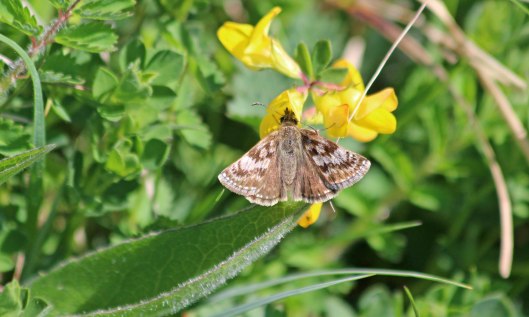
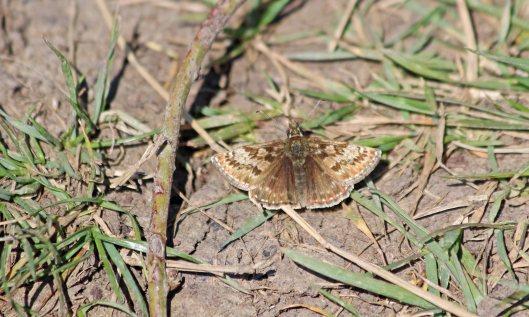
Not only did I see my first dragonflies of the year yesterday at Lavernock Nature Reserve but I also spotted my first Dingy skippers (Erynnis tages).

200507 dingy skipper (1)

At least four of these inconspicuous little butterflies were feeding on their favourite food plant, Common bird’s-foot trefoil, or basking on the compacted earth of the tracks through the reserve, as is their wont.

200507 dingy skipper (2)

Their preferences for bird’s-foot trefoil and patches of bare ground are why these butterflies are often found on chalk and limestone grasslands, on brownfield sites and in disused quarries, amongst sand dunes and along open pathways adjacent to woodland.

200507 dingy skipper (3)

Sun, shelter and good food – it’s not much to ask for. But, sadly, the Dingy skipper is one of many declining species of butterfly in Britain, probably due to the way land is managed and to the intensification of agriculture. So, I feel very privileged to be able to observe and enjoy these lovely little skippers so close to home.

200507 dingy skipper (4)

Like Loading...

127/366 First dragonflies

06 Wednesday May 2020

Posted by sconzani in insects, nature

≈ 2 Comments

Tags

British dragonflies, Broad-bodied Chaser, dragonflies, dragonfly, Lavernock Nature Reserve

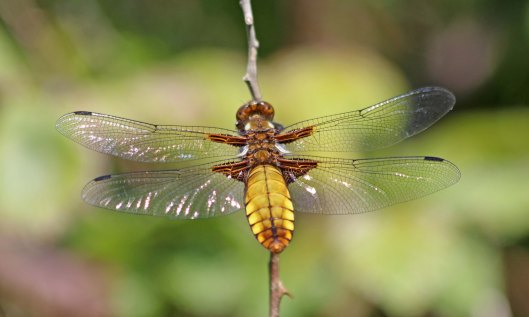
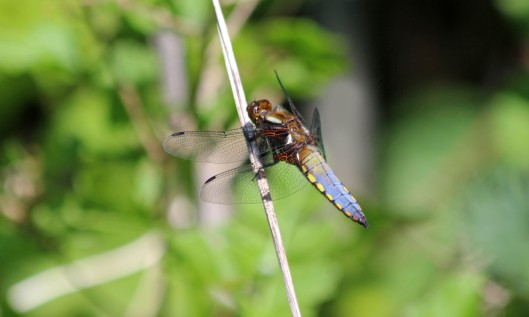
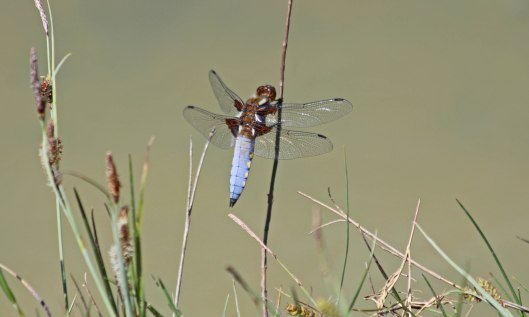
I was delighted to see my first dragonflies of the year at Lavernock Nature Reserve during this morning’s walk: two female (with the golden abdomen) and two male (blue abdomen) Broad-bodied chasers.

200506 Broad-bodied chaser (1)200506 Broad-bodied chaser (2)200506 Broad-bodied chaser (3)

Like Loading...

126/366 The Lady of the Woods

05 Tuesday May 2020

Posted by sconzani in insects, nature, spring

≈ 6 Comments

Tags

British butterflies, butterfly, Orange-tip 2nd instar, Orange-tip butterfly, Orange-tip egg

I know I already posted about seeing my first Orange-tip butterfly of the year (The ostentatious Orange-tip, 15 April) but, for those not familiar with this lovely springtime butterfly, I thought it might be useful to see a bit more detail. So, here is a typical male Orange-tip, from the top and the side. The speckling on the lower wings looks green but that’s an optical illusion – the colours are actually yellow and black.

200505 orange-tip male (1)
200505 orange-tip male (2)

And here’s a female from both angles. If you only see her from the top, you might confuse her with one of the other white butterflies, though the dark patches are different in all the whites, and the Orange-tip also has a distinctive wing shape.

200505 orange-tip female (1)
200505 orange-tip female (2)

I managed to find several eggs during a recent walk – the newly laid eggs are white but turn orange very quickly. You’ll find them on the caterpillar food plants: Cuckooflower, Garlic mustard and Honesty are three wildflowers this butterfly favours. And, for the first time ever, I found a caterpillar. This is a 2nd instar (i.e. stage) – the larvae proceed through 5 instars, progressively growing larger, until they are ready to pupate.

200505 orange-tip egg
200505 orange-tip larva 2nd instar

You might be wondering why I gave this post the title of ‘the Lady of the Woods’. Well, according to Peter Eeles’s superb publication Life Cycles of British & Irish Butterflies (every home should have one!), this is the name given to the Orange-tip by Benjamin Wilkes in his Twelve New Designs of English Butterflies, published in 1742.

Like Loading...

123/366 Dock beetles

02 Saturday May 2020

Posted by sconzani in insects, nature

≈ 2 Comments

Tags

beetles, beetles on dock plants, British beetles, dock beetles, Gastrophysa viridula, Green dock beetle

Iridescent Green dock beetles are out in force now on the Dock plants in one of my local parks. I’ve blogged about these gorgeous mini-beasties before (Green dock beetles, May 2016) so today I’m just going to share a few photos. Keep an eye out for these on your exercise walks, and don’t forget to check carefully under the holey leaves for eggs and their little grey grubs.

200502 green dock beetle (1)

200502 green dock beetle (2)
200502 green dock beetle (3)

200502 green dock beetle (4)

Like Loading...

122/366 Species 10

01 Friday May 2020

Posted by sconzani in insects, nature

≈ 4 Comments

Tags

British butterflies, butterfly, Grangemoor Park, Green-veined white, Pieris napi

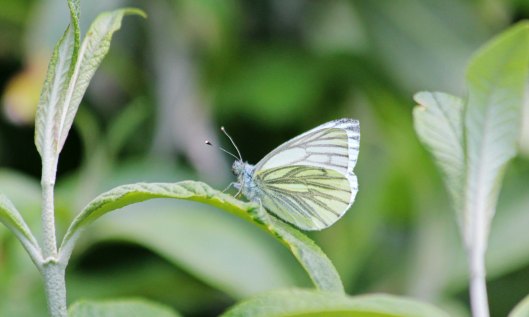
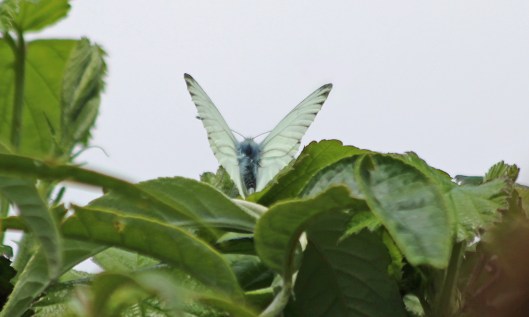
With the current restrictions on movement, my butterflying has got off to a slower start than usual but today I spotted my first Green-veined white butterfly of 2020, my tenth species for the year, during my walk around Cardiff’s Grangemoor Park.

200501 Green-veined white (1)

This pristine male only appeared briefly, before disappearing amongst the leafy trees, but it was a joy to see him. These spring-brood Green-veined whites are often very pale – I can’t even see the small dark spots on his upper wings and he has only a hint of yellow colouring on his undersides. The summer brood, when they emerge in July and August, usually show darker markings – I’ll try and do a comparison post later in the year to show the differences.

200501 Green-veined white (2)

Like Loading...
← Older posts
Newer posts →

About me

sconzani

sconzani

I'm a writer and photographer; researcher and blogger; birder and nature lover; countryside rambler and city strider; volunteer and biodiversity recorder.

View Full Profile →

Follow earthstar on WordPress.com

Enter your email address to follow this blog and receive notifications of new posts by email.

Recent blog posts

  • In flower now April 12, 2026
  • A surprise Slow-worm April 11, 2026
  • My first Holly blue April 10, 2026
  • Alder flies April 9, 2026
  • Lily beetle April 8, 2026

From the archives

COPYRIGHT

Unless otherwise acknowledged, the text and photographs on this blog are my own and are subject to international copyright. Nothing may be downloaded or copied without my permission.

Fellow Earth Stars!

  • Unknown's avatar
  • Unknown's avatar
  • Unknown's avatar
  • Unknown's avatar
  • Unknown's avatar
  • Unknown's avatar
  • Unknown's avatar
  • Unknown's avatar
  • Unknown's avatar
  • Unknown's avatar
  • Unknown's avatar
  • Unknown's avatar
  • Unknown's avatar
  • Unknown's avatar
  • Unknown's avatar
  • Unknown's avatar
  • Unknown's avatar
  • Unknown's avatar
  • Unknown's avatar
  • Unknown's avatar
  • Unknown's avatar
  • Unknown's avatar
  • Unknown's avatar
  • Unknown's avatar
  • Unknown's avatar
  • Unknown's avatar
  • Unknown's avatar
  • Unknown's avatar
  • Unknown's avatar
  • Unknown's avatar
  • Unknown's avatar
  • Unknown's avatar
  • Unknown's avatar
  • Unknown's avatar
  • Unknown's avatar
  • Unknown's avatar
  • Unknown's avatar
  • Unknown's avatar
  • Unknown's avatar
  • Unknown's avatar
  • Unknown's avatar
  • Unknown's avatar
  • Unknown's avatar
  • Unknown's avatar
  • Unknown's avatar
  • Unknown's avatar
  • Unknown's avatar
  • Unknown's avatar
  • Unknown's avatar
  • Unknown's avatar

Blog at WordPress.com.

Privacy & Cookies: This site uses cookies. By continuing to use this website, you agree to their use.
To find out more, including how to control cookies, see here: Cookie Policy
  • Subscribe Subscribed
    • earthstar
    • Join 642 other subscribers
    • Already have a WordPress.com account? Log in now.
    • earthstar
    • Subscribe Subscribed
    • Sign up
    • Log in
    • Report this content
    • View site in Reader
    • Manage subscriptions
    • Collapse this bar
 

Loading Comments...
 

You must be logged in to post a comment.

    %d