Hannibal Harlequin

Tags

, , , , ,

In the Silence of the Lambs, it was Hannibal Lecter; in the world of ladybirds, it’s Hannibal Harlequin. Yes, folks, though I’m sure you all thought ladybirds were cute, it’s actually a ladybird eats ladybird world out there! In this case, a Harlequin ladybird larva is eating the pupa of a 7-spot ladybird.
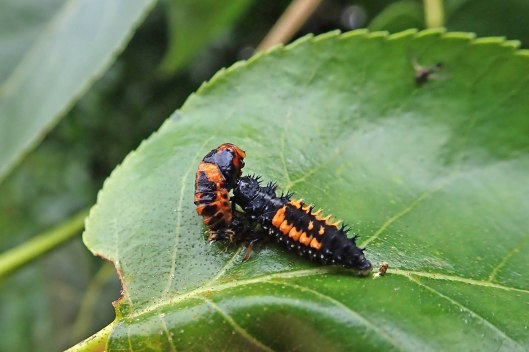
210715 ladybirds

A new leafhopper

Tags

, , , , ,

I just happened to be examining the leaves of a local Italian alder tree on Saturday (looking for signs of the Crypturaphis grassii aphids I found on this tree last December) when I spotted first one, then another, then several more leafhoppers, all with quite distinctive markings so, of course, I took photos. When I later checked the British Bugs website, I was able to identify them as Eupterycyba jucunda, a new species for me.

The website notes that this species is ‘found predominantly on alder in England and Wales, as far north as Lancashire’, and that the adults can be seen between July and October. Looking at the photos on the website, I think the small black-and-white objects I also saw (photos below) are actually the empty exuvia of Eupterycyba jucunda nymphs. Fascinating!

Golden-ringed dragon

Tags

, , ,

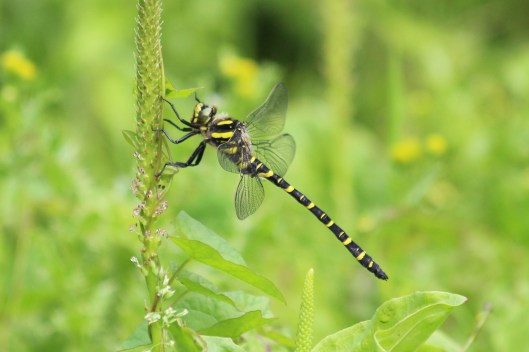
It may have been only my second ever sighting of this gorgeous dragonfly species but, with its distinctive markings perfectly matching its name, I was certain of my ID – this is a Golden-ringed dragonfly (Cordulegaster boltonii). These beauties can be found in upland areas, heathlands and woodlands that have the flowing water they favour for breeding. The Golden-ringed I saw was close to a small river in a woodland setting, no more than 100 metres from where I spotted the White-letter hairstreak I posted about yesterday. That was a memorable walk indeed!

210710 golden-ringed dragonfly

You can read more about this dragonfly, and see lots of stunning images, on the British Dragonfly Society website.

A white-letter day

Tags

, , , , ,

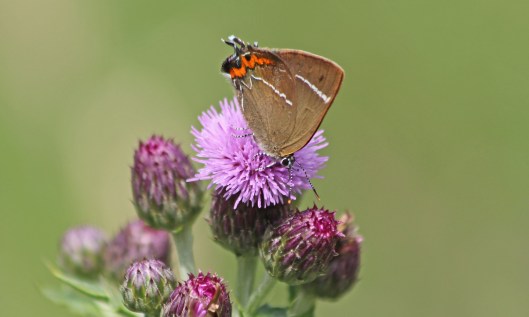
I’m sure you’ve all heard of red-letter days, those days that are of special significance or particularly memorable. Well, for me, yesterday was a red-letter white-letter day – the day when I had my best ever views of the elusive White-letter hairstreak butterfly (Satyrium w-album).

210709 white-letter hairstreak (1)

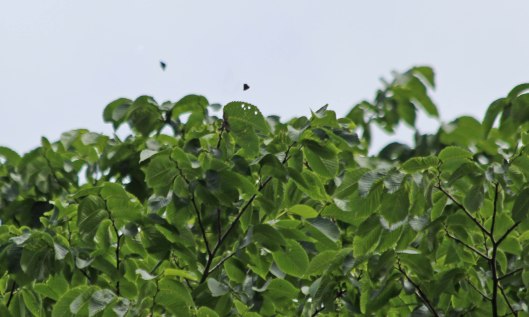
These beautiful creatures spend most of their time in the tops of Wych elm trees (now that most English elms have died from Dutch elm disease) so my first sighting of them this year was typical – they were flitting around the top of a tree in a local park, far too distant for good views, let alone photos (see above).

210709 white-letter hairstreak (2)

Then, yesterday, I was walking in meadows adjacent to a local woodland, when I spotted this gorgeous White-letter hairstreak nectaring on a thistle right next to the path in front of me. I was able to photograph and watch it for at least 15 minutes before it flew back towards the nearby Wych elm. A white-letter day to treasure!

210709 white-letter hairstreak (3)

Marsh helleborines

Tags

, , ,

As their current conservation status in Britain is rated amber, meaning they are vulnerable and near-threatened, I feel privileged to have within easy travelling distance a large colony of Marsh helleborines (Epipactis palustris).

210707 marsh helleborine (1)

And, as our rainfall levels in Wales during May were the highest recorded since records began in 1862, this has been a very good year for a plant that thrives in the wet – hence, the ‘Marsh’ in its name.

These are low-growing orchids, no more than a foot in height, but it is well worth getting down to their level to appreciate more fully the elegant and delicate beauty of their flowers. To my fanciful eye, they sometimes resemble a woman dancing, her frilly white petticoats swirling about her. At other times, I see a white blouse, with an extravagant ruffle down the front, like the jabot worn by some judges. What do you see?

210707 marsh helleborine (4)

A future butterfly

Tags

, , , ,

Golden Large skippers have been flitting through the tall grasses of my local meadows for about a month now and soon, too soon, they will disappear for another year.

210706 large skipper

But, if they manage to escape the cutting blades of mowers and survive through whatever weather the winter throws at us this year, then the larvae that emerge from their miniscule eggs, like the one below, will guarantee we see these handsome creatures again next year.

210706 large skipper egg