134/366 The Swannee river

Tags

, , , , , ,

When I spotted a pair of Mute swans and their six cygnets on an inlet of the River Ely on yesterday’s exercise walk, the old song ‘Way down upon the Swannee River’ immediately came to mind. The song has nothing to do with swans, of course (it’s about an African slave longing for ‘de old plantation’), and most of you are probably too young to even remember the tune – I think it was just the combination of swans and river that made it pop into my brain. But enough of the strange workings of my mind during lockdown…. Isn’t this little family just gorgeous?!

200513 swan and cygnets (2)200513 swan and cygnets (3)200513 swan and cygnets (4)200513 swan and cygnets

133/366 First Common blue

Tags

, , , , ,

One of the benefits of some local councils not mowing all the road verges at the moment is that wildflowers that would normally be strimmed to death are now being allowed to grow and bloom.

200512 Common blue butterfly (1)

Not only does this mean we get to enjoy their glorious rainbow of colours but the wildflowers’ pollen and nectar also provide a nutritious feast for all the newly emerging insects.

200512 Common blue butterfly (2)

And it was on one such uncut verge that I spotted my first Common blue butterfly of the year today, this stunning, pristine, little male.

200512 Common blue butterfly (3)

If only the councils would mow less all the time, then we’d be able to enjoy both the flowers and the insects all through spring and summer, and it would also go a little way to reversing the huge decline in insect life that’s happening all over the world.

200512 Common blue butterfly (4)

132/366 A sanguine sight

Tags

, , , , , ,

Warning: the photos in this post are a bit gory!
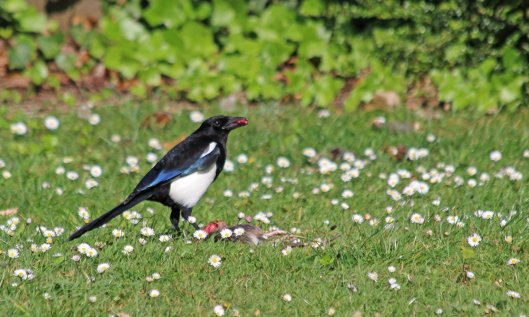
The highlight – if this can be called a highlight – of my early morning local walk was this Magpie, feeding on the grass in a local park.

200511 magpie (1)

Although Magpies mostly eat fruit, seeds and small insects, they are also opportunists who will quite happily scavenge household food waste, eat the eggs and chicks of other birds, and graze on road kill and other carrion. This bird had found a dead rat and was happily pulling it apart for a bloody, but presumably nourishing breakfast.

At least, I hope it was nourishing – the rat could, I suppose, have been poisoned, and I’m not sure whether that would have an adverse effect on the bird. I hope not.

200511 magpie (4)

131/366 New bloomers

Tags

, , , , , , ,

Here are this week’s newly flowering wildflowers …
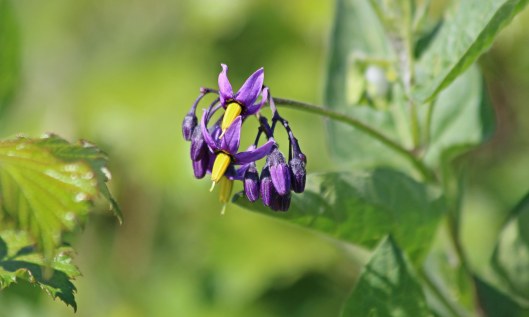
200510 bittersweet nightshade

Bittersweet nightshade (Solanum dulcamara), also known as Woody nightshade and Deadly nightshade, though my Flora Britannica assures me this is actually one of the less poisonous members of the nightshade family.

200510 cut-leaved crane's-bill

Cut-leaved crane’s-bill (Geranium dissectum), one of the many lovely members of the extended Geranium family.

200510 flax

Flax (Linum usitatissimum), a small delicate plant, with beautiful pale blue flowers. This is rather different from the plant I, as a New Zealander, usually associate with this name – see my September 2018 post Flax.

200510 goat's-beard

Goat’s-beard (Tragopogon pratensis). As well as producing these glorious large sunny flowers, this wildflower, also known as Jack-go-to-bed-at-noon, has the most wonderful seedheads.

200510 wood avens

Wood avens (Geum urbanum) – you may know this wildflower by its alternate name of Herb Bennet.

200510 milkwort

Common milkwort (Polygala vulgaris). Discovered during my walk to Lavernock Nature Reserve earlier this week, this was the first time I’d seen this pretty little plant, though it’s very small and was almost hidden amongst the other wildflowers and grasses so it may be that I had simply overlooked it on previous visits.

One theory behind its common name is that the flowers of milkwort are shaped like udders and so medieval herbalists, following the ‘signature’ belief (that body parts can be treated by plants that resemble them), used to prescribe this plant to nursing mothers to increase their milk flow.

130/366 Spiderlings

Tags

, , , , ,

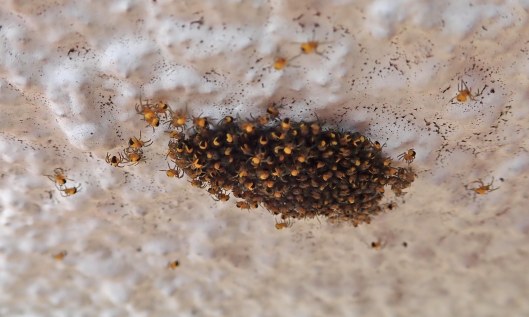
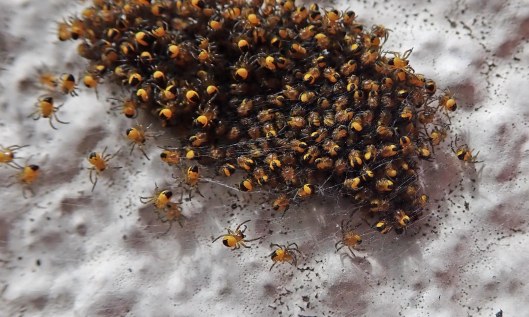
At first sight, from several feet away, I thought this splodge on the side of a building was a dollop of bird poo … but then I noticed it was moving. So, of course, I immediately got out my camera and peered closer.

200509 garden spiderlings (1)

They were spider babies, hundreds of them, of the species Araneus diadematus, commonly known as Garden spiders. Both as spiderlings and as adults, these are completely harmless, though, as so often happens, several of the trashy daily newspapers have, in the past, vilified these bunches of babies with such headlines as ‘Woman’s horror as hundreds of tiny yellow spiders erupt from a nest in her back garden’ and ‘Millions of “exploding” yellow baby spiders invade Britain’.

200509 garden spiderlings (2)

When they’ve grown to adult size, these little cuties will look like those I photographed for my November 2017 blog post Wearing a diadem. You can read more about the Garden spider on the British Arachnological Society’s website.

129/366 Along the Ely

Tags

, , , , , , , ,

Yesterday’s walk along the Ely river embankment was a mix of treats and unexpectedness. The first unexpected treat was the large number of both Sand and House martins flying low along the embankment: the air around me was alive with their close flypasts and their noisy chirruping. I’ve no photos of them – I was too intent on enjoying their proximity.

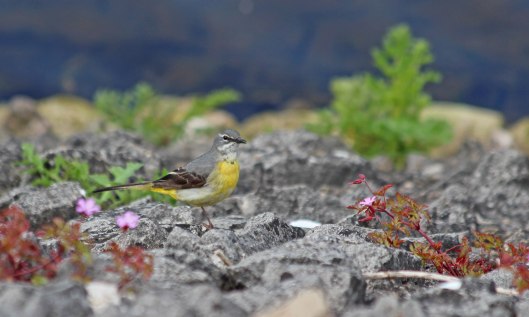
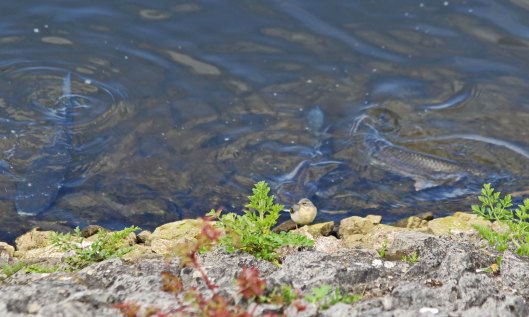
200508 grey wagtail (1)

Next up was the sight of a family of Grey wagtails, two adults and their three offspring, flitting about amongst the stones at the water’s edge.

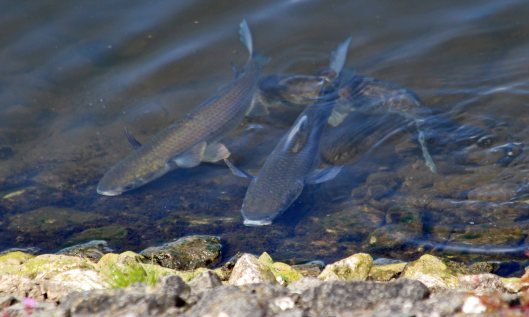
200508 thick-lipped grey mullet (1)

200508 thick-lipped grey mullet (2)

The Grey wagtail fledgling helps to show the size of the fish

While watching the wagtails, I noticed the water churning at various points along the river’s edge. It was being caused by large fish, feeding on the weed that’s growing on the stones just under the water. Thanks to one of my Twitter pals, Tate, I later learned they were Thick-lipped grey mullet, which can grow ‘to huge sizes’ and which are ‘mostly a saltwater fish but can tolerate fresh water quite far up rivers’.

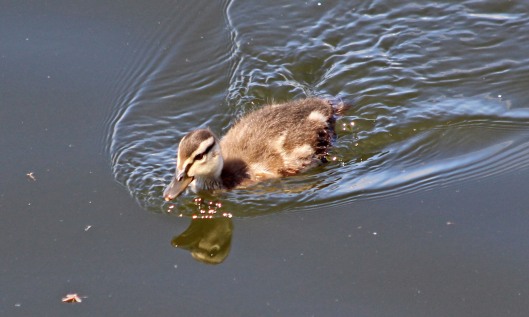
200508 duckling (2)

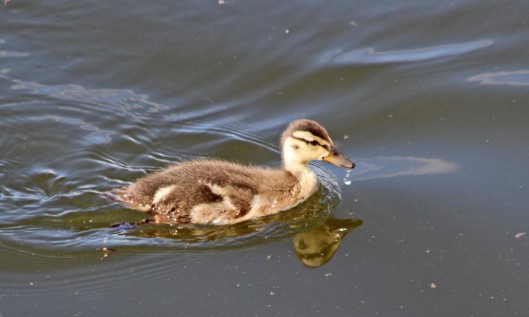
After unexpectedly bumping in to a birding friend and enjoying a chat to a real live person (a rare treat in these days of lockdown), my final wild treat was seeing these two Mallard ducklings, meandering along the river with their mother.

200508 duckling (1)

128/366 Dingy skippers

Tags

, , , ,

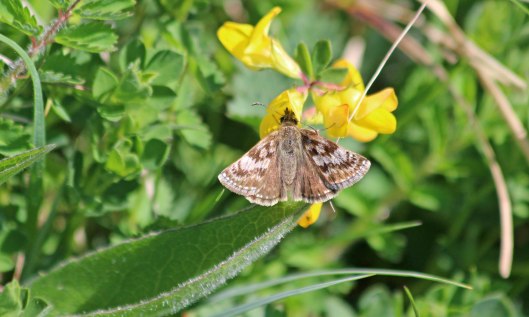
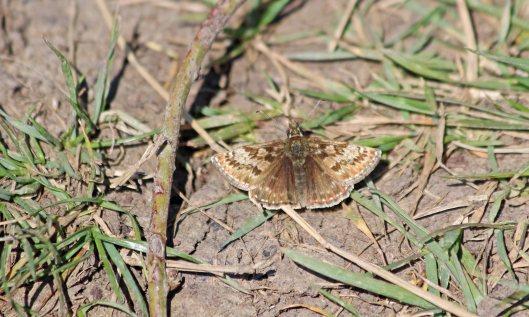
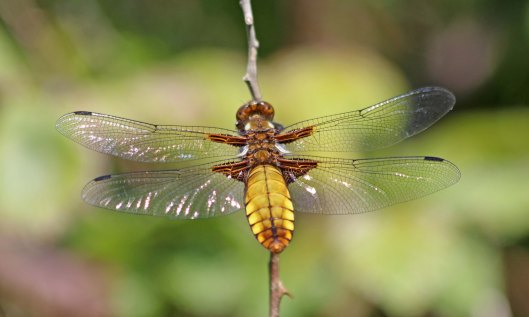
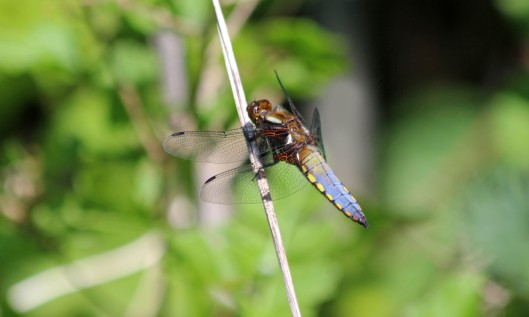
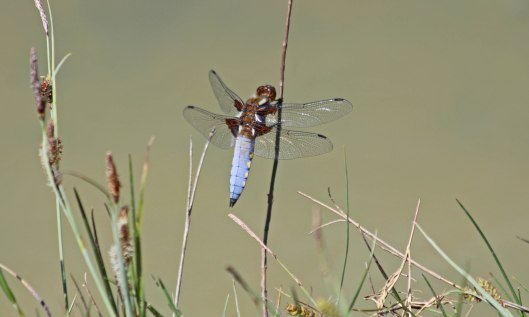
Not only did I see my first dragonflies of the year yesterday at Lavernock Nature Reserve but I also spotted my first Dingy skippers (Erynnis tages).

200507 dingy skipper (1)

At least four of these inconspicuous little butterflies were feeding on their favourite food plant, Common bird’s-foot trefoil, or basking on the compacted earth of the tracks through the reserve, as is their wont.

200507 dingy skipper (2)

Their preferences for bird’s-foot trefoil and patches of bare ground are why these butterflies are often found on chalk and limestone grasslands, on brownfield sites and in disused quarries, amongst sand dunes and along open pathways adjacent to woodland.

200507 dingy skipper (3)

Sun, shelter and good food – it’s not much to ask for. But, sadly, the Dingy skipper is one of many declining species of butterfly in Britain, probably due to the way land is managed and to the intensification of agriculture. So, I feel very privileged to be able to observe and enjoy these lovely little skippers so close to home.

200507 dingy skipper (4)

126/366 The Lady of the Woods

Tags

, , , ,

I know I already posted about seeing my first Orange-tip butterfly of the year (The ostentatious Orange-tip, 15 April) but, for those not familiar with this lovely springtime butterfly, I thought it might be useful to see a bit more detail. So, here is a typical male Orange-tip, from the top and the side. The speckling on the lower wings looks green but that’s an optical illusion – the colours are actually yellow and black.

And here’s a female from both angles. If you only see her from the top, you might confuse her with one of the other white butterflies, though the dark patches are different in all the whites, and the Orange-tip also has a distinctive wing shape.

I managed to find several eggs during a recent walk – the newly laid eggs are white but turn orange very quickly. You’ll find them on the caterpillar food plants: Cuckooflower, Garlic mustard and Honesty are three wildflowers this butterfly favours. And, for the first time ever, I found a caterpillar. This is a 2nd instar (i.e. stage) – the larvae proceed through 5 instars, progressively growing larger, until they are ready to pupate.

You might be wondering why I gave this post the title of ‘the Lady of the Woods’. Well, according to Peter Eeles’s superb publication Life Cycles of British & Irish Butterflies (every home should have one!), this is the name given to the Orange-tip by Benjamin Wilkes in his Twelve New Designs of English Butterflies, published in 1742.

125/366 Bonding

Tags

, , , ,

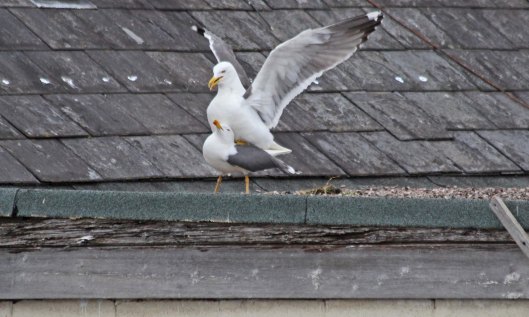
During the past couple of weeks, it’s been fascinating to watch two Lesser black-backed gulls – presumably, the same two who nested amongst a group of neighbouring chimney pots last year – renewing their pair bonds and practising their seduction techniques. The process goes a bit like this …

200504 lesser black-backed gulls (1)

They circle each other, beaks thrust towards the sky in unison, and there’s some low bird-speak (as opposed to gull shrieking) …

200504 lesser black-backed gulls (2)

One bird (the female, I think) begs the other for food, as if it is a chick, and the second bird regurgitates a niblet of food …

200504 lesser black-backed gulls (3)

There’s more circling and beak thrusting and chatter …

200504 lesser black-backed gulls (4)

Finally, the males jumps on the back of the female, though it takes them a couple of minutes to spread their wings, tails, feathers to reach the right angle to achieve copulation …

200504 lesser black-backed gulls (5)

And this happens more than once, the male remaining on the female’s back until they’ve copulated three times during this one session …

200504 lesser black-backed gulls (6)

Once finished, he jumps off, she puts her head down and waggles her rear end, and there is more low chatter, and a little beak bumping, before they both fly off.

200504 lesser black-backed gulls (7)