124/366 Ragged robin

Tags

, , , , , , ,

At Grangemoor Park on Friday, I spotted my first flowering Ragged robin for the year.

200503 ragged robin (1)

This gorgeous wildflower was formerly known as Lychnis flos-cuculi, but is now Silene flos-cuculi – from a scientific article I browsed, this seems a complicated story of almost constant reclassification of the species! You will still see both names used in books and on line, which is why I’ve mentioned both here.

200503 ragged robin (2)

According to a couple of books I discovered on the ‘language of flowers’, Ragged robin’s symbolic meaning is ‘wit’, and it is dedicated to Saint Barnabas. The ever-informative First Nature website says:

Lychnis, the genus name, comes from the Greek noun lychnos, meaning lamp; it refers to the use of a plant in this genus as the wick of an oil lamp. The specific epithet flos-cuculi means ‘flower of the cuckoo’ and was probably chosen because the first flowers of Ragged Robin appear just as the first cuckoos are being heard (in Britain and Ireland at least) in May.
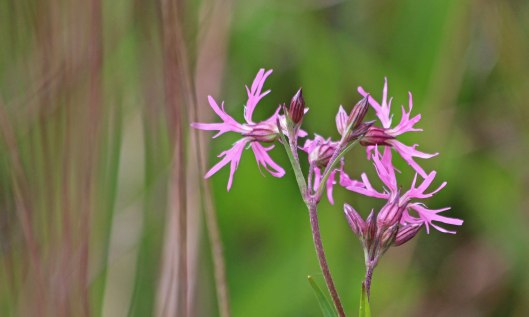
200503 ragged robin (3)

A special moment: to try to stop it swaying in the breeze so I could get a sharp photo, I was holding one of the blooms when a bee-fly decided to zoom in for a feed of nectar. That super long proboscis comes in handy for long narrow flowers like these.

200503 ragged robin (4)

123/366 Dock beetles

Tags

, , , , ,

Iridescent Green dock beetles are out in force now on the Dock plants in one of my local parks. I’ve blogged about these gorgeous mini-beasties before (Green dock beetles, May 2016) so today I’m just going to share a few photos. Keep an eye out for these on your exercise walks, and don’t forget to check carefully under the holey leaves for eggs and their little grey grubs.

200502 green dock beetle (1)


200502 green dock beetle (4)

122/366 Species 10

Tags

, , , ,

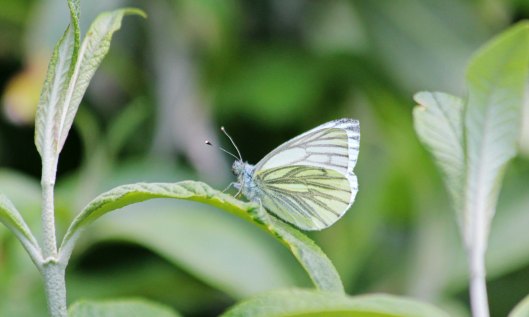
With the current restrictions on movement, my butterflying has got off to a slower start than usual but today I spotted my first Green-veined white butterfly of 2020, my tenth species for the year, during my walk around Cardiff’s Grangemoor Park.

200501 Green-veined white (1)

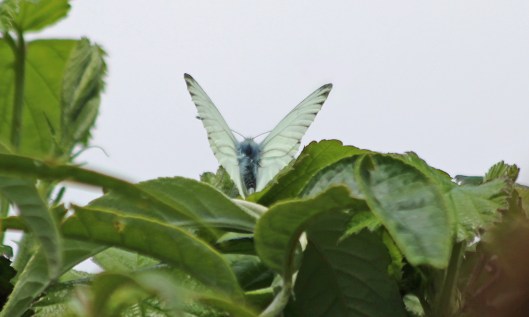
This pristine male only appeared briefly, before disappearing amongst the leafy trees, but it was a joy to see him. These spring-brood Green-veined whites are often very pale – I can’t even see the small dark spots on his upper wings and he has only a hint of yellow colouring on his undersides. The summer brood, when they emerge in July and August, usually show darker markings – I’ll try and do a comparison post later in the year to show the differences.

200501 Green-veined white (2)

120/366 What’s in a gall?

Tags

, , , , , ,

Back in October 2017, I blogged about a gall I’d found (More galls, part 2), the gall created by the Thistle gall fly (Urophora cardui). Here are two photos of those galls: on the left, the gall growing on the thistle (in fact, there are two galls – there’s a second one, still quite small, in the background to the left) and, on the right, a dried version, which I harvested from a thistle plant at the end of last year and which I’ve since been keeping at home in a jar.

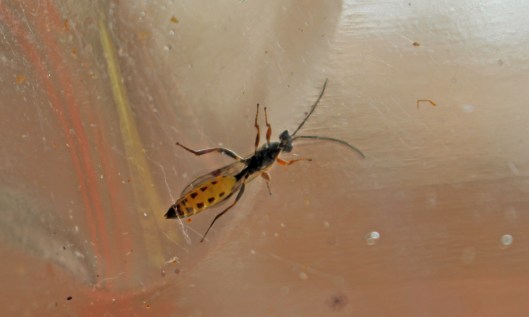
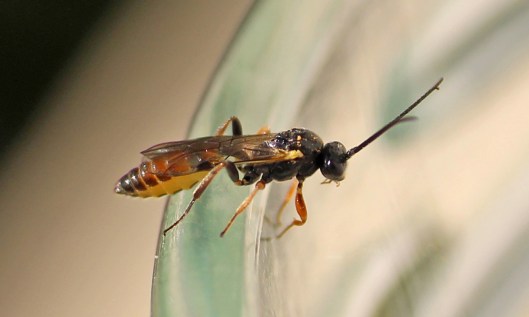
According to my research, the Thistle gall flies don’t usually emerge until June but last week flying creatures began emerging from the gall. On closer examination, I found the empty pupae case (pictured below right) poking out of one of several holes in the gall.

So far, five little critters have hatched but these are not Thistle gall flies. They appear to be some kind of parasitic wasp, which I have not yet managed to identify – there are thousands of species of parasitic wasp and these are not the species that is normally considered the primary parasite of the Urophora cardui (which is a wasp called Eurytoma robusta).

200429 5 thistle gall fly gall parasite

Underside of wasp, photographed through glass of jar

I don’t know whether any Thistle gall fly larvae or pupae still survive within the gall or, indeed, whether anything else will yet emerge. So, for now, the gall remains in its jar, and I’ll post again if any other aliens appear.

This story has a sequel as all in this gall was not as it seemed – here’s a link to part 2, A Tale of two galls, May 2020.

200429 6 thistle gall fly gall parasite

One of the mystery wasps, sitting on the edge of the jar, as it was being released

119/366 Sheltering

Tags

, , , , ,

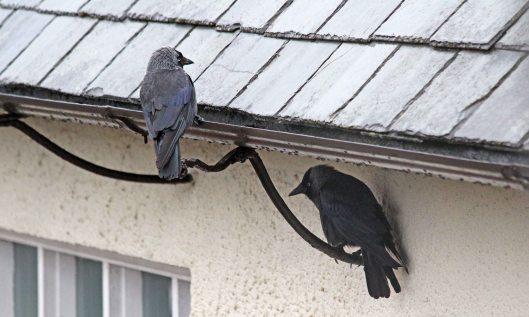
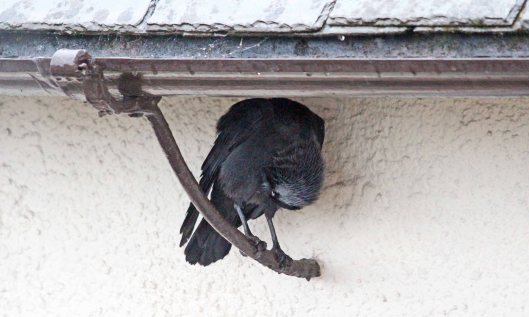
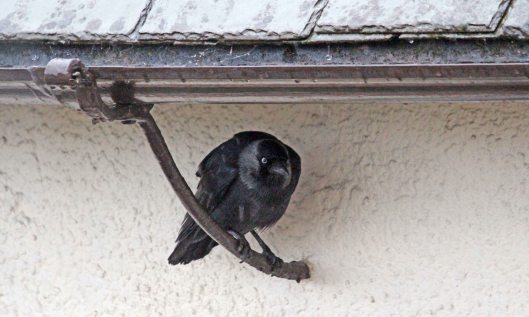
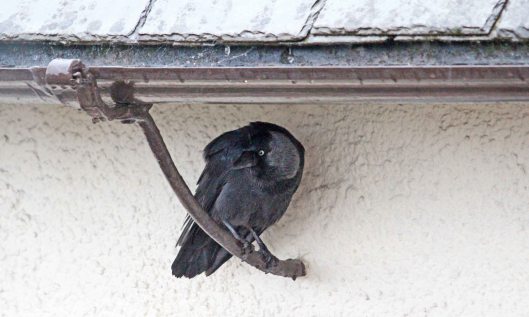
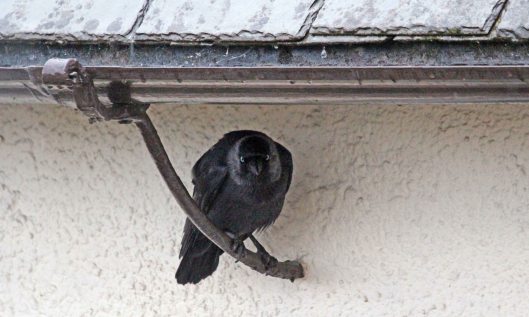
My local Jackdaws are excellent weather indicators. If I haven’t already realised how wet it is outside, I have only to glance out my bedroom window to see where they are. If they’re sitting under the eaves on the old-fashioned gutter supports, then I know it must be teaming down.

200428 jackdaws (1)200428 jackdaws (2)

Sometimes they look really miserable sitting there, each on their own bracket. Other times, they snooze, or use the opportunity for a groom and feather spruce up.

200428 jackdaws (3)200428 jackdaws (4)

I have to be careful trying to get photos of them, as those alert blue eyes are always aware of what’s happening around them, even when I think they’re not.

200428 jackdaws (5)200428 jackdaws (6)

118/366 A birding fix

Tags

, , , , , , , , ,

I felt the need to see some birds today so headed down to Cardiff Bay for my exercise walk. First up, this pair of Shelducks were working their way around the water’s edge near the Barrage – first I’ve seen since the lockdown began.

200427 1 shelducks

This Starling had a beakful of caterpillar and flies so I presume it had hungry mouths to feed somewhere nearby.

200427 2 starling

At least fourteen Turnstones were picking and poking their way along the stones of the embankment, this one looking very handsome in its breeding colours.

200427 3 turnstone

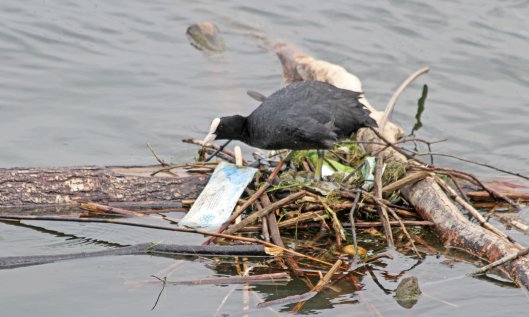
This Coot was busy pulling bits of rubbish into the pile of sticks it has begun shaping into a nest. Its mate was nearby, hauling a branch to weave into the growing structure.

200427 4 coot

This was the first Rock pipit I’ve seen for a little while. It was busily prospecting for nibbles so perhaps it also has offspring to feed.

200427 5 rock pipit

Most of the wagtails have moved away to breed but this Pied wagtail looked very handsome amongst the Herb Robert and Red valerian that now covers much of the embankment.

200427 6 pied wagtail

117/366 It’s Pea time

Tags

, , , , , , ,

You know the summer’s not far away when members of the extensive Pea family start to flower and, during this week’s exercise walks, I’ve spotted four Pea species newly come in to flower. The first were three of the vetches …

200426 Bush vetch

Bush vetch (Vicia sepium)

200426 Common vetch

Common vetch (Vicia sativa) … and friends.

200426 Grass vetchling

Grass vetchling (Lathyrus nissolia)

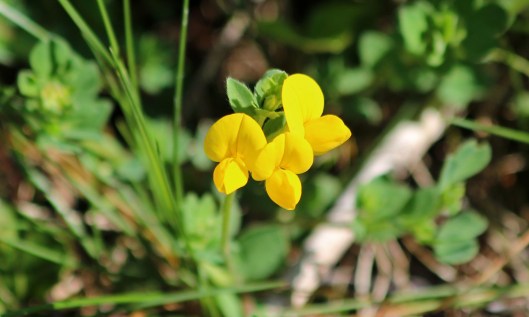
200426 bird's-foot trefoil

And, also, one of my all-time favourites – possibly because it’s also a favourite with a lot of the butterflies and day-flying moths I adore so much, Common bird’s-foot trefoil (Lotus corniculatus).

200426 Red campion

Oh, and this week’s new blooms also included one not-a-pea wildflower, the always lovely Red campion (Silene dioica).

116/366 A gall and its parasites

Tags

, , , , , ,

This must be the largest Oak apple gall I’ve ever seen – it was at least 1½ inches across, and it had attracted the interest of several small wasps, though these are not the wasps that created the gall in the first place.

200425 oak apple gall

I assumed that they were parasitic wasps about to use their long ovipositors to inject their own eggs into the gall, and it turns out my assumption was correct. Thanks to the British Plant Galls account on Twitter (@BritGalls), and to another Twitter user’s tweet, I’ve learnt that the tiny wasp in the photo below is a member of the Chalcis genus of wasps, probably one of the family of Torymidae. They are ectoparasites: their larvae feed on the larvae of the Oak apple gall wasp that created the gall in the first place.

200425 parasitic wasp

115/366 Short but sweet

Tags

, , , ,

When out for my walk in Grangemoor Park yesterday, I had paused to watch a Whitethroat songflighting when I suddenly had the feeling I was being watched. And, indeed, I was, by this handsome Wheatear. It sat still for quite some time, perhaps exhausted from its migration journey, but then along came a dog-walking woman calling loudly for her wayward dog and off the bird flew. It was a delightful, if too short encounter.

200424 wheatear