94/366 Curiosity

Tags

, , ,

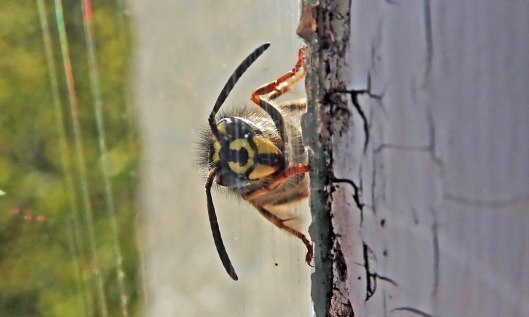
This Common wasp (Vespula vulgaris), which was enjoying the warm sunshine on the front of the house this morning, seemed to be as curious about me as I was about it.

(Yes, the windows are a mess – I live in a flat in a Grade II listed building that’s well over 100 years old, and the windows, most of which still have Victorian glass in them, with all its imperfections, are in need of major repair. It’s a long and ongoing story.)

93/366 Cat’s-paw

Tags

, , , ,

By sheer coincidence, author Robert Macfarlane’s ‘word of the day’ today on Twitter is cat’s-paw.

200402 cats paw (1)

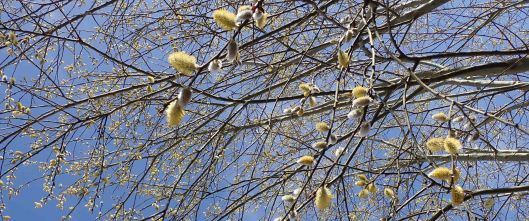
He writes about them: ‘nickname for catkins of the smaller willows/sallows (Goat willow, pussy willow, grey willow); among the earliest signs of spring; first grey & silky, then growing a glowing aura of tiny flowers. Often brought into houses at Easter/on Palm Sunday.’

200402 cats paw (2)

I had already decided that today’s post would be on this same topic so here are the photos I’ve been collecting over the past week or so. These are of different trees so it’s quite likely they are not all the same species of willow (and I’m useless at working out which is which), but I love the way the catkins develop from soft furriness to beautiful bursts of yellow, and the insects love them too.

200402 cats paw (3)

92/366 The Devil’s butterfly?

Tags

, , , , ,

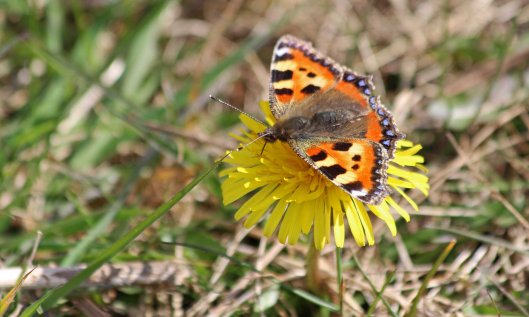
Today’s fascinating information on the once common, now less so Small tortoiseshell (Aglais urticae) is taken from Peter Eeles’s magnificent publication Life Cycles of British and Irish Butterflies (Pisces Publications, 2019). If you like butterflies and don’t have this book, you really should get it, as it’s jam-packed with amazing detail and fabulous photos.

200401 small tortoiseshell (1)

In the section on the Small tortoiseshell, Eeles reports on the variety of names it has had over the centuries: the Lesser Tortoise-shell Butterfly (James Petiver, Musei Petiveriani, 1699); Small Tortoiseshell (Benjamin Wilkes, Twelve New Designs of English Butterflies, 1742); and Nettle tortoiseshell (William Lewin, Twelve Papilios of Great Britain, 1795).

200401 small tortoiseshell (2)

Eeles also notes that, in Scotland, in the past, this lovely creature was called the Devil’s butterfly and the Witch’s butterfly, though he doesn’t explain how it got those unfortunate names.

200401 small tortoiseshell (3)

This particular Small tortoiseshell was the highlight of yesterday’s exercise walk around Grangemoor Park (luckily, Cardiff’s parks are still open, though this is the only one in walking distance for me). It was a joy to see, as we don’t get a lot of these butterflies in my local area, and I was delighted when it settled in a couple of places so I could get some photos.

200401 small tortoiseshell (4)

91/366 The bells are ringing

Tags

, , ,

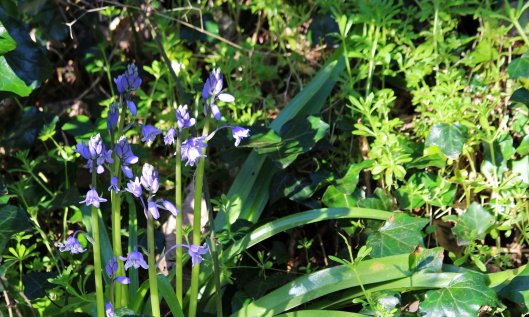
The Bluebells are in bloom!

200331 bluebells (1)

Sadly, these are not native Bluebells but they were growing in a semi-wild location rather than in a park. As I passed along the edge of one local park yesterday, I noticed the Bluebells inside are also starting to open their gorgeous flowers but, as the park is currently closed, I can’t get in to enjoy them. Are the Bluebells out yet where you live?

200331 bluebells (2)

90/366 Dawdling

Tags

, , , , ,

As many of us are doing during our Covid-19 lockdown, and as I don’t have the solace of a garden, I’ve been spending a lot of time staring out my windows. And one thing that has been entertaining me has been the antics of a pair of Jackdaws who are nest-building in a neighbour’s chimney. They’ve chosen a great spot, well weather protected and in the house of a woman who constantly has her bird-feeders full.

200330 jackdaws 200303

3 March. It was before the lockdown that I first noticed a little courtship grooming happening, and it was a couple more weeks before the couple decided to build a nest together.

200330 jackdaws 200322 (1)200330 jackdaws 200322 (2)

22 March. Structural work has begun. Twigs, large and small, are being carted in from various neighbourhood locations.

26 March. A+ for effort. E for spatial awareness. I thought Jackdaws were meant to be smart birds.

200330 Jackdaws 200329

29 March. Delivery of the soft furnishings has begun.

200330 Jackdaws 200330

30 March. Today, activity seems to have stepped up a notch. Not only have I seen this wool (?) being brought in but both birds have been in the tree in front of my house, breaking off live twigs to take to the nest.

I’ll keep watching and bring you another update soon …

89/366 This week’s new wildflowers

Tags

, , , , , , , , ,

During this week’s walks, which have, of course, in our current lockdown situation, been shorter and much more restricted than my usual meanderings, my mood has been brightened by the sight of our beautiful flowering wild plants, especially those that have just come into bloom in recent days. They’re a heartening reminder of better times to come … eventually. These are those I’ve found this week.

200329 barren strawberry

Barren strawberry (Potentilla sterilis): It seems a shame that this species of strawberry doesn’t produce the luscious fruit we all enjoy in the summer months. Instead, its berries are small and quite hard.
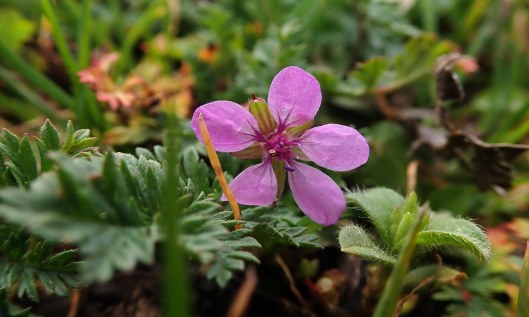
200329 Common stork's-bill

Common stork’s-bill (Erodium cicutarium): I was delighted to spot these pretty little things. I’m a big fan of the whole Geranium family, the crane’s-bills and the stork’s-bills.

200329 dog-violet

Dog-violet (Viola sp.): The photos I took weren’t good enough for me to work out whether these are Early dog-violets or Common dog-violets but they’re pretty nonetheless.
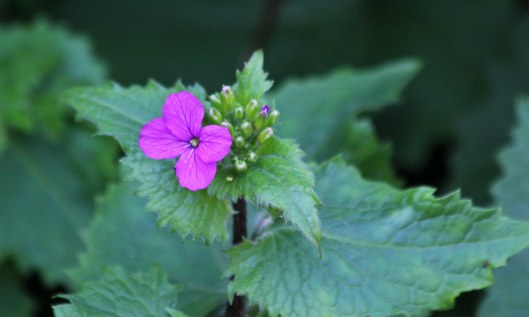
200329 honesty

Honesty (Lunaria annua): When I had a garden I used to grow Honesty, partly for its lovely flowers but also to harvest the branches of seed pods once they’d dried. I love their fragility and the way they glisten in the sunshine. Their vernacular name, Moonpennies, is so appropriate.

200329 marsh marigold

Marsh-marigold (Caltha palustris): These were growing in the depths of a small dingle right in the middle of the town where I live, the flowers are little bright lights beaming up from the gloom.
200329 ramsons

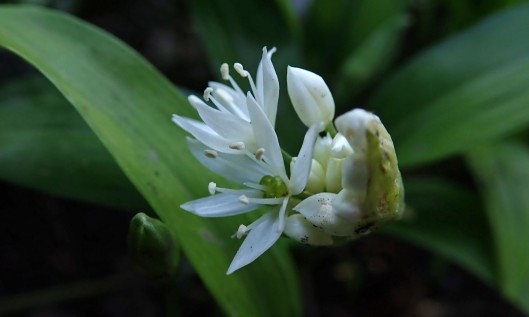
Ramsons (Allium ursinum): That same valley where I found the Marsh-marigolds is also home to swathes of Ramsons, also known to many of us as Wild garlic. There must be thousands of these plants in the valley and along the sides of the stream bed that leads from there down towards the sea.

88/366 Down by the riverside

Tags

, , , , , , , ,

Today’s exercise walk saw me up and out of the house by 7am for a stomp down to Cardiff Bay and the embankment path alongside the River Ely. There was, and still is, a bitterly cold wind blowing, pushing small waves up on to the stones of the embankment so I was surprised to see any birds there at all. But the further up river I went the more sheltered it became and the embankment foragers appeared.

200328 1 redshank

First up was this Redshank, poking about at the water’s edge, its feathers ruffled by the wind gusts.

200328 2 turnstones

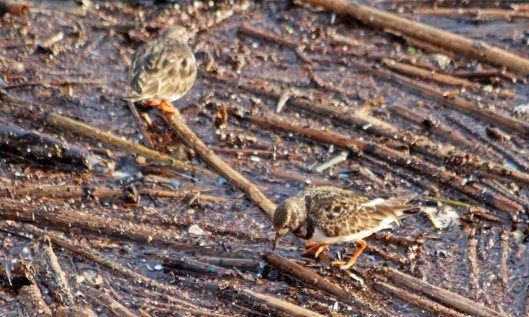
Next, in a corner where rubbish often accumulates, three Turnstones were poking about amidst the branches and twigs, plastic bottles and other assorted detritus.

200328 3 mallard

Two Mallards came waddling hopefully up the stones while I was watching the Turnstones. Sadly, I didn’t have any seed for them today.

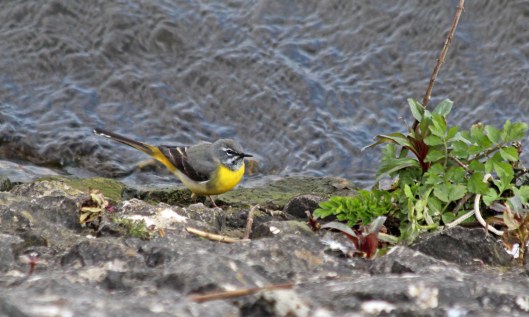
200328 4 grey wagtail

Lucky last, and most colourful, was this bright little button, a Grey wagtail, which was singing a little song to itself as it pottered along.

86/366 Dandelions and Brimstones

Tags

, , , , , ,

Here’s why it should be an offence to cut, spray or otherwise destroy blooming wildflowers – in this case, Dandelions, in particular.

200326 brimstone (1)

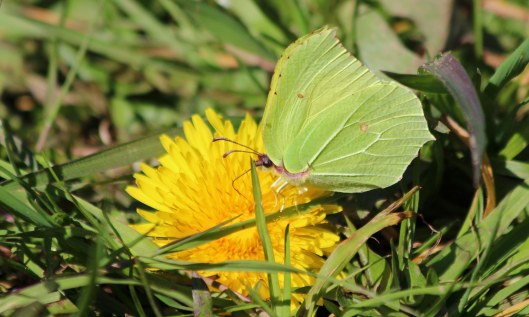
During yesterday’s daily exercise walk around Grangemoor Park I saw at least five Brimstone butterflies. These were all males, newly emerged from hibernation and already flying frantically back and forth along their chosen path-sides and hedgerows, seeking out females to mate with.

200326 brimstone (2)

As there aren’t yet many wildflowers in bloom at Grangemoor, when it came time to refuel for their next patrol flight, every single one of these Brimstones stopped and supped on Dandelion nectar. In fact, once I twigged to what they were doing, I took to checking every Dandelion I saw, just in case it held a butterfly. So, please, PLEASE, leave your Dandelions for the insects to feed on.

200326 brimstone (3)

85/366 Water lilies

Tags

, , ,

200318 waterlilies (8)

It’s easy to see why water lilies inspired Monet to depict these sublime blooms over and over again, in a series of around 250 compositions in oils – such delicate hues, such symmetrical structures.

My photos are no match for Monet’s impressionistic masterpieces but, really, the flowers themselves are the masterpieces. These were flourishing in a huge public garden in the tropical climate of Singapore.

200318 waterlilies (7)