Grebe vs eel

Tags

, , , , , , , ,

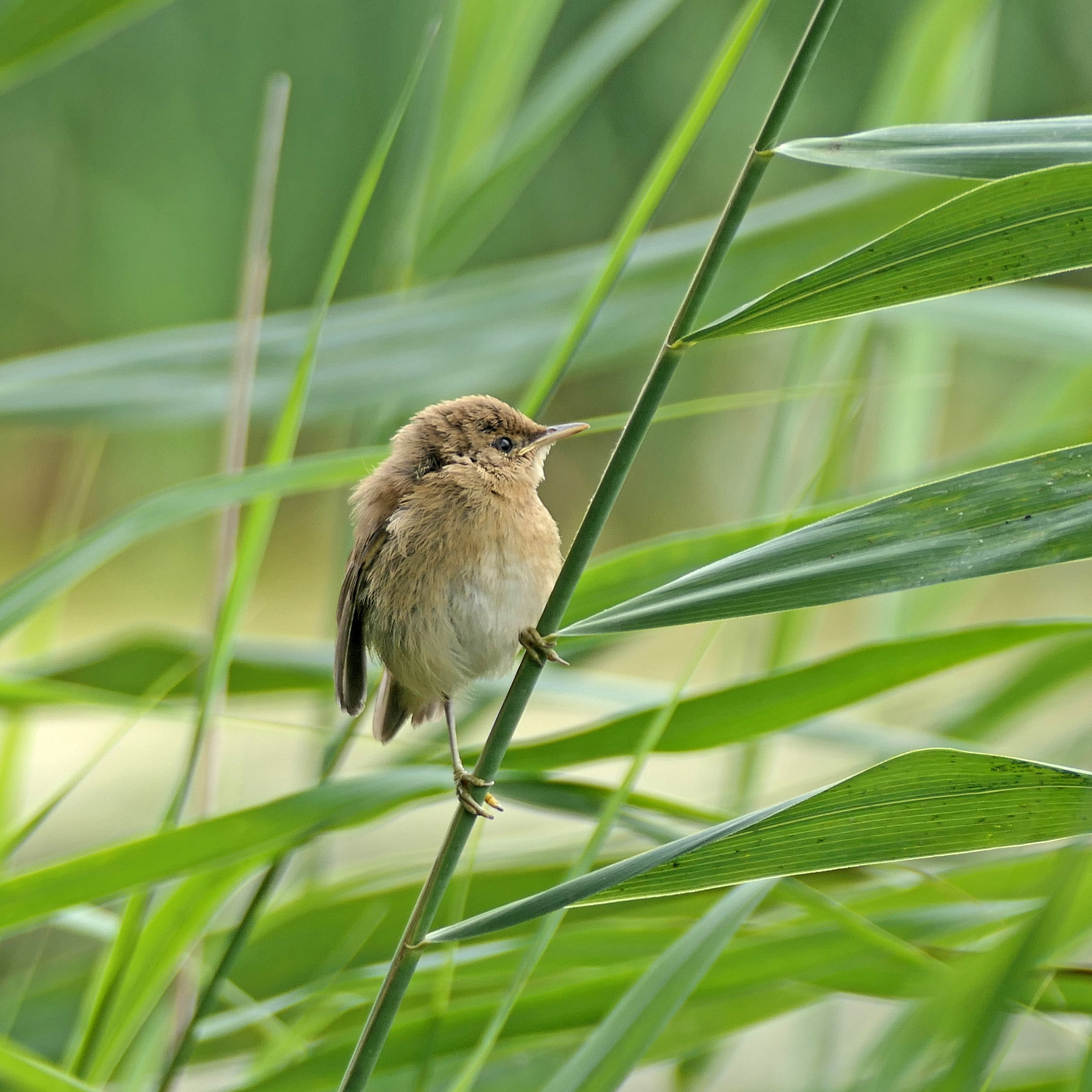
The Great crested grebe chick would not shut up, squeaking incessantly for food even while it was preening.

So, abandoning its attempt at a snooze, the parent grebe slid off its pile of weed to head off in search of fish.

What the parent brought back to feed its ever-hungry youngster was an eel, a squirming struggling eel that was putting up a strong fight for its life.

The grebe parent tried to at least stun the eel, bashing it repeatedly against the surface of the water.

However, the eel was definitely still alive and wriggling when the parent passed it to its chick.

The chick struggled to find a way to swallow the still moving eel but appeared, after a few minutes, to gulp it down.

To the youngster’s surprise, and mine, the eel was not done with its fight for life, somehow managing to slither back up the grebe’s throat and back out of its beak.

It took perhaps five more minutes before the youngster managed to grab it, poke it, manoeuvre it into position and once again swallow down the eel. This time it stayed down.

Why did the shrew cross the road?

Tags

, , ,

Why did the shrew cross the road? Perhaps it was to escape the ‘explosive atmosphere’.

These signs at Grangemoor Park are new so, presumably, recent tests have shown an increase in the gases leaking through the soil from whatever toxic combination of rubbish and dumped materials are lurking, mouldering beneath the ground in this former town rubbish dump. I don’t feel endangered but it did make wonder what effect it might have on the much smaller creatures that inhabit the park.

The fact that I saw the (probably Common, but they can be hard to positively identify) shrew was mere coincidence, and a wonderful chance encounter. Usually, I only see dead shrews so it was lovely to be able to watch this little mammal, scurry about at the edge of the tarmac path, race half way across then back again, sniff about in the low vegetation once more, before finally racing right across the road and disappearing into the foliage.

A new kid in town

Tags

, , , , , ,

‘My’ crows have a kid!

~ youngster and its mother

Last time I visited I thought they might perhaps be having a second try at breeding as, rather than flying down together, the female Carrion crow came first. She’s always more hesitant at approaching me, whereas the male will fly almost to my feet and walk towards me. Twice the female flew off towards the woodland with food, rather than caching it in the field that is their territory, and the male only appeared for his share just as I leaving their area.

~ always curious

During my most recent visit, I heard the raucous calls of a youngster before I saw it. Mum and Dad flew in together, very eager for the suet pellets I take for them, and then flew to the tree where their youngster was waiting, as well as caching stashes of pellets on the ground for later. There was only one fledgling but, given how dry this summer has been and how few insects there are, one hungry mouth is probably more than enough for the adult birds to cope with and satisfy.

~ always hungry

Glorious Graylings

Tags

, , , , , , ,

Last Tuesday’s walk was strenuous but the result of my efforts was magical!

As I try to do around this time every year, I caught a train up to Bargoed, then trudged down to the River Rhymney, up the steep slope on the other side to Aberbargoed, then up the even steeper hill that is the former colliery spoil tip.

Why? Because this is the closest and most accessible location I know where I might find Grayling butterflies.

And, yes, as you can clearly see from the extravagance of photographs in this post, my quest was successful.

In fact, I saw more Graylings this year than in any previous year, and they were also more widely spread across the site than I have seen previously.

The national population of Graylings has plummeted in recent decades and they are now officially classified as an endangered species, so their abundance was particularly heartening to see.

It may be that this year’s warm weather suits them, though I think it is likely also to be at least one of the reasons they have dispersed more widely across the tip; the heat means plants are not producing as much nectar so the butterflies have to fly further to find food.

That did mean I was able to photograph these glorious Graylings on a variety of wildflowers and in settings other than them simply sitting on the coal spoil, which made my time spent amongst them even more special.

Goldfinch envy

Tags

, , , , ,

I’ve just taken a look at today’s weather forecast and the temperature peak will feel like 12 degrees Celsius. That’s a whopping 20 degrees lower than last Friday when I took these photos and our highs here in south-east Wales, during our third heatwave of the summer, reached a sweltering 32º C.

Then, I was feeling very envious of these Goldfinches and their big puddle of water (though it’s at the start of someone’s driveway along a countryside lane, I think this is actually a pipe leak, as we haven’t had rain in sufficient quantity to create this big a puddle, and there is always water at this location).

Next in after the two Goldfinches finished their refreshing dunking were a Robin and a Blackbird, with two Woodpigeons waiting close by for their turn to cool down.

Leafmines: Phyllonorycters on Alder

Tags

, , , , , ,

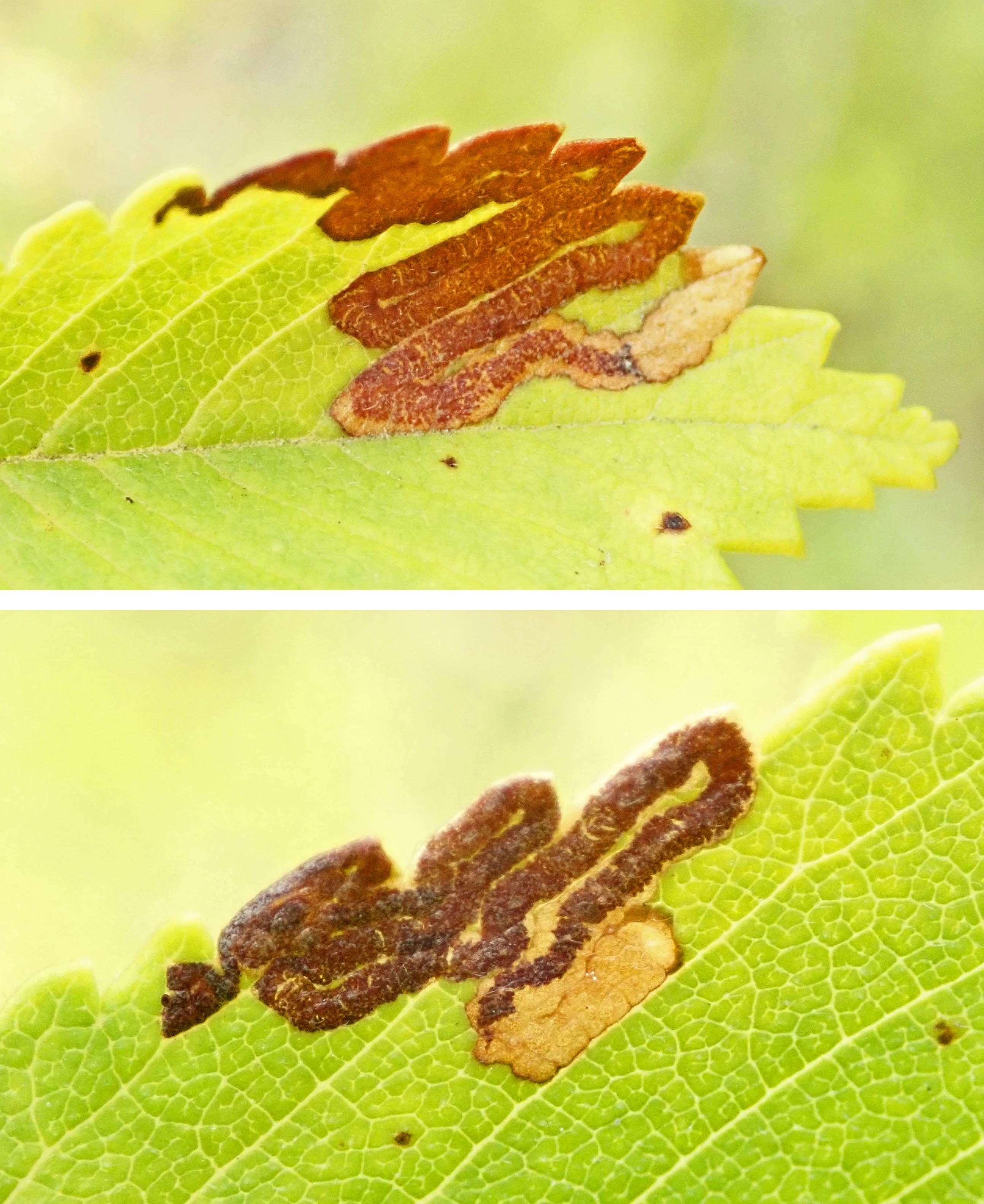
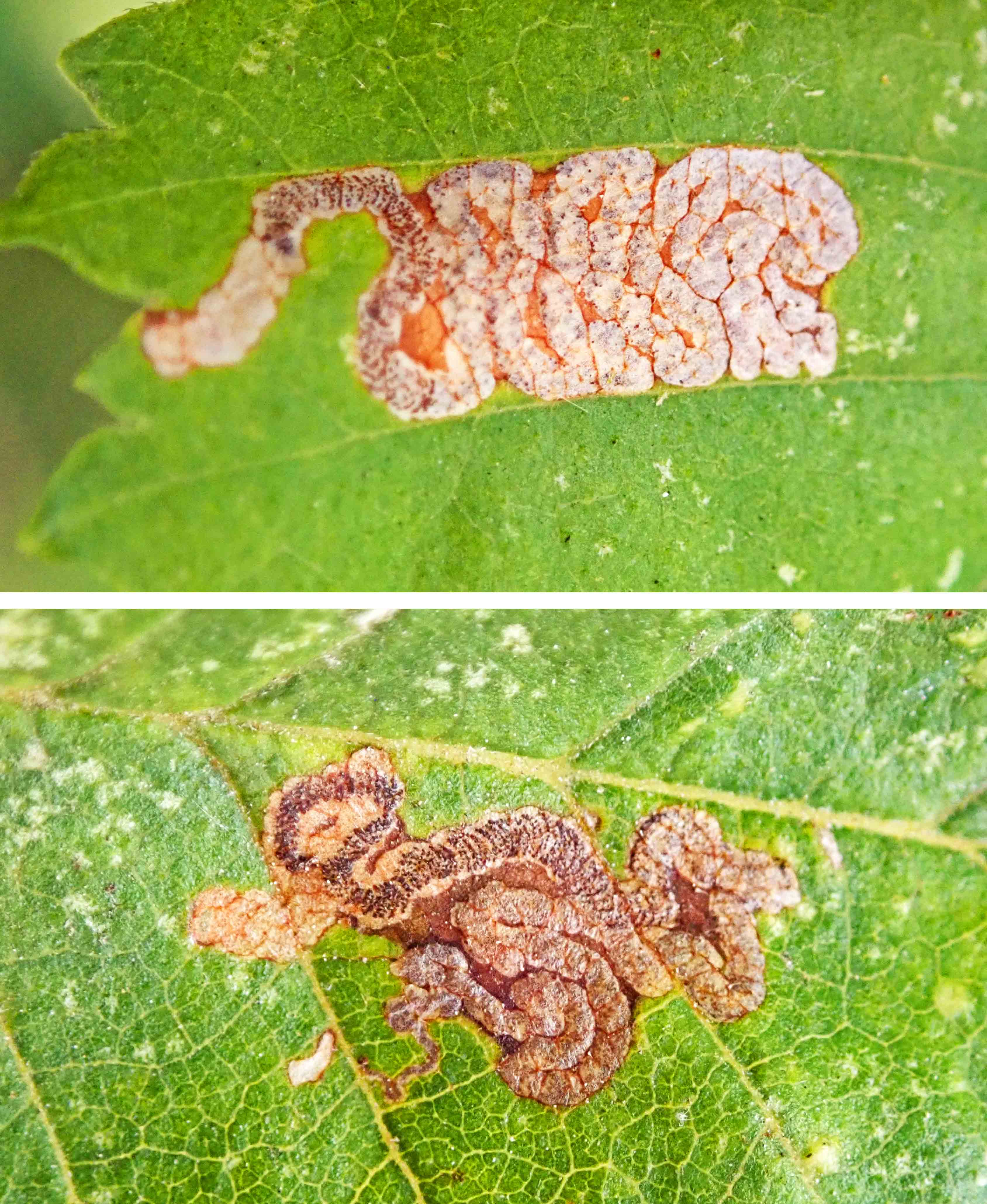
It’s been a while since I’ve blogged about a new leaf-mining moth, and today you get two for the price of one.

You see, the larvae of both these moths mine the leaves of Alder trees, creating a blotch with a single strong crease along the mine’s centre but, fortunately for those of us trying to identify these mines, there is one vital difference: the larval mines of Phyllonorycter rajella (below) can be found on the underside of the leaf, whereas the mines of Phyllonorycter stettinensis (above) are on the upper side of the leaf.

Both moths are bivoltine, i.e. they produce two generations each year; in both cases, the adult moths are active in May and again in August, so there’s a good chance of seeing the mines right through the summer. Amazingly, I’ve actually seen the adult Phyllonorycter rajella moth several times – two instances are shown below, but you can see better images of the very pretty adult moths of both these species on the UK Moths website: click the name to see Phyllonorycter rajella here, and Phyllonorycter stettinensis here.

Harebells

Tags

, , , , ,

Though my Flora Britannica tells me the Harebell (Campanula rotundifolia) is ‘one of the most catholic in its choice of habitats’, growing on almost ‘any kind of dry, open and relatively undisturbed ground, from mountain-tops to sand-dunes’, it does not grow in my part of coastal south Wales.

So, for me, it was a delight to see the delicate blue bell-shaped flowers of this lovely wildflower nodding in the breeze on Rodborough Common during my recent visit to Gloucestershire. (In fact, I really must plan an earlier visit up that way as the Common is known for its wonderful wildflowers, especially several species of orchid, but everything was looking rather frazzled in the summer heat.)

It’s probably no surprise that the Scots often call Harebells ‘bluebells’ – the name fits well their flower’s colour and shape, though the Harebell blooms later, between July and September. The Wildlife Trusts website says Harebells have other vernacular names that allude to their magical associations: ‘witches’ thimbles’ and ‘fairy bells’, but I haven’t found any more detail about why that is.

Bug: Arocatus roeselii

Tags

, , , ,

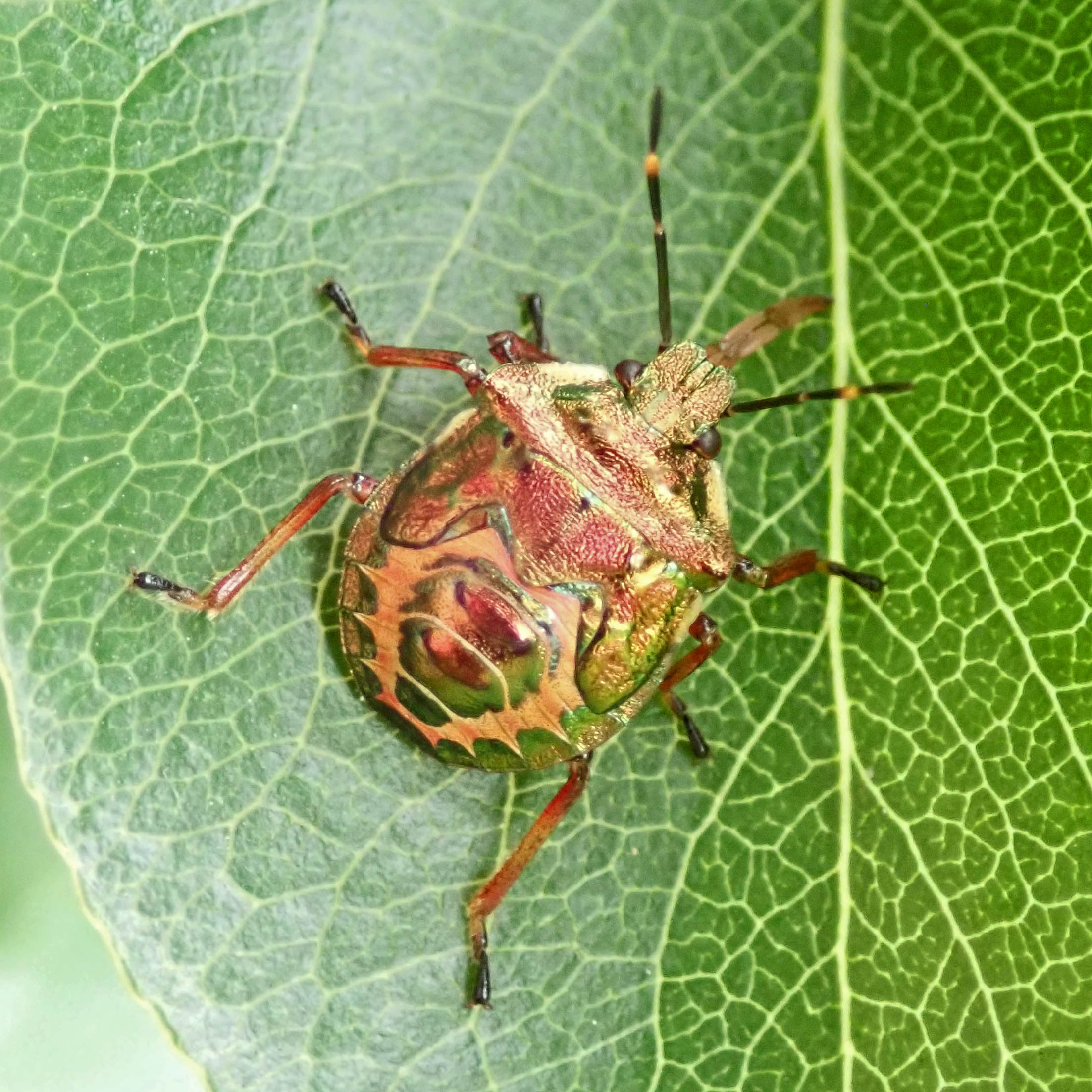
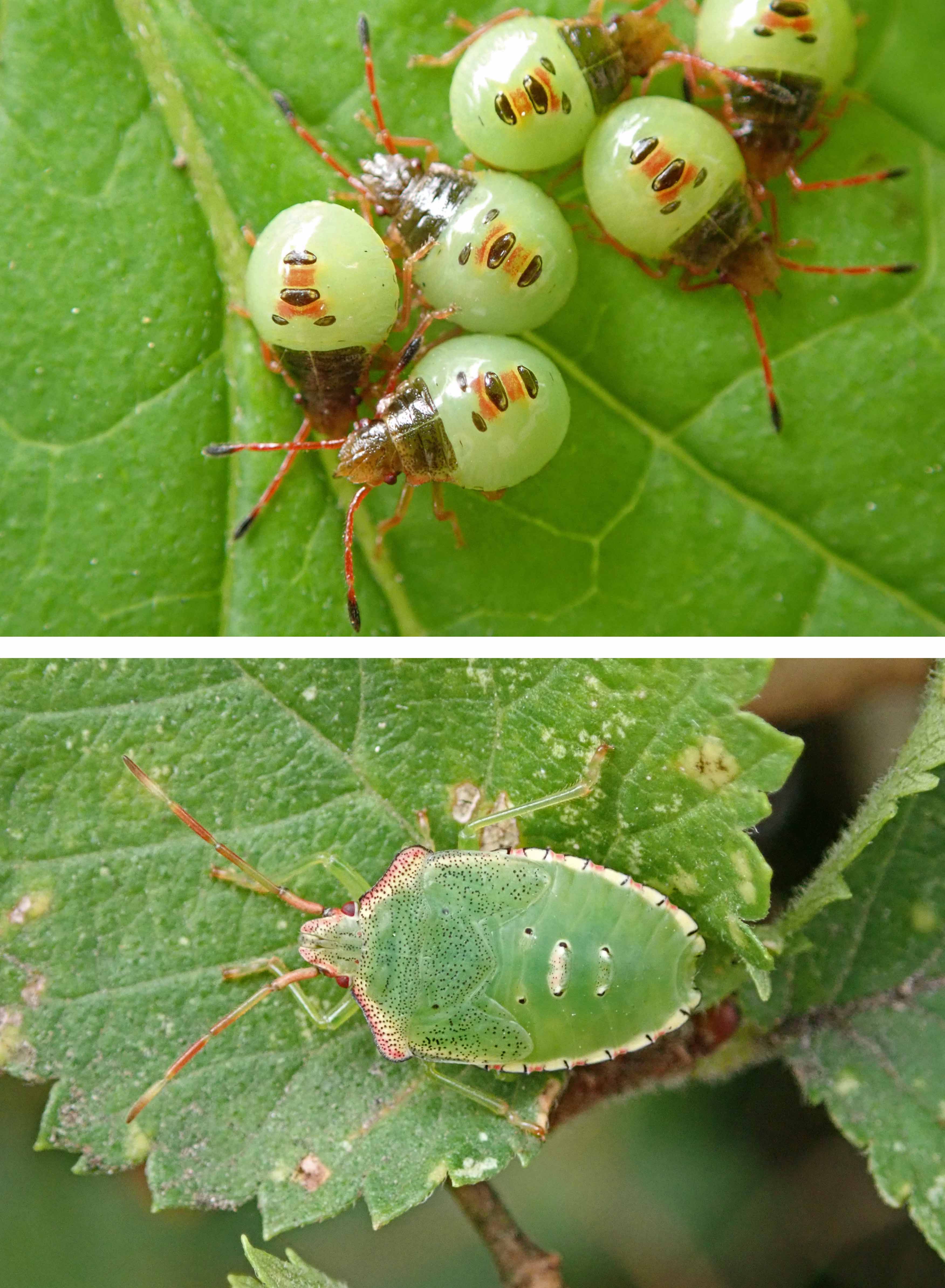
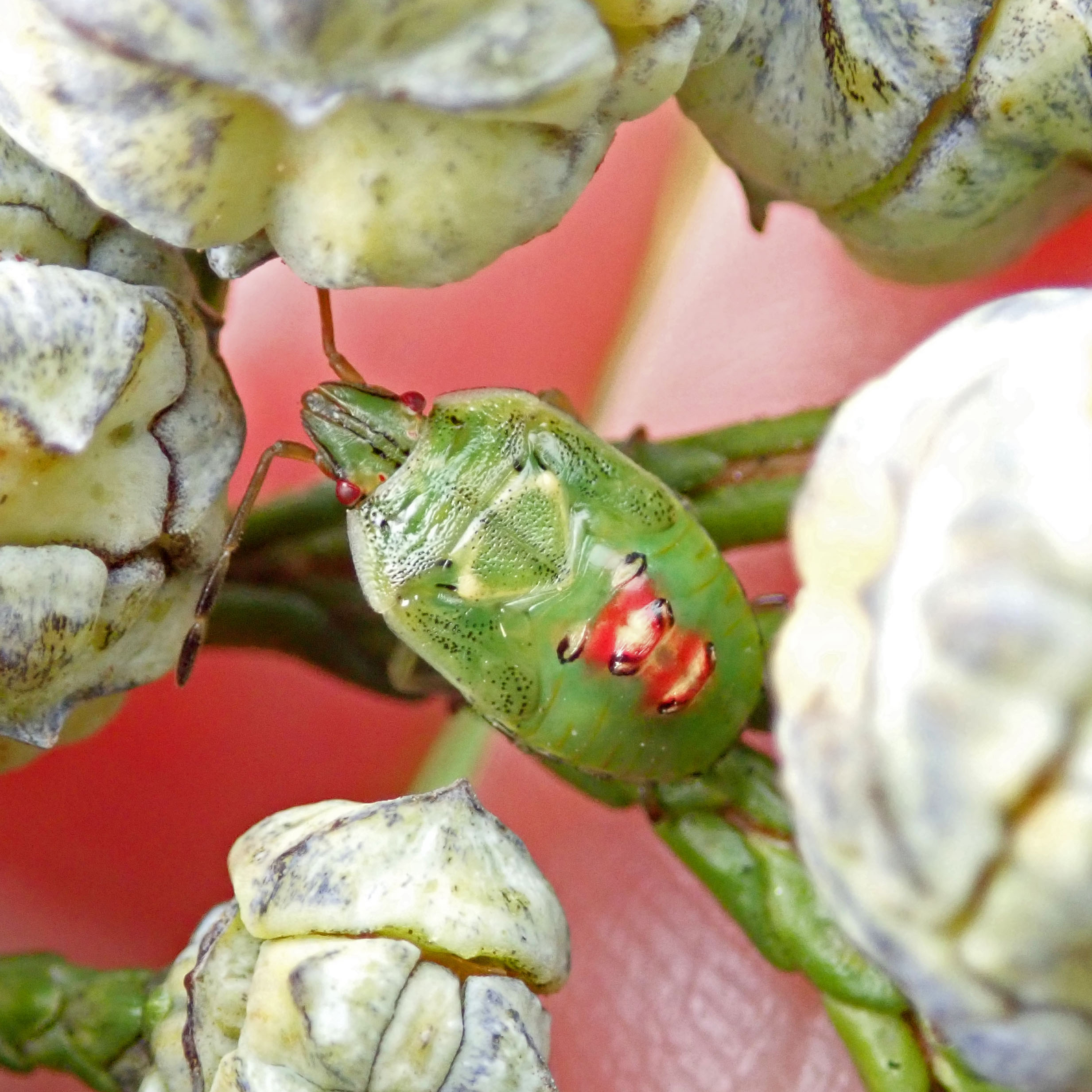
This new bug is intriguing. According to the British Bugs website, it was only found in England in 2007, and only on Plane trees in London and the southern counties. Due to that association with Plane trees, the experts decided that the bug they’d found was Arocatus longiceps, and, when an extremely similar-looking bug was found in the same locations several years later, but was found to be feeding only on the seeds of Alder trees, the consensus was that it must be Arocatus roeselii. Since that time, German scientists have checked the genes of the two species and found no difference between them; the red and black colours of the Alder seed-eaters are apparently more intense but this is likely to be due to their diet, rather than an indication that they are two separate species.

So, if you were to google or research these bugs, you might see them referred to as Arocatus longiceps / roeselii. I found my bugs, both the nymph in the photos above and the adult in the image below, on a roadside Alder tree last Sunday, so I’m going to stick with the name Arocatus roeselii until any possible species confusion is irrevocably settled. And aren’t they super looking little bugs, whatever you might want to call them?

** EDIT: I found out on 1 August that this find was the first for Wales! **

Roaming Rodborough Common

Tags

, , , , , , , ,

On my last full day in Gloucestershire I caught the train to Stroud and spent several hours roaming around Rodborough Common, another hot spot for butterflies and a location with stunning views over the beautiful surrounding hills and valleys of the Cotswolds.

And here they were again, those gorgeous flying black-and-white chequerboards, the Marbled whites. After Tuesday’s remarkable butterfly numbers, I already had more than enough photos of Marbled whites but, as any photographer knows, you can always do better, so I couldn’t resist taking more images.

Though the top plateau of the Common is relatively flat, the hillsides are steep and criss-crossed with narrow paths, for use by people and the cattle that help to maintain the grassland habitat.

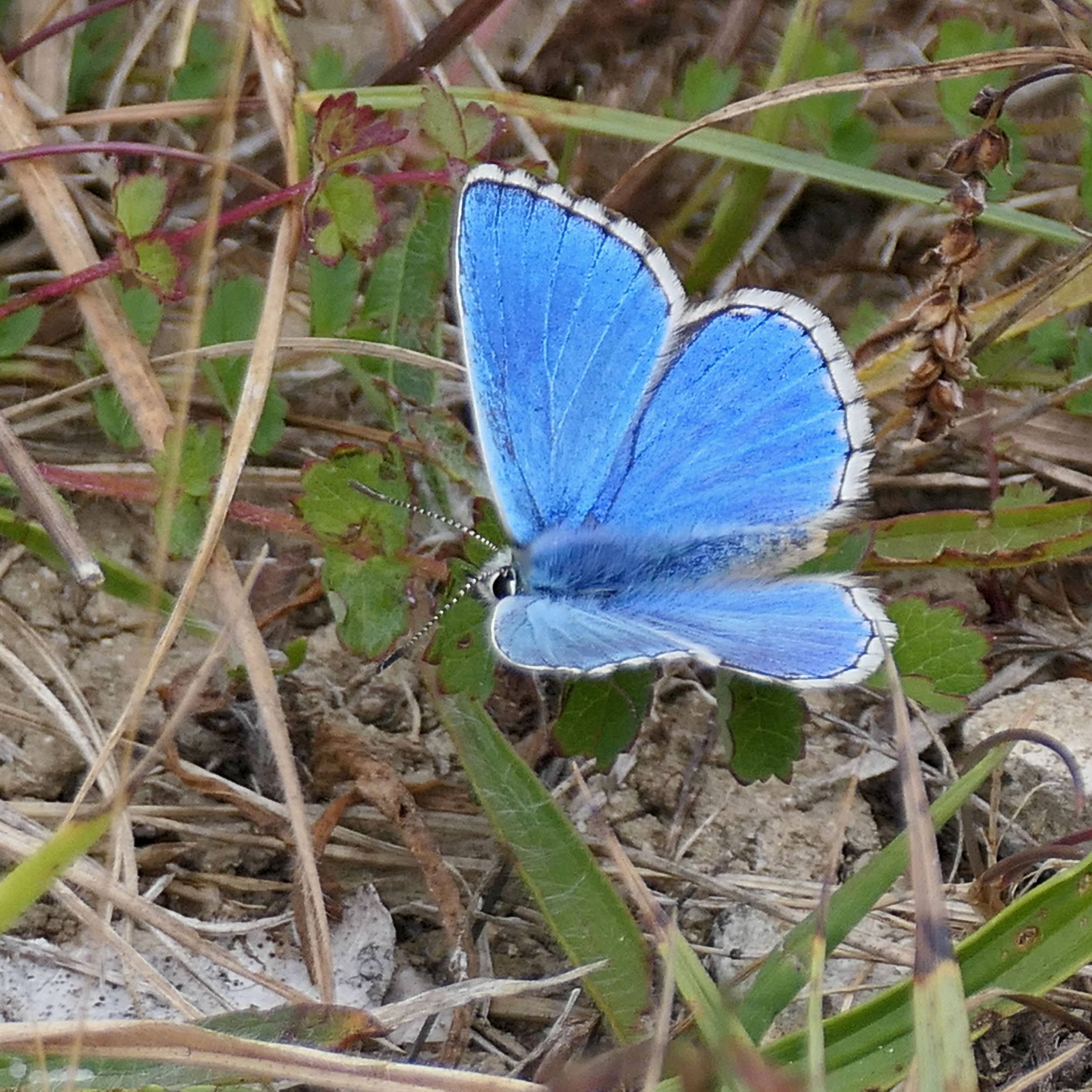
This was a 15-butterfly-species day, with many of the more common butterflies I see in other locations. This Small heath posed very prettily for me. And the sight of the blue caused a slight heart flutter, as the very rare Large blues have been re-introduced and are thriving here, and there was a slight chance I might see one. However, my sighting was of a Common blue; it was the end of the season for Large blues and I understand they are more likely to be seen on neighbouring Minchinhampton Common, so an earlier visit to this location is already on the list for next year.

Fortunately, a refreshing breeze was blowing across the Common so my choice of this bench for a lunch stop was just perfect.

Prior to my visit, a fellow butterfly enthusiast I follow on social media had posted of his sighting of singles of Dark green fritillary and Silver-washed fritillary, and had kindly given me details of where I might look for them. And I was lucky – I also saw singles of these two beauties.

And then it was time to walk back down the hill and in to Stroud to catch the train back to Cheltenham. What a fabulous day to end the fabulous three days of my mini break!

A day in Tiddesley Wood

Tags

, , , , , , , ,

My main aim for my little trip to Cheltenham was to try to see my first ever Purple emperor butterfly: I failed. Yet, in spite of that failure, and the late afternoon train chaos (caused by a fault at Birmingham New Street station) that meant I arrived back at my guest house almost two hours later than planned, I had the most wonderful day in Tiddesley Wood in Worcestershire.

The reason this was such a wonderful day was the sheer abundance of butterflies I saw in this woodland, an abundance that has been very sadly lacking in recent years at the various locations I visit in south Wales. The first treat was getting very good views of several White admirals as they were gliding along the woodland rides. (The previous week I’d been to Slade Wood, in Gwent, the only local place I can find this species and seen two, but only distantly and fleetingly.)

The second source of delight was the profusion of Silver-washed fritillaries living in the wood. These are big showy butterflies, the largest of Britain’s fritillaries, and they thrive in the wide wildflower-filled rides of woodlands like Tiddesley. The only location where I’d ever seen such a large quantity before was on a visit to Lower Woods Nature Reserve in south Gloucestershire back in 2019 so I was in butterfly heaven watching them at Tiddesley.

And then there were the ‘ordinary’ butterflies, like this handsome little Brown argus, a gang of which were patrolling small territories along the edges of the rides.

And this stunning Painted lady that flew right to my feet, as if to insist that it was also worthy of a photograph. I was happy to oblige.

For those interested, the total butterfly species list for the day was 19. They were: Ringlet, Meadow brown, Speckled wood, Gatekeeper, Small skipper, Large skipper, Brown argus, Small white, Large white, Green-veined white, Marbled white, Brimstone, Red admiral, Comma, Peacock, Small copper, Painted lady, White admiral, and Silver-washed fritillary. I may have missed out on seeing my first Purple emperor but I headed home smiling after a magical day in the woods.