Woodpigeon migration

Tags

, , , , ,

Last Friday morning, one of the autumn’s massive flocks of migrating Woodpigeons passed over my house, and what an incredible sight it was as they headed south along the coast. There were, perhaps, several thousand birds in the flock, which seemed an enormous number to me but, the very next day, there was a report on social media from a birder who’d had his second highest ever count on the Severn of 242,160 Woodpigeons, viewed from the sea wall at Goldcliff.

Despite the enormous quantities of birds that participate in these autumn migrations, they are something of a mystery in the bird world. No one truly knows where the birds originate from or where they’re going. Even expert birders have different theories; last week I read the blog of a well known ornithologist (Pigeons move in mysterious ways) who suggested ‘They may be Scandinavian birds heading for the Cork Oak forests of Iberia, as there is good evidence of migration from ringed birds but perhaps their visits through southern Britain are so rapid that no rings are recovered.’ But another birder, who seems to have a very good understanding of the autumn migration of most species of birds (see this presentation on YouTube: An Introduction to Visible Migration – Dan Webb), commented on the blog, writing that the Woodpigeons are

Almost certainly not Scandinavian birds. Most likely to be British birds moving to the Continent and south western Britain in search of acorns and mast backed up by observers recording departing flocks from Start Point in Devon and further evidenced by a spring return passage along the English side of the Severn in early spring. Scandinavian woodpigeon movement through the Continent peaks several weeks before ours.

Some, perhaps 100, of the Woodpigeons that flew over my house stopped off briefly in the local trees, until the local crows made a fuss and sent them packing.

Autumn trees: Aspen

Tags

, , , , ,

The leaves of the Aspen (Populus tremula) are some of the most stunning autumn leaves, their summer green changing to yellow and orange and red and every combination of those colours, sometimes all in one leaf. Those colours, together with the way the leaves of the Aspen seem to quiver and rustle (tremula is Latin for trembling or quaking) at the merest hint of a breeze, make this tree a favourite of mine – and I’m sure with many of you, as well.

Aspen are usually associated with cold places, growing best in mountains near rivers – they prefer moist but well-drained soil, so coastal south Wales is not their preferred habitat but, for some reason, they seem often to be used in ornamental plantings in parks and alongside roads, in the landscaping around business and housing developments, so these are the Aspens I’m most familiar with. Some day I’d like to make an autumn trip to a place where Aspen are at their most spectacular – I’ve read the trees in the north west of Scotland put on a particularly fine autumn display.

Harvestman: Nemastoma bimaculatum

Tags

, , ,

It’s sad when huge old trees fall or need to be felled – I’m not sure what happened to the tree I found at Cardiff’s Heath Park one day last week – but it does provide opportunities for fossicking around logs and branches and under slabs of bark. And on this particular day, when I turned over one of several pieces of bark, I was delighted to find this harvestman, Nemastoma bimaculatum, a species I’d never seen before.

I’m reliably informed, by someone on social media who’s seen many of these harvestmen, that ‘they tend to freeze when you first turn over a log and expose them but then make a sudden run for it’, so I was exceedingly lucky that this one stayed perfectly still the whole time I had its home turned upside down. I was able to focus-stack some images but these harvestmen are tiny, just 2-3mm long, and the light was dull so my photos are not very sharp.

Fortunately for me, Nemastoma bimaculatum has distinctive markings – those two white spots on the black body, so it was easy to identify. This harvestman is not often recorded but the species is probably quite common – it’s just that most people don’t go looking under logs and bark to find them.

Coral in the grass

Tags

, , , , , ,

The clubs and corals, properly known as the Clavariacae, come in many shapes and colours; some are small, simple and singular, resembling worms standing upright in the grass, while others form in multi-branching clumps that really do resemble the corals you can find growing under the sea.

Today’s offerings slot somewhere in between the two, sometimes growing as individual stems but mostly in loose clumps of multi-branched stems that divide, like antlers, near the stem tops. Standing between 4 and 8cm tall, these lovely little yellow fungi are Meadow coral (Clavulinopsis corniculata).

Clavarioid fungi are usually found growing in unimproved grasslands and are one of the 4 (or 5) groups used to assess the conservation value of grasslands; the CHEG (or CHEGD) system assigns a value to the number of species of each of the fungal groups found at particular location (see this page on Wikipedia for a more detailed, though still simple explanation).

I found these examples of Meadow coral growing on a road verge that, presumably, was once grassland before houses and roads, a supermarket, a petrol station and a restaurant, and, of course, the ubiquitous car parks were built in the area.

When I spotted them, I was actually looking for the Hairy earthtongue fungi (Trichoglossum hirsutum, another of the CHEG/CHEGD fungi) I’ve found previously at this location. My disappointment at not finding any of those turned quickly to delight when I spotted the Meadow coral, which I don’t often find in my local area.

Wednesday wash day

Tags

, , , , , ,

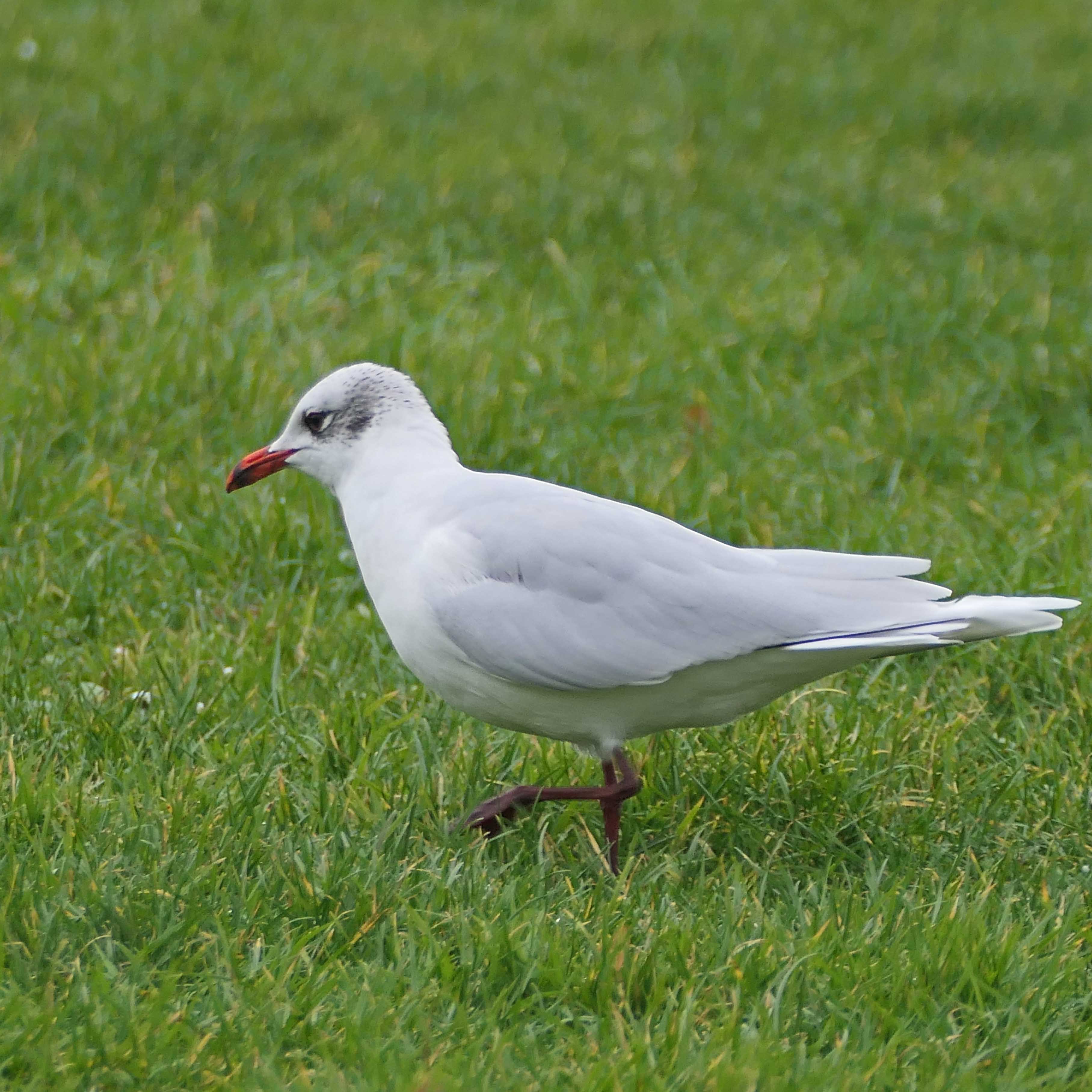
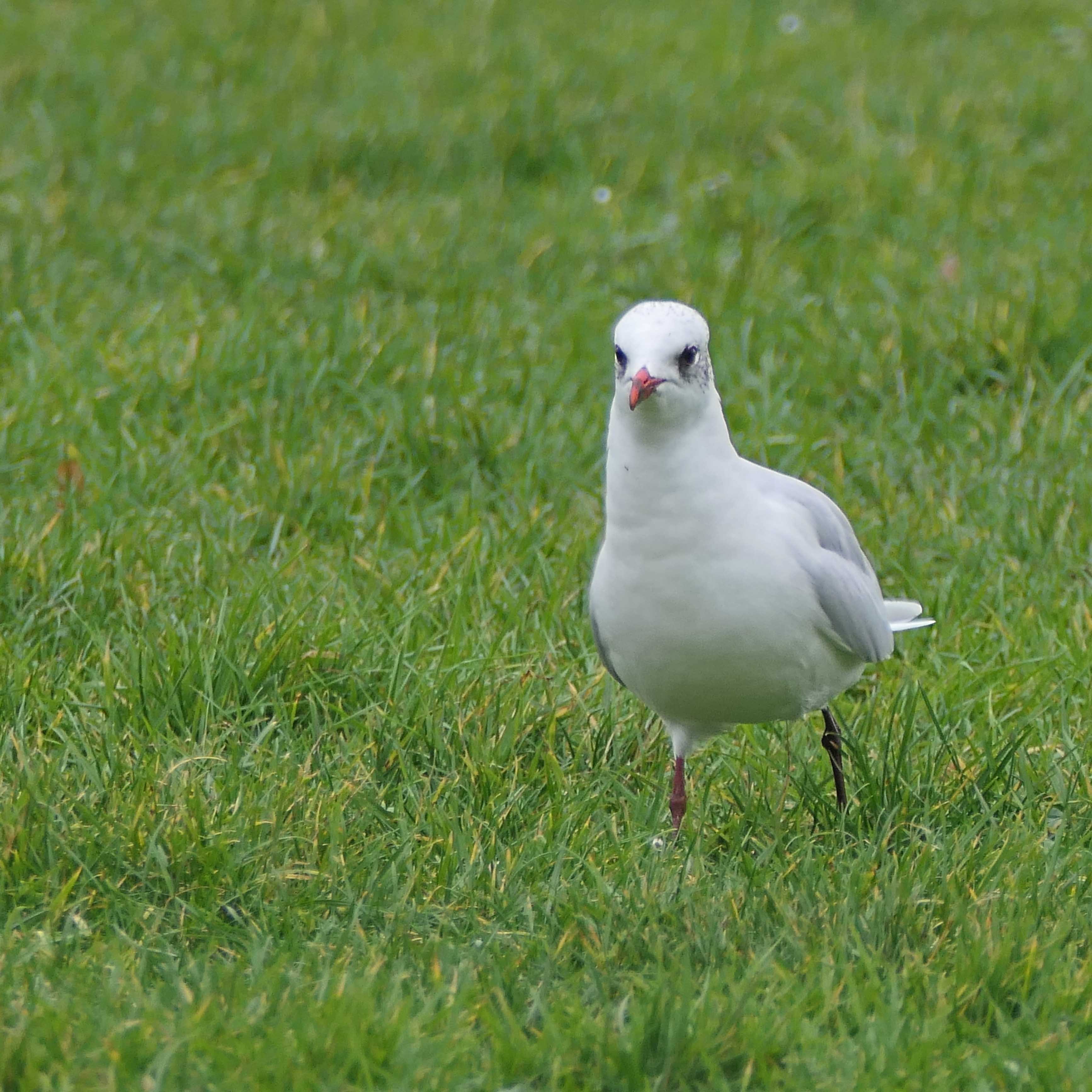
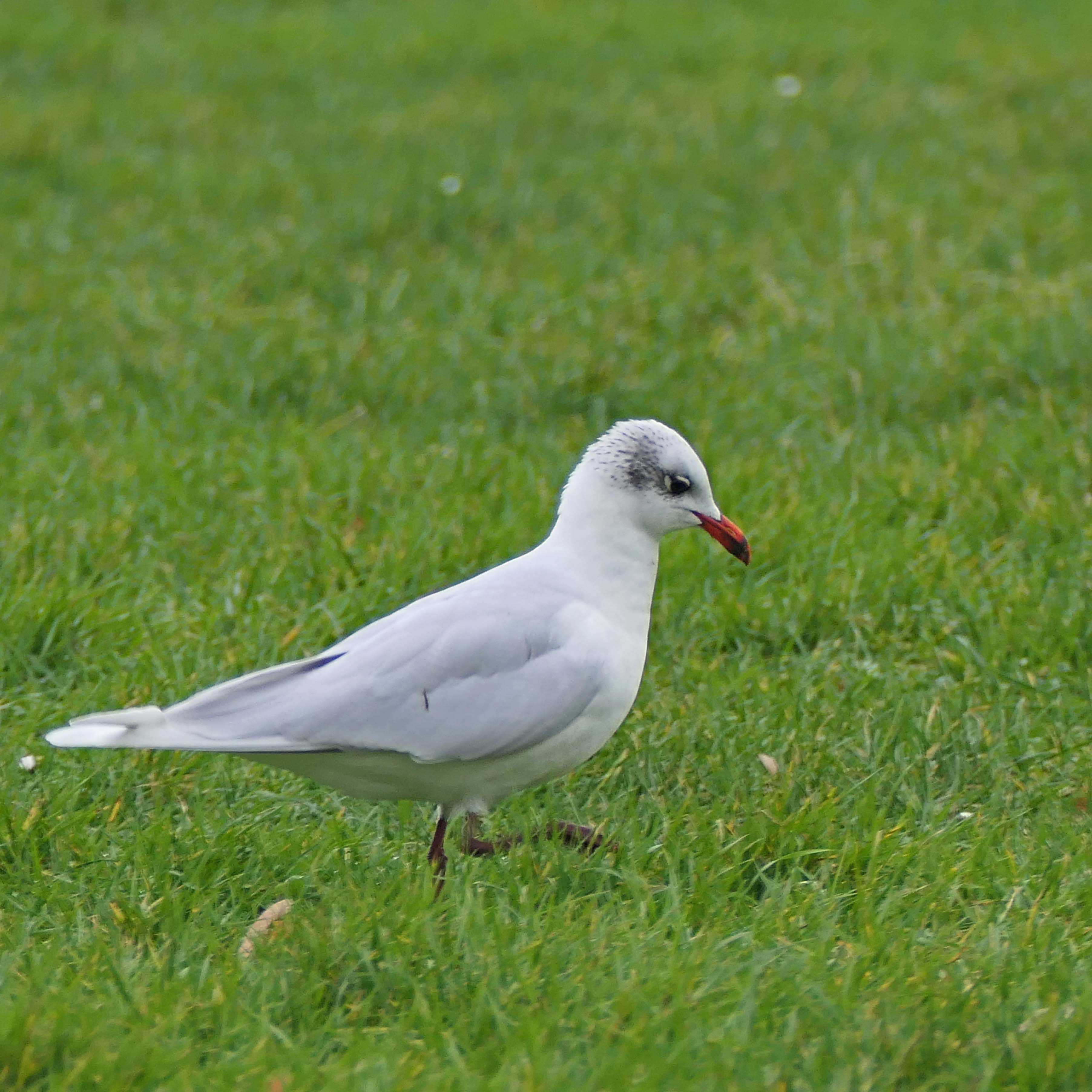
We don’t see very many Mediterranean gulls in Cardiff Bay so it was a real treat yesterday to see this one at Cardiff Bay Wetlands Reserve yesterday.

The resident Black-headed gulls often use this area as a good place to wash, plunging into the water, giving themselves a good shake, flapping their wings … you get the idea. And, if you don’t, here’s a short video.

The Med gull is the one that looks to have a completely white body and wings, though it actually has a very fine dark line along the edge of its wings. In my photos, above and below, the Med gull is the bird at the back, with a Black-headed gull in front so you can compare the two.

36!

Tags

, , , , ,

Thirty six is the number of hoverfly larvae I counted on a section of the local park railings, about 10 metres long, as I strolled very slowly past on Monday. They all look to be one of the Syrphus species of hoverfly; it’s not possible to be exact with the larvae of this particular species.

This is a great time of year to look for hoverfly larvae, particularly after stormy weather. They get shaken off the remaining leaves on trees, then try to climb back up to find yummy aphids to eat. So, if you look on railings or fences, even gravestones, particularly under Sycamore trees, you’ll probably be surprised at how many you can find.

And if you want to have a try at identifying any hoverfly larvae you discover, you’ll find a free downloadable pdf Colour Guide to Hoverfly Larvae on the Diptera.info website.

The consolation prize

Tags

, , , , ,

Do I give the impression that I always find what I go searching for? If I do, then I apologise because I don’t but, rather than letting that get me down, I’ve learnt to appreciate what I find along the way.

Yesterday was one of those days. Three Firecrests had been reported the previous day, in trees around the edge of a local recreation ground; I couldn’t find them. A female Goldeneye had been seen in Cardiff Bay over several days and, though I’d had a fleeting glimpse, I wanted to try for photos; I couldn’t find her. And, though, as you’ve seen, I have already taken photos of the Red-throated diver that’s still feeding in the channel off the Barrage, I was hoping for closer views; it stayed distant.

But there was a consolation prize from my seven-mile walk: the one bird that did pose well for me, allowing a close look at its stunning plumage and some reasonable photos as I watched it drying its wings, this handsome young Cormorant.

Lingering Chiffchaffs

Tags

, , , , , ,

During my most recent circuit of Cardiff Bay, one day last week, I counted at least nine Chiffchaffs, and I’m sure there were probably more.

Most of those Chiffchaffs that intended to migrate should have moved through by now so it’s likely that these remaining birds will linger a while longer, possibly right through the winter, if the weather doesn’t get too cold. It’s lovely to see and hear them still dotting about the trees.

Autumn trees: Hawthorn

Tags

, , , , , , , ,

The Hawthorn (Crataegus monogyna) is not really a tree we notice for its foliage, though its leaves were, apparently, one of the models for the foliage that wreathes the faces of Green Men seen in carvings in churches.

And, according to Richard Mabey’s Flora Britannica, Bread-and-cheese is a vernacular name given to the leaves of the Hawthorn in some places around Britain. He says: ‘This is usually explained as referring to their rudimentary culinary qualities’ but then quotes a correspondent who writes:

We would pick the red berries and green leaves in the autumn. These were known as “bread and cheese” – the leaf the bread, the berry the cheese.

In the autumn, though the leaves of the Hawthorn do, of course, change colour, the hues are mostly yellow and brown, with just the merest hint of red. So it’s the stunning red berries rather than the tree’s leaves that makes the Hawthorn stand out in the autumnal landscape. I’ve never tried eating the berries but Mabey notes that the ‘flesh is a little like overripe avocado pear or, more fancifully, a whey cheese.’ That doesn’t sounds very appetising to me so I think I’ll continue to admire, not to eat them.

Red-throated diver

Tags

, , , ,

The identity of this bird, which was first spotted in the sea off Cardiff Bay’s Barrage on Wednesday the 29th, caused a lot of discussion among local birders, which made for an excellent learning experience for me, as I’d only ever seen this species once before. It seems that Black-throated divers (known as Arctic loons in North America) and Red-throated divers (also known as Red-throated loons) can be tricky to tell apart when they’re not in breeding plumage.

The white flank patch on this bird would normally indicate Black-throated but that species, when not in full breeding plumage, almost always has a throat that is mostly black around the back but has a white strip down the front (see this image on Cornell’s All About Birds website). The bills of these species can also be diagnostic; the bill of the Red-throated diver often looks slightly more upswept at the tip, while the Black-throated’s bill looks heavier and straighter; though some birders queried the shape of this bird’s bill, it seems to be within acceptable parameters.

The final decision was that this is a Red-throated diver (Gavia stellata), an adult bird that is still moulting from its stunning breeding plumage into its full winter plumage. Apparently, the white speckling/fringes to the back feathers indicate it’s an adult bird not a juvenile, which would usually have a black back. Cornell’s Macaulay Library has a photo of a similar-looking bird, a much clearer photo that my camera was able to produce at distance and in poor light.