First butterfly of 2024

Tags

, , ,

I was sitting in a train carriage heading home, paused just outside of Cardiff Queen Street Station because of a points failure, gazing idly out of the window when, to my utter amazement, there came a fluttering of black and red on the other side of the glass – a Red admiral! It was a cold day but, in sheltered spots, the sun was quite warm – warm enough, obviously, to have roused this brave creature from its winter slumbers. The Red admiral was the last butterfly I saw in 2023, on 20 November, and is now the first seen in 2024, on 18 January. I was too slow, and the train began to move forward, so I didn’t get a photo of this first sighting – the image below is from one my last sightings last year.

240123 red admiral 231023

Pale-bellied Brent geese

Tags

, , , , , ,

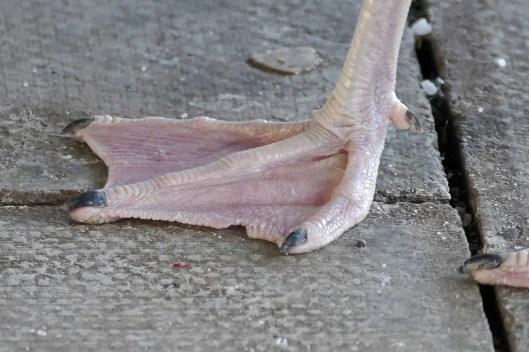
Four Pale-bellied Brent geese (also known as Light-bellied) (Branta bernicla hrota) have been present, mostly distant, in the waters around Sully Island on the Welsh south coast for a week or so and, during last Friday’s walk, I was very fortunate to find them feeding along the shore line in Swanbridge bay.

240122 pale-bellied brent geese (1)

There are four distinct races of Brent goose, depending on the colour of their bellies (some are dark-bellied – see my November 2022 post A rare visitor to Cardiff Bay) and where they breed (the Bird Guides website has a good article on the different sub-species). Pale-bellied Brents found on the western shores of Britain are almost certainly from the population that breeds in Canada, and they usually overwinter in Iceland.

240122 pale-bellied brent geese (2)

However, population expansion (the Canadian population doubled between the mid 1990s and mid 2000s, according to one article I found) has led the excess numbers to find other overwintering locations, including sites like Anglesey and Morecambe Bay. There has for some time been a very small population at Aberthaw approximately 10 miles west of Sully Island along the south Wales coast. Perhaps, if numbers continue to increase, more Pale-bellied Brents will move further east, and we will be lucky enough to see these beautiful birds in my neighbourhood more often.

240122 pale-bellied brent geese (3)

Flashes of teal

Tags

, , , , ,

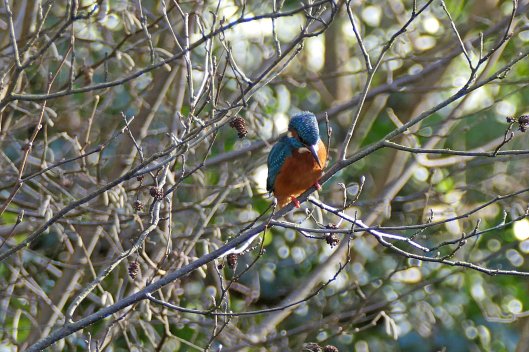
My most frequent views of Kingfishers are as passing piping flashes of teal, streaking around the edges of Cardiff Bay. So, it was a delight, on Thursday, to walk along the Glamorgan canal at Forest Farm Country Park and find one sitting on a branch, staring at the water, intensely focused on finding its next meal.

240120 kingfisher

Red-necked grebe

Tags

, , , , ,

This handsome bird, a Red-necked grebe (Podiceps grisegena), was first sighted on north Cardiff’s reservoirs last Thursday 11 January by our county bird recorder, who lives very near this location. He says this bird is only his ninth ever at the site and the first since September 2001 – by anyone’s definition, a local rarity.

240118 red-necked grebe (1)

The reservoirs are just a train ride and a half mile walk from where I live so I headed up on Thursday to see if I could spot it. I did, firstly on the much larger Llanishen Reservoir from where it flew across to neighbouring Lisvane Reservoir but, at least while I was there, it remained very distant. As is the way with birding, later that day the grebe moved very close to the reservoir edge nearest the café, so afternoon visitors got very good views of the bird.

240118 red-necked grebe (2)

As I needed to go to north Cardiff again this past Monday on another matter, I thought I’d visit the reservoirs for a second look. And this time my luck was in, both with the sunny, less windy weather and with the grebe, which had returned to Llanishen Reservoir but, fortunately, was cruising around much closer to the western edge.

240118 red-necked grebe (3)

According to the RSPB website, ‘Less than 20 individuals spend the summer in the UK each year, with numbers increasing slightly in the winter when birds move here from colder Europe’, so I feel particularly privileged to have spent time observing and photographing this Red-necked grebe. Oh, and if you think its neck doesn’t look very red, it’s because the bird is in its winter plumage. Take a look at the RSPB website for photos of how stunning this bird is in breeding plumage.


240118 red-necked grebe (4)

Hiding in plain sight

Tags

, , ,

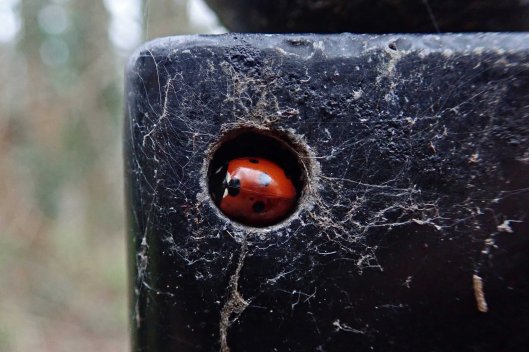
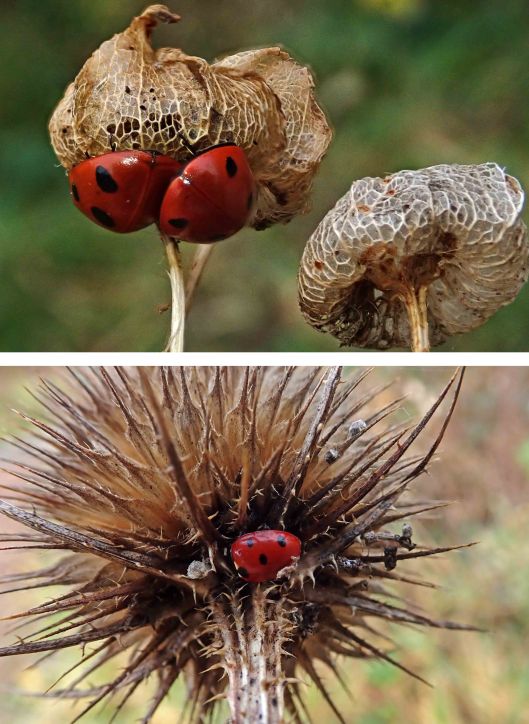
Have you ever wondered where ladybirds go in winter? Some of them hide away in crevices in tree bark, or under unused flower pots in garden sheds; some even invade our houses, where they can often be found huddled together along the edges of windows.

240117 ladybird (1)

Others can be spotted outside, hiding in plain sight, as you see here, tucked in holes in fences or clinging on beneath seed heads. They’re such wonderful, though tiny pops of colour in an otherwise fairly drab landscape.

240117 ladybird (2)

Witch’s broom

Tags

, , , , ,

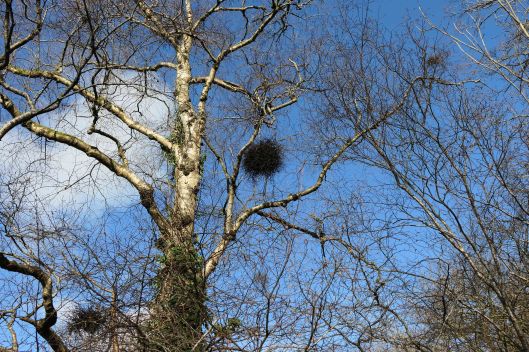
When I went to north Cardiff last week to see the Waxwings, I also had a walk around nearby Heath Park and found one of the best examples I’ve ever seen locally of Witch’s (or Witches’) broom. One tall Birch tree had a particularly large ‘broom’, a dense twisted mass of twigs and small branches, and several smaller ones just beginning to form.

240116 witchs broom (1)

Witch’s brooms can be found on several different tree species and, according to an entry on the Woodland Trust website, they are likely caused ‘by fungal, viral or bacterial activity, and occasionally insect activity’. However, it is generally agreed that brooms on Birch trees are caused by the fungus, Taphrina betulina.

240116 witchs broom (2)

Blackbirds and berries

Tags

, , , ,

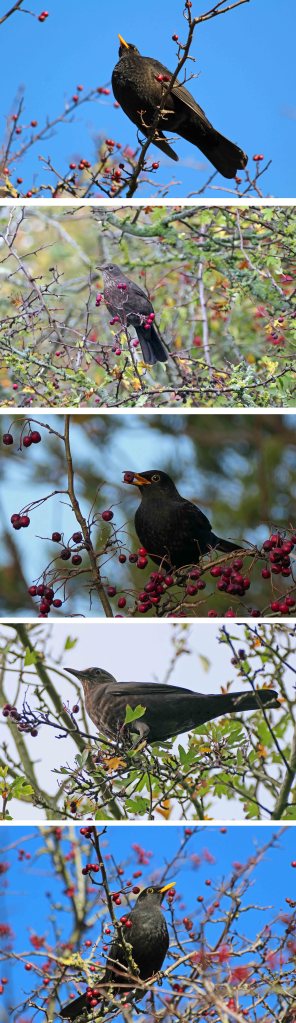
I mentioned yesterday that any remaining berries are fast disappearing as hungry birds search for sustenance in the cold winter weather. Well, here’s one of those berry eaters, the one that I find a bit more cooperative when it comes to photographs than many of the other berry-eating birds, the beautiful Blackbird. (I find Redwing and Fieldfare, Song and Mistle thrushes all tend to be a little more elusive.)

Berries, still

Tags

, , , ,

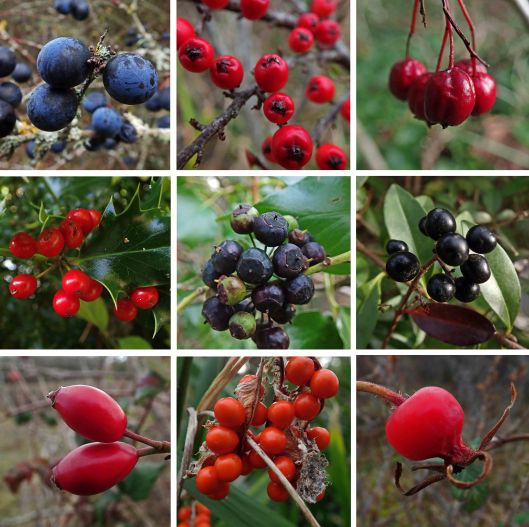
Going, going, soon be gone! Given the voracious appetites of birds in the colder weather, those berries than still remain will soon be gone. So, I thought we’d have a change from wildflowers this week and, instead, enjoy some bright berry colours (and hips and haws and other berry-type fruit) before they all disappear into hungry mouths and beaks.