Hiding in the Ivy berries

Tags

, , ,

It’s been a bit of struggle finding invertebrates this month – everything’s tucked away out of the cold and the rain – so I was very pleased to see this Red-legged shieldbug trying to hide in this little clump of Ivy berries. If it’s not careful a hungry bird will have a crunchy treat when it comes feeding on the berries.

Siskins in the Alders

Tags

, , , , , ,

It was easy to hear their sibilant chatter (if you’ve never heard it, SoundCloud has a good recording). With their green, yellow and black colouring, they were well camouflaged so it was hard to pick them out among the Alder branches and cones. And, because of all those twigs, branches and cones, it was even harder to get photographs, which is my excuse for not getting better images of the noisy Siskins I found feeding near the Glamorgan Canal at Forest Farm Nature Reserve last week.

240130 siskin

Lively larva

Tags

, , ,

I took this short video back in November but had so much other material to share that it never got posted on YouTube until now. You might think hoverfly larva are slow and ungainly but just look at how quickly this little guy can move up the tree trunk. (Sorry it gets a bit blurry towards the end.)

Of course, as we’ve moved in to the colder temperatures and inclement weather of winter, we don’t see hoverfly larva out and about so much. But, as I found yesterday, if you pick up a handful of leaf litter and riffle through it, you can still find these larvae. I’m not sure how long this little creature will remain in its larval state before pupating – I think that depends to some degree on species – but it was certainly a nice reward for getting my fingers mucky.

240129 hoverfly larva

Winter 18

Tags

, ,

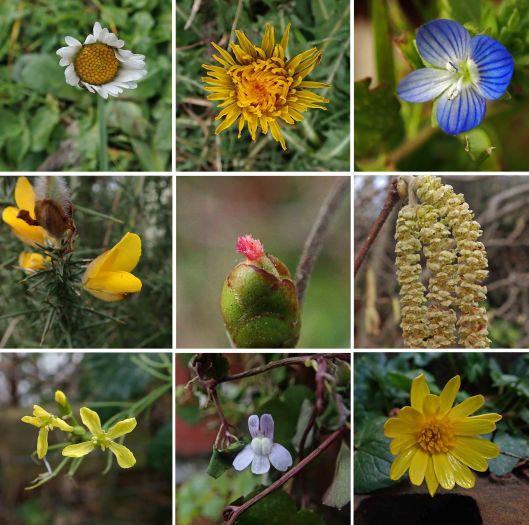
January’s weather has been all over the place. First, we shivered through a week of colder than average temperatures, then two wild and windy named storms blew away what few flowers had survived the cold, and now our weather is milder than usual. As a result, our flora (and fauna) seem confused about whether it’s winter or spring, and finding wildflowers in bloom has been hard work this week. However, after walking my patch for several years, I know where the more sheltered places are and so have managed to find 18 wildflowers in bloom.
240128 wildflowers (1)

Just in case you don’t recognise them, these are: Daisy, Dandelion, Field speedwell, Gorse, both the female and male flowers of Hazel, Hoary mustard, Ivy-leaved toadflax, Lesser celandine, Mayweed, the white-flowered version of Pink campion, Primrose, Sea radish, Snowdrop, Sweet violet, Three-cornered leek, Wild strawberry, and Winter heliotrope.


240128 wildflowers (2)

What a dude!

Tags

, , , ,

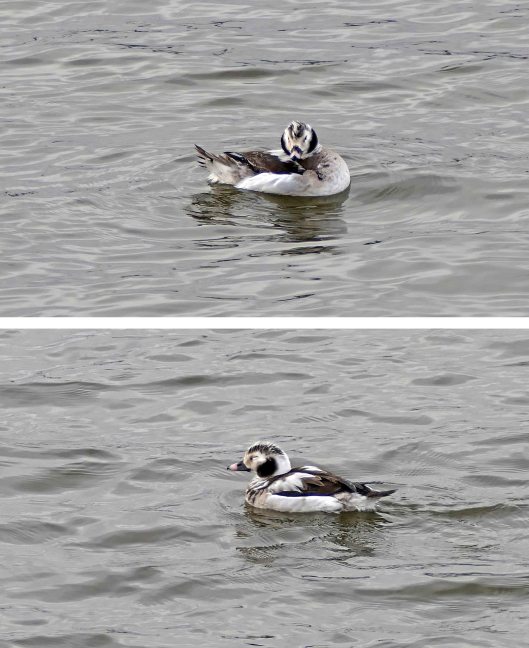
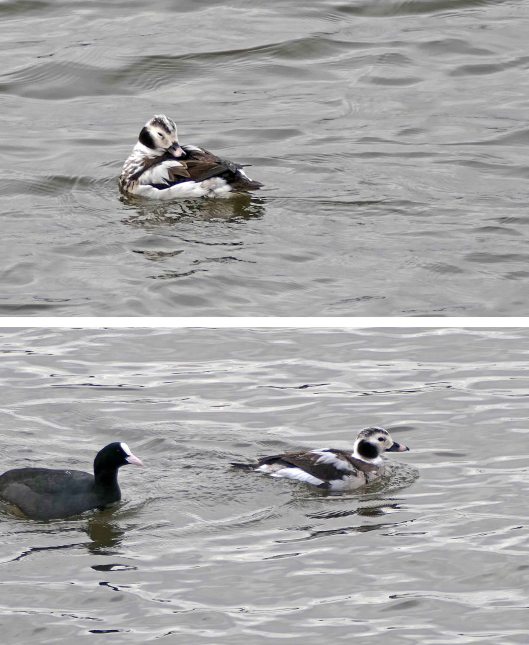
With the slicked-up feathers on top of his head, the dark ear muffs, the stylish plumage in 50 shades of grey, black and white, this juvenile Long-tailed duck is quite the sophisticated dude, don’t you think? He’s a first winter bird, born last summer, so hasn’t yet got the long tail his species is named for but that will soon grow in.

240127 long-tailed duck (1)

He’s been hanging out near the Barrage in Cardiff Bay for about a week, spending most of his time around the string of orange buoys in front of the sluices, diving frequently in and around those buoys then startling the perching Black-headed gulls when he pops up right next to them. The Coots don’t much like this foreigner in their patch either, but then Coots are ornery about most things.

240127 long-tailed duck (2)

Let it be lichen

Tags

, , , ,

I’ve probably said this before. I’ll probably say this again in the future. Next time you’re passing a wooden fence- or gate-post, particularly an older post, take a moment to look at the top of it because there will almost certainly be a marvellous miniscule landscape, with a dazzling display of diverse textures and lush colours, and possibly even a tiny creature or two.

240126 lichen

Bulrushes

Tags

, , ,

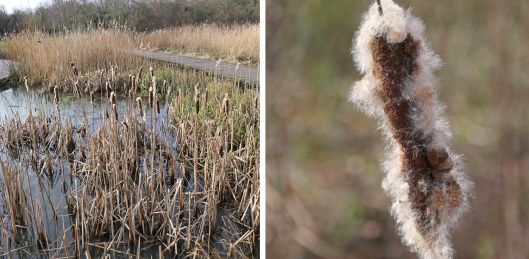
As the weather has now turned unseasonally mild, I had hoped to find a Water vole when I meandered past the dipping pond at Cosmeston but none had ventured out of their holes. So, instead, you get bulrushes – not quite the same, I admit, but I’ve always liked their flowerheads, particularly when, like these, they’re shedding their fluffy seeds.

240124 bulrushes

Though other plants are also called bulrushes, the ones shown here are what most of us recognise when we hear that word. This is Great reedmace (Typha latifoli), a tall, long-leaved plant that typically grows on the margins of freshwater ponds and ditches.

Another rare grebe

Tags

, , , , ,

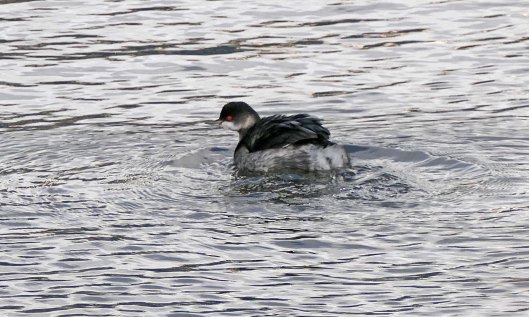
For the past week or thereabouts, a Black-necked grebe (Podiceps nigricollis) has been making its home in the middle of Cardiff Bay, visible to those well versed in identifying distant specks of black and white through their telescopes but not so easy for the likes of me, deficient in those skills and with old eyes and mere binoculars. However, I did wonder if perhaps the battering and raging of Storm Isha overnight last Sunday might have encouraged the grebe to shelter close to the western side of the Bay.

240124 black-necked grebe (3)

And I was right! There it was, with a large flock of Tufted ducks, a few Goosander, Coots, Mallards and a couple of Gadwall, and several of its grebe cousin the Great cresteds. With the Red-necked grebe still present on Cardiff’s northern reservoirs, it’s a real treat to have another rare grebe visitor this year already.

240124 black-necked grebe (2)

The BTO (British Trust for Ornithology) website says that, on average, just 115 birds overwinter in Britain, and some 50-odd pairs breed here, though they are both secretive and mostly kept secret, so as to prevent interference with this amber-listed beauty. I would certainly not want to disturb their breeding but I would love to see one of these grebes in its summer plumage – it’s a far cry from the smudgy black and white our local rare visitor is currently sporting. (The Bird Guides website has a page that provides excellent information and includes stunning images of all our local grebes in both winter and summer plumage).

240124 black-necked grebe (1)

First butterfly of 2024

Tags

, , ,

I was sitting in a train carriage heading home, paused just outside of Cardiff Queen Street Station because of a points failure, gazing idly out of the window when, to my utter amazement, there came a fluttering of black and red on the other side of the glass – a Red admiral! It was a cold day but, in sheltered spots, the sun was quite warm – warm enough, obviously, to have roused this brave creature from its winter slumbers. The Red admiral was the last butterfly I saw in 2023, on 20 November, and is now the first seen in 2024, on 18 January. I was too slow, and the train began to move forward, so I didn’t get a photo of this first sighting – the image below is from one my last sightings last year.

240123 red admiral 231023

Pale-bellied Brent geese

Tags

, , , , , ,

Four Pale-bellied Brent geese (also known as Light-bellied) (Branta bernicla hrota) have been present, mostly distant, in the waters around Sully Island on the Welsh south coast for a week or so and, during last Friday’s walk, I was very fortunate to find them feeding along the shore line in Swanbridge bay.

240122 pale-bellied brent geese (1)

There are four distinct races of Brent goose, depending on the colour of their bellies (some are dark-bellied – see my November 2022 post A rare visitor to Cardiff Bay) and where they breed (the Bird Guides website has a good article on the different sub-species). Pale-bellied Brents found on the western shores of Britain are almost certainly from the population that breeds in Canada, and they usually overwinter in Iceland.

240122 pale-bellied brent geese (2)

However, population expansion (the Canadian population doubled between the mid 1990s and mid 2000s, according to one article I found) has led the excess numbers to find other overwintering locations, including sites like Anglesey and Morecambe Bay. There has for some time been a very small population at Aberthaw approximately 10 miles west of Sully Island along the south Wales coast. Perhaps, if numbers continue to increase, more Pale-bellied Brents will move further east, and we will be lucky enough to see these beautiful birds in my neighbourhood more often.

240122 pale-bellied brent geese (3)