S is for snipe

Tags

, , , , , ,

I saw my only Jack snipe (Lymnocryptes minimus) of the year on 18 February, and six days later, on 24 February, my only Common snipe (Gallinago gallinago), which I blogged about the following day (First Jack, now Common, 25 February).

231224 jack snipe

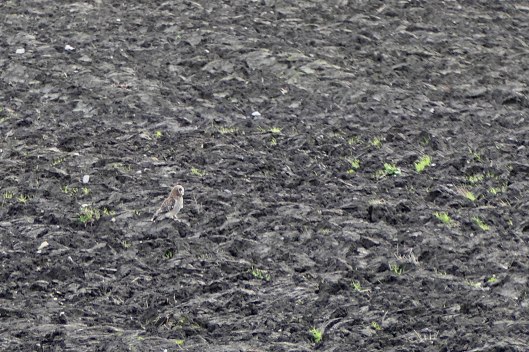
As you can see from the images above, Jack snipes can be extremely difficult to see – they are masters at keeping perfectly still, and they frequent reed beds and swards of short grass and scrub, where their plumage ensures almost perfect camouflage. Even though I know where the bird is in the full-size left-hand photo, I still find it hard to find – I’ve zoomed in for the right-side image.

231224 common snipe

Common snipe can also be tricky to spot but, fortunately, they do sometimes sit out and feed in the open. I had hoped for more snipe sightings but, due to the very wet weather this year, the rides in the Snipe enclosure at Cosmeston have not been cut and I’ve also not seen my trusty birding friend with the thermal imaging equipment.
R is for Ruddy darter

Tags

, , , ,

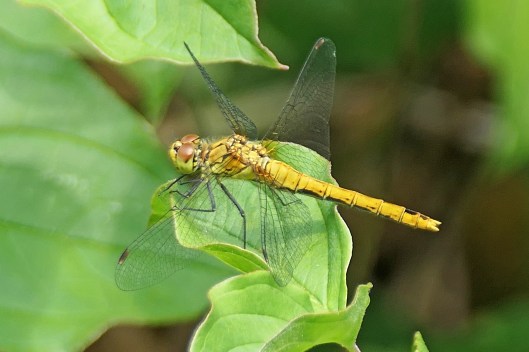
2023 was a good year for me for odonata. On 26 June, just five days after seeing my first Small red-eyed damselflies, I found my first ever Ruddy darter (Sympetrum sanguineum), though this was a female so did not look at all like her ‘ruddy’ name. My 30 June blog, Lifer: Ruddy darter, tells the story, and I already have a note in my 2024 schedule to look for more of these at the country park near this year’s find spot.

231223 ruddy darter

Q is for Quercus

Tags

, , ,

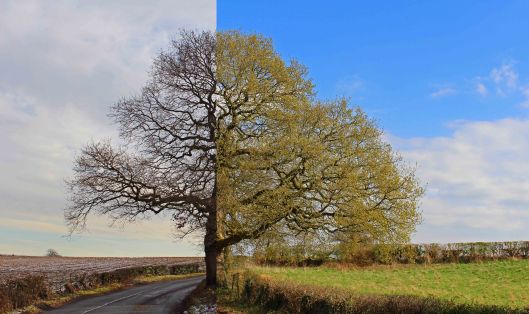
I read online recently, on the Woodland Trust website, that the English oak (Quercus robur) supports as many as 2300 species, 326 of which depend entirely on the Oak for their survival. The 2300 total includes 108 fungi, 1178 invertebrates and 716 lichens, as well as creatures like bats, butterflies like the Purple hairstreak, birds like Jays and Wood warblers. Where would our ecosystems be without the magnificent Oak?!

231222 quercus

P is for Painted lady

Tags

, ,

I saw my first Painted lady of 2023 on 15 May and my last on 3 October which, when I look back over the past five years of my records, is about the usual date range. This year, here in south Wales, they were most numerous during September but this was not a year of large numbers – the last major Painted lady influx, according to my numbers, was 2019, when I was astonished to see over 50 of these beauties in one field at a local nature reserve. I miss the butterflies – of all species – when they disappear during the colder months and can’t wait to start seeing them again in 2024.

231221 painted lady

O is for owl

Tags

, , , ,

The end of October brought a huge birding treat: my second-ever sighting of a Short-eared owl (and the first had been five years previously) so, though that sighting was the briefest of glimpses, I was over the moon (see Short-eared owl, 28 October). In the days following that sighting, the weather was not conducive to a return visit to the site but I got lucky when I did finally make it back, as the owl was still in the area.

231220 short-eared owl (1)

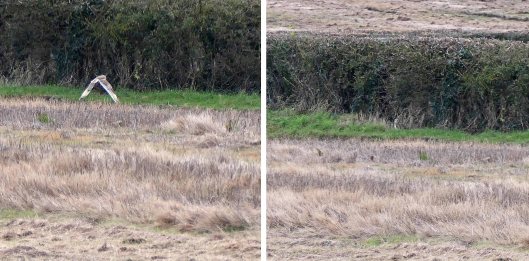
As had happened previously, it was other birds – this time Magpies – that alerted me to its presence, and I was privileged to watch the bird for a longer period, in flight along the hedgerows, sitting in the middle of a ploughed field, flying again, and then cunningly sidling into a spot between a mound of grassy earth and the neighbouring hedge, where it blended so well into the background as to be nearly invisible. Magic!

231220 short-eared owl (2)

N is for new and noticed

Tags

, , , , , , ,

I’m using the letter N to highlight a few of the new insects I’ve been lucky enough to find during my 2023 meanderings. First up, in early spring, was a new fly species, the torpedo-shaped Nematus lucidus (below left) and then, in July, another, the bristly brute that is Nowickia ferox (below right).

231219 1 Nematus lucidus Nowickia ferox

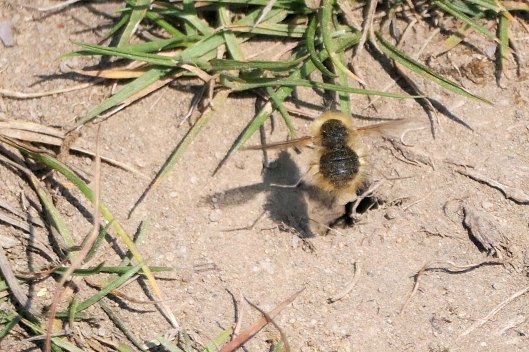
Next up, a new bee-fly. We usually only see Dark-edged bee-flies (Bombylius major) in my part of south Wales so it was super to spot this Western bee-fly (Bombylius canescens) during a visit to Aberbargoed in mid June.

231219 1 Bombylius canescens

On 17 July, in my local ‘secret field’, I discovered the final instar of a new shieldbug, Eurygaster testudinaria (left), and, the following day, I had another new find, the pretty caddisfly, Mystacides azurea (right). I didn’t blog this little creature at the time as I wasn’t sure of my identification but you can read more about it on the Nature Spot website.

231219 3 eurygaster testudinaria Mystacides azurea

Last, but certainly not least as these are favourites of mine, are two new leafhopper species. The seventeenth of July was a red letter day, with two new species found in my ‘secret field’, both the shieldbug mentioned above and, perched on an Oak leaf, the vibrant little leafhopper Typhlocyba quercus (left). I’ll certainly be checking for more of these next summer. Then, in the middle of November, bopping around a Bramble bush in one of the local cemeteries, I spotted the beautifully patterned Ribautiana tenerrima (right), and was left wondering how I’d never seen them before. I’m already looking forward to what new invertebrate species 2024 will bring.

231219 4 shieldbugs

L is for leafminers

Tags

, , , , , ,

As a result of standing staring for hours at leaves, I’ve found lots and lots of lovely new-to-me leafminers this year. Here’s a summary of those I’ve blogged about:

On 13 February, Leafmines: Phyllonorycter ulicicolella covered the tricky-to-find mines of tiny moth larvae on gorse. In Leafmines: Eriocrania unimaculella, 22 May, the larvae of a different moth were mining Birch leaves, and, on 26 June, Leafmines: Mompha terminella, featured more moth larvae mines, this time on Enchanter’s nightshade. In October the moth miners were munching on Hawthorn leaves (Leafmines: Bucculatrix bechsteinella, 2 October) and on Blackthorn (Leafmines: Lyonetia prunifoliella, 9 October). The only new non-moth miner of the year was a fly whose larvae were found mining the leaves of Alder (Leafmines: Agromyza alnivora, 16 October) and, later in October, we were back to moth miners, with Hawthorn once again the plant of choice (Leafmines: Phyllonorycter corylifoliella, 23 October). In November, a willow moth miner I’d mentioned once before in passing starred in its very own blog (Leafmines: Phyllonorycter viminiella, 20 November) and, a week later, on 27 November, another moth larva was found on the leaves of a rose species (Leafmines: Stigmella anomalella). The final leafminer find of 2023 was yet another moth, this time devouring the leaves of Wild privet (Leafmines: Gracillaria syringella, 4 December).

231217 leafmines

I’ve already referenced the three case-bearing moth larvae leafminers in an earlier countdown blog (C is for Coleophora) but, just for completeness, I’ll also link to them here: Leafmines: Coleophora lutipennella on 1 May, Leafmines: Coleophora serratella on 15 May, and Leafmines: Coleophora gryphipennella on 13 November.

K is for Knopper

Tags

, , , , , , , , , , , ,

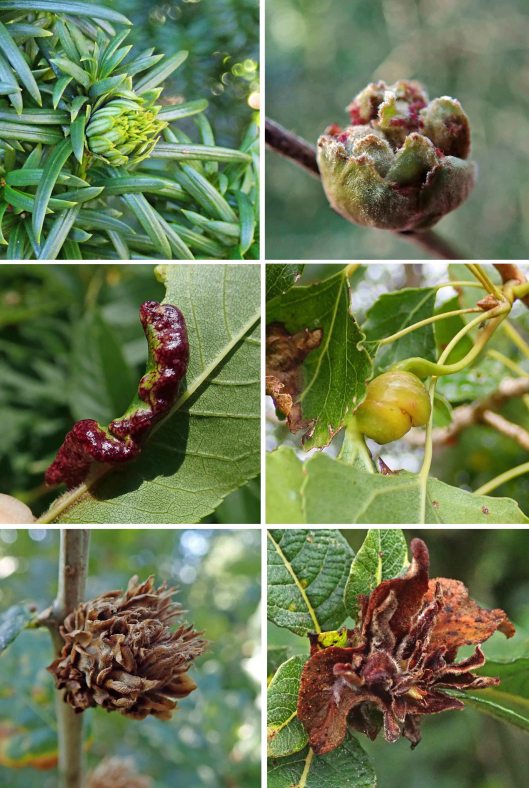
This is really a review of the galls I’ve found this year but the letter G simply had to be about my first ever confirmed Goshawk sighting, so K is for Knopper is my alternative lead in.

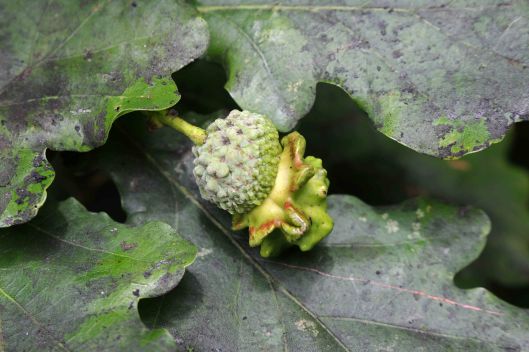
231216 Knopper Andricus quercuscalicis

Knopper galls, like the one shown above, did feature in one post this year, Acorns and galls on 1 October, but there were many other galls, most of which were new finds for me. February saw the year off to a good start with galls on Yew trees caused by a tiny midge (Galls: Taxomyia taxi, 9 February) and galls on Hazel caused by an equally tiny mite (Galls: Phytoptus avellanae, 20 February). In June, it was a small bug that was creating eye-catching galls on the leaves of an Ash tree (Galls: Psyllopsis fraxini, 12 June), and, in July, aphids were the gall causers on a Poplar tree (Galls: Pemphigus spyrothecae, 17 July). In that October blog Acorns and galls I mentioned above, as well as the knoppers, another tiny wasp had caused artichoke galls to form on the same Oak tree. And, a couple of weeks later, I found my final new galls for the year, those caused by midges on Willow trees (Galls: Rabdophaga rosaria, 17 October). All in all, 2023 was quite a galling year!

231216 mixed galls

J is for Jay

Tags

, , , , ,

They can be quarrelsome and raucous, are known for stashing acorns as winter fodder, and have colourful plumage that might more usually be found on a tropical bird. The Jay’s scientific name (Garrulus glandarius) is so appropriate: the words are both Latin, Garrulus meaning babbling, noisy, chattering, and glandarius meaning ‘of acorns’.

231215 jay (1)

Jays have been plentiful this year in my local woodlands, which is wonderful. I’ve managed to get reasonable photos a few times, and have blogged about them twice, Two Jays on 20 April and, on 12 October, A Jay and its acorn.

231215 jay (2)