Finally … my first butterfly of 2020, this lovely Comma at Cosmeston today.



16 Monday Mar 2020
Finally … my first butterfly of 2020, this lovely Comma at Cosmeston today.
15 Sunday Mar 2020
Posted in nature, plants, wildflowers
With its spotted leaves and flowers that start out pink but change quickly to blue, Common lungwort (Pulmonaria officinalis) is a very attractive plant. I’ve blogged before about the origin of its name and some of its other common names but the Royal Horticultural Society website has an even longer long list of vernacular names for this plant: Jerusalem sage, Adam and Eve, Bedlam cowslip, beggar’s basket, bugloss cowslip, Jerusalem cowslip, lady’s cowslip, lady’s milk, Mary’s honeysuckle, Mary’s tears, sage of Bethlehem, soldiers and sailors, spotted dog, and Virgin Mary’s honeysuckle.
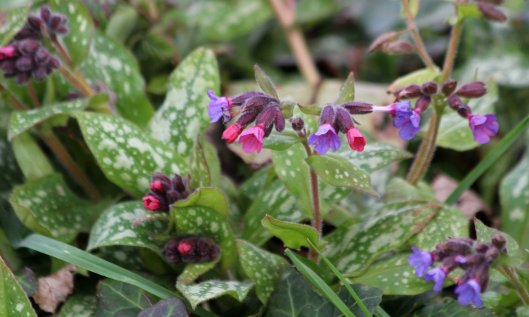
I’m sure many of the Lungwort plants I see are relatively recent garden escapes but the plants shown in today’s photos may perhaps be a little older. They were growing along the boundary fence of the medieval village at Cosmeston Lakes Country Park, a village which is a reconstruction of the actual buildings that existed on this site around 600 years ago. Was it one of the herbal plants used by the locals in those days? I like to think so.


14 Saturday Mar 2020
First, there was one juvenile Cormorant, sitting on the edge of the canal, keeping an eye on passers-by, ready to dive into the water if anyone came too close.


Then there were two, presumably siblings. Number two had been fishing, diving in the constant search for sustenance, though I didn’t see it catch anything.
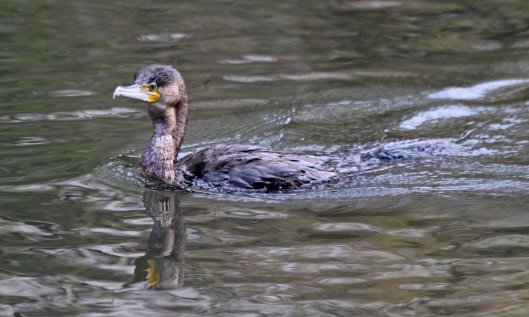
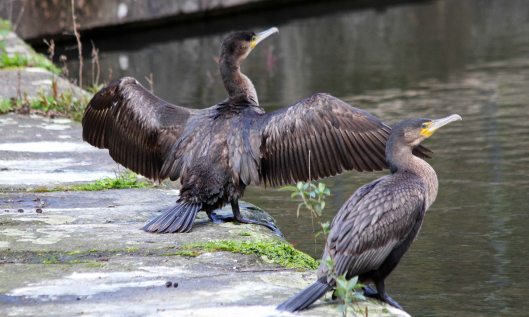
Deciding it needed a rest and to dry off, number two jumped up on the canal edge, and proceeded to shimmy and shake, the water droplets spraying in all directions, just like a dog shaking itself after a swim.


And then, as I’m sure you’ve seen all Cormorants and Shags do, number two spread out it wings to drip-dry in the weak sunshine, while number one kept a weather eye on me. Lovely creatures both!
13 Friday Mar 2020
Mr and Mrs Coot are pleased to announce the laying of three eggs! I can’t tell male from female Coot – I’m not even sure if it’s possible to tell which is which – but one of them was sitting tight on the nest when I visited this morning.

However, this small area of water has two pairs of Coots in residence, and they are uneasy neighbours. First, they were simply trying to intimidate each other.

Next thing you know, there’s a full scale battle underway.

And the sitting Coot left the nest to join in the tussle, which is how I know there are three eggs.

Luckily, the skirmish didn’t last long, and the eggs were soon safe and warm under their parent once more.

12 Thursday Mar 2020
Tags
birding, birdwatching, British birds, Cosmeston Lakes Country Park, Sand martin, spring migration
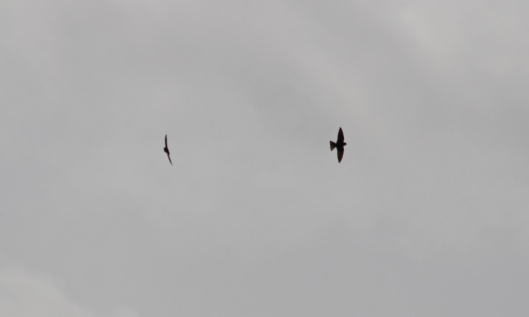
When I walked through the park this afternoon, three Sand martins were riding the blustery winds over Cosmeston’s west lake, twisting and swerving this way and that, hunting for tiny flying insects, feeding up after their marathon flights from Africa. What a joy it was to watch them!
11 Wednesday Mar 2020
I’ve never purposefully gone butterflying anywhere in Europe but I have taken photos if I’ve seen interesting butterflies – or any other critters – on my very occasional visits. And this is one such, taken in the botanical gardens in Madrid in June 2014. I believe this is a Cardinal fritillary (Argynnis pandora), and, given the prominent scent brands on its upper wings, I can confidently say it is a male.

According to the UK Butterflies website, the Cardinal, which they call the Mediterranean fritillary, has twice been seen in Britain: near Tintagel in Cornwall in August 1911 and in Lulworth, Dorset in August 1969, though the website also notes ‘This species is considered a very rare immigrant that is, undoubtedly, mistaken for a Silver-washed Fritillary and is therefore under-recorded.’

10 Tuesday Mar 2020
Posted in nature
Tags
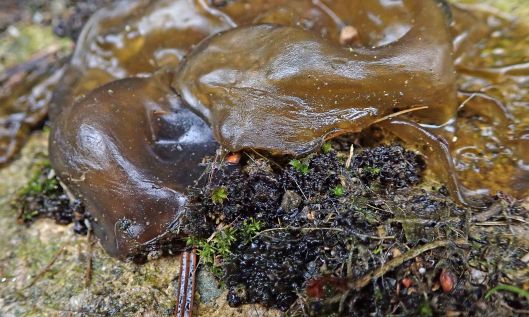
Nostoc: noun; a microorganism composed of beaded filaments which aggregate to form a gelatinous mass, growing in water and damp places and able to fix nitrogen from the atmosphere (Oxford Dictionary).
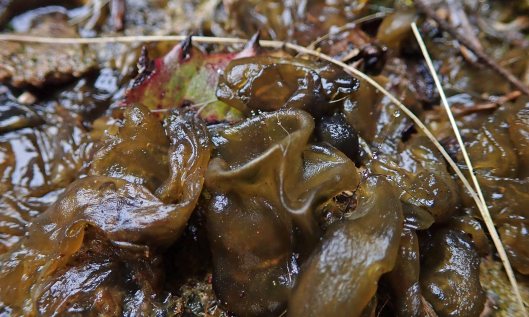
According to my totally unscientific observations, the organism that has benefitted most from this year’s almost constant wet and relatively mild weather is the cyanobacterium, Nostoc. I’ve been seeing huge viscous masses of it wherever I go, especially on concrete and gravel pathways, on steps, in gutters, wherever the atmosphere is damp, the environment water-logged.
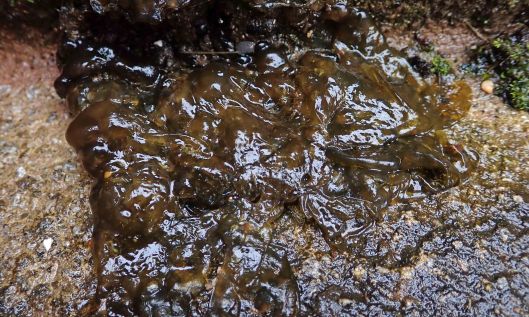
You can read more about Nostoc in my April 2018 blog ‘Gloop’.
09 Monday Mar 2020
Spring migration is underway! Our county bird recorder yesterday reported seeing his first Sand martin for 2020 and today I’ve seen my first Chiffchaffs, newly arrived from overwintering in the warm countries around the Mediterranean or perhaps somewhere in west Africa. Such long migratory flights by such little birds – incredible!
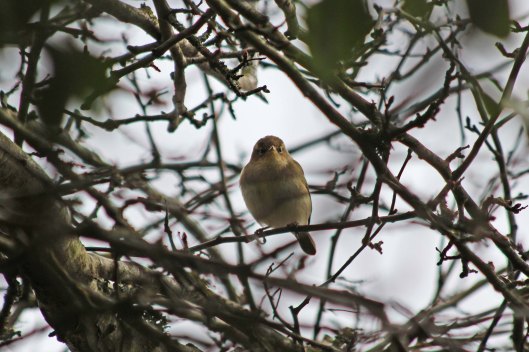
I saw or heard five Chiffchaffs during my walk along the coastal path this morning and then another three at Cosmeston Lakes Country Park. Above is number three and below is number seven. Hearing them singing their ‘chiff chaff’ song made my heart spring!

08 Sunday Mar 2020
Posted in nature, spring, wildflowers
Tags
#PavementPlants, #WildflowerHour, British wildflowers, Coltsfoot, Common cornsalad, Daisy, dandelion, Herb Robert, Lesser Celandine, primrose, Red dead-nettle, Shepherd's purse
Now that Spring has sprung, the folks who run #WildflowerHour on social media are issuing weekly challenges for followers to focus their searches around. This week it was #PavementPlants, searching for any plants in bloom that were growing in the cracks or along the edges of their local pavements. Challenges like this do mean you get some odd looks from people when you’re photographing your finds but I’m very used to that these days.
Here’s what I found: Coltsfoot (I love how tenacious these plants are – they were pushing up between the cracks in an old set of steps connecting two local streets); Common cornsalad; Daisy; Dandelion; Herb Robert; Lesser celandine; Primrose; Red dead-nettle; and Shepherd’s-purse.
07 Saturday Mar 2020
Dioecious: adjective; (of a plant or invertebrate animal) having the male and female reproductive organs in separate individuals (Oxford Dictionary).

My example today is the Yew tree (Taxus baccata), which has male and female flowers on separate trees. The male flowers are out now on a couple of trees in my local park – the female flowers may also be out but I didn’t look for them. The males are rather more showy and obvious, especially when they’re not soaking wet and their yellow pollen is blowing in the wind.

 earthstar
You must be logged in to post a comment.