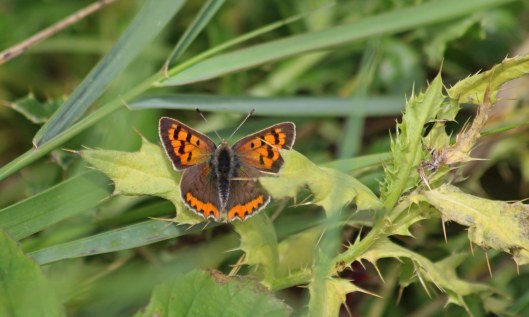
I was in seventh heaven yesterday because I found seven Small coppers, my favourite butterflies, at Cosmeston, the most I’ve ever seen in one place on one day. Here they are, the little beauties.




10 Thursday Sep 2020
I was in seventh heaven yesterday because I found seven Small coppers, my favourite butterflies, at Cosmeston, the most I’ve ever seen in one place on one day. Here they are, the little beauties.
04 Friday Sep 2020
Tags
autumn berries, birding, birdwatching, blackberries, bramble, British birds, Cosmeston Lakes Country Park, Pheasant, pheasant eating blackberries
A rustle of vegetation … an eye … who’s this lurking behind the ‘snipe paddock’ fence at Cosmeston?
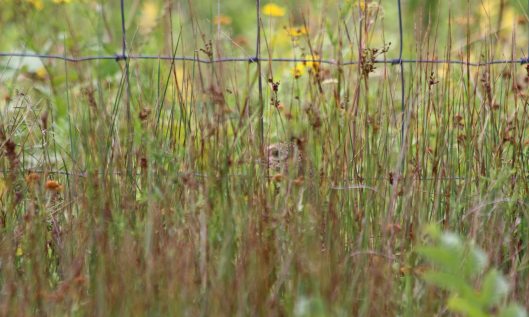
A female Pheasant? A common enough bird in the local countryside but not normally seen here in this dog-full park. She has quite short tail feathers and she’s not too bothered about my presence so I presume she’s a juvenile.

It seems she’s quite partial to blackberries.

Are there more of those delicious treats?
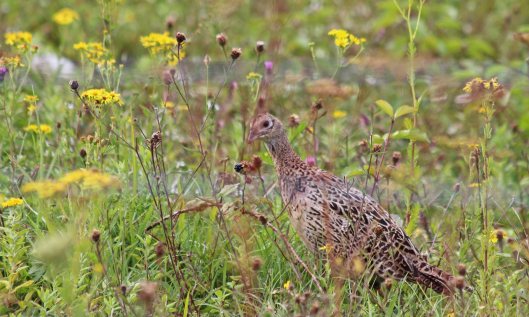
Aha, yes, another ripe one.

And, after scoffing those couple of berries, she wanders off in search of more.

03 Thursday Sep 2020
Posted in nature, plants, wildflowers
Tags
Amphibious bistort, amphibious wildflower, British flora, British wildflowers, Cosmeston Lakes Country Park, Persicaria amphibia
Initially, I doubted my identification of this plant – I’d seen it growing in clumps in the waters of Cosmeston Country Park’s west lake, so how could this be the same plant growing in a section of meadow, albeit a damp area where reeds are abundant?

The Great crested grebes like to park themselves amongst the plant, perhaps to stop them drifting while they snooze.
The clue, of course, is in its name: amphibious, ‘relating to, living in, or suited for both land and water’ (Oxford Dictionary). Amphibious bistort (Persicaria amphibia) has two forms, one that resembles a water lily, floating its leaves upon the water surface, and another that lives quite happily on land that can be quite a distance from water, as long as that land is moist.
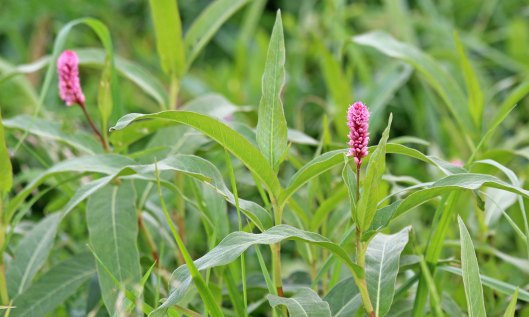
This second type also shows the somewhat more elongated leaves that its generic name refers to – persicaria ‘relates the shape of leaves of this group of plants to those of a peach tree’ (First Nature) – and the land-based form has hairy leaves, which the water-growing form does not. To clinch the identification, my book (The Wild Flower Key) says to look for two stigmas in most flowers, which Amphibious bistort has but similar species do not. And very pretty flowers they are too!


01 Tuesday Sep 2020
Tags
birding, birdwatching, British birds, Cosmeston Lakes Country Park, juvenile Reed warbler, Reed warbler
One highlight of a bumper birding day at Cosmeston last Friday was seeing rather than just hearing a little family of Reed warblers (they frequently hide away amongst the reeds so only their distinctive call can be heard). I caught glimpses of birds moving in the greenery, then recognised the constant call of a youngster and figured I had a better than usual chance of seeing something, as young birds are often less wary than adults.

So, I waited … and I waited … and after 7-8 minutes, this little cutie popped out, foraged, hopped up and down the reed stems, and poked about in the bushes.

And then, judging by how often it kept closing its eyes, I think it headed back into cover amongst the reeds for a snooze.

28 Friday Aug 2020
Tags
autumn migration, bird migration, birding, birdwatching, British birds, Cosmeston Lakes Country Park, Spotted flycatcher
It’s over a month since I saw my first Spotted flycatchers for 2020, the family group I encountered on my visit to Slade Wood back on 21 July. But, now I’m seeing them much more regularly, in ones and twos, as they pass through my local area on their autumn migration. I spotted my first migrant on 5 August, then had to wait a week until my second sighting on the 13th but, since then, have seen them almost every time I’ve been to Cosmeston Lakes Country Park, with 2 on the 17th, 4 on the 18th, 1 on the 20th, 3 on the 22nd, 2 on the 24th, and 3 on the 26th. In fact, I tend to go to Cosmeston much more often at this time of year specifically to see what migrants I can find, and I look especially for these stunning little birds, as I love to watch their fly-catching aerobatics.
25 Tuesday Aug 2020
Posted in autumn, insects, nature, plants, wildflowers
Tags
British galls, British insects, British wildflowers, Cosmeston Lakes Country Park, galls on wild carrot, Kiefferia pericarpiicola, midge gall, Wild carrot
I was looking around at the various wildflowers yesterday at Cosmeston, seeing what insects might be about, when I noticed these odd growths on some of the Wild carrot flower heads. I split one open with my finger nail and a miniscule orange blob fell out; turns out that was the larva of a midge with the long-winded name of Kiefferia pericarpiicola.
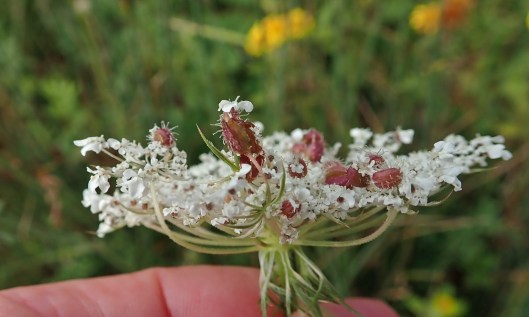
The galls start off green (below left), before turning pinkish and eventually brown. According to the Nature Spot website, these galls can be seen from late summer through to autumn, after which the larvae will leave the gall and drop down to the soil to pupate. The midge only occurs in southern parts of Britain at the moment – and I only found two previous records in the Welsh biodiversity database – but perhaps that will change as our climate continues to warm and the midge flies further afield. It’s also possible, of course, that this insect is under-recorded – it seems the midge itself is almost never seen, only its gall creations.


24 Monday Aug 2020
Tags
autumn migration, bird migration, birding, birdwatching, British birds, Clep yr eithin, Cosmeston Lakes Country Park, Crec yr eithin, Saxicola rubetra, Whinchat
The scientific name for the Whinchat is Saxicola rubetra which, apparently, means ‘small rock-dweller’, a reference to where this delightful little bird likes to make its home: saxicola is from the Latin saxum, meaning ‘rock’, and incola, meaning ‘dwelling’, and, also Latin, rubetra means ‘a small bird’.
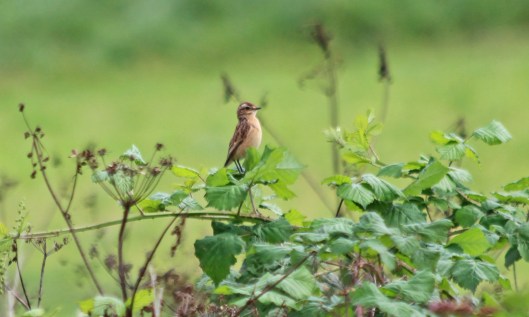
In Welsh, the Whinchat is Crec yr eithin or sometimes Clep yr eithin, eithin being the Welsh word for gorse (also known as furze or whin), where the bird is often seen perching; and crec and clep both meaning clap, a reference to the bird’s call.

Here in south Wales, the Whinchat is a passage migrant, meaning I only get the chance to see it locally in autumn – it passes through in spring as well, of course, but, as it’s then in a hurry to reach its breeding grounds, it usually just flies straight over. Both the gorgeous little Whinchats in my photos stopped over at Cosmeston Lakes Country Park last week, feeding up before they set out on their long migration flight south, crossing the English Channel, western Europe, the Med, North Africa, and finally the Sahara Desert before arriving at their wintering grounds in central and southern Africa.
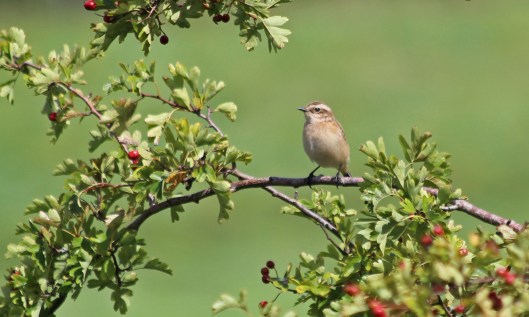
According to the RSPB website, Whinchat numbers in Britain declined more than 50% between 1995 and 2008, though the reason for that decline is not known. I imagine the hazards of their long migratory flight might well have something to do with it. Safe journey, little Whinchats!
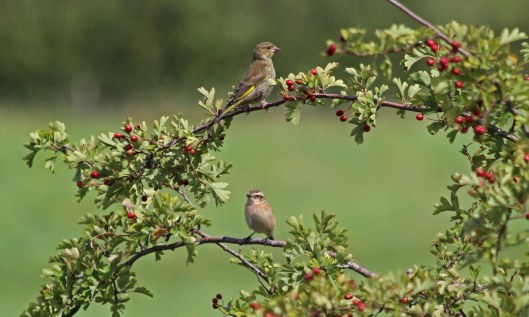
I love this photo with the Greenfinch – just shows how small the Whinchat really is.
16 Sunday Aug 2020
Posted in nature, wildflowers
Tags
Black medick, British wildflowers, Common restharrow, Cosmeston Lakes Country Park, Ervilla hirsuta, Grangemoor Park, Hairy tare, Medicago lupulina, Ononis repens, Pea plant family
You’ll recall that a couple of weeks ago we had some members of the Pea family (A Pod of Peas, 26 July) – well, here are another three members of that extensive kin group.
Common restharrow (Ononis repens)
The name ‘restharrow’ comes from the fact that this wildflower’s thick long roots were ‘tough enough to stop a horse-drawn harrow in its tracks’ (Flora Britannica) and that esteemed publication also notes that those roots could be chewed, with a taste like liquorice. According to the Plantlife website, the plant’s shoots also had culinary uses: they could be boiled as a vegetable or eaten in salads.


Hairy tare (Ervilla hirsuta)
There’s an abundance of this little plant curling and winding itself through the rough grassland and wildflower fields at Grangemoor Park. As its flowers are rather small, it’s easy to miss how lovely they are but they’re definitely worth a closer look, anytime from May to August.


Black medick (Medicago lupulina)
This is a plant I often see along the edges of roads but it’s also particularly numerous in one of the wildflower fields at Cosmeston Lakes Country Park. The First Nature website explains its scientific name thus:
‘The genus name Medicago refers to the region of Iran known as Media, where this plant was thought to have originated. The specific epithet lupulina means “wolf-like” – a reference to the flowers of the hop Humulus lupulus, which its inflorescence resembles.’


03 Monday Aug 2020
Posted in nature, plants, wildflowers
Red bartsia (Odontites vernus) is an unobtrusive wildflower that I have tended to overlook until now but it’s very common in Cosmeston Lakes Country Park, one of my local haunts, so I thought I should take a closer look at it.

The Wildlife Trust website says Red bartsia can be found growing on low-fertility soils – places like waste ground, brownfield sites, along the edges of roads and railway tracks, and it survives in these more barren places because it’s semi-parasitic on the plants around it, tapping in to their root systems to gather extra nutrients.


Its scientific name is interesting: Odontites comes from Ancient Greek ὀδούς meaning tooth and apparently refers to the fact that Pliny the Elder used this plant to treat toothache; vernus refers to springtime, presumably when this plant comes to life for the year. It flowers for several months over the summer, providing a good nectar source for many species of bee and wasp.

21 Tuesday Jul 2020
Tags
birding, birdwatching, British birds, Cosmeston Lakes Country Park, juvenile Stonechat, Stonechat, Stonechat preening video
For the first time in who knows how long a pair of Stonechats overwintered at Cosmeston Lakes Country Park and, came the Spring, they bred, the first time this has ever been recorded at Cosmeston. The two offspring are now well grown juveniles and, if you’re lucky, the family can be seen feeding and flitting about together along the hedgerows and amongst the wildflowers in Cosmeston’s meadows. I caught up with them during a walk last Thursday and was delighted that at least one of the family was happy to be photographed and videoed.
 earthstar
You must be logged in to post a comment.