• ABOUT
  • BIRDING 2018
  • Birding 2019
  • BLOG POSTS
  • Butterflies 2018
  • Resources

earthstar

~ a celebration of nature

earthstar

Monthly Archives: August 2020

234/366 Tiger hunting

21 Friday Aug 2020

Posted by sconzani in insects, nature

≈ 2 Comments

Tags

British moths, Euplagia quadripunctaria, Jersey tiger, Lavernock Nature Reserve, moth, tiger moths

As many local events in Nature’s calendar have been tracking a couple of weeks earlier than usual this year, I first started this year’s tiger hunting ten days ago but it took three visits to Lavernock Nature Reserve and much staring at the flowers of Hemp-agrimony before I finally found a tiger.

200821 jersey tiger (1)

I am not, of course, talking about the big cats – I am vehemently opposed to all hunting! My hunt was for the gorgeous moth that is the Jersey tiger (Euplagia quadripunctaria).

200821 jersey tiger (2)

Having spread northwards in southern England, from Devon in to Somerset, these moths tackled the watery expanse of the Bristol Channel in stages, recorded on the island of Flat Holm in 2008 but not making the final flight across to the south Wales coast until 2012.

200821 jersey tiger (3)

Though they have avoided big city Cardiff – the single Cardiff record thus far was in 2017, the Jersey tiger now appears to be well established along a section of the Vale of Glamorgan coastline, from Penarth to Barry, and presumably it will spread further as climate and environmental conditions allow.

200821 jersey tiger (4)

Last Monday, 17 August, I spotted these two, feeding quite close together, at Lavernock (the first two photos here are one moth; the other three show the second tiger). Though they have been recorded on various flowers, I’ve only ever seen them on Hemp-agrimony, which is one of the food plants used by their larvae. I live in hope of finding one of their funky-looking caterpillars but I was over the moon to see my first tigers of the year.

200821 jersey tiger (5)

Like Loading...

233/366 Migration, migration, migration

20 Thursday Aug 2020

Posted by sconzani in autumn, birds, nature

≈ 2 Comments

Tags

autumn migration, bird migration, birding, British birds, Pied flycatcher, Redstart, Sedge warbler, Whitethroat, Willow warbler

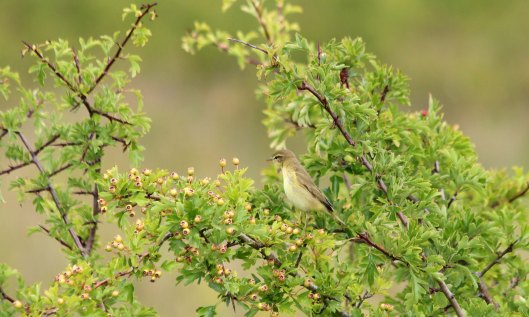
While yesterday’s Clouded yellow butterfly was migrating northwards on the hot southerlies, our local birds were heading in the opposite direction, to their various wintering spots around the Mediterranean and in locations all over the African continent. They started heading south in ever-increasing numbers about three weeks ago – at least, that’s when I started noticing this year’s autumn migration. Blackcaps, Chiffchaffs, Swallows, Sand and House martins … for a lot of these little birds their long journey has already begun.

200820 pied flycatcher

The first noteworthy bird for me was a Pied flycatcher, found by a local birder at Cosmeston one day, and I just happened to be right there he re-found it the following day. That was 22 July, the day I also began to notice how many Willow warblers there were everywhere – I’ve been seeing good numbers of these lovely little birds almost daily since then.

200820 willow warbler

On 2 August, this Sedge warbler was a surprise find in the hedgerow on a local farm. With any luck, it will be well on its way to sub-Saharan Africa by now.

200820 sedge warbler

Also on 2 August, in that same hedgerow, I noticed a lot of Whitethroats, and they’re also passing through in small numbers every day now.

200808 whitethroat (1)
200808 whitethroat (2)

I’ve seen a Redstart at Cosmeston a few times – these photos were taken on 4 August and 16 August in almost the exact same location. Might it be the same bird that has perhaps found the place to its liking and is trying to fatten up before flying onward?

200820 redstart (1)
200820 redstart (2)

In recent days, I’ve also been seeing some of my favourite migrants, Spotted flycatchers (several now seen) and Whinchat (just one so far) but I’m going to post separate blogs about those superb little birds.

Like Loading...

232/366 Third time lucky

19 Wednesday Aug 2020

Posted by sconzani in insects, nature

≈ 7 Comments

Tags

British butterflies, butterfly, Clouded yellow, migrant butterfly

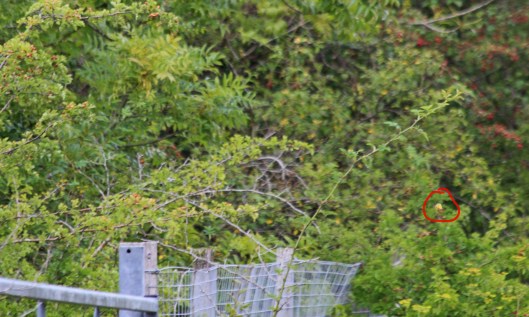
I had hoped the recent combination of southerly winds and heat wave would bring a wave of migrants to our shores and it did. The most exciting for me was the Clouded yellow butterfly. I saw my first on 10 August but, as is often the case with these beauties, their rapid flight can make them difficult to photograph, and this one flew over a fence into a shrubby area, disappearing immediately. My next Clouded yellow sighting came on 16 August, in a different location but with almost the same result – over the fence and gone! I managed to grab a single ‘record’ shot, below.

200819 clouded yellow (1)

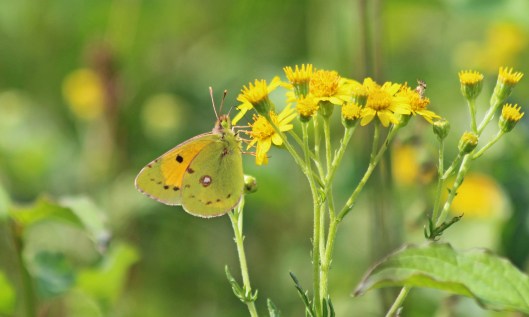
Then, last Monday 17 August, I got lucky. I did have to follow this Clouded yellow around a sizeable field, watching intently, not following too closely so as not to spook it, waiting for it to settle but, finally, it paused briefly to feed and I got my photograph. They are such lovely butterflies, so different from anything else in Britain – I just wished they lived among us.

200819 clouded yellow (2)

Like Loading...

231/366 They’re back!

18 Tuesday Aug 2020

Posted by sconzani in autumn, birds, nature

≈ Leave a comment

Tags

autumn bird migration, birding, birdwatching, British birds, Cardiff Bay, Ely embankment, Turnstone, Turnstone breeding plumage

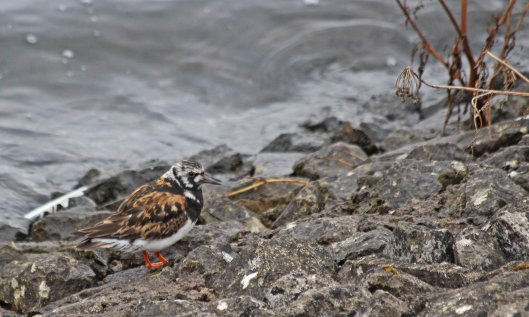
As well as seeing the Common sandpiper I blogged about yesterday, Friday’s walk along the Ely embankment made me smile for another reason – the Turnstones are back!

200818 turnstone (1)

Fresh from their breeding season in Greenland and parts of northern Canada, looking very handsome in their darker summer plumage, perhaps still a little weary from those long-haul flights, but they’ve made it.

200818 turnstone (2)

I love these characterful little birds. Most of the time they might seem a bit dull, plodding purposefully along the tide line, turning over pebbles and seaweed in their never-ending search for insect snacks, or sitting, a little hunched over, snoozing in the sun.

200818 turnstone (3)

Yet I’ve also seen a large group of them, in a coastal town in southern England, in the midst of a huge storm, when the ferocity of the waves had driven them up off the beach on to an expanse of grass where large puddles had accumulated, behaving like crazy kids, chattering away happily to each other while they ran in and out of the puddles, excited, splashing and flapping their wings, and so obviously having fun.

200818 turnstone (4)

There were four Turnstones on the embankment on Friday. Maybe they’re locals, or maybe they just stopped over for a rest before heading further south, but I’m sure I’ll be seeing many more of these special birds in the weeks to come.

Like Loading...

230/366 Number 111

17 Monday Aug 2020

Posted by sconzani in birds, nature

≈ Leave a comment

Tags

birding, birding in a pandemic, birdwatching, British birds, Cardiff Bay birds, Common sandpiper, Covid-19 birding, Ely embankment, lockdown birding

Due to the Covid-19 lockdown and the fact that I don’t drive, this year’s birding has been a bit different from previous years, with no birding trips away and very limited access to public transport. I actually decided back in February, before the lockdown even began, that I would focus this year on ‘my patch’, and then along came the corona virus and I basically had no other choice.

200817 common sandpiper (1)

My patch isn’t really a defined area – it’s how far I can walk from home, with the proviso that I can use public transport in one direction, so bus there – walk home or train there – walk home, though I haven’t done that since we locked down in March.

200817 common sandpiper (2)

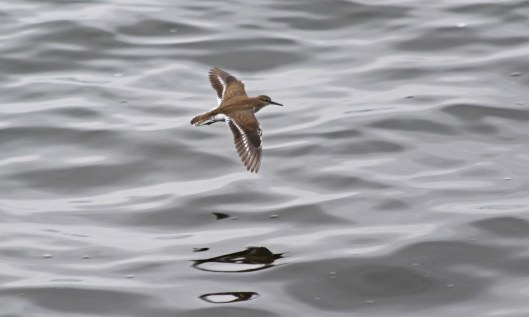
Much to my surprise, with the addition of this lovely Common sandpiper along the Ely embankment of Cardiff Bay on Friday, I have now seen 111 species in 2020. And that’s without chasing some of the birds I might have seen – a posse of Cattle egrets in Cardiff Bay one day but I’d already walked 6 miles that day and couldn’t face another long stomp; a couple of gull species that milled around in the middle of Cardiff Bay but which I find almost impossible to spot without the help of someone with a telescope; and others.

200817 common sandpiper (3)

Though it’s always nice to see the more unusual birds, this has been the perfect time to get to know my local area much better, and to appreciate how lucky I am to have several different types of habitat within walking distance. And, with the autumn bird migration now getting underway and the possibility of winter bringing in a few different species, I’m excited to see what this year’s total will finally be. I’ll report back in December but, in the meantime, I’ll keep enjoying the birds, like this handsome sandpiper, that pop up in my patch.

200817 common sandpiper (4)

Like Loading...

229/366 More peas please

16 Sunday Aug 2020

Posted by sconzani in nature, wildflowers

≈ Leave a comment

Tags

Black medick, British wildflowers, Common restharrow, Cosmeston Lakes Country Park, Ervilla hirsuta, Grangemoor Park, Hairy tare, Medicago lupulina, Ononis repens, Pea plant family

You’ll recall that a couple of weeks ago we had some members of the Pea family (A Pod of Peas, 26 July) – well, here are another three members of that extensive kin group.

Common restharrow (Ononis repens)
The name ‘restharrow’ comes from the fact that this wildflower’s thick long roots were ‘tough enough to stop a horse-drawn harrow in its tracks’ (Flora Britannica) and that esteemed publication also notes that those roots could be chewed, with a taste like liquorice. According to the Plantlife website, the plant’s shoots also had culinary uses: they could be boiled as a vegetable or eaten in salads.

200809 common restharrow (2)
200809 common restharrow (1)

200809 common restharrow (3)

Hairy tare (Ervilla hirsuta)
There’s an abundance of this little plant curling and winding itself through the rough grassland and wildflower fields at Grangemoor Park. As its flowers are rather small, it’s easy to miss how lovely they are but they’re definitely worth a closer look, anytime from May to August.

200816 hairy tare (3)200816 hairy tare (4)

Black medick (Medicago lupulina)
This is a plant I often see along the edges of roads but it’s also particularly numerous in one of the wildflower fields at Cosmeston Lakes Country Park. The First Nature website explains its scientific name thus:
‘The genus name Medicago refers to the region of Iran known as Media, where this plant was thought to have originated. The specific epithet lupulina means “wolf-like” – a reference to the flowers of the hop Humulus lupulus, which its inflorescence resembles.’

200816 black meddick (2)
200816 black meddick (4)

200816 black meddick (1)


Like Loading...

228/366 Mothing, accidentally

15 Saturday Aug 2020

Posted by sconzani in insects, nature

≈ Leave a comment

Tags

Agriphila tristella, Autographa gamma, British moths, Common grass-veneer, Common purple & gold, moths, Pyrausta purpuralis, Scotopteryx chenopodiata, Shaded broad-bar, Silver Y

It seems surprising to me that a rainy day walk can turn up moth sightings. I’m not talking about heavy rain – I probably wouldn’t be out in that – just a very slight drizzle, which in this week’s heat was actually quite refreshing. Only a few hardy Meadow brown butterflies flitted up as I passed by but the moths were more frequent than I expected.

200815 silver y

Silver Y (Autographa gamma)
Late summer through to mid autumn is probably the best time to see these distinctive immigrants, though some hardy souls do manage to breed in Britain. I imagine this one wafting in from the Continent on last week’s hot southerly winds.

200815 pyrausta purpuralis

Common purple-and-gold (Pyrausta purpuralis)
I’ve seen quite a few of these tiny moths during my daily meanders, presumably because they have two broods each year and the second brood emerges right about now, July-August.

200815 Shaded broad-bar

Shaded broad-bar (Scotopteryx chenopodiata)
Two of these beauties have popped up for me recently, one at Grangemoor Park, the other at Cosmeston, both quite light in colour, though a quick look at the images on the Butterfly Conservation website will show how variable they can be.

200815 Agriphila tristella

Common grass-veneer (Agriphila tristella)
I tend to avoid photographing the many grass moths that, like crickets and grasshoppers, flit up as my legs disturb them when I’m walking through longish grass or wildflowers, because they can be difficult to identify. Luckily, my local Twitter pal George, a senior moth ecologist at Butterfly Conservation, was able to put a name to this one very quickly. It’s a common grassland species that flies from June through to September.

Like Loading...

227/366 Guelder rose

14 Friday Aug 2020

Posted by sconzani in autumn, nature, plants

≈ 2 Comments

Tags

autumn berries, autumn colour, Guelder rose

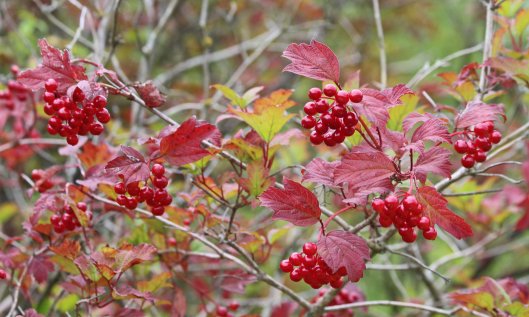
You thought I was joking with yesterday’s post about autumn arriving early this year, didn’t you? Well, the gorgeous colours of this Guelder rose look very autumnal to me. Bring on the glorious shades of autumn!

200814 guelder rose

Like Loading...

226/366 Autumn comes early

13 Thursday Aug 2020

Posted by sconzani in nature

≈ 2 Comments

Tags

Autumn Lady’s-tresses, autumn orchids, British orchids, British wildflowers, native orchids, Spiranthes spiralis

200813 autumn lady's-tresses (1)It’s two and a half weeks yet till the calendar tells us it’s autumn, and we’re all melting in the heatwave that currently has much of Britain in its fiery grip, yet the Autumn lady’s-tresses are in full flower. These gorgeous orchids are tiny and not easily spotted amongst long grass and wildflowers but, luckily, I saw a report of a find of over 40 plants in a new-to-me location and went for a look early yesterday morning. Success!

This slideshow requires JavaScript.

Like Loading...

225/366 Battered & bird-pecked

12 Wednesday Aug 2020

Posted by sconzani in insects, nature

≈ 2 Comments

Tags

battered butterflies, bird-pecked butterflies, British butterflies, Brown argus, Comma, Essex skipper, Gatekeeper, Painted Lady, Peacock, Ringlet, Small copper

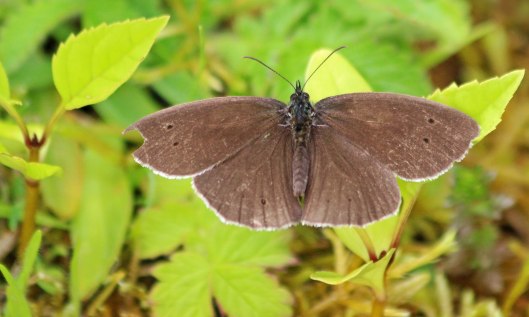
Though second-brood butterflies are still looking pristine, many of the others are now well past their best, as life is tough for such fragile creatures. Some butterflies are so battered that I’m amazed they’re able to fly at all, yet this Gatekeeper and Ringlet were still moving from plant to plant.

200812 battered gatekeeper
200812 battered ringlet

Birds looking for an easy snack often attack butterflies and it’s easy to see the tell-tale signs of bird pecks on butterflies’ wings, like those on these: a Ringlet, Comma, Small copper and Peacock, and another Gatekeeper.

200812 birdpecked ringlet

200812 birdpecked 1 comma
200812 birdpecked 2 small copper
200812 birdpecked 3 peacock

200812 birdpecked gatekeeper

Is it the blazing sun that has caused this Essex skipper’s orange to fade so dramatically or has it lost most of its wing scales?

200812 faded essex skipper

I’m 99% sure this is the same Brown argus, seen first on 1 August and again on 10 August. It already had some bird pecks when I first saw it but, nine days later, it was looking rather faded and more than a little ragged around the edges.

200812 faded brown argus 0108
200812 faded brown argus 1008

This Painted lady is looking battered, bird-pecked, faded and jaded, perhaps the affects of a long migration journey, or simply a tough life well survived.

200812 jaded painted lady

Like Loading...
← Older posts
Newer posts →

About me

sconzani

sconzani

I'm a writer and photographer; researcher and blogger; birder and nature lover; countryside rambler and city strider; volunteer and biodiversity recorder.

View Full Profile →

Follow earthstar on WordPress.com

Enter your email address to follow this blog and receive notifications of new posts by email.

Recent blog posts

  • Our celebrity Redshank February 19, 2026
  • My first moth of the year February 18, 2026
  • Three Common sandpipers February 17, 2026
  • Beetle: Athous bicolor February 16, 2026
  • Crocus flower power February 15, 2026

From the archives

COPYRIGHT

Unless otherwise acknowledged, the text and photographs on this blog are my own and are subject to international copyright. Nothing may be downloaded or copied without my permission.

Fellow Earth Stars!

  • Unknown's avatar
  • Unknown's avatar
  • Unknown's avatar
  • Unknown's avatar
  • Unknown's avatar
  • Unknown's avatar
  • Unknown's avatar
  • Unknown's avatar
  • Unknown's avatar
  • Unknown's avatar
  • Unknown's avatar
  • Unknown's avatar
  • Unknown's avatar
  • Unknown's avatar
  • Unknown's avatar
  • Unknown's avatar
  • Unknown's avatar
  • Unknown's avatar
  • Unknown's avatar
  • Unknown's avatar
  • Unknown's avatar
  • Unknown's avatar
  • Unknown's avatar
  • Unknown's avatar
  • Unknown's avatar
  • Unknown's avatar
  • Unknown's avatar
  • Unknown's avatar
  • Unknown's avatar
  • Unknown's avatar
  • Unknown's avatar
  • Unknown's avatar
  • Unknown's avatar
  • Unknown's avatar
  • Unknown's avatar
  • Unknown's avatar
  • Unknown's avatar
  • Unknown's avatar
  • Unknown's avatar
  • Unknown's avatar
  • Unknown's avatar
  • Unknown's avatar
  • Unknown's avatar
  • Unknown's avatar
  • Unknown's avatar
  • Unknown's avatar
  • Unknown's avatar
  • Unknown's avatar
  • Unknown's avatar
  • Unknown's avatar

Blog at WordPress.com.

Privacy & Cookies: This site uses cookies. By continuing to use this website, you agree to their use.
To find out more, including how to control cookies, see here: Cookie Policy
  • Subscribe Subscribed
    • earthstar
    • Join 670 other subscribers
    • Already have a WordPress.com account? Log in now.
    • earthstar
    • Subscribe Subscribed
    • Sign up
    • Log in
    • Report this content
    • View site in Reader
    • Manage subscriptions
    • Collapse this bar
 

Loading Comments...
 

You must be logged in to post a comment.

    %d