• ABOUT
  • BIRDING 2018
  • Birding 2019
  • BLOG POSTS
  • Butterflies 2018
  • Resources

earthstar

~ a celebration of nature

earthstar

Monthly Archives: August 2020

244/366 Butterfly magic

31 Monday Aug 2020

Posted by sconzani in insects, nature

≈ 4 Comments

Tags

aberrant Meadow brown, British butterflies, butterfly, Comma, Green-veined white, Painted Lady, Red Admiral, Small copper, Small tortoiseshell

To celebrate – or, perhaps, to mourn – the last calendar day of summer, here’s a tribute to some of the beautiful butterflies I’ve seen in recent days, just because, when they’re gone, I’m really going to miss their magic.

200831 comma

A Comma doing what they do so well when their wings are closed – blending in.
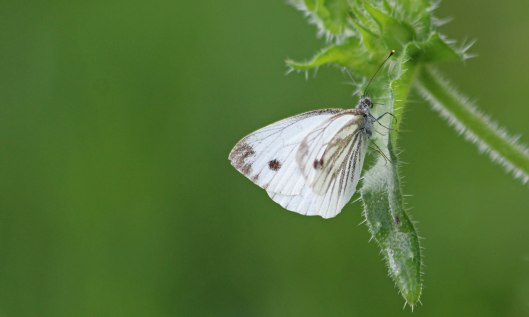
200831 green-veined white

Most of the white butterflies I’ve seen lately have been Small whites so this Green-veined white stood out from the crowd.
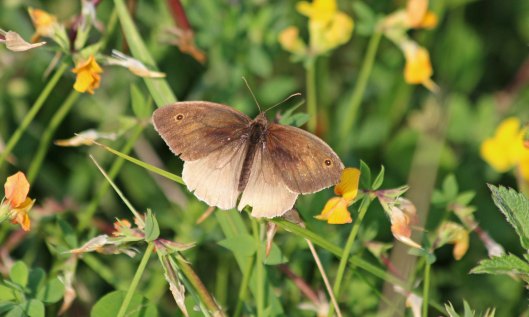
200831 meadow brown

Here’s another that stood out – an aberrant Meadow brown. There always has to be one!

200831 painted lady

The heat wave a couple of weeks ago seems to have brought in a small influx of Painted ladies, though nothing like the numbers we had last year.
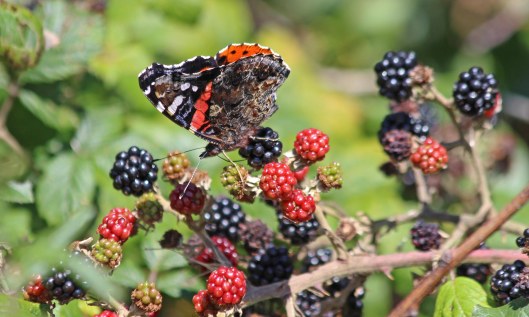
200831 red admiral

Have you ever noticed how much Red admirals like blackberries? And their colours blend in to this background rather well.
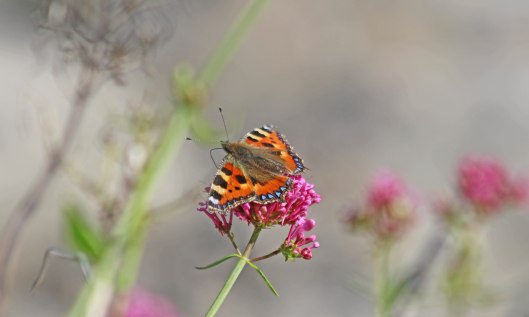
200831 small tortoiseshell

Small tortoiseshells have been having a good year locally, which has been a real treat. I even found two feeding on Red valerian right at the edge of one of the local beaches this morning.
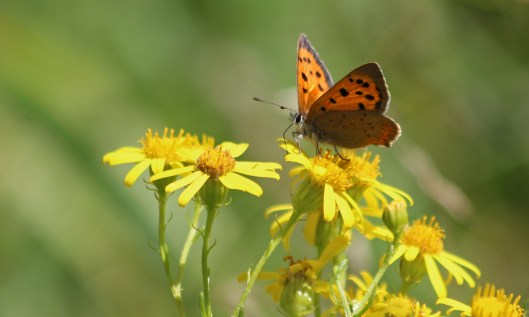
200831 small copper

A delightful surprise from Saturday’s walk at Cosmeston, a pristine Small copper.

Like Loading...

243/366 Wildflower oddities

30 Sunday Aug 2020

Posted by sconzani in nature, wildflowers

≈ Leave a comment

Tags

British wildflowers, Common knapweed, Devil's-bit scabious, odd-coloured wild flowers, pink-flowered Devil's-bit scabious, white-flowered Common knapweed

I’ve mentioned before here on the blog the white flowers of the usually pink-flowered Common centaury (Small and white, July 2020) and the blue flowers of the usually orange-red-flowered Scarlet pimpernel (The Pimpernels, July 2017). Today, I have another couple of wildflower oddities for you.

200830 pink devil's-bit scabious (3)

Pink Devil’s-bit scabious (Succisa pratensis)
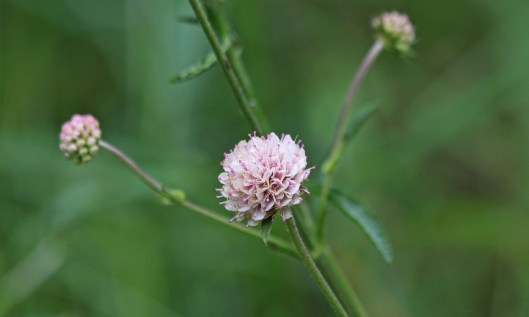
As I’m sure you’re aware, the flowers of Devil’s-bit scabious are usually somewhere in the lilac, blue-mauve range but, at Lavernock Nature Reserve, there are quite a number of plants with pink flowers. I’ve read this is a natural variation but I don’t know if there is something specific that triggers the alteration in colour. At Lavernock, the pink-flowering plants grow right next to those with lilac flowers, so it’s certainly nothing to do with the soil.

200830 pink devil's-bit scabious (1)200830 pink devil's-bit scabious (2)

White Common knapweed (Centaurea nigra)
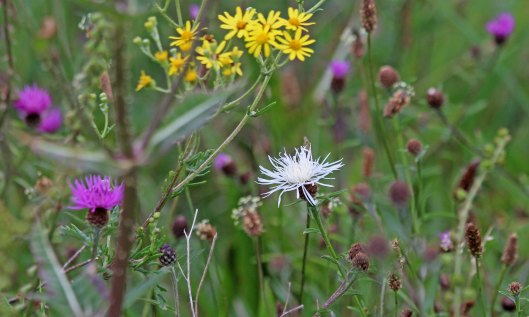
Also at Lavernock Nature Reserve, I recently found Common knapweed with stunning white flowers. This plant, of course, usually has flowers in the pink-purple range. Once again, plants with purple and white flowers were growing right next to each other, which presumably rules out soil composition as a factor. It’s a mystery, but a rather lovely mystery, to be sure!

200830 white knapweed (1)200830 white knapweed (2)

Like Loading...

242/366 Bottoms on brambles

29 Saturday Aug 2020

Posted by sconzani in autumn, insects, nature, plants

≈ 4 Comments

Tags

blackberries, brambles, flies, insects on blackberries, insects on bramble, wasp

I don’t know about you but, when I’m out walking at this time of year, I’m often tempted to pluck and devour one of the luscious-looking blackberries growing on the bramble-covered fences and hedgerows.

200829 bottoms on brambles (1)
200829 bottoms on brambles (2)

Well, not any more. Not now I’ve seen how many flies like to suck at them and run their dirty little feet all over them. Just look at all those fly bottoms!

200829 bottoms on brambles (3)
200829 bottoms on brambles (4)

And let’s not even mention the very real possibility of getting stung by a wasp that’s jealously guarding ‘its’ berries. From now on, the berries are all for the beasties!

200829 bottoms on brambles (5)
200829 bottoms on brambles (6)
Like Loading...

241/366 Migrants : Spotted flycatcher

28 Friday Aug 2020

Posted by sconzani in autumn, birds, nature

≈ Leave a comment

Tags

autumn migration, bird migration, birding, birdwatching, British birds, Cosmeston Lakes Country Park, Spotted flycatcher

It’s over a month since I saw my first Spotted flycatchers for 2020, the family group I encountered on my visit to Slade Wood back on 21 July. But, now I’m seeing them much more regularly, in ones and twos, as they pass through my local area on their autumn migration. I spotted my first migrant on 5 August, then had to wait a week until my second sighting on the 13th but, since then, have seen them almost every time I’ve been to Cosmeston Lakes Country Park, with 2 on the 17th, 4 on the 18th, 1 on the 20th, 3 on the 22nd, 2 on the 24th, and 3 on the 26th. In fact, I tend to go to Cosmeston much more often at this time of year specifically to see what migrants I can find, and I look especially for these stunning little birds, as I love to watch their fly-catching aerobatics.

This slideshow requires JavaScript.

Like Loading...

240/366 Helophilus trivittatus

27 Thursday Aug 2020

Posted by sconzani in insects, nature

≈ 1 Comment

Tags

British hoverflies, Helophilus trivittatus, hoverfly

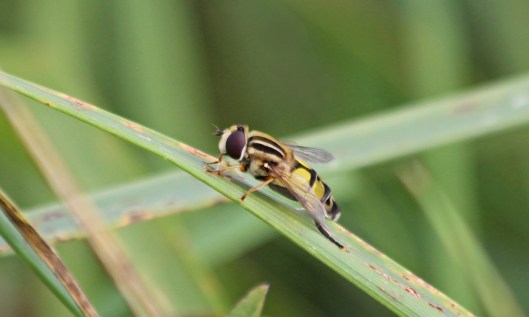
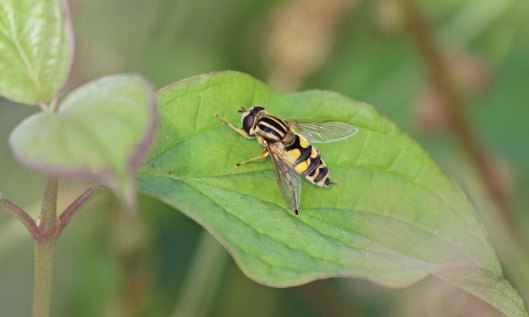
Somehow this splendid hoverfly had passed me by, probably many times, without my noticing its presence in my landscape. It wasn’t until one of my Twitter pals (thank you, Tate) posted a photo of his recent sighting at Cosmeston Lakes that I thought ‘Hang on a minute. Why haven’t I seen that?’, and duly set out to find one.

200827 helophilus trivittatus (1)

And, like buses, once one comes along, a whole fleet is soon whizzing past.

200827 helophilus trivittatus (2)

One of the possible reasons I hadn’t noticed it before is because it’s a migratory species so perhaps there haven’t been as many around in previous years.

200827 helophilus trivittatus (3)

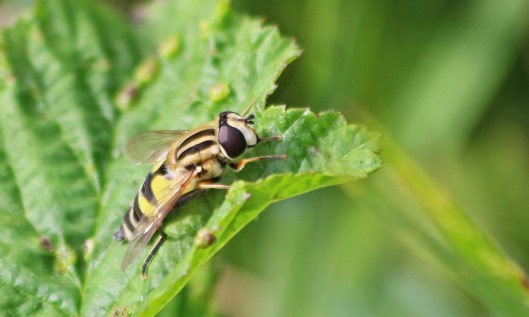
Also, Helophilus trivittatus looks a lot like its close relative Helophilus pendulus, but H. trivittatus is actually much more lemon-yellow in colour, and it’s a little longer in the body (which is noticeable once you get your eye in), and it doesn’t have the black stripe down the centre of its face that the other Helophilus species have.

200827 helophilus trivittatus (4)

This handsome hoverfly tends to be found in coastal areas or, as it prefers a damp habitat, along the routes of Britain’s main river systems in the southern half of Britain.

Like Loading...

239/366 Spurges

26 Wednesday Aug 2020

Posted by sconzani in nature, plants, wildflowers

≈ Leave a comment

Tags

British wildflowers, Cypress spurge, Euphorbia cyparissias, Euphorbia helioscopia, Euphorbia peplus, Petty spurge, spurge, Sun spurge

The Oxford Dictionary tells me that the word spurge was first used in Late Middle English and is a ‘shortening of Old French espurge, from espurgier, from Latin expurgare “cleanse” (because of the purgative properties of the milky latex)’. If you have sensitive skin, you may want to be wary of touching that latex, which both the stem and leaves will exude if broken, as it can irritate.

200826 Petty spurge (1)
200826 Petty spurge (2)

In fact, the latex in Petty spurge (Euphorbia peplus) is so caustic that it’s used in medications for the removal of warts and veruccas. This is the spurge I see most often, as it seems to enjoy the edges of pavements and lanes, road verges and waste ground and, though an annual, it can be seen over a long period, from April right through to October.

200826 sun spurge (2)

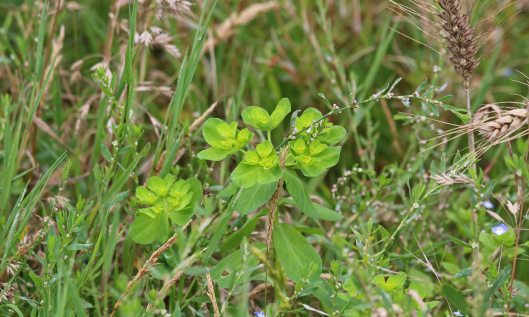
Sun spurge (Euphorbia helioscopia) is superficially similar to Petty spurge but is slightly larger and has a shorter growing period, from May to August. The easiest way to tell one spurge from the other is by counting the rays in the umbel: Petty spurge has three rays while Sun spurge has five. Although Sun spurge supposedly enjoys a similar growing environment to Petty spurge, I don’t see it very often in my urban area: as the photo below indicates, my find was growing in an arable field (where no crops were sown this season, but some residue crops have sprouted).

200826 sun spurge (1)

Perhaps because of its irritant sap, Sun spurge has a wealth of interesting common names. These are from the Royal Horticultural Society’s website: cat’s milk, churn staff, little good, little goody, mad woman’s milk, mare’s milk, mouse milk, wart grass and wartwort.

200826 cypress spurge (2)
200826 cypress spurge (1)

Cypress spurge (Euphorbia cyparissias) is the most unusual and intriguing of today’s spurges. I found a large area of this very attractive plant growing on top of the Aberbargoed coal spoil tip on 29 July but it’s taken a couple of weeks to get the identification confirmed. I’m not sure how the plant came to be on the tip – my guide book says Cypress spurge is ‘possibly native’ in southern Britain but a probable garden escape elsewhere (The Wild Flower Key).

Like Loading...

238/366 Midge galls

25 Tuesday Aug 2020

Posted by sconzani in autumn, insects, nature, plants, wildflowers

≈ 2 Comments

Tags

British galls, British insects, British wildflowers, Cosmeston Lakes Country Park, galls on wild carrot, Kiefferia pericarpiicola, midge gall, Wild carrot

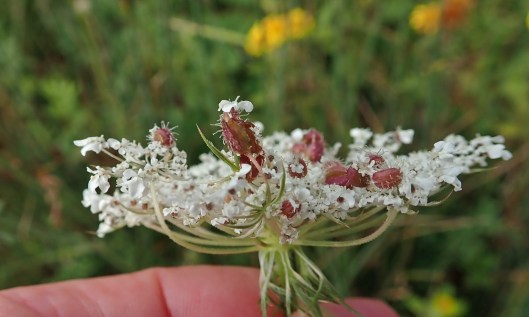
I was looking around at the various wildflowers yesterday at Cosmeston, seeing what insects might be about, when I noticed these odd growths on some of the Wild carrot flower heads. I split one open with my finger nail and a miniscule orange blob fell out; turns out that was the larva of a midge with the long-winded name of Kiefferia pericarpiicola.

200825 Kiefferia pericarpiicola (1)

The galls start off green (below left), before turning pinkish and eventually brown. According to the Nature Spot website, these galls can be seen from late summer through to autumn, after which the larvae will leave the gall and drop down to the soil to pupate. The midge only occurs in southern parts of Britain at the moment – and I only found two previous records in the Welsh biodiversity database – but perhaps that will change as our climate continues to warm and the midge flies further afield. It’s also possible, of course, that this insect is under-recorded – it seems the midge itself is almost never seen, only its gall creations.

OLYMPUS DIGITAL CAMERA
Like Loading...

237/366 Migrants : Whinchat

24 Monday Aug 2020

Posted by sconzani in autumn, birds, nature

≈ Leave a comment

Tags

autumn migration, bird migration, birding, birdwatching, British birds, Clep yr eithin, Cosmeston Lakes Country Park, Crec yr eithin, Saxicola rubetra, Whinchat

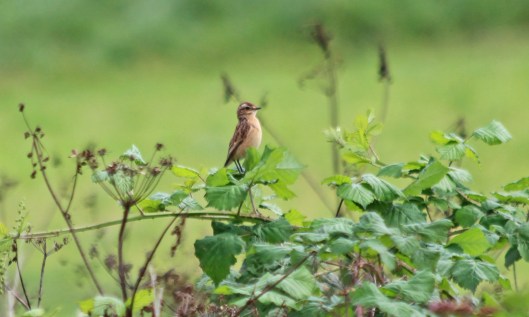
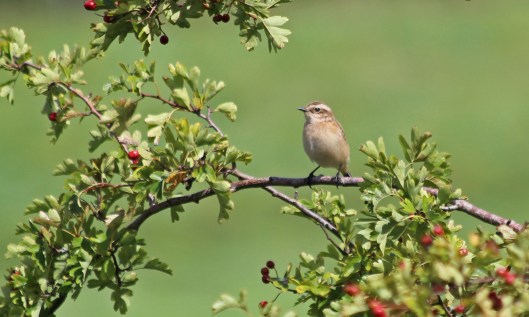
The scientific name for the Whinchat is Saxicola rubetra which, apparently, means ‘small rock-dweller’, a reference to where this delightful little bird likes to make its home: saxicola is from the Latin saxum, meaning ‘rock’, and incola, meaning ‘dwelling’, and, also Latin, rubetra means ‘a small bird’.

200824 whinchat (4)

In Welsh, the Whinchat is Crec yr eithin or sometimes Clep yr eithin, eithin being the Welsh word for gorse (also known as furze or whin), where the bird is often seen perching; and crec and clep both meaning clap, a reference to the bird’s call.

200824 whinchat (1)

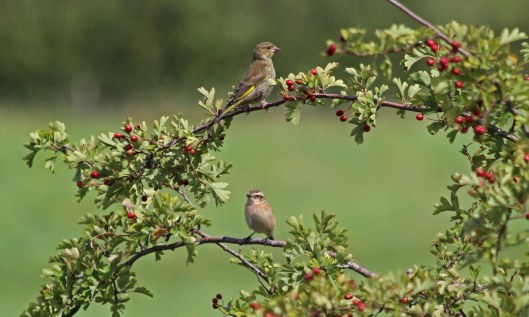
Here in south Wales, the Whinchat is a passage migrant, meaning I only get the chance to see it locally in autumn – it passes through in spring as well, of course, but, as it’s then in a hurry to reach its breeding grounds, it usually just flies straight over. Both the gorgeous little Whinchats in my photos stopped over at Cosmeston Lakes Country Park last week, feeding up before they set out on their long migration flight south, crossing the English Channel, western Europe, the Med, North Africa, and finally the Sahara Desert before arriving at their wintering grounds in central and southern Africa.

200824 whinchat (2)

According to the RSPB website, Whinchat numbers in Britain declined more than 50% between 1995 and 2008, though the reason for that decline is not known. I imagine the hazards of their long migratory flight might well have something to do with it. Safe journey, little Whinchats!

200824 whinchat (3)

I love this photo with the Greenfinch – just shows how small the Whinchat really is.

Like Loading...

236/366 On the fleabane

23 Sunday Aug 2020

Posted by sconzani in insects, nature, wildflowers

≈ 2 Comments

Tags

British butterflies, British insects, British wildflowers, Common fleabane, fleabane, insects on fleabane, Pulicaria dysenterica

The local fields are ablaze with Common fleabane (Pulicaria dysenterica), which the Plantlife website says has a
‘curious scent, with hints of carbolic soap and chrysanthemum, [which] is an insect repellent. In the past it was kept in houses specifically for the purpose of driving away fleas. Bunches were dried and burned as a fumigant or hung in rooms.’
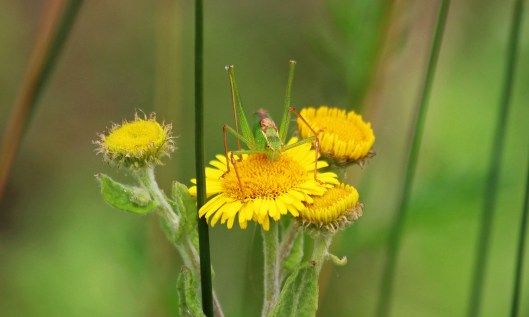
Well, it may be the bane of fleas and it may act as an insect repellent when it’s been dried but, from what I can see, when it’s alive and fresh, most insects love it!

200823 speckled bush-cricket

As well as that Speckled bush-cricket, I’ve found 9 species of butterfly and 1 moth nectaring on Fleabane flowers.

200823 b brimstone
200823 b brown argus
200823 b common blue
200823 b gatekeeper
200823 b painted lady
200823 b meadow brown
200823 b pyrausta purpuralis
200823 b small copper
200823 b small tortoiseshell
200823 b small white

And then there are the hoverflies and assorted other flies, bees and bumbles. It’s more like a magnet than a repellent.

200823 Chrysotoxum bicinctum
200823 Sphaerophoria sp
200823 eristalis horticola
200823 fly sp
200823 helophilus pendulus
200823 nomada sp
200823 eristalis pertinax
200823 buff-tailed bumble
200823 syrphus sp
200823 picture-winged fly
200823 honey bee
Like Loading...

235/366 Two Hawkers

22 Saturday Aug 2020

Posted by sconzani in insects, nature

≈ Leave a comment

Tags

British dragonflies, dragonfly, hawkers, Migrant hawker, Southern hawker

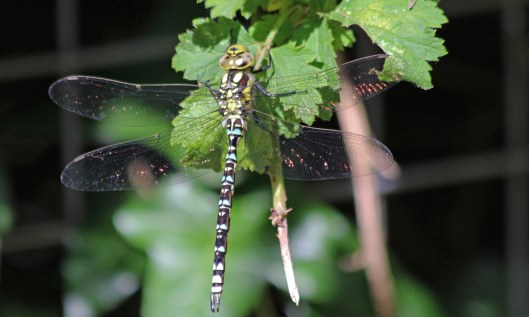
Though Common darters are now, well, common around my local haunts, I’ve seen very few of the larger dragonflies this year, perhaps because last year’s extremely dry summer caused many local ponds to dry up completely. These are two recent finds …

200822 southern hawker

This Southern hawker (Aeshna cyanea) was patrolling a section of a local bridle way/cycle path/walking track called Mile Road and, though I walk this lane quite often, I only saw the dragonfly once. Perhaps it decided the amount of horse/cycle/people traffic along the lane wasn’t conducive to good insect hunting.

200822 migrant hawker

I watched this Migrant hawker (Aeshna mixta) for several minutes on Thursday before it finally settled on a nearby tree (I often feel like my head is waving around like I’m a spectator at some kind of crazy tennis match when I’m watching dragonflies). The perch was a little high up for crisp photos but I was pleased to see this, my first Migrant hawker of the year.

Like Loading...
← Older posts

About me

sconzani

sconzani

I'm a writer and photographer; researcher and blogger; birder and nature lover; countryside rambler and city strider; volunteer and biodiversity recorder.

View Full Profile →

Follow earthstar on WordPress.com

Enter your email address to follow this blog and receive notifications of new posts by email.

Recent blog posts

  • Bearded tit!!! April 3, 2026
  • A Portland Bill Kestrel April 2, 2026
  • A proliferation of Peacocks April 1, 2026
  • Little owl March 31, 2026
  • Distant seabirds March 30, 2026

From the archives

COPYRIGHT

Unless otherwise acknowledged, the text and photographs on this blog are my own and are subject to international copyright. Nothing may be downloaded or copied without my permission.

Fellow Earth Stars!

  • Unknown's avatar
  • Unknown's avatar
  • Unknown's avatar
  • Unknown's avatar
  • Unknown's avatar
  • Unknown's avatar
  • Unknown's avatar
  • Unknown's avatar
  • Unknown's avatar
  • Unknown's avatar
  • Unknown's avatar
  • Unknown's avatar
  • Unknown's avatar
  • Unknown's avatar
  • Unknown's avatar
  • Unknown's avatar
  • Unknown's avatar
  • Unknown's avatar
  • Unknown's avatar
  • Unknown's avatar
  • Unknown's avatar
  • Unknown's avatar
  • Unknown's avatar
  • Unknown's avatar
  • Unknown's avatar
  • Unknown's avatar
  • Unknown's avatar
  • Unknown's avatar
  • Unknown's avatar
  • Unknown's avatar
  • Unknown's avatar
  • Unknown's avatar
  • Unknown's avatar
  • Unknown's avatar
  • Unknown's avatar
  • Unknown's avatar
  • Unknown's avatar
  • Unknown's avatar
  • Unknown's avatar
  • Unknown's avatar
  • Unknown's avatar
  • Unknown's avatar
  • Unknown's avatar
  • Unknown's avatar
  • Unknown's avatar
  • Unknown's avatar
  • Unknown's avatar
  • Unknown's avatar
  • Unknown's avatar
  • Unknown's avatar

Blog at WordPress.com.

Privacy & Cookies: This site uses cookies. By continuing to use this website, you agree to their use.
To find out more, including how to control cookies, see here: Cookie Policy
  • Subscribe Subscribed
    • earthstar
    • Join 642 other subscribers
    • Already have a WordPress.com account? Log in now.
    • earthstar
    • Subscribe Subscribed
    • Sign up
    • Log in
    • Report this content
    • View site in Reader
    • Manage subscriptions
    • Collapse this bar
 

Loading Comments...
 

You must be logged in to post a comment.

    %d